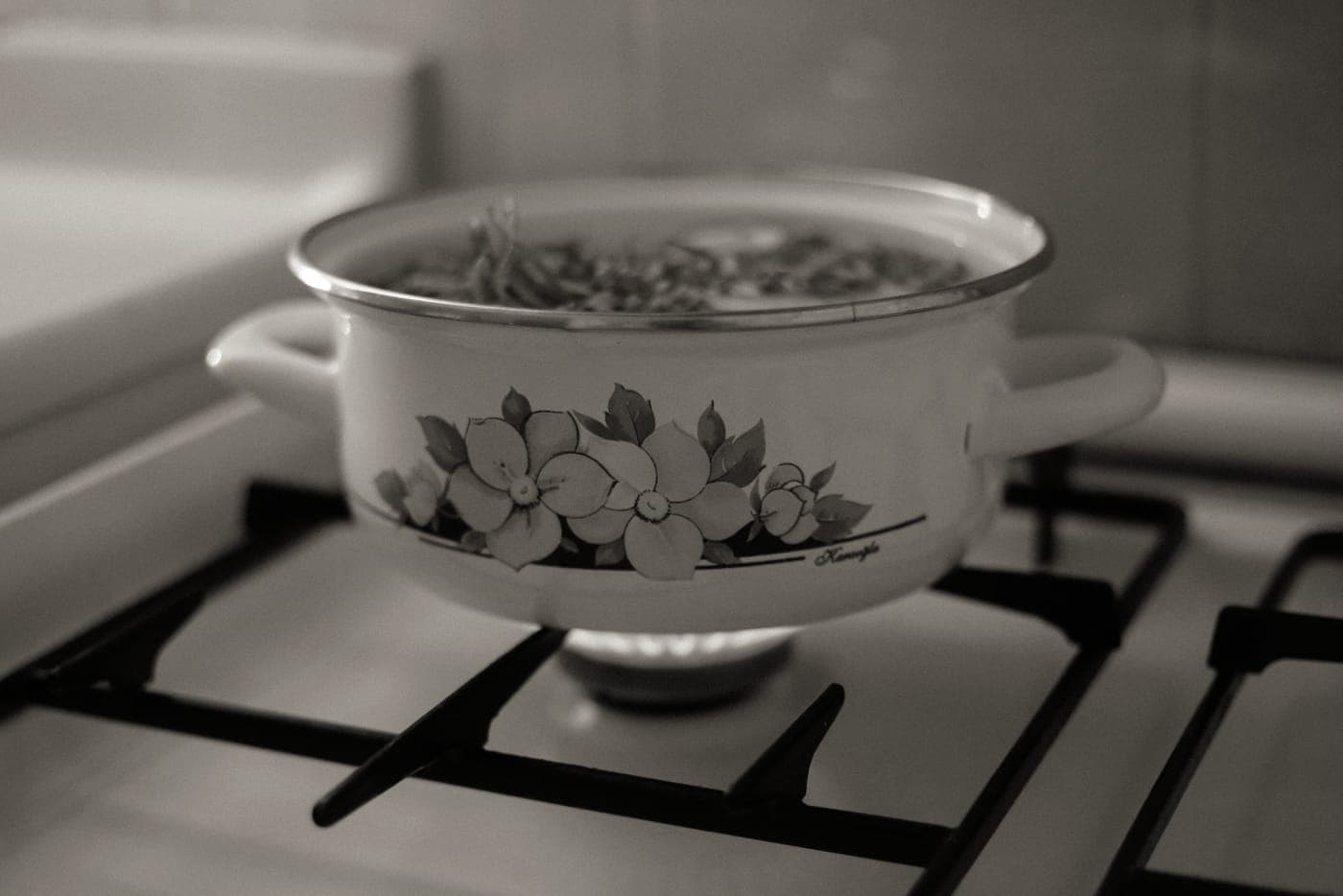
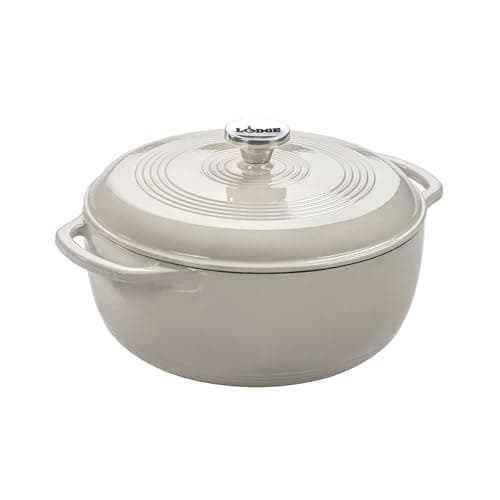
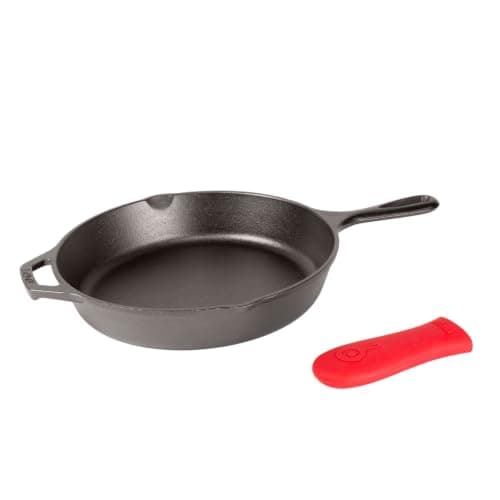
The same iron with a glass coat. It solves the one thing bare iron cannot do and gives up the one thing bare iron does best.
Where we stand
We do not make or sell bare cast iron or enameled cast iron. Both link to the same retailer, both pay us the same commission rate, and we earn exactly the same whichever one you buy — or nothing at all if you buy neither, which is sometimes the right answer. Most of the comparison pages that rank for this question are published by companies that sell one of the two. How we are funded.
What enamel actually is
Porcelain enamel is glass. It is a powdered glass frit fused to the iron at high temperature, bonding chemically to the metal. It is not a coating in the nonstick sense — it is not sprayed on, it does not wear off with use, and it does not degrade with heat the way a polymer does.
What it does share with nonstick is that it can be damaged and cannot be repaired. Glass chips. Once it chips, that spot is bare iron in the middle of a pot you will keep cooking acidic things in, and there is nothing you can do about it.
The gap enamel fills, which is a real one
Bare cast iron is reactive. A long tomato braise picks up a metallic taste, and the acid strips the seasoning while it does. This is not a technique problem or a seasoning-quality problem — it is chemistry, and it is the one genuine limitation of the material.
Enamel removes it entirely. You can simmer tomato, wine, vinegar and lemon in enameled cast iron for as long as you like, and the food tastes like the food. You keep all the mass and heat retention of iron, because the iron is still there under the glass.
For anyone who cooks braises, stews, chili, ragu or bread, that is not a marginal benefit. It is the reason a Dutch oven is a Dutch oven.
What you give up
Repairability, which is the big one
A rusted bare cast iron skillet found in a junk shop can be stripped back to metal and re-seasoned into a pan indistinguishable from new. That is genuinely remarkable and it is why cast iron gets passed down.
Enamel has no equivalent. A chip is permanent. You can keep using the pot — the exposed iron will rust a little and the food is not unsafe — but it will never be right again, and it will not be worth passing on.
A lower oven ceiling
Lodge publishes 550F for bare seasoned cast iron. Enameled pieces are always lower, and the limiting factor is usually the knob rather than the enamel or the iron. Some pots ship with a phenolic knob rated far below the pot; some sell a stainless replacement knob specifically so you can raise the ceiling.
Check the specific SKU, because this varies within a single manufacturer's range and it is the sort of thing that matters exactly once, when you want to finish something at high heat.
Slightly worse at very high heat
Enamel is glass, and glass under extreme thermal stress can craze — develop a network of fine cracks. Most manufacturers advise against preheating an enameled pot empty at high heat for this reason. Bare iron does not care at all.
For normal searing at the start of a braise, enamel is fine. For the kind of screaming-hot dry sear a steak wants, bare iron is the right tool.
What it gets right
- Enamel: completely non-reactive, so acidic braises and stews are back on the menu
- Enamel: no seasoning to maintain and nothing to re-do after washing
- Bare iron: restorable from rust indefinitely, which no coated cookware can claim
- Bare iron: a published 550F ceiling and indifference to preheating empty
What it costs you
- Enamel: a chip is permanent and the pot is never right again
- Enamel: a lower oven ceiling, usually set by the knob rather than the pot
- Bare iron: reactive with acid, which rules out a whole category of cooking
- Bare iron: seasoning to maintain, and it must be dried properly every time
The answer is usually both, as different pieces
This is one of the few comparisons on this site where owning both is the sensible outcome, because they naturally occupy different shapes.
- Bare cast iron as a skillet. Searing, cornbread, high dry heat. Everything a skillet is for is something bare iron does better. See the best cast iron skillets.
- Enameled as a Dutch oven or braiser. Braises, stews, stock, bread, chili. Everything a lidded pot is for involves liquid, and much of it involves acid.
You will notice that almost nobody sells a bare cast iron Dutch oven for domestic use and almost nobody sells an enameled skillet. The market has already worked this out.
On price, briefly
Enameled cast iron spans an enormous range, from the budget end to the famous French pots at several times the price. The iron underneath is the same in all of them; the differences are enamel quality and thickness, the interior color, and the knob.
Cheaper enamel chips more readily — that is a real and consistent difference, not snobbery, and it matters more here than usual because a chip cannot be fixed. Whether it justifies the multiple depends on how carefully you handle a heavy pot, and on whether you are the kind of person who stacks cookware.
Care differences
- Enamel: no seasoning, no drying ritual, dishwasher tolerated by most makers. Avoid metal utensils, avoid thermal shock, do not preheat empty at high heat.
- Bare iron: Lodge's own instruction is warm soapy water, then dry completely. Re-season occasionally at 450-500F for an hour with a layer of oil too thin to drip. Full method in seasoning and caring for cast iron.
Enamel stains, particularly light-colored interiors. It is cosmetic, and a soak with baking soda or a peroxide-based cleaner takes most of it off.