Heads up: some links on this page earn us a commission at no extra cost to you. It does not change what we recommend or the order. How we are funded.
The short answer
A 10 or 12-inch skillet. Searing, sauteing, anything that browns. Clad stainless or cast iron.
A 3-quart saucepan with a lid. Rice, grains, sauces, reheating, blanching a small amount.
A 6 to 8-quart stockpot. Pasta, stock, soup, anything in quantity. Buy it bigger than feels sensible.
One coated pan, 8 or 10-inch. Eggs and delicate fish. A consumable — buy it cheap.
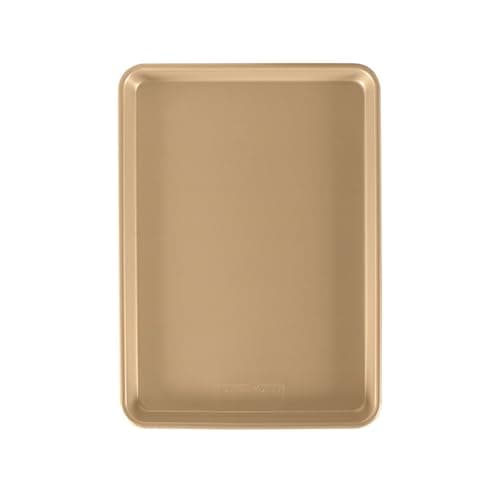
A half sheet pan. Roasting, sheet-pan dinners, and half the things you did not expect.
Why the list is five things and not fifteen
Cookware is sold by the piece, so everything about how it is marketed pushes you toward more pieces. But a kitchen is not a collection of vessels; it is a set of heat behaviors. There are three of those — hold heat, spread heat evenly, release food — plus two containers, one for boiling volume and one for the oven. Five items covers all five needs. Every additional piece is covering a need you have already covered, in a slightly different shape.
This is worth internalizing before you shop, because the alternative is the common outcome: a fourteen-piece set where four pieces do everything and ten take up the cupboard you now need for a stand mixer. If you want the reasoning behind the materials rather than the list itself, read cookware materials compared next.
1. The skillet, which you will use most days
This is the pan that decides how you feel about cooking. It browns, it sautes, it finishes in the oven, and if it is the wrong pan you will notice every evening.
Ten inches suits one or two people; twelve suits three or more. The size question is really a crowding question: food that does not fit in a single layer steams instead of browning, and a pan that overhangs your burner has a cold rim, which on a poor conductor like cast iron is a real problem. That trade-off gets worked through properly in what size cast iron skillet.
On material: clad stainless is the versatile choice, cast iron the specialist one. Stainless handles acid, goes in the dishwasher, and responds when you change the heat. Cast iron sears better than stainless can and asks for maintenance in return. Most first kitchens are better served by clad stainless as the everyday pan and cast iron added later for searing — which is why the set below covers the skillet and the Lodge appears separately.
What to avoid here
A nonstick skillet as your only skillet. It cannot brown properly, it cannot go under a broiler, and it will need replacing while everything else is still new.
A disc-bottom stainless pan. The aluminum stops at the base and the walls stay cool. Check for "clad" or "tri-ply" in the listing.
Anything above 12 inches, at first. It will not fit your burner and it will not fit your sink.
2. The saucepan, 3 quarts, with a lid that fits
Three quarts is the size that does the most jobs. Two is too small for a pound of pasta or a batch of rice for four; four is unwieldy for the single portion of something you actually make on a Tuesday. Three sits in the middle and covers both, and it is the size almost every set includes for exactly that reason.
Clad stainless is the right material without much debate. Sauces and grains are the two things most likely to catch and scorch, and even heat up the sidewalls is the specific thing clad construction buys. Anything acidic — tomato, wine, lemon — also rules out bare iron and bare aluminum on taste grounds.
The lid matters more than the listing photos suggest. A lid that fits tightly is the difference between rice that steams and rice that dries out. This is one quiet argument for buying a set: matched lids that actually fit, in sizes you can replace.
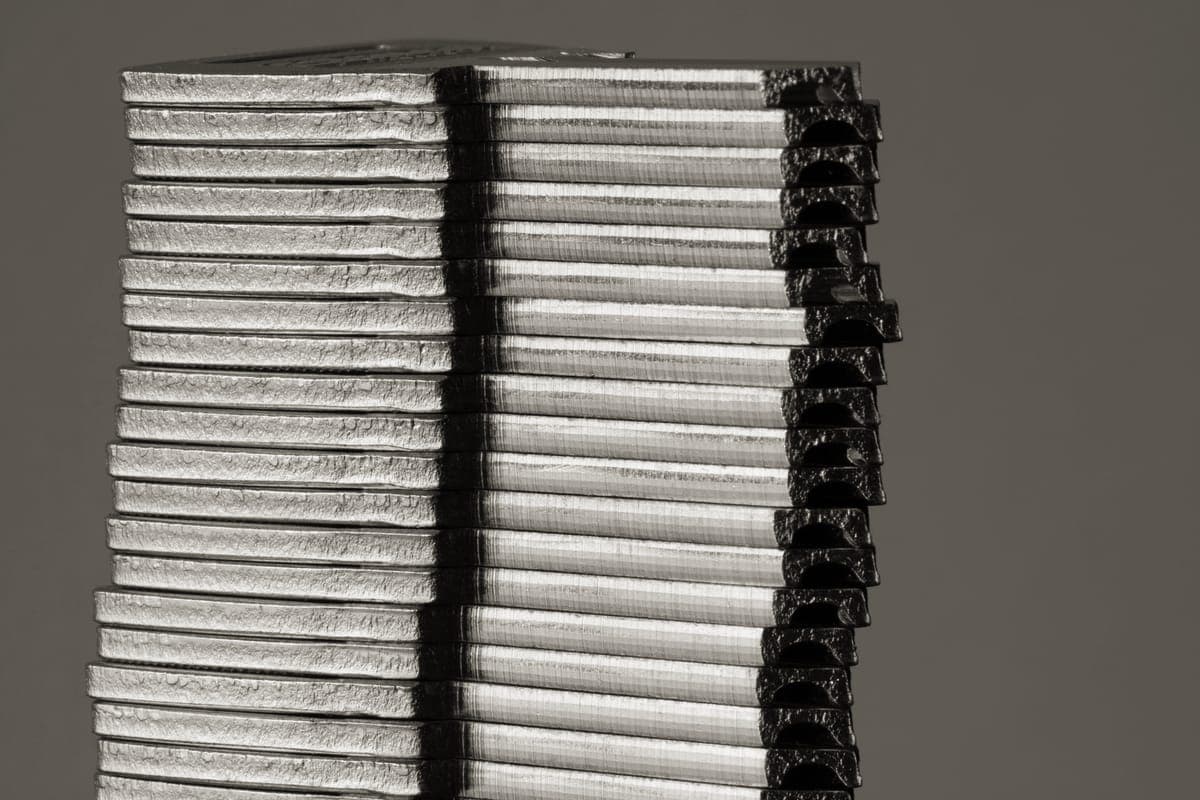
On a clad pan the aluminum runs up the wall. On a disc-bottom pan it stops at the base, and sauces scorch in a ring.
3. The stockpot, bigger than you think
Buy 6 quarts minimum, 8 if you have anywhere to put it. This is the piece people under-buy most consistently, because a large pot looks absurd in a small kitchen and then you try to cook a pound of pasta in a 4-quart pot and spend the evening managing a boil-over.
It is also the one piece where construction matters least. A stockpot is mostly holding boiling water, and boiling water is the same temperature regardless of how evenly your pot conducts. A disc-bottom stockpot is a perfectly reasonable economy, and if you are trimming a budget this is the right place to trim it.
What does matter: a lid, handles you can grip with an oven glove on, and a diameter that fits your largest burner. A tall narrow pot on a small burner takes a very long time to come to a boil.
4. One coated pan, bought cheap on purpose
Every coating is a consumable, and no manufacturer publishes how long theirs lasts — not GreenPan, not any PTFE maker. That silence is the most useful fact in the category, and it has a direct buying implication: spend the least you can on a coated pan that is well made, and plan to replace it.
Eight or ten inches, used only for eggs, pancakes and delicate fish, never preheated empty, never above medium, hand washed. Treated that way a cheap coated pan lasts years; treated like a searing pan it lasts months. The safety questions — PTFE, ceramic, PFAS — are covered honestly in is nonstick cookware safe.
5. The half sheet pan, which you will use for everything
A half sheet is 18 by 13 inches, it costs less than any other item on this list, and it will get used more than three of them. Roasting vegetables, sheet-pan dinners, cookies, toasting nuts, catching drips under a pie, resting fried food on a rack, holding prepped ingredients before they go in the pan.
Bare aluminum with an encapsulated steel rim. Aluminum conducts at 237 W/m-K against steel's 45, which is why it browns evenly, and the steel rim is what stops it warping with a bang when it hits oven heat. Nordic Ware publishes both the dimensions and the rim construction, and warrants the pan for life. Buy two; the second costs almost nothing and the moment you need to rotate trays you will want it.
The eight pieces that sell well and get used twice
None of these are bad products. They are all answers to needs most people do not have, sold to people who have not yet found out which needs they have.
Piece
Why it is in the set
What to do instead
1-quart saucepan
Pads the piece count cheaply
Use the 3-quart. Nothing you make needs exactly one quart
Steamer insert
Counts as a piece
A folding steel steamer basket costs a few dollars and fits every pot
8-inch skillet
Looks like value beside the 10-inch
Only useful if the 10-inch is permanently in use, which it is not
Egg poacher
Impulse buy
A saucepan and vinegar
Grill pan
Photographs well
The stripes are cosmetic. Sear flat in the skillet
Wok, if you have electric or glass
Aspirational
A wok needs a flame that wraps the base. On flat electric it is a bad skillet
Second stockpot
Bundled
One good stockpot and patience
Utensil set thrown in
Inflates the count
The utensils in cookware sets are almost always the worst part of the box
Piece counts are a marketing unit. Count the vessels you will actually reach for.
The order to buy in, if you cannot buy it all at once
Skillet and saucepan. These two cook most meals. If a set gets you both plus the stockpot for less than buying them separately, buy the set.
Stockpot. The moment you cook pasta or make stock.
Sheet pan. Cheap enough to add at any point, and it changes how you cook on weeknights.
Coated pan. Last, because it is the one that wears out. Buying it last means its clock starts later.
Cast iron, if you sear. An addition, not a replacement.
While you are working down that order, you will be cooking recipes that ask for a pan you have not bought yet. Which pan to use instead, and what changes when you swap covers the substitutions that work and the five jobs that genuinely have no stand-in.
Total for a decent version of the whole list is worked out honestly, with the arithmetic shown, in what it costs to outfit a kitchen. And if you are furnishing a rental with a small budget and a short lease, the best cookware for a first apartment is the shorter, cheaper version of this page.
What to buy, if you are buying
These are the products this page's reasoning actually points at. Same rules as everywhere else on the site: published specs, a stated trade-off, and a live price only where one exists.
Top pick · Covers four of the fiveSpecs read September 3, 2026
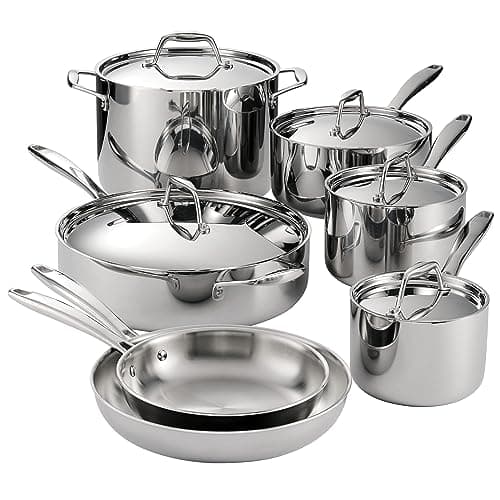
Tramontina Signature Tri-Ply Clad 12-Piece Set
One set covers the skillet, the saucepan and the stockpot in one purchase, in fully clad construction rather than disc-bottom.
Best for: A first kitchen that should not need replacing
Published specifications for the Tramontina Signature Tri-Ply Clad 12-Piece Set
Construction
Tri-ply: 18/10 stainless, aluminum core, magnetic stainless exterior
Pieces
8 in and 10 in fry pans; 1.5, 2 and 3 qt covered saucepans; 5 qt covered deep saute; 8 qt covered stockpot
Oven maximum
500F on the 80116-249DS listing; other SKUs in the line are listed at 350F
Induction
Yes - magnetic stainless exterior
Dishwasher
Listed dishwasher safe
Handles
Precision cast, riveted
Certification
NSF-certified on the 80116-249DS line
Country of origin
Not asserted - retail listings disagree across SKUs (Brazil and China both appear)
Good
Fully clad, not disc-bottom: the aluminum runs up the sidewalls, so sauces do not scorch in a ring at the base
NSF certification on the flagship SKU is a real, checkable third-party mark rather than a marketing badge
Induction-ready without paying an induction premium
Not good
Retail listings disagree on the oven maximum across SKUs in the same line, which is a documentation problem, not a cooking one
Handles run hot on gas
The 12-piece count includes lids; the useful-item count is seven
The trade-off. Handles are the weak point. They are riveted and sturdy, but they get hot on a gas ring in a way the more expensive clad brands' do not.
Skip this if. You want a set you can leave in the oven above 500F, or you cook mostly eggs and pancakes and would rather spend the money on one good nonstick pan.
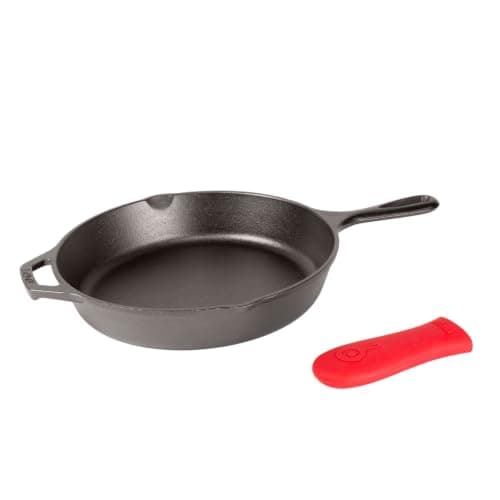
Published specifications for the Lodge Seasoned Cast Iron Skillet, 10.25 in (L8SK3)
Diameter
10.25 in
Weight
5.66 lb
Oven maximum
550F
Induction
Yes - bare iron is ferrous
Seasoning
Pre-seasoned with soy-based vegetable oil, no synthetic chemicals
Warranty
Lifetime
Made in
USA
Care
Hand wash. Lodge's own instructions permit warm soapy water
Good
Effectively unbreakable and fully restorable - a rusted one can be stripped and re-seasoned
Holds heat better than anything else at the price, which is what a sear needs
Lodge publishes its seasoning method openly, so the maintenance is not a mystery
Not good
Heavy
Heats unevenly on a small burner: cast iron conducts at roughly 50 W/m-K, so it is slow to spread and slow to react
Bare iron is reactive; long tomato braises will taste of it
The trade-off. It weighs 5.66 lb empty. You will feel that every time you move it full, and it is the single most common reason a cast iron skillet ends up in a cupboard.
Skip this if. You have wrist or shoulder trouble, or you cook mostly acidic braises. Carbon steel does most of the same jobs at roughly half the weight.
Published specifications for the Nordic Ware Naturals Half Sheet, 18 x 13 in
Exterior dimensions
17.9 x 12.9 x 1 in
Material
Aluminum
Rim
Encapsulated steel rim
Gauge
Not published by Nordic Ware
Warranty
Lifetime
Dishwasher
Hand wash recommended. Automatic dishwasher use is not advised
Made in
America of domestic and imported materials
Good
Aluminum conducts at 237 W/m-K, which is why it browns evenly and a steel pan does not
The encapsulated steel rim is the reason it does not warp in a hot oven
Lifetime warranty on a pan this cheap
Not good
Nordic Ware does not publish a gauge figure, so thickness cannot be compared like for like
Bare aluminum stains and reacts with acid
Not dishwasher safe by the maker's own advice
The trade-off. Bare aluminum discolors and reacts with acid. It will look used within a month and Nordic Ware advises against the dishwasher.
Skip this if. You want a pan that stays looking new, or you will not hand wash. Buy an aluminized-steel coated pan instead and accept the coating as a wear item.
Five pieces cover nearly everything: a 10 or 12-inch skillet, a 3-quart saucepan with a lid, a 6 to 8-quart stockpot, one coated pan for eggs, and a half sheet pan. Everything beyond that covers a specific cuisine or preference.
›Do I need both a nonstick pan and a stainless pan?
Yes, and they do different jobs. Stainless browns and handles acid and heat; nonstick releases eggs and delicate fish and cannot brown properly. Using one for the other's job is why people end up disappointed with both.
›What size saucepan is most useful?
Three quarts. Two is too small for a pound of pasta or rice for four, and four is awkward for a single portion. Three covers both, which is why nearly every set includes one.
›How big should a stockpot be?
Six quarts minimum, eight if you have the storage. This is the piece people most often buy too small, and a stockpot is also where construction matters least, so it is the right place to economize.
›Is a cookware set better than buying pieces individually?
For the skillet, saucepan and stockpot, usually yes: clad pans bought together cost considerably less than the same pans bought separately. Buy the coated pan separately, because it is a wear item you will replace.
Sources
Every figure on this page came from one of these. Follow them and check our arithmetic — that is the point.