Stainless steel cookware, and the aluminum hiding inside it
The workhorse material. Non-reactive, dishwasher-tolerant, effectively permanent — and useless on its own without the aluminum in the middle.
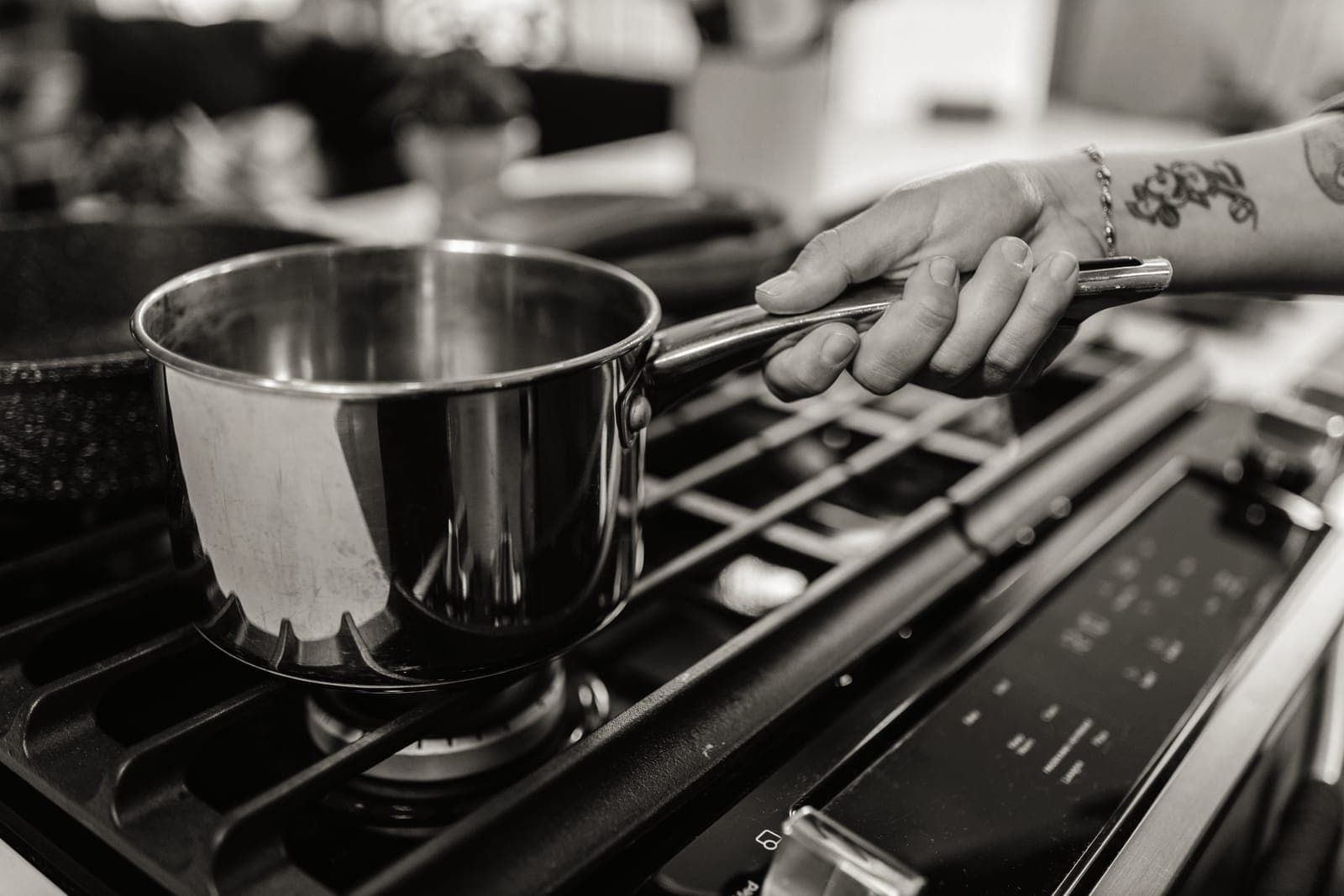
Start here
Here is the fact that explains every stainless pan ever made: type 304 stainless steel conducts heat at roughly 15 to 16 W/m-K. Aluminum conducts at 237. Stainless is about fifteen times worse at moving heat sideways, which means a pan made entirely of stainless would have a scorching hot spot exactly where the burner touches it and cold walls everywhere else.
So nobody makes one. Every stainless pan worth owning is a composite: stainless on the surfaces, where you want its non-reactivity and its indifference to scratches, and aluminum in the middle doing the actual thermal work. Understanding that one sandwich explains ply counts, price tiers, and why food sticks to stainless in a way it does not stick to a seasoned pan.
In this section
Every page below carries its own reasoning and its own sources. Roundup tiles show the current top pick and a live price where one exists.
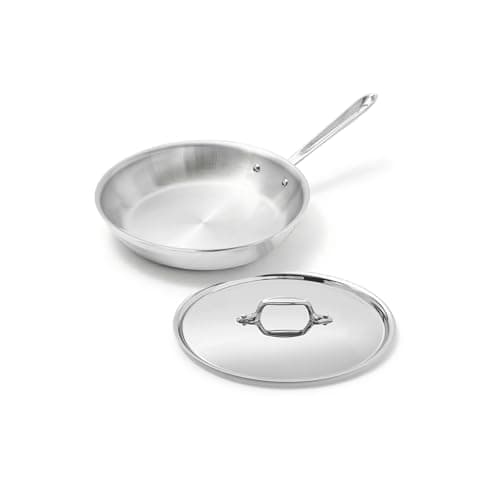
Top pick: All-Clad D3 Stainless 10 in Fry Pan
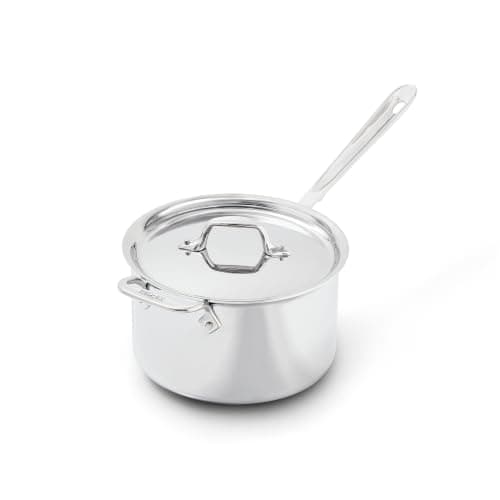
Top pick: All-Clad D3 Stainless Saucepan, 3 qt
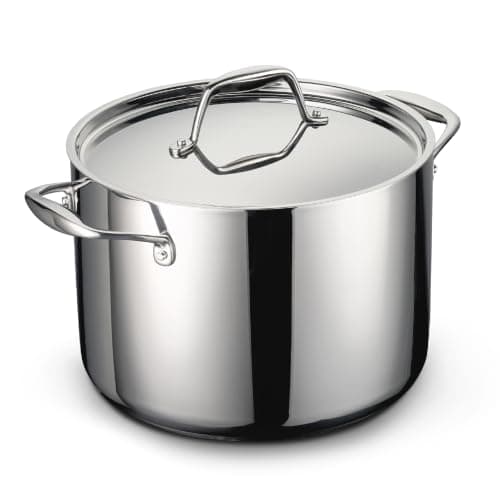
Top pick: Tramontina Tri-Ply Clad Covered Stock Pot, 8 qt
Top pick: All-Clad D3 Stainless 10 in Fry Pan
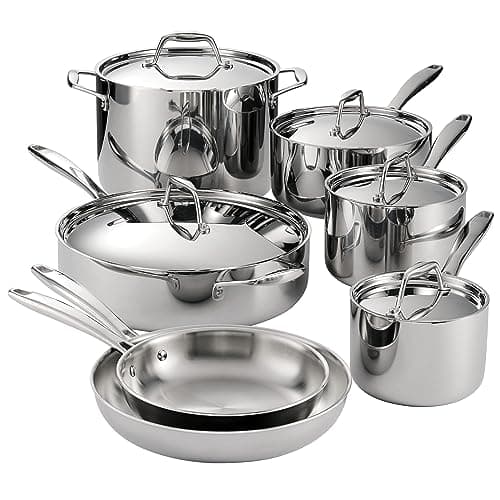
Top pick: Tramontina Signature Tri-Ply Clad 12-Piece Set
Top pick: All-Clad D3 Stainless Saucepan, 3 qt
Top pick: Tramontina Tri-Ply Clad Covered Stock Pot, 8 qt

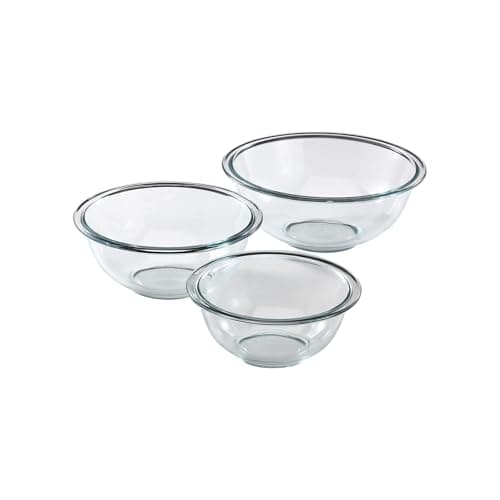
Top pick: Pyrex 3-Piece Glass Mixing Bowl Set
What ply counts actually mean
Tri-ply is stainless, aluminum, stainless. Five-ply usually adds a second aluminum layer and another steel layer, sometimes with a copper layer in place of one aluminum. Seven-ply exists and is mostly a marketing escalation.
More layers means more total thickness, and thickness is what actually changes how a pan behaves: it evens out heat and it slows the pan down. A thicker pan is better for a sauce and worse for anything you want to control quickly. That trade-off is real and it is the only reason to care about ply count. A five-ply pan is not "better" than tri-ply; it is heavier and slower, which is sometimes what you want.
The layer that matters most is the outside one. On an induction hob, the exterior layer has to be magnetic stainless — usually a 400-series grade — or the pan does not work at all. That is why induction-compatible clad pans specify a "magnetic stainless exterior" while the interior is 18/10.
| Material | Thermal conductivity (W/m-K) | What that means in a pan |
|---|---|---|
| Copper | 401 | Fastest response of any cookware metal; reactive, so it needs a lining |
| Aluminum | 237 | The core in every clad pan; too soft and reactive to use bare |
| Cast iron | ~50 | Slow to heat, slow to change, holds a lot of energy |
| Carbon steel | ~45 | Similar conduction to cast iron at roughly half the mass |
| Stainless 304 | 15-16 | Poor conductor; needs an aluminum core to be usable |
Non-reactive, and why that is the real selling point
Cast iron and carbon steel are reactive: cook a long tomato sauce in either and you will taste it, and you will strip the seasoning while you are at it. Bare aluminum is worse. Stainless does not care. You can simmer wine, tomato, vinegar and lemon in a stainless pan for hours and the food tastes like the food.
That, plus the fact that it survives dishwashers, metal utensils and being scrubbed with steel wool, is why stainless is the material a kitchen is built around and the other materials are specialists you add. Start with the best stainless steel cookware.
Why food sticks, and why that is not a defect
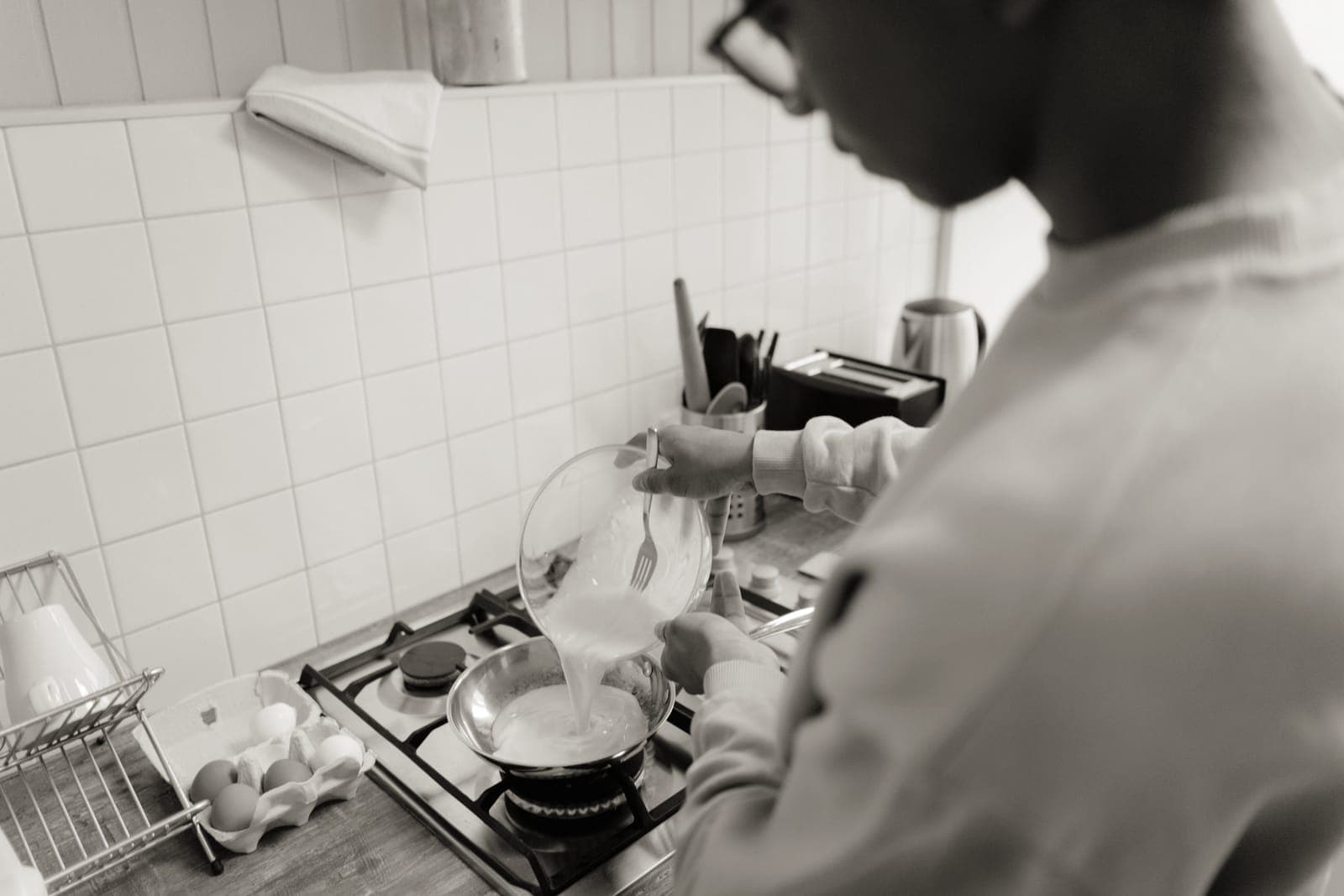
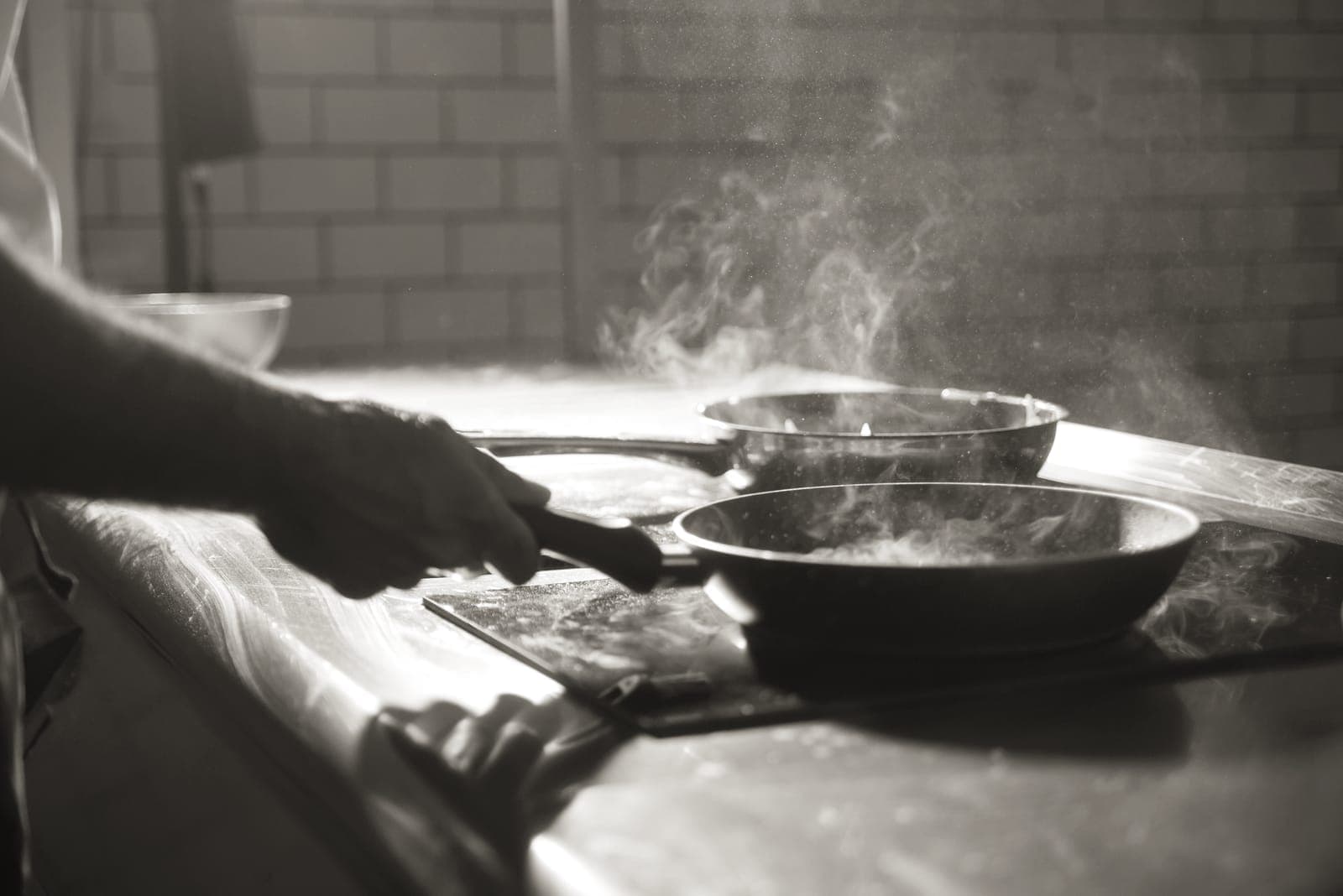
Every stainless pan sticks if you put food into it before it is hot. The mechanism is not mysterious: cold protein bonds chemically to the metal surface, and hot protein does not, because the water at the interface flashes to steam and holds it off. Get the pan hot, add fat, then add food, and stainless releases far better than its reputation. Get impatient and it welds.
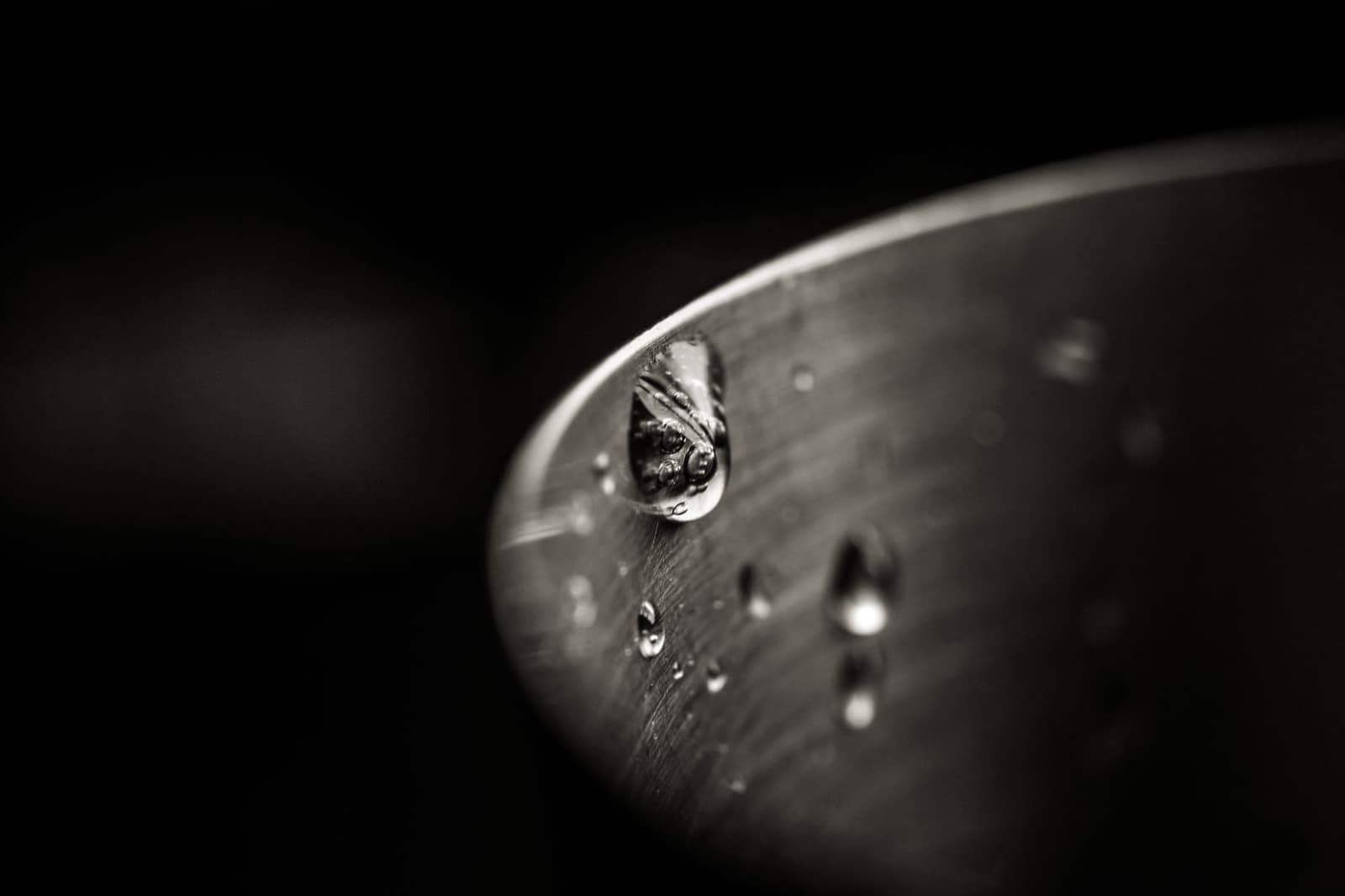
There is a physical test for this that costs nothing and is the single most useful thing on this hub: the water-droplet test. It is why "stainless is hard to cook on" is really "stainless requires you to preheat and most people do not".
Cleaning, which is where stainless is genuinely fine
Burnt-on food is the standard complaint and it is a solved problem. Stainless tolerates treatment that would destroy any coated pan, so the aggressive options are all on the table. Deglazing while the pan is still warm handles most of it in under a minute; a barkeeper-style oxalic acid cleaner handles the rest. The step by step is in how to clean a burnt stainless pan.
Rainbow discoloration is not damage. It is a thin oxide layer that forms with heat, it is cosmetic, and it comes off with acid if it bothers you. White chalky spots are mineral deposits from hard water, and those also come off with acid. Neither means anything is wrong with the pan.
How to choose, in order
- Confirm it is fully clad, not disc-bottom. This matters more than brand.
- Confirm the oven ceiling in the manual, not the listing. They disagree more often than you would expect.
- Check induction compatibility with a magnet if you have an induction hob.
- Decide whether dishwasher safe matters. All-Clad's D3 is hand wash only; Cuisinart's MultiClad Pro is not.
- Only then compare prices. Read stainless versus cast iron and stainless versus nonstick to see what else you might need alongside it.
- If the shape rather than the material is the open question, saute pan versus braiser settles the pair people most often buy both of when they needed one.
Common questions
›Why is stainless steel cookware made in layers?
Because stainless steel is a poor thermal conductor at around 15 to 16 W/m-K, roughly fifteen times worse than aluminum at 237. A solid stainless pan would have a hot spot over the burner and cold walls. The aluminum core does the heat spreading; the stainless does the non-reactive food contact.
›Is five-ply better than tri-ply?
It is thicker, not better. More layers means more mass, which evens heat out and makes the pan slower to respond. That is an advantage for sauces and a disadvantage for anything you want to control quickly.
›Does stainless steel leach into food?
Stainless is used precisely because it is non-reactive, and it is the standard material for commercial food equipment for that reason. Trace nickel and chromium migration has been measured with long acidic cooking in new or damaged pans, at levels far below dietary intake from food itself.
›Why does my stainless pan have rainbow marks?
That is a thin oxide layer formed by heat. It is cosmetic, it is not damage, and it comes off with a mild acid such as vinegar or a dedicated stainless cleaner if you want it gone.
Sources
Every figure on this page came from one of these. Follow them and check our arithmetic — that is the point.