A durable good and a consumable, sold on the same shelf as though they were alternatives.
Where we stand
We do not make or sell stainless cookware or nonstick cookware. Both link to the same retailer, both pay us the same commission rate, and we earn exactly the same whichever one you buy — or nothing at all if you buy neither, which is sometimes the right answer. Most of the comparison pages that rank for this question are published by companies that sell one of the two. How we are funded.
They are not alternatives, and the shelf lies about it
These two pans sit side by side at similar prices, which invites you to pick one. That framing is wrong, and it is the reason so many kitchens end up badly equipped.
Clad stainless is a durable good. It has no coating, nothing to fail, and a well-made one outlives its owner. Nonstick is a consumable: an aluminum pan with a film sprayed on it, and when the film stops working the pan is done. No manufacturer of either PTFE or ceramic publishes how long that takes.
So the real question is not which to buy. It is what each one is for, and the answer is that a kitchen wants one of each — a clad set that lasts, plus one cheap coated pan for eggs.
What nonstick is genuinely for
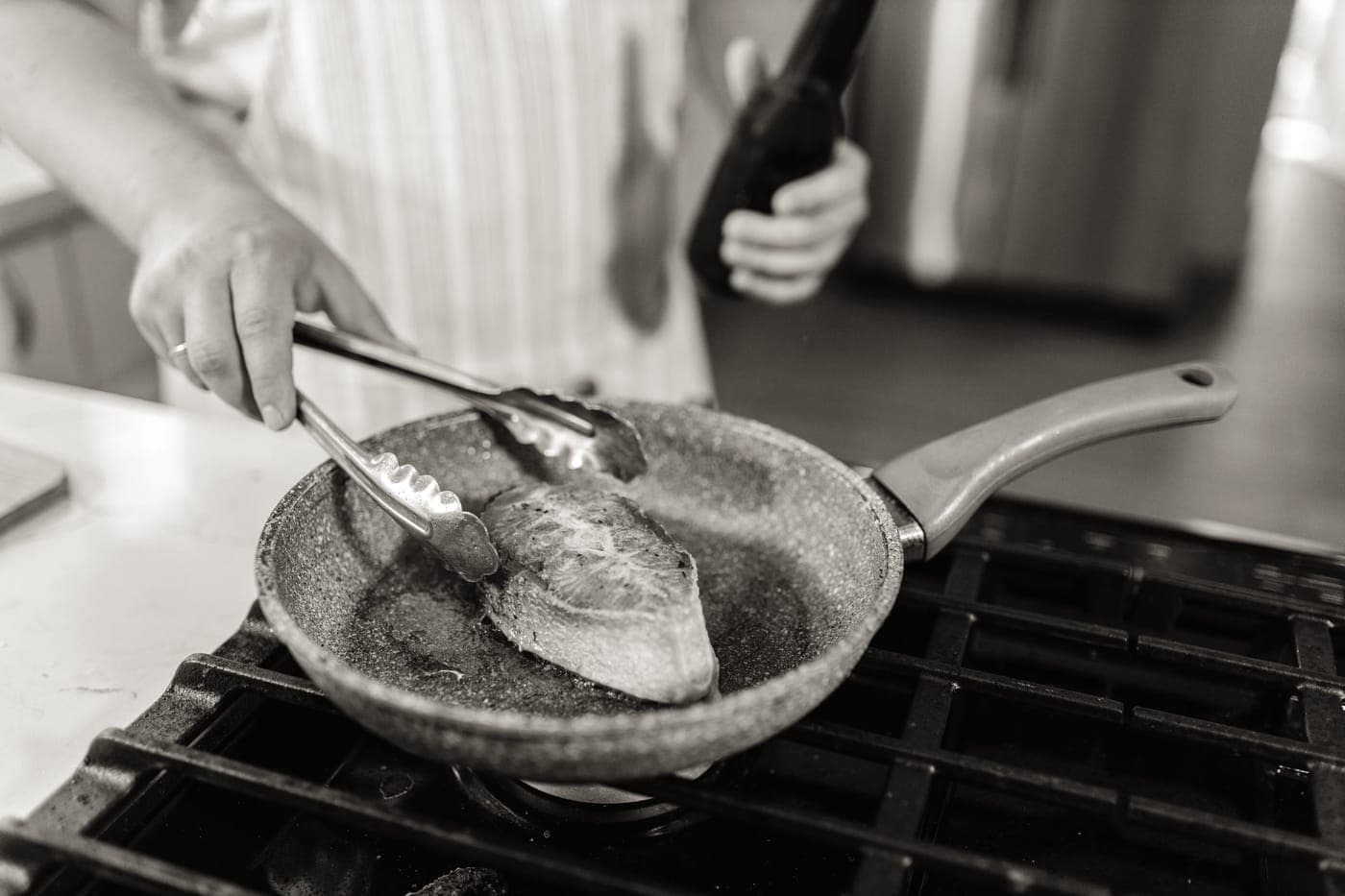
Eggs, pancakes, delicate fish, crepes. Anything where the food is fragile, low in fat, and would tear rather than release. There is no technique that makes bare steel as good at an omelette as a coated pan is, and pretending otherwise is how people end up frustrated with stainless.
It also removes a genuine daily irritation. Cooking eggs in stainless every morning is possible and it is a small tax on the day, and small daily taxes are exactly what a cheap pan should eliminate.
What stainless does that nonstick cannot
- Brown properly. A coated surface is designed to prevent the protein-to-metal bonding that browning depends on. You cannot get a real sear in a nonstick pan.
- Make fond. The browned residue stuck to a stainless pan is where pan sauces come from. In a nonstick pan there is nothing to deglaze.
- Take high heat. Clad stainless is rated to 500 or 600F depending on the maker. Coated pans should stay at medium and must never be preheated empty.
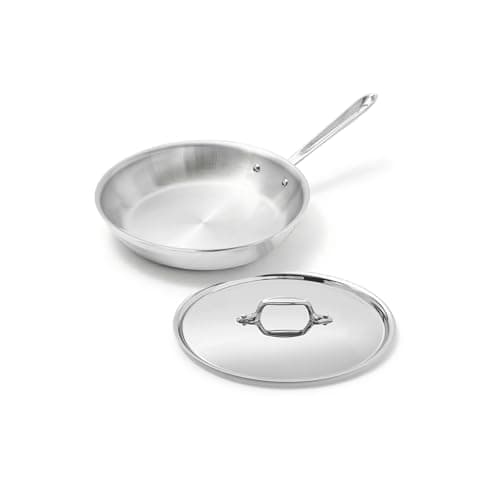
- Go under a broiler. All-Clad publishes oven and broiler safe to 600F on the D3. No coated pan can make that claim.
- Survive anything. Metal utensils, steel wool, dishwashers, decades.
The lifespan question, which nobody will answer
Search any nonstick manufacturer's site for how long the coating lasts. You will not find it. GreenPan publishes what Thermolon is made from, that it is PFAS-free, and that the coating withstands 850F. It does not publish a lifespan, and neither does any PTFE maker.
That silence is deliberate and it is understandable — coating life depends on heat, utensils and washing, and no company wants a number on the record a customer can hold them to. But it has a direct consequence for how you should buy.
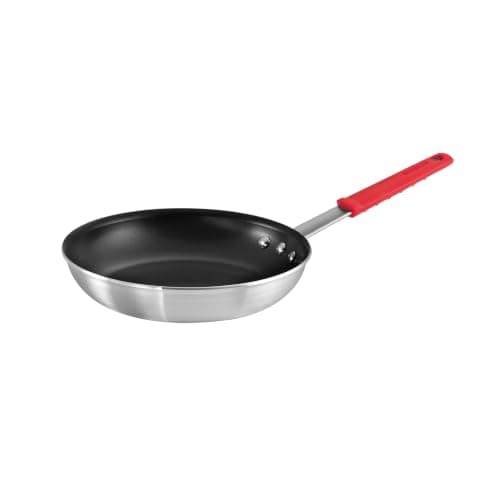
Spend as little as you reasonably can on a coated pan. An expensive coated pan is a wear item at a keepsake price. Buy a well-made cheap one, treat it properly, and replace it without regret. See the best nonstick pans.
The safety question, briefly
It comes up in every version of this comparison so it is worth stating what the regulators actually say. The FDA authorizes PTFE for food contact under 21 CFR 177.1550 and states that "studies show negligible amounts of PFAS in this coating can migrate to food."
The genuine caution is temperature, not chemistry: an empty coated pan on high heat degrades the coating and can produce fumes. Do not preheat coated pans empty, keep them at medium, and keep pet birds out of the kitchen while cooking, since birds are genuinely far more sensitive to those fumes than people. Fuller treatment in is nonstick cookware safe.
If stainless sticks for you, it is the preheat
Almost every "I switched back to nonstick" story is a preheat story. Cold protein bonds chemically to steel; hot protein does not, because water at the interface flashes to steam and holds it off the surface.
- Heat the dry pan over medium for two to three minutes.
- Flick in a few drops of water. Sizzling means not yet. Beading and skating across the surface like mercury means ready.
- Add fat, let it shimmer, then add food.
That is the Leidenfrost effect used as a free thermometer, and it works on any pan. Full explanation in why food sticks to stainless.
The verdict
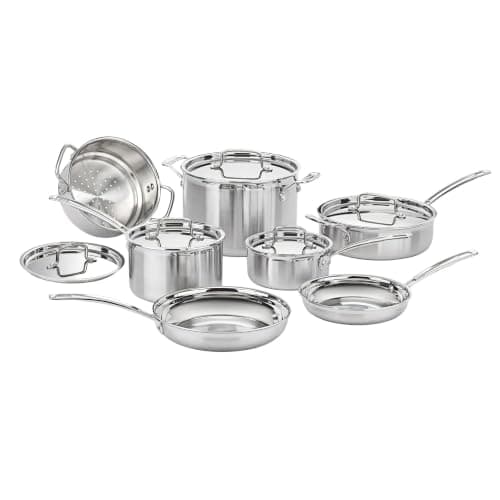
Buy both, and buy them differently. A clad stainless set as the spine of the kitchen, chosen to last decades — see the best stainless steel cookware. One cheap, well-made coated pan for eggs, chosen to be replaced.
If you genuinely can only buy one: stainless. It does more jobs and it does not expire. You will cook eggs slightly worse for a while, and you will still own the pan in twenty years.