Cookware sets, judged on what is actually in the box
The fastest way to fill an empty kitchen, and the easiest place to overpay for lids.
Start here
A cookware set is the single largest kitchen purchase most people make, and it is sold using a number that means almost nothing. "12-piece" counts lids. It counts a steamer insert. On some sets it counts utensils. Two sets with the same number on the box can differ by three actual pans.
So this section starts by taking the box apart. Then it looks at construction, because that is what separates a set you keep for twenty years from one you replace in three. Start with the best cookware sets, or with what a piece count actually means if you are still deciding what to look at.
In this section
Every page below carries its own reasoning and its own sources. Roundup tiles show the current top pick and a live price where one exists.
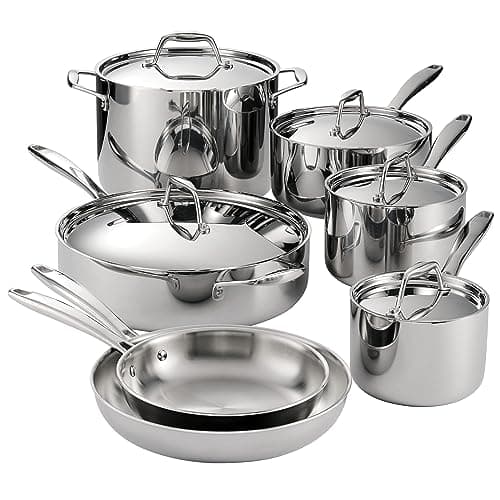
Top pick: Tramontina Signature Tri-Ply Clad 12-Piece Set
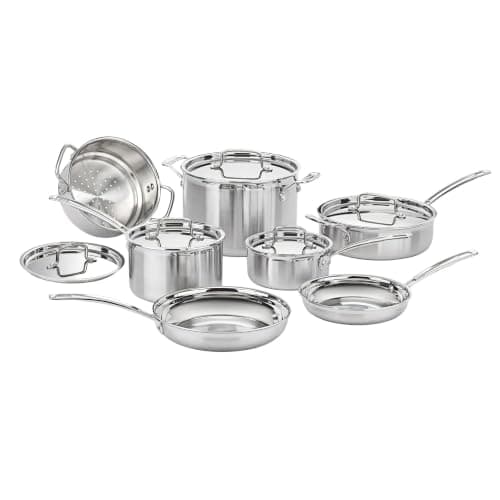
Top pick: Cuisinart MultiClad Pro MCP-12N 12-Piece Set
Top pick: Tramontina Signature Tri-Ply Clad 12-Piece Set
Top pick: Tramontina Signature Tri-Ply Clad 12-Piece Set
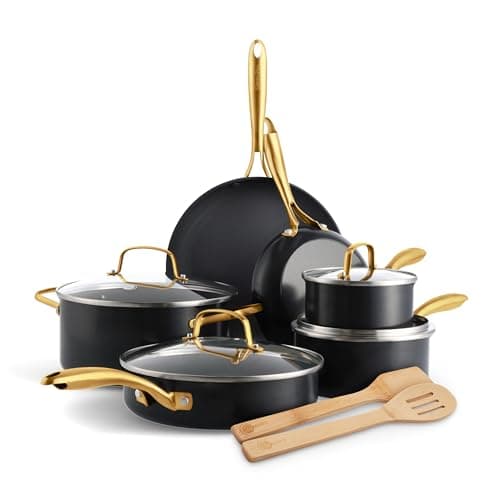
Top pick: GreenPan Ceramic Nonstick Cookware Set
Top pick: Tramontina Signature Tri-Ply Clad 12-Piece Set
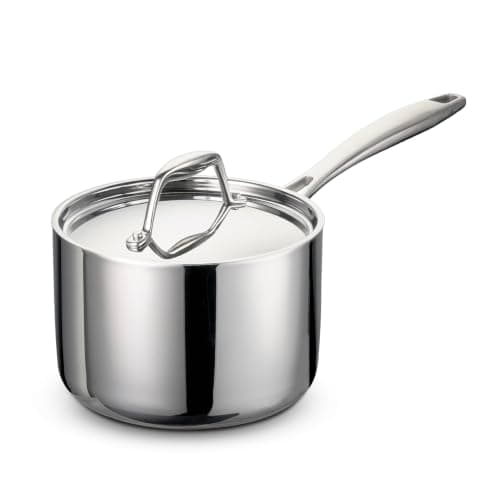
Top pick: Tramontina Tri-Ply Clad Covered Saucepan, 2 qt
Top pick: Tramontina Signature Tri-Ply Clad 12-Piece Set
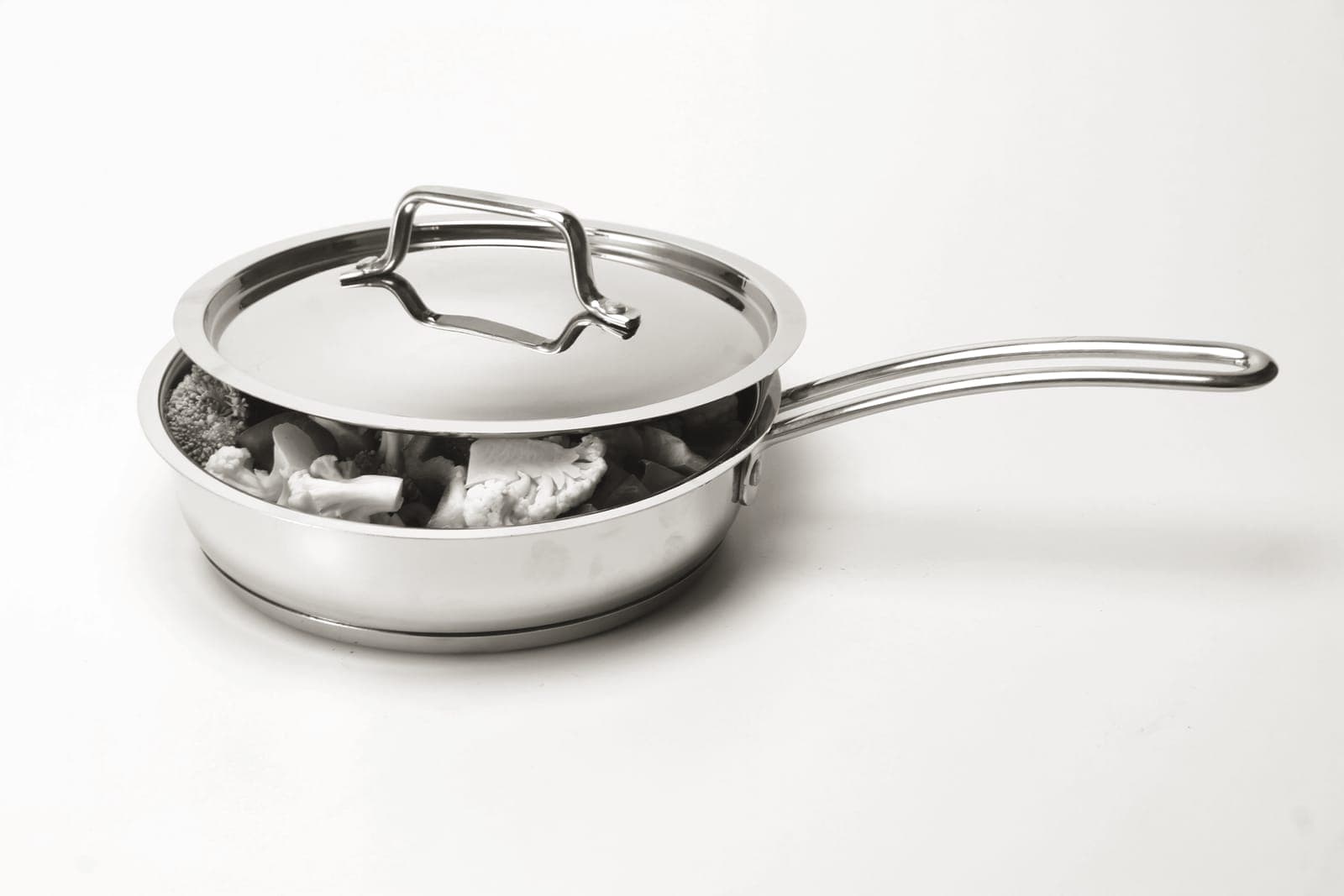
Top pick: Cuisinart MultiClad Pro MCP-12N 12-Piece Set
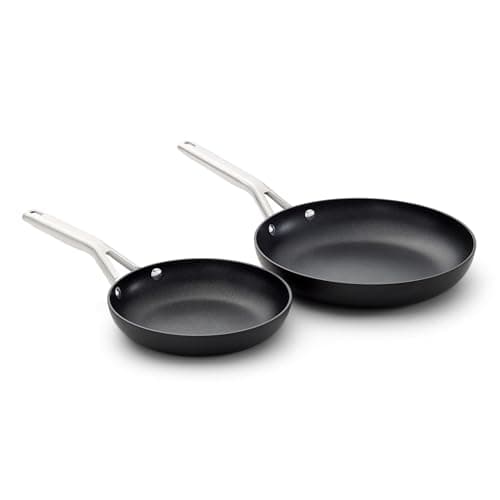
Top pick: Calphalon Premier Hard-Anodized Nonstick Fry Pan, 10 in
Top pick: Tramontina Signature Tri-Ply Clad 12-Piece Set
Top pick: Tramontina Signature Tri-Ply Clad 12-Piece Set
Fully clad versus disc-bottom: the one spec that matters
There are two ways to build a stainless pan, and the price difference between them is smaller than the performance difference. A disc-bottom pan is a sheet of stainless with a slug of aluminum welded to the base. A fully clad pan is a sandwich — stainless, aluminum, stainless — rolled and formed as one piece, so the aluminum runs all the way up the sidewalls.
You notice the difference the first time you reduce a sauce. In a disc-bottom pan the base is hot and the walls are not, so the liquid at the edges sits there while the middle catches. In a clad pan the whole vessel is roughly the same temperature and the sauce reduces evenly. Every set we recommend is fully clad, and if a listing does not say "clad" or "tri-ply" anywhere, assume it is disc-bottom.
| Disc-bottom | Fully clad (tri-ply) | |
|---|---|---|
| Aluminum runs | Base only | Base and sidewalls |
| Sauce reduction | Hot spot in the middle | Even across the pan |
| Warping risk | Higher, the disc can detach | Lower, it is one piece |
| How to spot it | A visible seam or step at the base edge | A smooth continuous wall, often a visible layer line at the rim |
| Typical wording | "Encapsulated base", "impact-bonded" | "Tri-ply", "fully clad", "5-ply" |
What is actually in a 12-piece set
Take the two most common tri-ply sets on the market. Tramontina's twelve-piece is two fry pans, three covered saucepans, a covered deep saute and a covered stockpot — seven vessels, five lids. Cuisinart's MCP-12N is two covered saucepans, two skillets, a covered saute, a covered stockpot and a steamer insert — six vessels, five lids, one insert.
Both are honest sets. Neither is twelve things you will use. And notice what is missing from both: a 12-inch skillet, which is the pan most people reach for second. That is a real gap and it is worth budgeting for separately rather than buying a bigger set to get it. Full breakdown in what "12-piece" actually means.
Lids, handles and the things nobody photographs
Glass lids look better in the listing photos and are worse in almost every other way. They cap your oven temperature at whatever the glass and its rim seal can take, they are the first thing to break, and they are frequently unavailable as spares five years later. Stainless lids have none of those problems and are harder to sell, which is why fewer sets ship with them.
Handles are the other quiet failure point. On a clad set the pan body will outlive you; the rivets and the handle geometry are what actually determine whether you still like the set in year ten. Riveted is better than welded for repairability, worse for cleaning — food gets behind rivets and stays there. Nobody has solved this and anyone claiming to has just moved the problem.
Oven ceilings, and why listings disagree with manuals
This is the sort of thing you only find by reading the actual documentation. Cuisinart's MultiClad Pro is listed by major retailers as oven safe to 550F. The Cuisinart use-and-care manual says 500F, and Cuisinart has confirmed the manual is the correct figure. That is a fifty-degree gap between the marketing and the instructions, on the same product.
Tramontina has a similar problem in a different shape: retail listings for different SKUs within the same Tri-Ply Clad line give 350F on some and 500F on others. We do not resolve those disagreements by picking the number we like. We say the listings disagree, cite both, and let you decide whether that matters for how you cook. See the best cookware sets for the specifics per set.
The "non-toxic" shelf
"Non-toxic cookware" is a marketing category, not a regulatory one, and it mostly means "no PTFE". Bare stainless, cast iron and carbon steel have always been in that category and nobody markets them that way because there is no premium in it. Ceramic-coated sets are where the term does most of its work, and the honest version of that pitch is in the best non-toxic cookware sets and is ceramic cookware safe.
Where you buy it, and when
Two things move the price of a set more than the badge on it does: the channel you buy from and the month you buy in. Where to buy cookware compares seven channels on price, information and recourse — including the three we earn nothing from and still recommend for specific purchases. And when cookware goes on sale covers the four annual discount windows, why sets discount and open stock does not, and how to tell a real price cut from a struck-through number nobody ever charged.
Buying one for somebody else is a different question again, and the answer is usually no: whether a cookware set is a good gift sets out the four cases where it lands, and what to give at the same budget in all the others.
Common questions
›How many pieces should a cookware set have?
Count vessels, not pieces. Six or seven vessels covers a normal kitchen: two skillets, two or three saucepans, a saute pan and a stockpot. A set advertising more than that is usually counting lids and inserts.
›What is the difference between tri-ply and disc-bottom cookware?
Tri-ply bonds aluminum between two layers of stainless through the whole pan including the sidewalls. Disc-bottom welds an aluminum slug to the base only, so the walls stay cool and sauces scorch in a ring in the middle.
›Are glass lids worse than stainless lids?
For durability and oven use, yes. Glass caps the oven temperature at whatever the lid assembly tolerates, breaks more easily, and is often unavailable as a spare part years later. It looks better in listing photos, which is largely why it exists.
›Why do cookware listings and manuals give different oven temperatures?
Because listings are written by retailers and manuals are written by the manufacturer's compliance team. Cuisinart's MultiClad Pro is listed at 550F by major retailers and 500F in its own use-and-care guide, and Cuisinart has confirmed the manual is correct. Read the manual.
Sources
Every figure on this page came from one of these. Follow them and check our arithmetic — that is the point.