Short answer: yes, on the evidence available. The more interesting question is what nobody will tell you about it.
What ceramic nonstick actually is
The name is misleading. There is no fired clay involved and no glaze in the pottery sense. Ceramic nonstick is a sol-gel coating: a liquid solution based on silicon dioxide is sprayed onto an aluminum pan and cured with heat, forming a thin, hard, slippery inorganic film.
GreenPan publishes the clearest description in the category: Thermolon "is crafted from sand-derived raw materials, Silicon Dioxide (SiO2), and turned into a sprayable solution."
Silicon dioxide is sand and quartz. It is one of the most abundant compounds on earth, it is chemically inert, and it is not something that reacts with your food. That is the basis of the safety case and it is a reasonable one.
What the makers publish
GreenPan states that Thermolon is "PFAS-free", and also publishes that it is PFOA-free and free of lead and cadmium. It publishes that cookware made with Thermolon "can safely be heated to 850F or 450C".
Those are checkable claims about composition and heat tolerance, and they are more than most of the category offers. A great many ceramic pans are sold with nothing more specific than the word "ceramic" and a list of things they do not contain.
What nobody publishes
How long the coating lasts. Not GreenPan, not any competitor, not any PTFE maker either. There is no figure anywhere in the category.
This is the most useful fact on this page, because it is the one that should change your behavior. Ceramic release is excellent when new and, in general use, declines faster than PTFE does. Nobody will commit to a number because the answer depends on heat, utensils and washing — but the absence of a number is itself information.
Practical consequence: buy one ceramic pan cheaply enough to replace without resentment, and do not buy a ceramic set. See the best ceramic cookware.
The PFAS question, accurately
Ceramic sol-gel coatings are not PFAS. That is a genuine, factual difference from PTFE and it is the main reason people choose ceramic.
It is worth being precise about what the concern is, though. The EPA describes PFAS as "widely used, long lasting chemicals, components of which break down very slowly over time", notes there are thousands of them, and that many "are found in the blood of people and animals all over the world".
That is a serious environmental concern about a chemical class. It is a strong argument for not manufacturing more fluoropolymer. It is a weaker argument about your personal exposure from an intact pan, because the FDA states of nonstick cookware coatings that "studies show negligible amounts of PFAS in this coating can migrate to food."
Both things can be true. Choose ceramic on the environmental argument if that is what moves you — it is coherent — rather than on a claim about migration that the regulator does not support.
The citation that gets misused
In January 2025 the FDA announced that 35 food contact notifications for PFAS-containing substances "are no longer effective based on the abandonment of these uses", noting these presented migration concerns because "there is potential for PFAS to migrate to food at levels that may result in a potential safety concern."
Those notifications covered grease-proofing agents applied to paper and paperboard food packaging — takeout containers, wrappers, microwave popcorn bags. They did not cover cookware. PTFE remains authorized for food contact under 21 CFR 177.1550.
You will see this action cited on ceramic cookware listings and in ceramic cookware marketing as though it were a regulatory move against nonstick pans. It was not, and a product with genuine advantages does not need a misrepresented citation to sell it.
What actually matters for ceramic safety
- Overheating is the real risk with any coating, and ceramic handles it better. The 850F figure means an empty ceramic pan left on a burner will not produce the fumes an overheated PTFE pan can. That is a genuine advantage and it is the strongest honest argument for ceramic.
- Damaged coating is not a poisoning risk. A chipped or worn ceramic surface is silica and aluminum. It is a performance problem, not a health emergency. Replace the pan because it has stopped working.
- Aluminum exposure is not the issue people think. The coating is between you and the aluminum, and bare aluminum contact is a minor consideration anyway compared with dietary intake from food itself.
- Pet birds. Birds are genuinely far more sensitive to cooking fumes than people, and this is the one exposure caution that is not overstated. Ceramic is the safer choice in a house with birds, precisely because of the higher heat tolerance.
How to use it well
- Never preheat empty. This is the rule that matters most.
- Medium heat only. Ceramic dislikes high heat more than PTFE.
- Hand wash, even if the pan is rated dishwasher safe.
- Wooden or silicone utensils. Metal will score the coating.
- No cooking spray. It builds a varnish that ruins release.
- Replace it when food starts sticking, rather than turning the heat up.
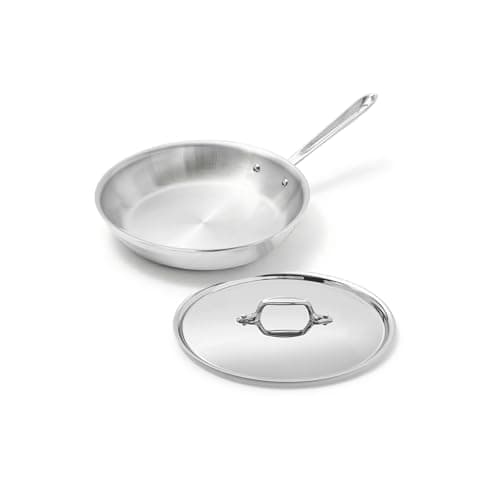
If you want to avoid the whole question, the answer is cookware with no coating at all: clad stainless, cast iron or carbon steel. They have always been in the "non-toxic" category and nobody markets them that way because there is no premium in it.