Heads up: some links on this page earn us a commission at no extra cost to you. It does not change what we recommend or the order. How we are funded.
The short answer
Ceramic cookware is worth it if your reason for buying it is avoiding fluoropolymers - that is a genuine difference and ceramic is the mainstream way to get it. It is not worth it if you want a coating that lasts longer than PTFE, because it generally does not, and it is not worth paying a premium for. Buy ceramic cheaply, treat it as a consumable with a shorter cycle than PTFE, keep the heat low, and never put it in the dishwasher.
What ceramic cookware actually is
It is not ceramic the material, and it is not a glaze. It is a silica-based sol-gel coating - liquid applied and cured onto a metal body, almost always aluminum. The name describes the chemistry of the film, which is inorganic and silicon-based rather than fluoropolymer.
That distinction is the whole product. A ceramic pan is a coated aluminum pan whose coating happens not to be PTFE - PTFE versus ceramic nonstick covers the comparison in full, and is ceramic cookware safe covers the safety position.
What it does genuinely well
Release, when new, is excellent. Often better than a new PTFE pan. This is why the reviews are enthusiastic and why the disappointment comes later.
No fluoropolymers. If that is your objection, this is the answer, and it is a real one rather than marketing.
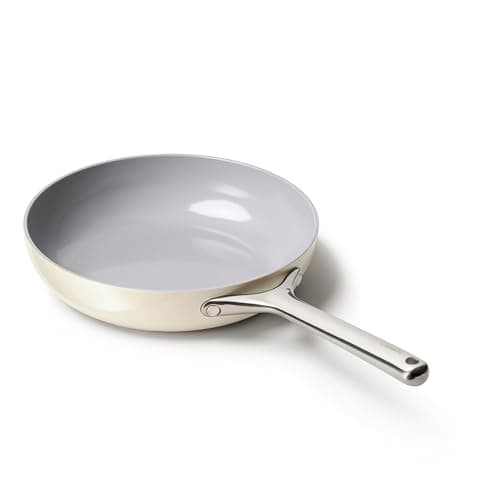
Usually a higher body rating. Caraway publishes 550F on an aluminum body, which is above where PTFE pans sit - though that is the body, and the coating is happiest much lower.
They look good, which is not nothing for a pan that lives on a hob.
Easy to clean while it works. Nothing bonds to a functioning ceramic surface.
The problem, stated plainly
Ceramic coatings lose release faster than PTFE. This is the category's defining characteristic and it is not a manufacturing defect or a brand issue - it is what the chemistry does. The sol-gel film is microscopically porous and it degrades with heat cycles, and as it does, food starts to stick.
Nobody publishes a lifespan, in ceramic or PTFE, at any price. What our audits found is that every warranty in the coated category excludes coating wear, which tells you how the manufacturers themselves regard it - how long nonstick lasts.
The single most damaging thing for a ceramic coating is high heat, and the second is aerosol cooking spray. A ceramic pan used on medium and washed by hand lasts substantially longer than one used hot and put in a dishwasher - the gap is large enough to look like two different products.
The arithmetic
Why you want ceramic
Worth it?
You want to avoid PFAS and fluoropolymers
Yes - this is the mainstream way to do it
You want a coating that lasts longer than PTFE
No - it generally lasts less
You want the best release out of the box
Yes, briefly
You want to stop buying replacement pans
No - buy bare metal instead
You want a pan that looks good on the hob
Yes, and that is a legitimate reason
You want to sear and brown well
No - no coated pan does this well
You want to spend a premium on cookware
No - spend it on clad stainless or carbon steel
The row that matters most is the last one. A premium ceramic pan and a cheap ceramic pan both have a coating with an unpublished, comparatively short life. Paying three times as much does not buy three times the life, and the money would buy a clad stainless pan that never needs replacing - are expensive pans worth it.
Making one last as long as it can
Medium heat, always. Ceramic does not need high heat to release and high heat is what kills it fastest.
Never preheat empty. The surface temperature climbs alarmingly fast with nothing in the pan.
Hand wash, even where a maker publishes dishwasher safe. Our Place publishes that for its Titanium Pro line and almost nobody else will.
No aerosol spray. The residue is the most common cause of a ceramic pan that appears to have failed early - how to clean nonstick pans.
Every coated pan ends here. The only question a ceramic pan changes is how soon, and what the coating was made of.
The verdict
Ceramic is worth buying for exactly one reason, and it is a good one: you want food release without a fluoropolymer. Buy it cheap, use it on medium, wash it by hand, and expect to replace it sooner than a PTFE pan.
If your objection is to the replacement cycle rather than the chemistry, ceramic is the wrong answer and the right ones are carbon steel, cast iron or clad stainless - what to replace nonstick pans with works through each.
Three ceramic options and the PTFE counter-argument
Ranked by how much each brand publishes about its coating, which is the only real differentiator inside the category.
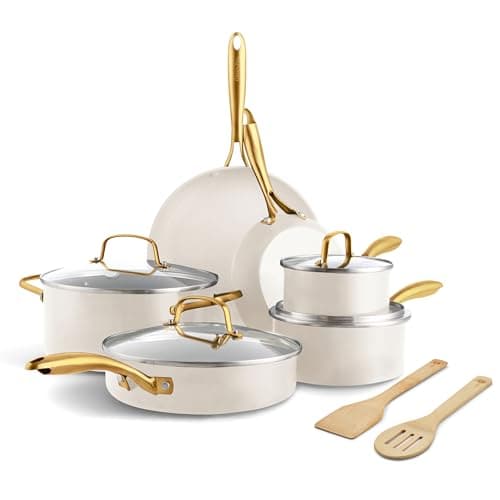
GreenPan Ceramic Nonstick Cookware Set
Someone who wants nonstick without PTFE and has read what that trades away
These are the products this page's reasoning actually points at. Same rules as everywhere else on the site: published specs, a stated trade-off, and a live price only where one exists.
Top pick · The documented ceramic optionSpecs read September 3, 2026
GreenPan Ceramic Nonstick Cookware Set
Thermolon published as PFAS-free, which is the entire reason to be on this page, from the brand that publishes most about it.
Best for: Someone who wants nonstick without PTFE and has read what that trades away
Published specifications for the GreenPan Ceramic Nonstick Cookware Set
Coating
Thermolon, from sand-derived Silicon Dioxide (SiO2), sprayed
Coating chemistry
PFAS-free, PFOA-free, free of lead and cadmium (GreenPan published)
Coating heat resistance
850F / 450C for the coating itself (GreenPan published)
Body oven maximum
Varies by line and is lower than the coating figure - check the specific line
Coating lifespan
Not published. No ceramic maker publishes one
Good
GreenPan publishes what the coating is made of in plain terms, which most ceramic brands do not
The coating will not release fumes if you overheat it the way PTFE can
Genuinely good release when new
Not good
Release degrades and nobody will tell you how fast
The 850F figure is for the coating, not the pan, and gets quoted as if it were the pan
Ceramic dislikes high heat and dishwashers, which is most of what a set gets used for
The trade-off. Ceramic nonstick loses release with use and no maker publishes a lifespan, GreenPan included. Treat it as a consumable, not a lifetime purchase.
Skip this if. You are buying a set expecting it to last as long as clad stainless. It will not, and the honest move is to buy one ceramic pan alongside a stainless set.
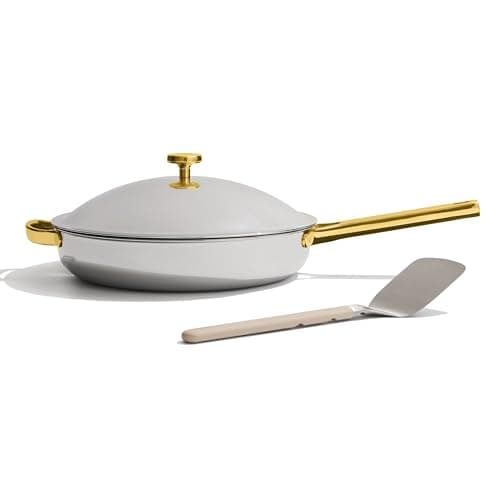
Published specifications for the Our Place Titanium Always Pan Pro
Construction
Published 3 mm fully clad - stainless exterior, aluminum core, titanium interior
Surface
NoCo coating-free nonstick, published as a micro-textured titanium surface that mimics the Lotus Effect
Coatings
Published made without PFAS including PTFE
Oven maximum
1000F published; 750F on the Gold version
Dishwasher
Published completely dishwasher safe
Metal utensils
Published safe
Induction
Published to work on all cooktops
Care
Published recommendation to rub a teaspoon of neutral oil into the interior after cleaning
Warranty
Limited lifetime, published as covering quality and craftsmanship
Made in
Not published
Dimensions and weight
Not published on the product page
Good
No coating at all, so there is no wear surface to fail
Published dishwasher safe and metal-utensil safe, which the ceramic line is not
A 1000F ceiling removes every oven and broiler question
Not good
The coating-free release claim has no published test method
Still recommends oiling the interior after cleaning, which a truly nonstick surface would not need
No published country of manufacture, dimensions or weight
The trade-off. “Coating-free nonstick” is an engineering claim with no published test behind it, and a textured metal surface is not a coating-grade release.
Skip this if. You want the cheap, easy egg pan. This is priced as premium clad cookware, because that is what it is.
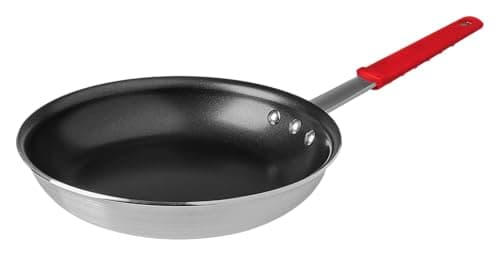
Published specifications for the Tramontina Professional Restaurant Fry Pan, 10 in
Body
Heavy-gauge aluminum
Coating
PTFE nonstick
Induction
No - aluminum body is not ferrous
Coating lifespan
Not published, by this or any nonstick maker
Good
Cheap enough that replacing it every couple of years is a real plan rather than a failure
Heavy gauge for a nonstick pan, so it does not warp on the first hot burner
Silicone handle sleeve that actually stays cool
Not good
Not induction compatible
PTFE, which some buyers will rule out on principle
No published coating lifespan, so the value case is unverifiable by design
The trade-off. It is PTFE. That is fine at normal cooking temperatures, and it is not a pan to preheat empty on high.
Skip this if. You want to avoid PTFE entirely. Buy ceramic instead and accept the shorter release life rather than pretending either one lasts forever.
Yes if your reason is avoiding fluoropolymers, because ceramic is the mainstream way to get food release without them. No if you want a coating that outlasts PTFE - it generally does not - and no if you were planning to pay a premium, because the coating life is unpublished and short either way.
›How long does ceramic cookware last?
No manufacturer publishes a figure, and every warranty in the coated category excludes coating wear. In practice ceramic loses release faster than PTFE. Heat is the biggest variable - a pan used on medium and hand washed lasts substantially longer than one used hot and machine washed.
›Is ceramic cookware better than Teflon?
Better at one specific thing: it contains no fluoropolymers, so it answers a PFAS objection that PTFE cannot. Worse at longevity, since ceramic coatings generally fade sooner. Neither is better at browning, because no coated pan sears well.
›Why did my ceramic pan stop being nonstick so quickly?
Usually heat, aerosol cooking spray residue, or the dishwasher - often all three. Before concluding the coating is finished, strip any built-up residue with a baking soda paste, because food frequently sticks to that film rather than to the pan itself.
›Should you buy expensive ceramic cookware?
There is little case for it. A premium ceramic pan and a cheap one both carry a coating with an unpublished and comparatively short life, so paying more does not buy proportionally more life. That money buys a clad stainless or carbon steel pan that never needs replacing.
Sources
Every figure on this page came from one of these. Follow them and check our arithmetic — that is the point.