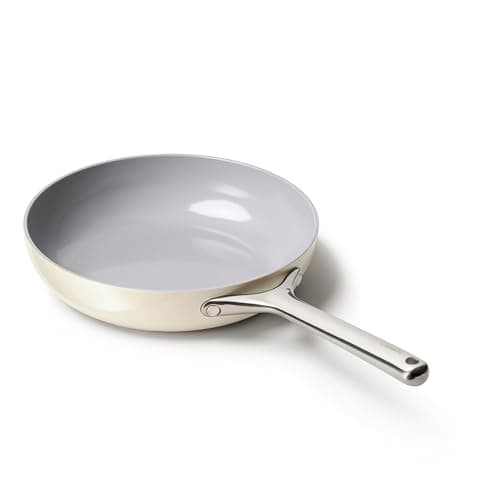
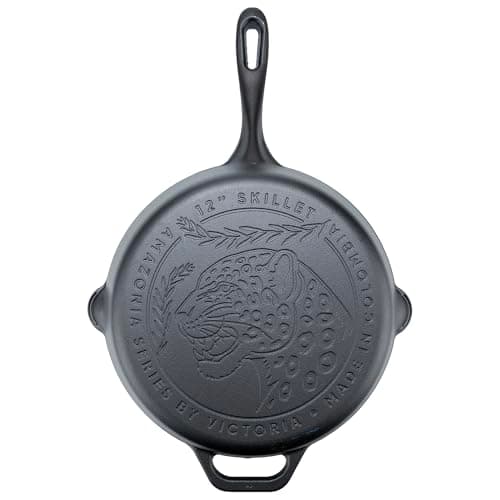
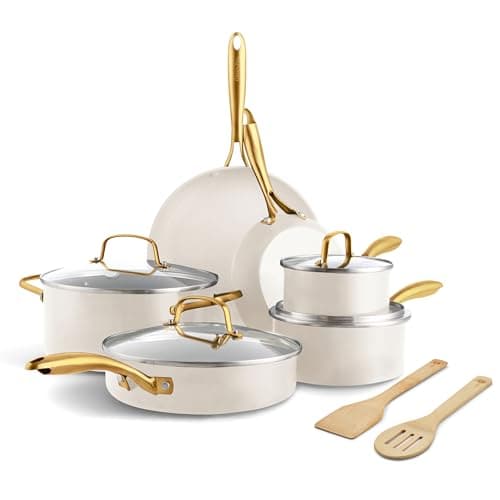
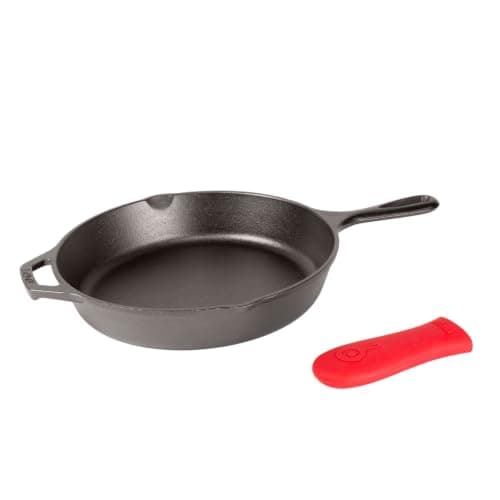
This is the one comparison where both sides pass the non-toxic test. That removes the usual argument and leaves the harder question: which surface do you want to be responsible for?
Heads up: some links on this page earn us a commission at no extra cost to you. It does not change what we recommend or the order. How we are funded.
The short answer
Buy cast iron if you want a pan that lasts indefinitely and you will spend thirty seconds drying and oiling it after washing. Buy ceramic if you want effortless release now, the lightest pan, zero maintenance and the ability to cook acidic food freely - and you accept replacing it every few years, because ceramic has the shortest life of any coating sold. Both avoid fluoropolymers, so the non-toxic question does not separate them. Heat, acid, weight and lifespan do.
Why this is the comparison people actually land on
Almost nobody arrives at this question from a standing start. They arrive after deciding to stop buying PTFE pans, and then discover there are only two mainstream answers: a bare iron surface you season yourself, or a silica-based ceramic coating. Everything else is either another fluoropolymer or clad stainless, which does not release food the same way.
That origin matters, because it means the usual argument is already settled before the comparison starts. What to replace nonstick pans with covers the wider field; this page is the final two.
Both are non-toxic, which settles less than you would hope
Cast iron is iron. The cooking surface is polymerized oil you applied yourself, and there is no coating chemistry to ask about at all - is cast iron safe.
Ceramic nonstick is a silica-based sol-gel coating rather than a fluoropolymer. GreenPan publishes Thermolon as PFAS-free with the clearest composition disclosure in the category, and Zwilling publishes its Clad CFX surface as PTFE-free. Those are real, verifiable claims - is ceramic cookware safe goes through them, and PTFE versus ceramic nonstick explains why the two coatings get confused under one word.
One figure to be careful with: GreenPan's published 850F number applies to the Thermolon coating in isolation, not to the finished pan. The pan is limited by its aluminum body and its handle, both far lower. It is widely requoted as a pan rating and it is not one.
So if your filter is "no fluoropolymers," both sides pass and you need a different tiebreaker. The rest of this page is that tiebreaker.
One surface you rebuild, one you replace
This is the decisive asymmetry, and it is not close.
Cast iron seasoning is oil polymerized onto iron. It builds with use, it survives soap, and when it fails you scrub back to bare metal and start again. A pan from a century ago is still usable because the surface is renewable by definition - cast iron seasoning and care, and cast iron problems and fixes covers every way it goes wrong and how each is reversible.
A ceramic coating is applied at the factory and cannot be reapplied. It is microscopically porous, it degrades with heat cycles, and when release goes the pan is finished. No manufacturer publishes a lifespan for it, and every warranty in the coated category excludes coating wear - how long nonstick lasts.
Ceramic is also the shortest-lived coating on the market - shorter than PTFE, which is the thing people switching away from PTFE least expect - is ceramic cookware worth it.
Head to head on the things that decide it
Cast iron
Ceramic
Fluoropolymers
None - no coating at all
None - silica-based coating
Surface renewable
Yes, indefinitely
No - factory applied only
Published lifespan
Not needed; it is rebuildable
None published, and shortest in the category
Heat tolerance
550F published, nothing to degrade
Lowest ceiling of any coating
Release when new
Fair; improves with months of use
Excellent, immediately
Release at year five
Better than when new
Usually gone
Acidic food
Short contact only
Unlimited - genuinely non-reactive
Weight, 10 inch
Around 5.5 lb
Around 2 to 3 lb
Maintenance
Dry on heat, wipe with oil
None
Dishwasher
Never
Makers generally say no as well
Metal utensils
Fine
No
Searing and browning
Excellent
Poor
Cost over a decade
One pan
Several pans
Ceramic wins the first two years on convenience. Cast iron wins everything measured in decades.
Ceramic has the lowest heat ceiling in the category
This gap is wider than it is against PTFE, and it is the specification most likely to disappoint someone arriving from a coated pan.
Zwilling publishes a 400F oven ceiling on Clad CFX, which is the lowest figure in our entire audited ledger. Caraway publishes low-to-medium heat guidance explicitly to preserve the coating. Both are honest disclosures and both describe the same constraint: ceramic does not want to be hot.
Practical consequence: if you want to sear a steak, finish a chop under the broiler, or bake cornbread at 450F, ceramic is the wrong pan and no brand within the category fixes it - best pans for searing steak.
Release: ceramic wins the first year, cast iron wins the fifth
A new ceramic pan releases food better than a new cast iron pan, and better than a new PTFE pan. That is genuinely true and it is why the reviews are enthusiastic.
A cast iron pan starts fair and improves. Pre-seasoned from the factory means usable rather than finished; the surface gets genuinely good after a few months of cooking fatty things in it. Eggs remain the hard case and the honest answer is that a coating does them better until the seasoning is mature - best nonstick pans for eggs.
So the curves cross. Which side of the crossing you live on depends on how long you keep pans, and that is really the whole decision.
The surface on the left of this comparison gets better every year. That is not a thing any coating does.
Acid, where cast iron genuinely loses
Seasoning is a thin organic barrier and acid degrades it. A quick deglaze with wine is fine; a two-hour tomato simmer strips the seasoning, exposes bare iron and puts a metallic note into the sauce. About thirty minutes is the practical limit on a mature pan - cooking acidic foods and reactive cookware.
Ceramic has no such limit. The coating is inert, so tomato sauce, lemon, vinegar and wine are all unrestricted. For someone who cooks a lot of acidic food in one pan, this is a real argument for ceramic and the clearest thing it wins outright besides weight.
The usual resolution is enameled cast iron, which is glass over iron and therefore non-reactive with no coating to wear out - cast iron versus enameled cast iron.
Weight, and who each rules out
A 10-inch cast iron skillet runs around five and a half pounds empty and closer to eight loaded. A ceramic-coated aluminum pan of the same size is roughly two to three pounds. That is not a small difference and it decides the question for some people entirely.
A pan that is unpleasant to lift, wash and store gets used once a month. If that is you, ceramic is a better outcome than an unused cast iron skillet, and a lighter cast iron casting or an eight-inch pan is the middle path - cookware for arthritis and limited grip takes this seriously, and what size skillet has the weights.
How each one ends
Failure modes are worth knowing before you buy, because they are completely different experiences.
Cast iron
Rust, from being stored damp. Scrub and re-season; twenty minutes.
Flaking seasoning, from layers built too thick. Scrub off what is loose and rebuild.
Sticky surface, from too much oil when seasoning. Re-bake it thin.
A crack, which is genuinely terminal and genuinely rare. Lodge publishes a lifetime warranty.
Three of those four are reversible in an afternoon, which is why cast iron has no meaningful replacement cycle.
Ceramic
Release fades, gradually, over months to a couple of years. Not repairable.
Residue film, from cooking spray or overheated oil, which looks like failure and is not - strip it before concluding the pan is done - how to clean nonstick pans.
Crazing or chipping, from thermal shock or impact. Terminal.
Dishwasher damage, which Caraway publishes a direct warning about.
Be honest with yourself here, because it is the question that most reliably predicts regret.
Cast iron asks for a routine after every wash: dry it on the burner rather than a towel, and wipe a little oil on while it is warm. That is the entire maintenance burden and it takes about thirty seconds. The folklore makes it sound far worse than it is - modern dish soap is a detergent and does not dissolve polymerized seasoning, and Lodge's own published guidance permits it.
Ceramic asks for nothing beyond gentle treatment: medium heat, soft sponge, no metal, no dishwasher, no aerosol spray. There is no routine, but there is no recovery either.
Which to buy
You keep pans for years and will do the thirty seconds:a 10 inch cast iron skillet. It costs little, it outlives you, and it sears properly.
You want release now, with no maintenance:a ceramic fry pan, used on medium and washed by hand, treated as a consumable.
You cook acidic food in one pan constantly: ceramic, or enameled cast iron if you would rather not replace pans.
Owning both, which is what most kitchens do
They divide cleanly, and neither is trying to do the other's job.
Cast iron takes searing, cornbread, roasting, anything going under a broiler, and anything where you want a crust. The ceramic pan takes eggs, delicate fish, pancakes and any acidic thing you want to cook in a hurry. Buy the cast iron first because it is cheaper and does more; add the coated pan for the three jobs it genuinely wins.
Every figure quoted on this page is read from the maker's own published material. Neither category publishes a coating or seasoning lifespan, and we have not invented one.
Lodge Seasoned Cast Iron Skillet, 10.25 in (L8SK3)
Searing, cornbread, and anyone who wants one pan that cannot be worn out
Ceramic pans on Amazon — buy at the cheaper end and expect to replace it; paying a premium does not buy coating life.
What to buy, if you are buying
These are the products this page's reasoning actually points at. Same rules as everywhere else on the site: published specs, a stated trade-off, and a live price only where one exists.
Top pick · Best rebuildable surfaceSpecs read September 3, 2026
Lodge Seasoned Cast Iron Skillet, 10.25 in (L8SK3)
A named Tennessee foundry, 550F published and a lifetime warranty, on a surface you can strip to bare metal and rebuild as many times as you like.
Best for: Searing, cornbread, and anyone who wants one pan that cannot be worn out
Published specifications for the Lodge Seasoned Cast Iron Skillet, 10.25 in (L8SK3)
Diameter
10.25 in
Weight
5.66 lb
Oven maximum
550F
Induction
Yes - bare iron is ferrous
Seasoning
Pre-seasoned with soy-based vegetable oil, no synthetic chemicals
Warranty
Lifetime
Made in
USA
Care
Hand wash. Lodge's own instructions permit warm soapy water
Good
Effectively unbreakable and fully restorable - a rusted one can be stripped and re-seasoned
Holds heat better than anything else at the price, which is what a sear needs
Lodge publishes its seasoning method openly, so the maintenance is not a mystery
Not good
Heavy
Heats unevenly on a small burner: cast iron conducts at roughly 50 W/m-K, so it is slow to spread and slow to react
Bare iron is reactive; long tomato braises will taste of it
The trade-off. It weighs 5.66 lb empty. You will feel that every time you move it full, and it is the single most common reason a cast iron skillet ends up in a cupboard.
Skip this if. You have wrist or shoulder trouble, or you cook mostly acidic braises. Carbon steel does most of the same jobs at roughly half the weight.
Publishes more chemistry evidence than anyone else in the category - and publishes low-to-medium heat guidance and a no-dishwasher instruction, which is the honest version of owning one.
Best for: Buyers who want documented PFAS testing and will hand wash
Published specifications for the GreenPan Ceramic Nonstick Cookware Set
Coating
Thermolon, from sand-derived Silicon Dioxide (SiO2), sprayed
Coating chemistry
PFAS-free, PFOA-free, free of lead and cadmium (GreenPan published)
Coating heat resistance
850F / 450C for the coating itself (GreenPan published)
Body oven maximum
Varies by line and is lower than the coating figure - check the specific line
Coating lifespan
Not published. No ceramic maker publishes one
Good
GreenPan publishes what the coating is made of in plain terms, which most ceramic brands do not
The coating will not release fumes if you overheat it the way PTFE can
Genuinely good release when new
Not good
Release degrades and nobody will tell you how fast
The 850F figure is for the coating, not the pan, and gets quoted as if it were the pan
Ceramic dislikes high heat and dishwashers, which is most of what a set gets used for
The trade-off. Ceramic nonstick loses release with use and no maker publishes a lifespan, GreenPan included. Treat it as a consumable, not a lifetime purchase.
Skip this if. You are buying a set expecting it to last as long as clad stainless. It will not, and the honest move is to buy one ceramic pan alongside a stainless set.
Cast iron if you keep pans for years and will dry and oil it after washing - it sears far better, takes any heat and its surface is rebuildable indefinitely. Ceramic if you want effortless release now, the lightest pan, no maintenance and unrestricted acidic cooking, accepting that you will replace it every few years.
›Is ceramic cookware non-toxic like cast iron?
Both avoid fluoropolymers, so on that specific filter they both pass. Cast iron has no coating at all - the surface is polymerized oil you applied. Ceramic is a silica-based coating, and GreenPan publishes Thermolon as PFAS-free while Zwilling publishes its Clad CFX surface as PTFE-free.
›Does ceramic cookware last longer than cast iron?
No, and the gap is enormous. Ceramic has the shortest life of any coating sold - shorter than PTFE - and no maker publishes a lifespan for it. Cast iron has no meaningful replacement cycle because the cooking surface can be stripped back to bare metal and rebuilt as many times as you like.
›Can ceramic pans handle high heat like cast iron?
Not remotely. Zwilling publishes a 400F ceiling on Clad CFX, the lowest in our audited ledger, and Caraway publishes low-to-medium heat guidance specifically to preserve the coating. Lodge publishes 550F on cast iron, which has no coating to degrade and no practical broiler limit.
›Can you cook tomatoes in ceramic but not cast iron?
Yes, and it is the clearest thing ceramic wins outright. A ceramic coating is inert, so acidic food is unrestricted. On cast iron, acid degrades the seasoning, so about thirty minutes is the practical limit on a mature pan and a quick deglaze is fine.
›Which is lighter, cast iron or ceramic?
Ceramic, by a wide margin. A 10 inch ceramic-coated aluminum pan is roughly two to three pounds against about five and a half for cast iron, and closer to eight loaded. If lifting a heavy pan is difficult, that difference decides the question on its own.
Sources
Every figure on this page came from one of these. Follow them and check our arithmetic — that is the point.