Heads up: some links on this page earn us a commission at no extra cost to you. It does not change what we recommend or the order. How we are funded.
The short answer
Oven: unrestricted in practice. Lodge publishes 550F for its seasoned cookware, and the iron is unbothered above that.
Broiler: fine on bare iron. The seasoning may darken; nothing is damaged.
Grill and campfire: fine, and this is what the material is best at. Expect to touch up the seasoning afterward.
Enameled cast iron: oven yes, broiler no, direct fire no. The enamel is the limit, not the iron.
Why cast iron has no practical ceiling
A cast iron skillet is one piece of metal. There is no silicone sleeve, no phenolic knob, no glued handle and no coating - which is precisely why every other pan in the kitchen has a published oven maximum and this one effectively does not.
Lodge publishes 550F for its seasoned cookware as a cooking guideline. That figure describes the seasoning rather than the iron: polymerized oil begins to break down well before iron cares about anything. The pan was cast at temperatures no domestic oven or barbecue approaches.
The practical consequence is that the question changes shape. It is not "can the pan take it" but "what does this heat source do to the seasoning, and what do I do afterward". Every published ceiling for every other material is collected in oven-safe cookware temperatures.
The oven
Unrestricted for bare cast iron in domestic use. Sear on the stove, move the whole pan to the oven, finish - it is the workflow that makes a cast iron skillet the best pan for thick cuts, as set out in best pans for searing steak.
The handle will be extremely hot. This is the single most common cast iron injury. Leave a cloth over it as a reminder.
Preheating the empty pan in the oven is fine, and is how skillet cornbread and pizza get their base.
A very long high-temperature bake will darken seasoning, which is cosmetic.
Do not put a hot pan into water. Thermal shock is one of the few things that can crack iron.
The broiler
A broiler is direct radiant heat from an element inches away, and the surface of the pan can run far hotter than the oven's set point. Bare cast iron handles it.
What happens to the seasoning depends on how long. A few minutes to finish a steak or brown a top does nothing. Twenty minutes under a broiler will burn seasoning off in patches, leaving gray metal - which looks alarming and is simply a re-season, using the method in cast iron seasoning and care.
All-Clad is the only brand in our ledger that publishes "oven and broiler safe" in writing, and it publishes 600F. Cast iron does not carry that wording because manufacturers write guidance about seasoning rather than about the metal - the absence of a claim is not the same as a prohibition.
On a grill
Cast iron on a barbecue is one of its best uses, and the reason is contact. A grill grate browns food in stripes; a cast iron pan on the grate browns all of it, while keeping the smoke and the ambient heat.
Setup
Works?
Notes
Skillet on a gas grill grate
Yes
The most controllable version - treat it as an outdoor burner
Skillet on charcoal grate
Yes
Very hot; expect seasoning to darken
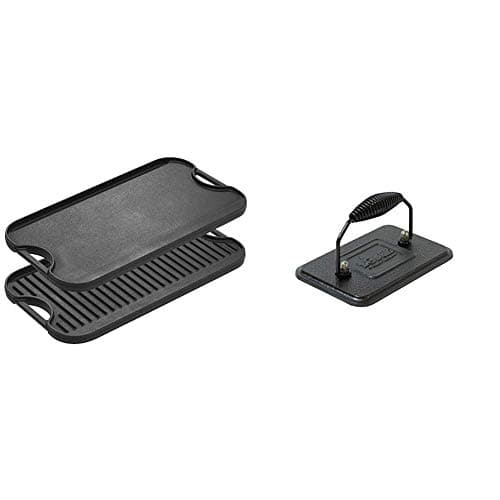
Griddle across a grill
Yes
Ideal for smash burgers and breakfast outdoors
Grill pan on a grill
Pointless
You already have grates - use a flat pan
Dutch oven on a grill, lid on
Yes, bare iron
Effectively an outdoor oven
Enameled anything on a grill
No
Direct flame and enamel do not mix
The rule is that anything bare is fine and anything glazed is not. Enamel is the limit at every heat source beyond a domestic oven.
Over a campfire
Direct fire is the harshest thing you can do to a pan and cast iron takes it. Coals, flames, a pan sitting in embers - none of it damages the metal, and it is why cast iron has been the outdoor cooking material for two centuries.
What it does do is strip seasoning. A pan that has sat in a fire may come out with gray patches or bare metal, and that is a re-season rather than a loss. A pan left in a fire overnight and rained on will rust, and that is also recoverable - restoring rusty cast iron covers the full strip.
Practical notes for fire cooking, which differ from stovetop:
Loop handles beat long handles over a fire, because a long handle sits in the flames.
A lid turns a skillet into an oven when you put coals on top of it.
Let it cool before water touches it. Thermal shock is the one genuine risk to the iron.
Bring the pan you do not mind marking. Fire cooking is hard on appearance.
Everything above applies to bare iron. Enamel changes the answer at every heat source above a domestic oven, and it is worth being precise:
Oven: yes, but the ceiling is set by the knob rather than the pot. Le Creuset publishes a stainless knob rated to 500F on the Signature line; other brands rate by SKU.
Broiler: no. Direct radiant heat is outside what enameled cookware is rated for.
Grill or campfire: no. Direct flame and thermal shock are what chip and craze enamel, and a chip cannot be repaired.
Empty on high heat: no, at any heat source. This is the one way to damage enamel through cooking.
The care rules in full are in enameled cast iron care. If you want a Dutch oven for a fire, that is a bare cast iron camp oven with legs and a rimmed lid - a different product we have not audited.
What to do afterward
Let it cool naturally. Never quench a hot pan.
Scrape and wash with hot water, with a little soap if you want it - soap does not strip modern polymerized seasoning.
Dry it on a burner, which is the step that prevents rust.
Wipe a very thin film of oil on the warm pan. Thin enough that it looks wiped off.
If gray patches appeared, do two or three seasoning coats rather than one thick one.
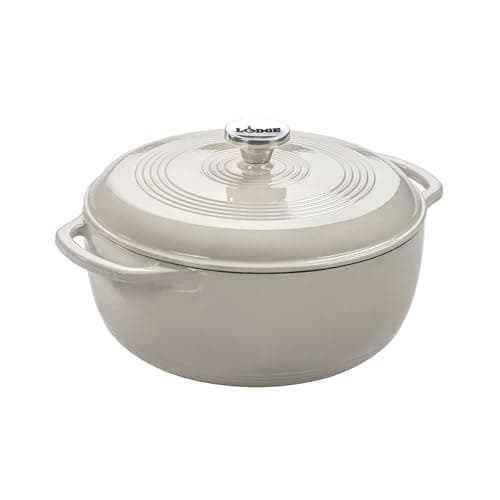
Bare iron for heat, and the enameled pot that stays indoors
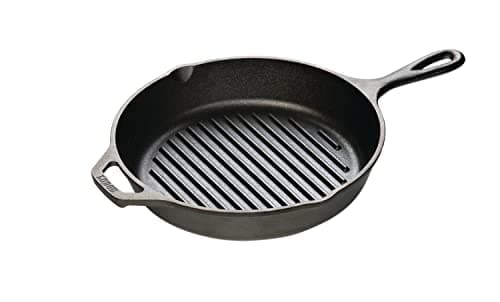
The first three have no upper limit that matters. The fourth is limited by its glaze at every heat source above an oven.
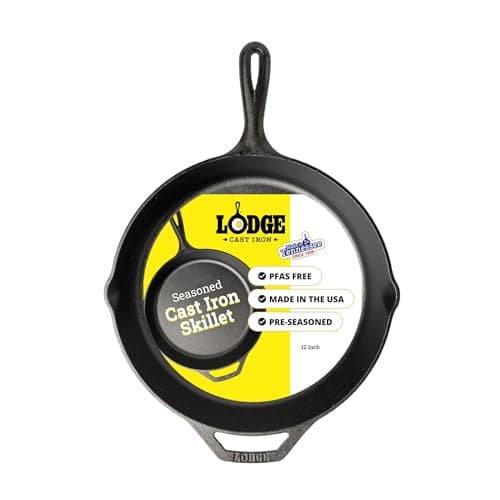
Lodge Seasoned Cast Iron Skillet, 12 in (L10SK3)
Cooking for three or more, or anything that needs surface area rather than depth
These are the products this page's reasoning actually points at. Same rules as everywhere else on the site: published specs, a stated trade-off, and a live price only where one exists.
Top pick · The pan for all of thisSpecs read September 3, 2026
Lodge Seasoned Cast Iron Skillet, 12 in (L10SK3)
One piece of iron with no handle sleeve, no knob and nothing softer than metal anywhere on it - which is why it has no practical ceiling.
Best for: Cooking for three or more, or anything that needs surface area rather than depth
Published specifications for the Lodge Enameled Cast Iron Dutch Oven, 6 qt
Material
Cast iron with porcelain enamel, inside and out
Capacity
6 qt
Induction
Yes - the iron under the enamel is ferrous
Seasoning
None required - enamel is not a seasoning surface
Acid
Safe for tomato and wine, unlike bare iron
Oven maximum
Set by the knob material - check the specific SKU; Lodge publishes a lower ceiling than for bare iron
Good
Non-reactive, so it handles the acidic cooking bare iron cannot
No seasoning to maintain
Considerably cheaper than the French enameled pots it copies
Not good
Chipped enamel is not repairable, unlike bare iron's seasoning
Oven ceiling is lower than bare cast iron because of the knob
Heavy, and the enamel makes it heavier than bare iron of the same capacity
The trade-off. The enamel is a glass layer. Chip it and the pot is not restorable the way bare iron is, and Lodge's enamel chips more readily than the premium brands'.
Skip this if. You already own a large stainless stockpot and rarely braise. This duplicates it for most weeknight cooking.
In domestic use, effectively unrestricted. Lodge publishes 550F for its seasoned cookware, and that figure describes the seasoning rather than the iron - the pan was cast at temperatures no oven approaches. The handle will be extremely hot, which is the real hazard.
›Can you put cast iron under a broiler?
Yes, if it is bare. A few minutes does nothing; a long session will burn seasoning off in patches, leaving gray metal that simply needs re-seasoning. Enameled cast iron should not go under a broiler.
›Can you use a cast iron skillet on a barbecue grill?
Yes, and it is one of the material's best uses - a pan on the grate browns all of the food rather than in stripes, while keeping the smoke and ambient heat. Expect seasoning to darken over charcoal.
›Can enameled cast iron go over a campfire?
No. Direct flame and thermal shock are what chip and craze enamel, and a chip cannot be repaired. For fire cooking you want bare cast iron - a camp Dutch oven with legs and a rimmed lid is the traditional tool.
›What do you do to a cast iron pan after cooking over a fire?
Let it cool naturally, wash with hot water, dry it on a burner, and wipe a very thin film of oil onto the warm metal. If gray patches appeared where seasoning burned off, build two or three thin coats rather than one thick one.
Sources
Every figure on this page came from one of these. Follow them and check our arithmetic — that is the point.