Heads up: some links on this page earn us a commission at no extra cost to you. It does not change what we recommend or the order. How we are funded.
The short answer
Wash the pan in warm soapy water — Lodge's own instruction — and dry it completely.
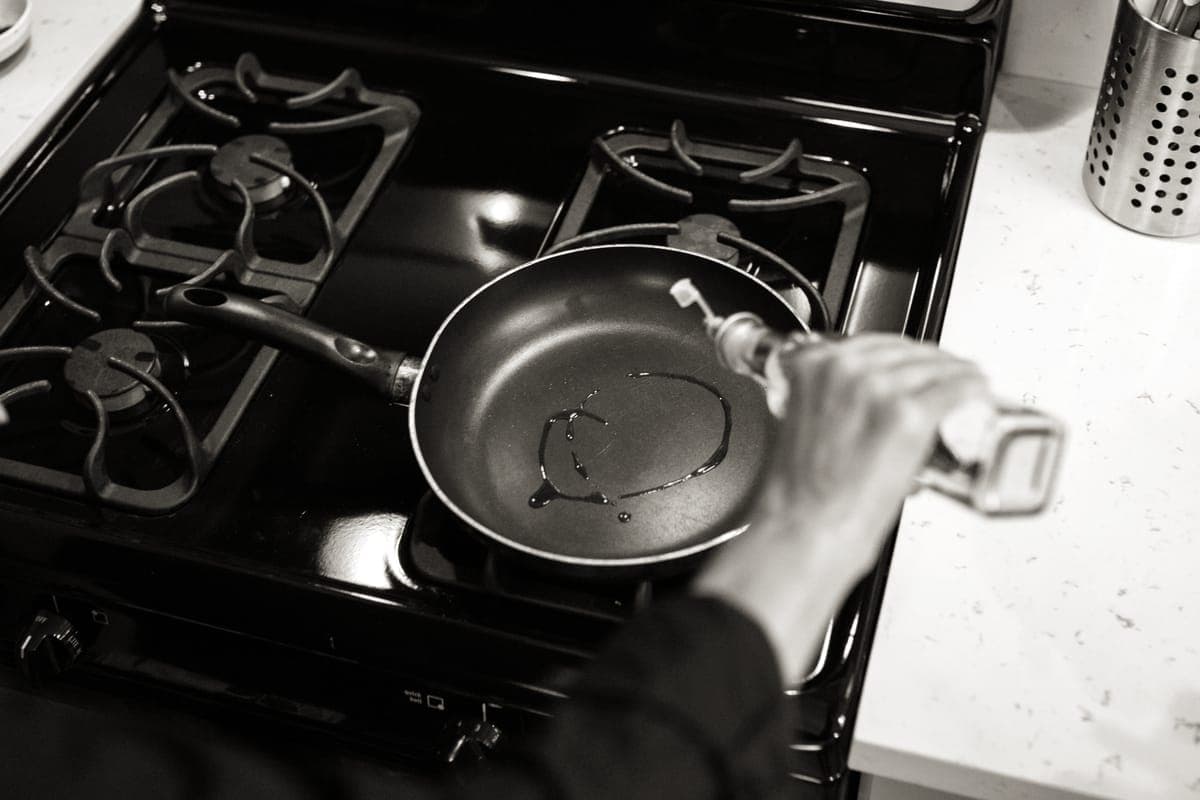
Wipe on a layer of oil too thin to drip. "Go easy on the oil, you want just a thin layer."
Bake upside down at 450-500F for one hour, on the center rack with foil below.
Let it cool in the oven. Repeat if the surface is patchy.
What seasoning actually is
Seasoning is not a layer of oil sitting on the pan. It is polymerized oil: fat heated past its smoke point until the molecules cross-link into a hard, slick, plastic-like film that is chemically bonded to the iron surface.
That distinction explains everything else. A bonded polymer film is not dissolved by dish detergent, which is why the soap folklore is wrong. It is not removed by a scrubbing brush. It is broken down by prolonged acid, and it is undermined by rust forming underneath it — which is why water is the actual enemy.
Lodge's published method, quoted
Lodge publishes this openly, which is worth noting on a site that judges companies by what they document.
Wash. "Use warm, soapy water to wash your pan, then dry completely with a paper towel or lint-free cloth."
Oil. "Add a very thin layer of cooking oil to the surface of your cast iron (inside and out) with a cloth or lint-free paper towel. Go easy on the oil — you want just a thin layer, not enough to drip or run when you tilt it." Lodge names vegetable oil, melted shortening or canola oil.
Bake. "Preheat your oven to 450-500F. Place aluminum foil on the bottom rack of the oven to catch any excess oil. Put your cookware upside down on the center rack. Bake for 1 hour."
Cool. "Turn the heat off and allow the cast iron skillet to cool in the oven."
Lodge also notes that all its cookware "comes seasoned and ready to use — straight from the foundry", and that "the best, and easiest, way" to build seasoning is simply to use the pan regularly.
The mistake that ruins nearly every attempt
Too much oil. Lodge says it twice in one instruction and people still use too much, because it feels counterintuitive that a hard-wearing surface comes from an amount of oil you can barely see.
A thick layer does not polymerize properly. The outer surface cures while the oil underneath stays liquid, and you get a sticky, tacky, uneven finish that peels off in patches — which people then interpret as the seasoning failing, and try to fix by applying more oil.
The correct amount: oil the pan, then wipe it off as though you had made a mistake. What is left in the metal's texture is the right amount.
If you can see the oil pooling or running when you tilt the pan, there is too much. Wipe it back until the pan looks almost dry.
The soap question, settled
Lodge's own care instruction says to wash with warm soapy water. The manufacturer of the most-owned cast iron in the world publishes that soap is fine.
The folklore has a real origin: dish soap used to be lye-based and genuinely harsh enough to attack a fat-based film. Modern dish detergent is a mild surfactant designed to lift loose grease, and polymerized seasoning is not loose grease — it is a bonded polymer.
What actually damages seasoning, in order:
Water left standing. Rust forms under the seasoning and lifts it off. This is the real one.
Long acidic cooking. Tomato, wine, vinegar. Chemistry, not carelessness. Use enameled cast iron for those.
The dishwasher. Not the detergent so much as the long wet cycle and the standing water afterwards.
Storing it damp or with a lid on. Trapped moisture rusts.
The daily routine, which takes a minute
Cook. Get the pan properly hot first, as with any pan.
While it is still warm, wash with hot water, soap if you want, and a brush or a chainmail scrubber for stuck bits.
Dry it on the burner. Not with a towel and not on a rack — put it back on low heat for a minute or two until every trace of water is gone. This is the step that matters.
Wipe a trace of oil around the cooking surface while it is warm. A few drops on a paper towel.
Store it uncovered, or with a paper towel between stacked pans.
Bringing a rusted pan back
This is cast iron's superpower and no coated cookware can do it. A pan that has been left outside for a year is fully recoverable.
Remove the rust. Steel wool and effort, or an overnight soak in a 50/50 vinegar-water solution. If you use vinegar, check every half hour after the first hour — it will start attacking the iron itself once the rust is gone.
Wash thoroughly with soap and hot water, and scrub off every loose flake.
Dry immediately and completely, on the burner. Bare stripped iron flash-rusts within minutes.
Season, following the method above, and do it three or four times rather than once. You are building a film from nothing.
Lodge publishes a restoration guide for exactly this, which tells you something about how the company expects its products to be treated over a lifetime.
Things that are not true
"Never use soap." The manufacturer says to use soap.
"Never use metal utensils." Metal is fine on bare cast iron. A metal spatula smooths the seasoning rather than damaging it.
"Flaxseed oil is the best seasoning oil." It polymerizes hard and is well known for flaking off in sheets later. Lodge names vegetable oil, shortening or canola, and those work.
"A seasoned pan is nonstick." It is slick, not nonstick. Eggs still want fat and a proper preheat. If you want genuine release, that is what a coated pan is for.
"You cannot boil water in it." You can. Briefly. Do not leave water standing in it afterwards.
The whole care routine is: get it hot, wash it, dry it on the heat, wipe a trace of oil. Everything else on the internet about this is elaboration, and most of it is wrong.
What to buy, if you are buying
These are the products this page's reasoning actually points at. Same rules as everywhere else on the site: published specs, a stated trade-off, and a live price only where one exists.
Top pick · The pan this routine is written forSpecs read September 3, 2026
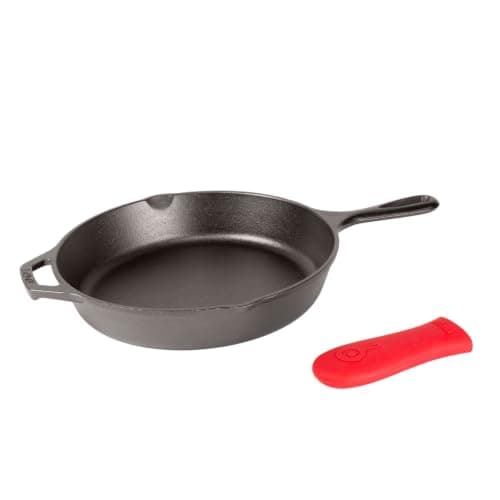
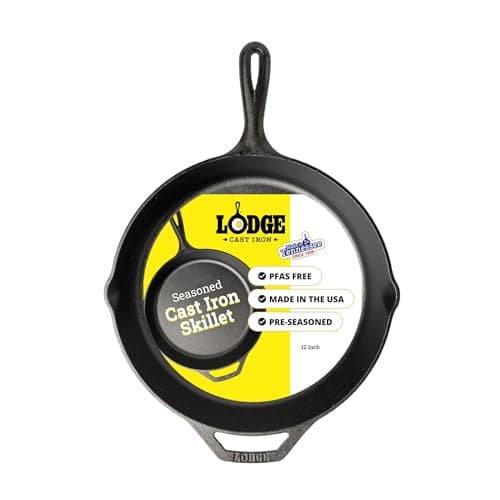
Lodge Seasoned Cast Iron Skillet, 10.25 in (L8SK3)
Lodge publishes the 450F to 500F seasoning range this page follows, for its own pans.
Best for: Searing, cornbread, and anyone who wants one pan that cannot be worn out
Published specifications for the Lodge Seasoned Cast Iron Skillet, 10.25 in (L8SK3)
Diameter
10.25 in
Weight
5.66 lb
Oven maximum
550F
Induction
Yes - bare iron is ferrous
Seasoning
Pre-seasoned with soy-based vegetable oil, no synthetic chemicals
Warranty
Lifetime
Made in
USA
Care
Hand wash. Lodge's own instructions permit warm soapy water
Good
Effectively unbreakable and fully restorable - a rusted one can be stripped and re-seasoned
Holds heat better than anything else at the price, which is what a sear needs
Lodge publishes its seasoning method openly, so the maintenance is not a mystery
Not good
Heavy
Heats unevenly on a small burner: cast iron conducts at roughly 50 W/m-K, so it is slow to spread and slow to react
Bare iron is reactive; long tomato braises will taste of it
The trade-off. It weighs 5.66 lb empty. You will feel that every time you move it full, and it is the single most common reason a cast iron skillet ends up in a cupboard.
Skip this if. You have wrist or shoulder trouble, or you cook mostly acidic braises. Carbon steel does most of the same jobs at roughly half the weight.
Yes. Lodge's own published care instruction is to wash with warm soapy water and dry completely. Seasoning is polymerized oil chemically bonded to the iron, not loose grease that detergent dissolves.
›How do you season a cast iron skillet?
Lodge's method: wash and dry the pan, wipe on a layer of cooking oil too thin to drip, place it upside down on the center oven rack with foil below, bake at 450 to 500F for one hour, then let it cool in the oven.
›What oil should you use to season cast iron?
Lodge names vegetable oil, melted shortening or canola oil. Flaxseed oil is often recommended online and is well known for building a hard layer that later flakes off in sheets.
›How do you fix a rusted cast iron pan?
Scrub off the rust with steel wool or soak in a 50/50 vinegar and water solution, checking regularly. Wash, dry immediately on the burner because bare iron flash-rusts, then season three or four times rather than once.
›What actually ruins cast iron seasoning?
Standing water, which rusts under the seasoning and lifts it off, and long acidic cooking, which breaks the polymer down chemically. Dish soap and metal utensils do not.
Sources
Every figure on this page came from one of these. Follow them and check our arithmetic — that is the point.