Heads up: some links on this page earn us a commission at no extra cost to you. It does not change what we recommend or the order. How we are funded.
The short answer
A chainmail scrubber. The one accessory that genuinely changes cast iron ownership - it removes stuck food without stripping good seasoning.
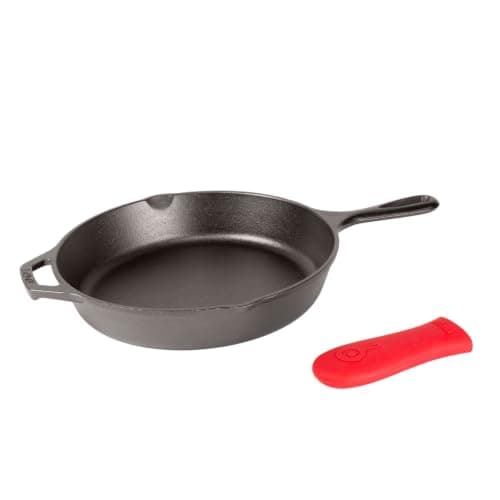
A silicone handle cover. Turns a stovetop skillet into a pan you can pick up, and it lives on the handle rather than in a drawer.
A pan scraper. A stiff plastic edge that costs almost nothing and removes what a sponge cannot.
Nothing else, really. Seasoning oils, conditioners and care kits are convenience packaging around oil you already own.
Quick picks
The whole answer, on one screen. Tap a row to jump to the full write-up. Every pick below carries a stated trade-off further down — including the one at the top.
#
Product
Best for
Price
1
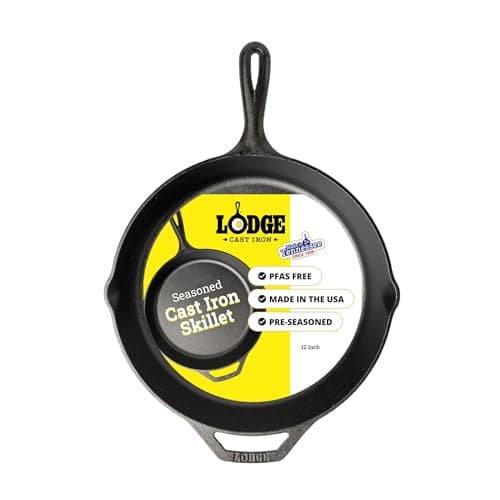
Lodge Seasoned Cast Iron Skillet, 10.25 in (L8SK3)
The 10-inch skillet is the pan every accessory on this page exists to serve, and Lodge publishes its seasoning method.
Prices last checked October 22, 2026. Prices move constantly — the number on Amazon when you click is the real one.
What we can tell you here
Our audited product ledger is cookware. It does not contain a separately audited chainmail scrubber or handle cover, so this page recommends those as categories via tagged searches rather than naming a model whose specifications we have not read. The method is here. The pans above are the audited items each accessory serves.
The chainmail scrubber
If you buy one thing from this page, buy this. A chainmail scrubber is a loose mesh of stainless rings that abrades stuck food off bare iron without cutting into the polymerized seasoning underneath.
That distinction is the whole value. Steel wool strips seasoning along with the food. A sponge does not shift baked-on residue at all. Chainmail sits precisely between the two, which is why it appears as a recommendation across the seasoning and troubleshooting pages — carbon steel problems and fixes and restoring rusty cast iron both lean on it.
Bare cast iron and carbon steel only. Never on enamel, never on a coating.
Rinse it and dry it, or it rusts in a sink caddy like anything else made of steel.
Look for a silicone core or handle if you dislike the feel of bare mesh.
A cast iron handle reaches the temperature of the pan, because it is the same piece of metal. That is the material's single most quoted drawback and it is solved by a few dollars of silicone.
The reason a cover beats a mitt is that it lives on the pan. A mitt is somewhere else when you need it; a cover is already there. For stovetop cooking with a 12-inch skillet this is the difference between a pan you move confidently and one you approach carefully — and it complements rather than replaces proper mitts, which are covered in best oven mitts and pot holders.
Check the cover's own temperature rating and take it off before the pan goes in the oven unless the maker publishes an oven figure. Silicone has a limit well below what cast iron tolerates, and this is exactly the handle-caps-the-pan problem described in oven-safe cookware temperatures.
A stiff polycarbonate scraper with a squared edge and usually a curved one, costing about as much as a coffee. It removes baked-on residue that a sponge slides over, without the abrasion of metal.
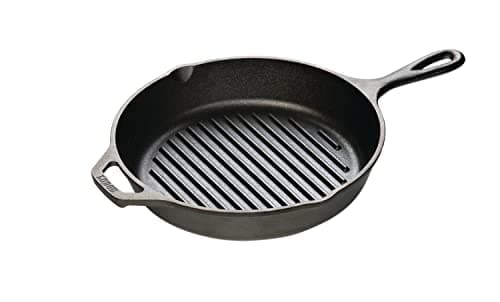
It is most useful on ridged surfaces — a grill pan traps residue between ridges where nothing flat reaches. Lodge includes one with some pans, which tells you what the maker thinks of it.
Seasoning oils and conditioners
Here is the honest assessment: these work, and they are optional.
Seasoning is polymerized oil. Lodge publishes that it seasons its pans with 100% natural vegetable oil — an ordinary supermarket product. A branded seasoning conditioner is usually a blend of oils and sometimes beeswax, packaged for the purpose. It is convenient, it applies thinly, and it does nothing a bottle of neutral oil and a paper towel cannot.
Buy one if you like the convenience. Do not buy one believing your pan needs a proprietary product, and do not let a care kit talk you into a maintenance ritual — the actual method is four steps in cast iron seasoning and care.
What is not worth buying
Sold as
What it is
Verdict
Cast iron care kit
A scrubber, a small oil, a cloth, in a box
Buy the scrubber alone; the rest is packaging
Seasoning wax or conditioner
Blended oil, sometimes with beeswax
Works, and so does vegetable oil
Cast iron cleaning brush
A stiff nylon brush
Fine, and a chainmail scrubber does more
Pan protectors for cast iron
Felt discs
Unnecessary - iron does not scratch iron. Useful on enamel
Cast iron trivets
A stand for a hot pan
A folded towel or a wooden board does it
Restoration kits
Abrasives and oils
Vinegar, steel wool and oil, all of which you can buy separately
The pattern is bundling. Almost everything in this table is one useful item packaged with two you already own.
What enameled pots need instead
Enamel is glass, so the entire list above inverts. No chainmail, no steel wool, no abrasive scrubbing.
A soft nylon brush for daily washing.
An enamel cream cleaner for staining and gray metal marks.
A chainmail scrubber, if you own any bare iron or carbon steel.
A silicone handle cover, if you cook on the stovetop with a skillet.
A pan scraper, if you own a grill pan or a griddle.
A bottle of neutral oil, which you already have.
The audited pans these accessories serve
Accessories are recommended on this page as categories, via tagged searches, because we have not audited specific models. The last pan is here as the one to keep chainmail away from.
Lodge Seasoned Cast Iron Skillet, 10.25 in (L8SK3)
Searing, cornbread, and anyone who wants one pan that cannot be worn out
Each write-up below gives the published specs, what the pan is genuinely good at, what it costs you, and who should skip it. The trade-off line is there on the top pick too — a recommendation with no downside is an advertisement.
Top pick · Best cast iron accessory pairingSpecs read September 3, 2026
Lodge Seasoned Cast Iron Skillet, 10.25 in (L8SK3)
The 10-inch skillet is the pan every accessory on this page exists to serve, and Lodge publishes its seasoning method.
Best for: Searing, cornbread, and anyone who wants one pan that cannot be worn out
Published specifications for the Lodge Seasoned Cast Iron Skillet, 10.25 in (L8SK3)
Diameter
10.25 in
Weight
5.66 lb
Oven maximum
550F
Induction
Yes - bare iron is ferrous
Seasoning
Pre-seasoned with soy-based vegetable oil, no synthetic chemicals
Warranty
Lifetime
Made in
USA
Care
Hand wash. Lodge's own instructions permit warm soapy water
Good
Effectively unbreakable and fully restorable - a rusted one can be stripped and re-seasoned
Holds heat better than anything else at the price, which is what a sear needs
Lodge publishes its seasoning method openly, so the maintenance is not a mystery
Not good
Heavy
Heats unevenly on a small burner: cast iron conducts at roughly 50 W/m-K, so it is slow to spread and slow to react
Bare iron is reactive; long tomato braises will taste of it
The trade-off. It weighs 5.66 lb empty. You will feel that every time you move it full, and it is the single most common reason a cast iron skillet ends up in a cupboard.
Skip this if. You have wrist or shoulder trouble, or you cook mostly acidic braises. Carbon steel does most of the same jobs at roughly half the weight.
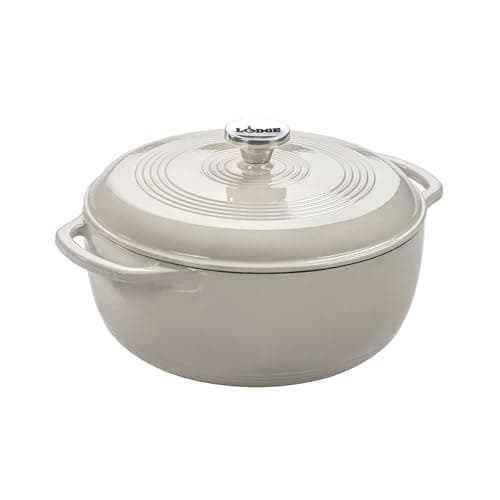
Published specifications for the Lodge Enameled Cast Iron Dutch Oven, 6 qt
Material
Cast iron with porcelain enamel, inside and out
Capacity
6 qt
Induction
Yes - the iron under the enamel is ferrous
Seasoning
None required - enamel is not a seasoning surface
Acid
Safe for tomato and wine, unlike bare iron
Oven maximum
Set by the knob material - check the specific SKU; Lodge publishes a lower ceiling than for bare iron
Good
Non-reactive, so it handles the acidic cooking bare iron cannot
No seasoning to maintain
Considerably cheaper than the French enameled pots it copies
Not good
Chipped enamel is not repairable, unlike bare iron's seasoning
Oven ceiling is lower than bare cast iron because of the knob
Heavy, and the enamel makes it heavier than bare iron of the same capacity
The trade-off. The enamel is a glass layer. Chip it and the pot is not restorable the way bare iron is, and Lodge's enamel chips more readily than the premium brands'.
Skip this if. You already own a large stainless stockpot and rarely braise. This duplicates it for most weeknight cooking.
›What cast iron accessories are actually worth buying?
A chainmail scrubber, a silicone handle cover and a stiff pan scraper. Those three genuinely change how cast iron is to live with. Seasoning oils and care kits work but do nothing a bottle of neutral oil cannot.
›What is a chainmail scrubber for?
Removing stuck food from bare cast iron without stripping the seasoning underneath. Steel wool takes the seasoning with the food and a sponge does not shift baked-on residue at all; chainmail sits precisely between them.
›Can you use a chainmail scrubber on enameled cast iron?
No. Enamel is glass fused to iron and chainmail scratches it permanently. Enameled pots want a soft nylon brush and, for stains and gray metal marks, an enamel cream cleaner.
›Do you need special cast iron seasoning oil?
No. Lodge publishes that it seasons its pans with 100% natural vegetable oil. A branded conditioner is convenient and applies thinly, and it does nothing that neutral oil and a paper towel cannot.
›Is a silicone handle cover better than an oven mitt?
For stovetop cooking, yes, because it lives on the pan rather than in a drawer. Check its own temperature rating and remove it before the pan goes in the oven unless the maker publishes an oven figure.
Sources
Every figure on this page came from one of these. Follow them and check our arithmetic — that is the point.