The one piece of kitchen equipment whose failure mode is a burn. Length and wet-steam behavior matter more than any temperature rating on the packaging.
Heads up: some links on this page earn us a commission at no extra cost to you. It does not change what we recommend or the order. How we are funded.
The short answer
Buy a pair of long mitts that cover your forearm, in silicone or an aramid-fiber weave, and keep them dry. The specification that matters is not the printed temperature rating — it is whether the mitt stays grippy on a heavy pan and whether it transmits heat when it gets damp, which quilted cotton does almost immediately. If you cook with cast iron or lift full Dutch ovens, length and grip decide this, not a number on the label.
Quick picks
The whole answer, on one screen. Tap a row to jump to the full write-up. Every pick below carries a stated trade-off further down — including the one at the top.
#
Product
Best for
Price
1
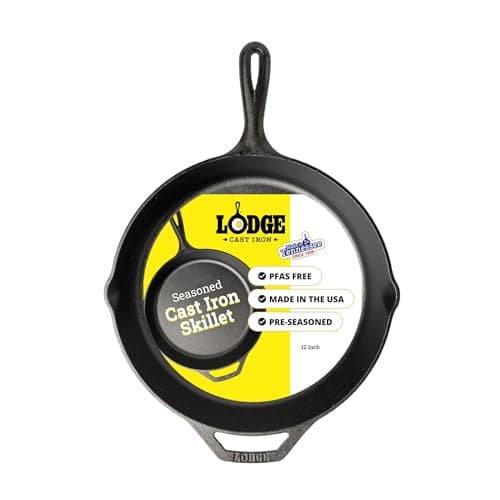
Lodge Seasoned Cast Iron Skillet, 12 in (L10SK3)
A 12 in cast iron skillet with a bare metal handle is why a proper mitt exists rather than a folded tea towel.
Prices last checked October 23, 2026. Prices move constantly — the number on Amazon when you click is the real one.
What we can tell you here
Our audited product ledger covers cookware, and it does not contain a specific oven mitt whose manufacturer specifications we have read. The method is here, and it means this page explains the materials and the failure modes and points at tagged category searches rather than naming a model we cannot cite. The cookware picks above are the pans that define what a mitt has to survive.
The failure mode nobody prints on the packaging
A mitt does not usually fail by reaching its temperature limit. It fails because it is damp.
Water conducts heat far better than the air trapped in fabric, so a quilted cotton mitt that has picked up moisture — from a wet counter, from steam, from a hand — transmits heat to your skin in seconds rather than tens of seconds. Every experienced cook has learned this by accident. It is the reason a folded tea towel is a genuinely dangerous substitute and the reason silicone exists in this category at all.
Steam is the second version of the same problem. Lifting a lid off a simmering pot puts your hand in wet vapour hotter than boiling water, and a fabric mitt soaks it up. Tilt lids away from you and use a mitt that does not absorb.
The materials
Material
Heat
Grip
Wet steam
The catch
Silicone
High
Excellent, even on smooth enamel
Unaffected - it does not absorb
Bulky; poor dexterity on small items
Silicone-over-fabric
High
Very good
Good - the silicone sheds it
Heavier and slower to dry inside
Aramid fiber weave
Very high
Good, with a textured palm
Fair - it is still a fabric
Expensive; looks industrial
Quilted cotton
Moderate
Poor on heavy smooth handles
Fails fast when damp
Cheap, washable, and the most common
Leather and suede
High
Excellent
Good
Not washable; stiffens over time
The wet-steam column is the one to read. It is the difference between a mitt that fails predictably and one that fails suddenly.
Length is the specification to buy on
Short mitts protect a hand and leave a forearm to press against a 400F oven rack while reaching to the back. That is where most domestic oven burns happen, and it is entirely preventable by buying a longer mitt.
Short, hand only (around 10 in). Fine for a stovetop handle, wrong for reaching into an oven.
Mid-length (13 to 15 in). The sensible default — covers the wrist and some forearm.
Long (17 in and up). Worth it if you use a deep oven, roast large joints, or lift Dutch ovens from a low shelf.
Mitts cover the hand and wrist and give the best protection. They cost dexterity, which matters when gripping a thin sheet-pan rim.
Pot holders are flat squares. Better dexterity, no wrist or forearm protection at all, and easy to drop. Best for setting hot pans down rather than carrying them.
Handle covers and sleeves slide onto a cast iron skillet handle and stay there, which makes a stovetop pan usable one-handed. For a cast iron kitchen this is often more useful than a mitt — cast iron accessories covers them.
Tea towels are what most people actually reach for, and they are the worst option: no grip, no defined thickness, and they fail instantly when damp.
Fit and the things that annoy you later
Both hands. Buy a pair. A single mitt makes a two-handed Dutch oven lift into an improvisation.
Deep enough that it does not slip off when you turn your hand over to set something down.
A hanging loop, because a mitt in a drawer is a mitt you do not use.
Washable, which rules out leather and matters more than people expect — mitts get greasy.
Grip texture on the palm, not just on the fingers. Smooth enamel handles are where cheap mitts slide.
What your cookware demands
The right mitt depends on what you lift. Three cases from our ledger:
Cast iron on the stovetop. A bare metal handle on a 12-inch skillet gets as hot as the pan. A silicone handle cover that lives on the pan beats a mitt for this, because it is always there.
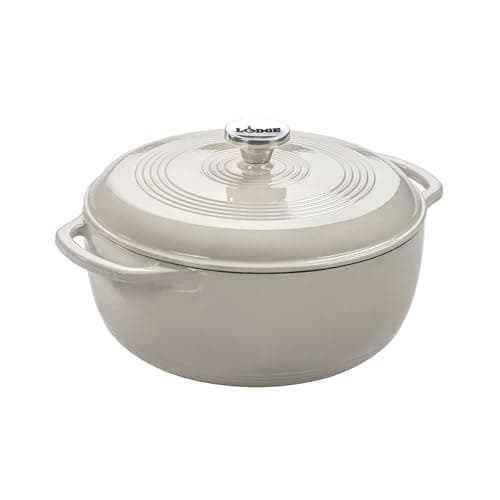
An enameled Dutch oven from a low oven.Six quarts full of braise is heavy, the loop handles are short, and you need grip on a smooth glazed surface with both hands. This is the case that justifies long silicone mitts.
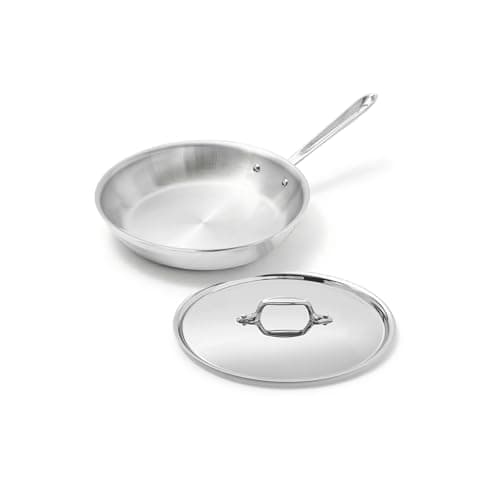
Anything from a 600F oven. All-Clad publishes oven and broiler safety at 600F, and every published ceiling is collected in oven-safe cookware temperatures. A handle at that temperature is not a tea-towel job.
Which to buy
Default: a pair of mid-to-long silicone or silicone-over-fabric mitts, kept dry.
You cook cast iron on the stovetop: add a silicone handle cover that lives on the pan.
You lift heavy pots from a low oven: buy the 17-inch length.
You handle thin sheet pans constantly: keep a pair of flat pot holders too, for the dexterity.
The cookware that sets the requirement
These are the audited pans whose handles and weights decide what a mitt has to do. Mitts themselves are recommended here as categories, via tagged searches, because we have not audited a model.
Lodge Seasoned Cast Iron Skillet, 12 in (L10SK3)
Cooking for three or more, or anything that needs surface area rather than depth
Each write-up below gives the published specs, what the pan is genuinely good at, what it costs you, and who should skip it. The trade-off line is there on the top pick too — a recommendation with no downside is an advertisement.
Top pick · The pan that sets the requirementSpecs read September 3, 2026
Lodge Seasoned Cast Iron Skillet, 12 in (L10SK3)
A 12 in cast iron skillet with a bare metal handle is why a proper mitt exists rather than a folded tea towel.
Best for: Cooking for three or more, or anything that needs surface area rather than depth
Published specifications for the Lodge Enameled Cast Iron Dutch Oven, 6 qt
Material
Cast iron with porcelain enamel, inside and out
Capacity
6 qt
Induction
Yes - the iron under the enamel is ferrous
Seasoning
None required - enamel is not a seasoning surface
Acid
Safe for tomato and wine, unlike bare iron
Oven maximum
Set by the knob material - check the specific SKU; Lodge publishes a lower ceiling than for bare iron
Good
Non-reactive, so it handles the acidic cooking bare iron cannot
No seasoning to maintain
Considerably cheaper than the French enameled pots it copies
Not good
Chipped enamel is not repairable, unlike bare iron's seasoning
Oven ceiling is lower than bare cast iron because of the knob
Heavy, and the enamel makes it heavier than bare iron of the same capacity
The trade-off. The enamel is a glass layer. Chip it and the pot is not restorable the way bare iron is, and Lodge's enamel chips more readily than the premium brands'.
Skip this if. You already own a large stainless stockpot and rarely braise. This duplicates it for most weeknight cooking.
Published specifications for the All-Clad D3 Stainless 10 in Fry Pan
Construction
Fully bonded tri-ply, aluminum core
Oven maximum
600F, oven and broiler safe
Induction
Yes - compatible with any stovetop
Dishwasher
Handwash only (All-Clad published)
Handle
Double-riveted stainless
Weight
3.0 lb (model 4110)
Warranty
Limited lifetime
Made in
Bonded, engineered and assembled in Canonsburg, PA
Good
600F is the highest oven ceiling of any stainless pan on this site
The one pan here whose manufacturing location is published down to the town
Genuinely repairable-adjacent: rivets are the only failure point and the warranty covers them
Not good
Hand wash only
The flared rim makes it a poor pan for anything with liquid
Costs several times what a Tramontina or Cuisinart pan of the same construction costs
The trade-off. Hand wash only. All-Clad publishes that plainly, and it is a real daily cost on a pan you will use every day.
Skip this if. You want a dishwasher-safe pan, or you are buying a whole kitchen on a fixed budget - one D3 skillet costs what a full clad set can cost.
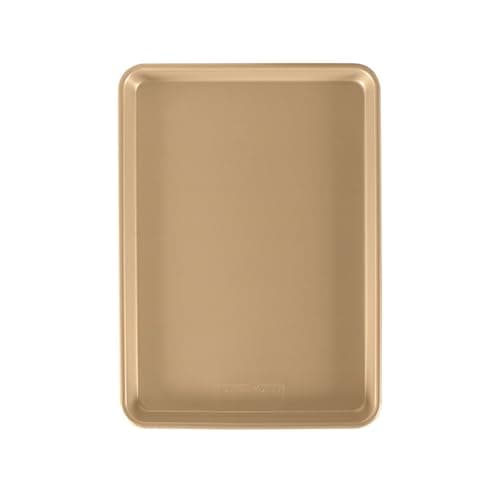
Published specifications for the Nordic Ware Naturals Half Sheet, 18 x 13 in
Exterior dimensions
17.9 x 12.9 x 1 in
Material
Aluminum
Rim
Encapsulated steel rim
Gauge
Not published by Nordic Ware
Warranty
Lifetime
Dishwasher
Hand wash recommended. Automatic dishwasher use is not advised
Made in
America of domestic and imported materials
Good
Aluminum conducts at 237 W/m-K, which is why it browns evenly and a steel pan does not
The encapsulated steel rim is the reason it does not warp in a hot oven
Lifetime warranty on a pan this cheap
Not good
Nordic Ware does not publish a gauge figure, so thickness cannot be compared like for like
Bare aluminum stains and reacts with acid
Not dishwasher safe by the maker's own advice
The trade-off. Bare aluminum discolors and reacts with acid. It will look used within a month and Nordic Ware advises against the dishwasher.
Skip this if. You want a pan that stays looking new, or you will not hand wash. Buy an aluminized-steel coated pan instead and accept the coating as a wear item.
Silicone or silicone-over-fabric for most kitchens, because they do not absorb moisture and they grip smooth enamel handles. Aramid-fiber weaves tolerate more heat but are still fabric. Quilted cotton is the most common and the least safe when damp.
›Why did my oven mitt burn me?
Almost certainly because it was damp. Water conducts heat far better than the air trapped in fabric, so a mitt that has picked up moisture from a counter, a hand or steam transmits heat in seconds rather than tens of seconds.
›How long should an oven mitt be?
Thirteen to fifteen inches as a sensible default, and seventeen or more if you use a deep oven or lift Dutch ovens from a low shelf. Short mitts leave a forearm to press against a hot rack, which is where most domestic oven burns happen.
›Are pot holders as good as mitts?
For setting hot pans down, yes, and they give better dexterity. They offer no wrist or forearm protection and are easy to drop, so they are a poor choice for carrying a heavy pot any distance.
›What should you use for a cast iron handle?
A silicone handle cover that lives on the pan, rather than a mitt. A bare cast iron handle reaches the temperature of the pan, and a cover that is always attached is more useful than a mitt you have to fetch.
Sources
Every figure on this page came from one of these. Follow them and check our arithmetic — that is the point.