Carbon steel: cast iron's performance without cast iron's weight
The professional kitchen's default pan, sold to home cooks with almost no explanation of what it needs.
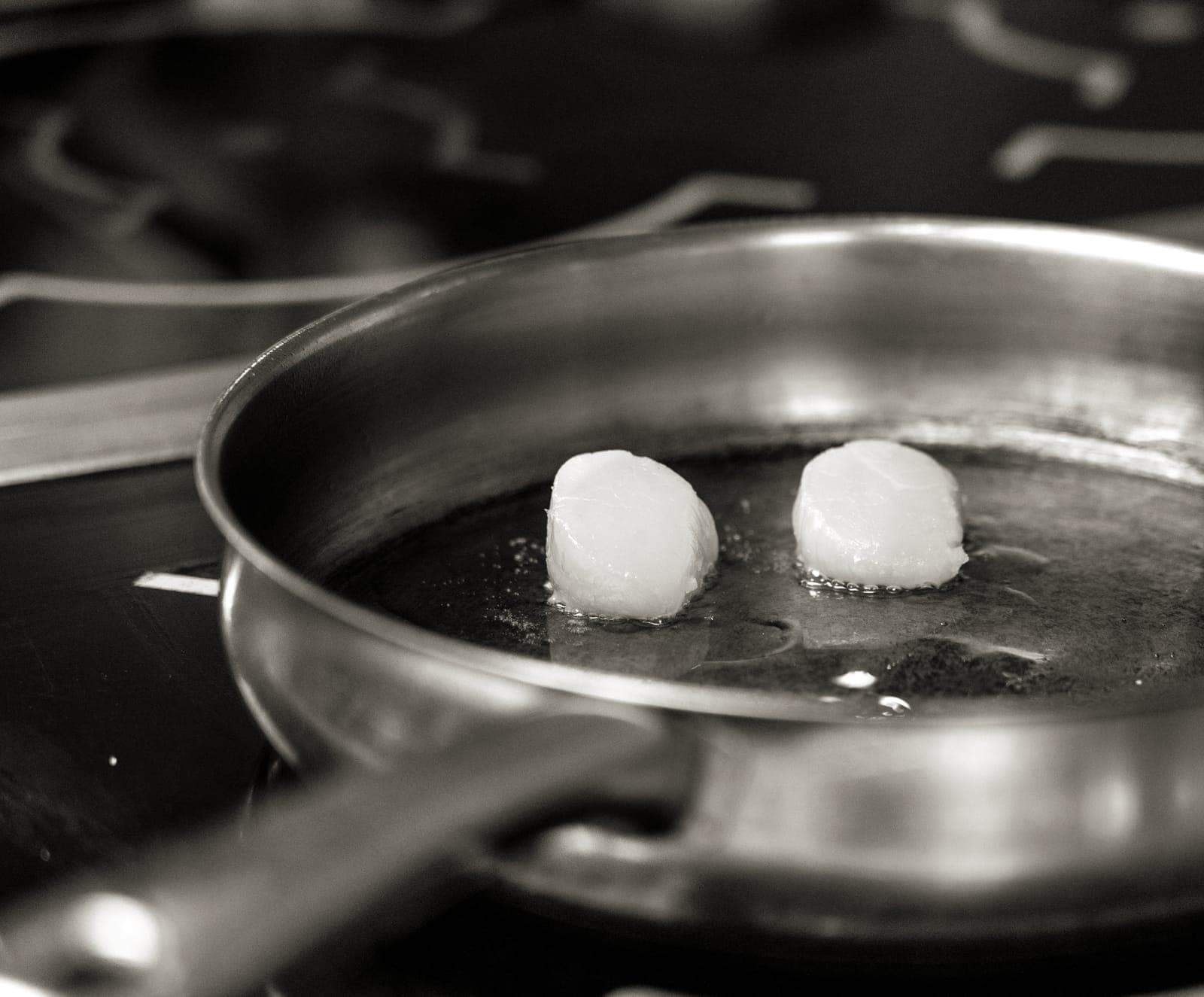
Start here
Carbon steel is roughly 99% iron and 1% carbon — de Buyer publishes exactly that for its MINERAL B PRO line — which makes it chemically almost the same material as cast iron. The difference is how it is formed. Cast iron is poured into a mold and has to be thick to survive. Carbon steel is rolled from sheet, so it can be 2 to 3 mm thick and still be strong.
That single manufacturing difference is the whole pitch. Similar conduction, around 45 W/m-K against cast iron's 50. Similar seasoning behavior. Roughly half the weight for the same diameter, and a sloped side that lets you actually toss food. Start at the best carbon steel pans, or read cast iron versus carbon steel if you are choosing between the two.
In this section
Every page below carries its own reasoning and its own sources. Roundup tiles show the current top pick and a live price where one exists.
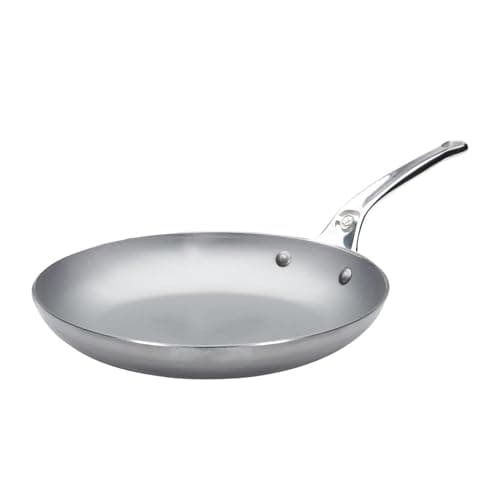
Top pick: de Buyer MINERAL B PRO Carbon Steel Fry Pan, 11 in

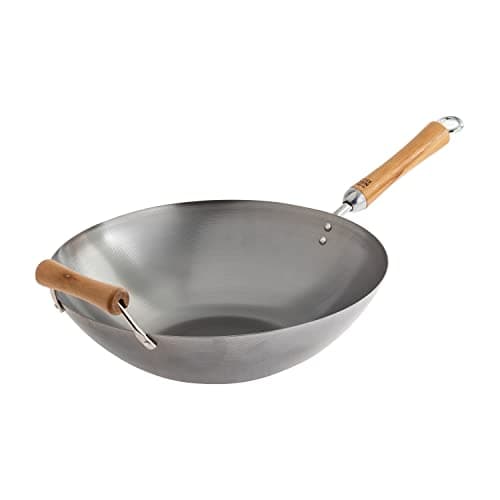
Top pick: Joyce Chen Classic Series Carbon Steel Wok, 14 in


Top pick: Joyce Chen Classic Series Carbon Steel Wok, 14 in
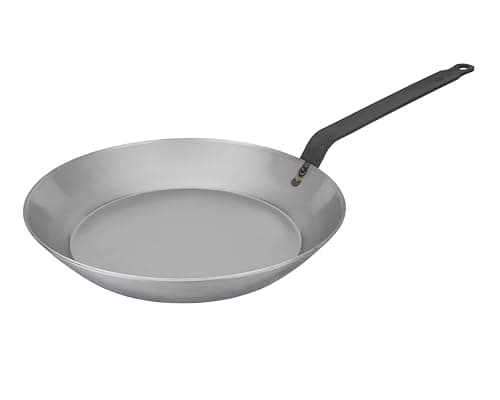
Top pick: Matfer Bourgeat Black Carbon Steel Fry Pan, 11 in (062004)

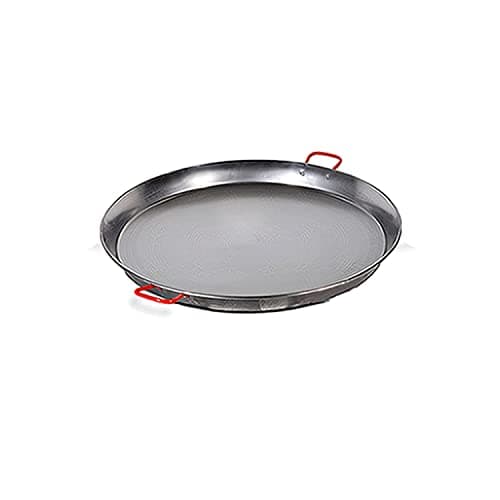
Top pick: Garcima Carbon Steel Paella Pan, 13 in / 32 cm
Thickness is the spec that actually matters
Carbon steel pans are sold at anywhere from about 1.5 mm to 3 mm, and the number changes the pan more than the brand does. de Buyer publishes 2.5 mm on its 8 and 9.5-inch MINERAL B PRO pans and 3 mm on the 11 and 12.5-inch. Matfer Bourgeat's round fry pans are listed at 3 mm in commercial catalogs.
Thin pans heat fast, respond fast, weigh little, and warp. Thick pans hold heat through a sear, sit flat on a glass top, and are heavy enough that you lose some of the weight advantage over cast iron. Three millimeters is where most people land, and 2 mm is the right call if you want a pan you can flip food in.
The de Buyer 11-inch at 3 mm weighs 4.6 lb — genuinely lighter than a comparable cast iron skillet, but not light. If weight is the reason you are looking at carbon steel, look at the published figure before assuming.
The beeswax problem nobody warns you about
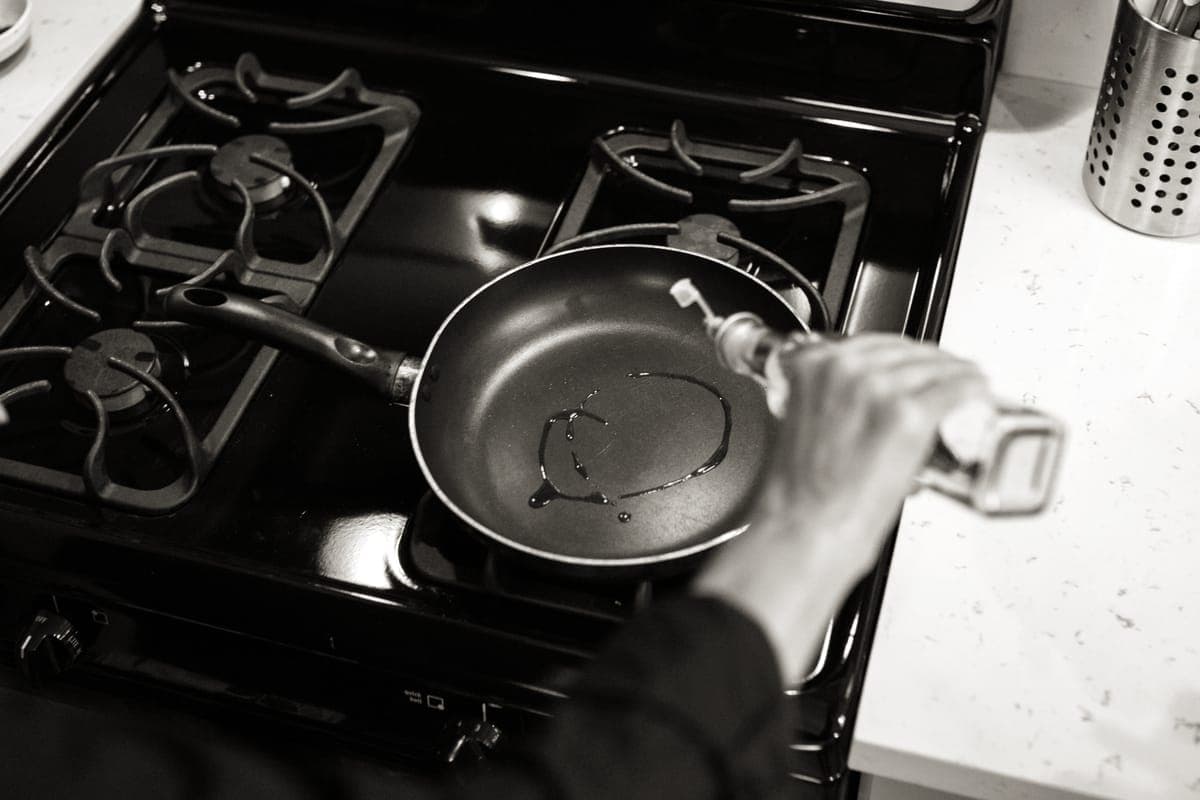
Most French carbon steel pans ship coated in beeswax to stop them rusting in transit. That coating has to come off before the pan is usable, and it is the step that makes people give up. de Buyer's own instruction is to "wash the pan thoroughly with hot water and a scrub brush or sponge to remove all beeswax — no soap needed", then oil it with something high smoke point like grapeseed or avocado and "heat until the oil begins to smoke lightly, then let it cool."
It takes twenty minutes and a smoky kitchen. If that sounds like a lot for a pan you are not sure about, Lodge's pre-seasoned carbon steel skips the step entirely — it is thinner and warps more readily, but you can cook in it the day it arrives. The full method is in how to season a carbon steel pan.
Handles, which is where the brands actually differ
de Buyer publishes "Riveted, Heat Stop" on the MINERAL B PRO — a deliberate geometry meant to slow heat traveling up the handle. Matfer's black steel pans use a riveted steel strip with no heat break at all, which is why restaurant cooks keep a folded towel permanently to hand.
Neither is wrong. Matfer's handle is a commercial design that assumes a towel and gives you an unbreakable, oven-indifferent pan. de Buyer's costs more and is friendlier at home. It is worth deciding which one you are before you buy, because it is the thing you will interact with every single time.
What carbon steel cannot do
It is reactive, more so than cast iron in practice because the seasoning layer is thinner and newer. Deglaze with wine and you will take seasoning off with the fond. A long tomato sauce is out of the question. If most of your cooking is acidic, buy clad stainless and stop reading.
It rusts, quickly, if you leave it wet. Not eventually — overnight. Every carbon steel pan needs to be dried on the heat and given a wipe of oil, and if that is a ritual you will resent, it is the wrong material for you. There is no shame in that answer, and is carbon steel worth it works through it honestly.
Who should actually buy one
- You sear a lot and want cast iron performance without the weight.
- You want to flip and toss food, which a straight-sided iron pan resists.
- You will dry it on the heat every time without resenting it.
- Your cooking is not mostly acidic.
If two of those are false, buy a clad stainless pan and a cheap coated pan instead. That combination covers more of a normal week and asks nothing of you.
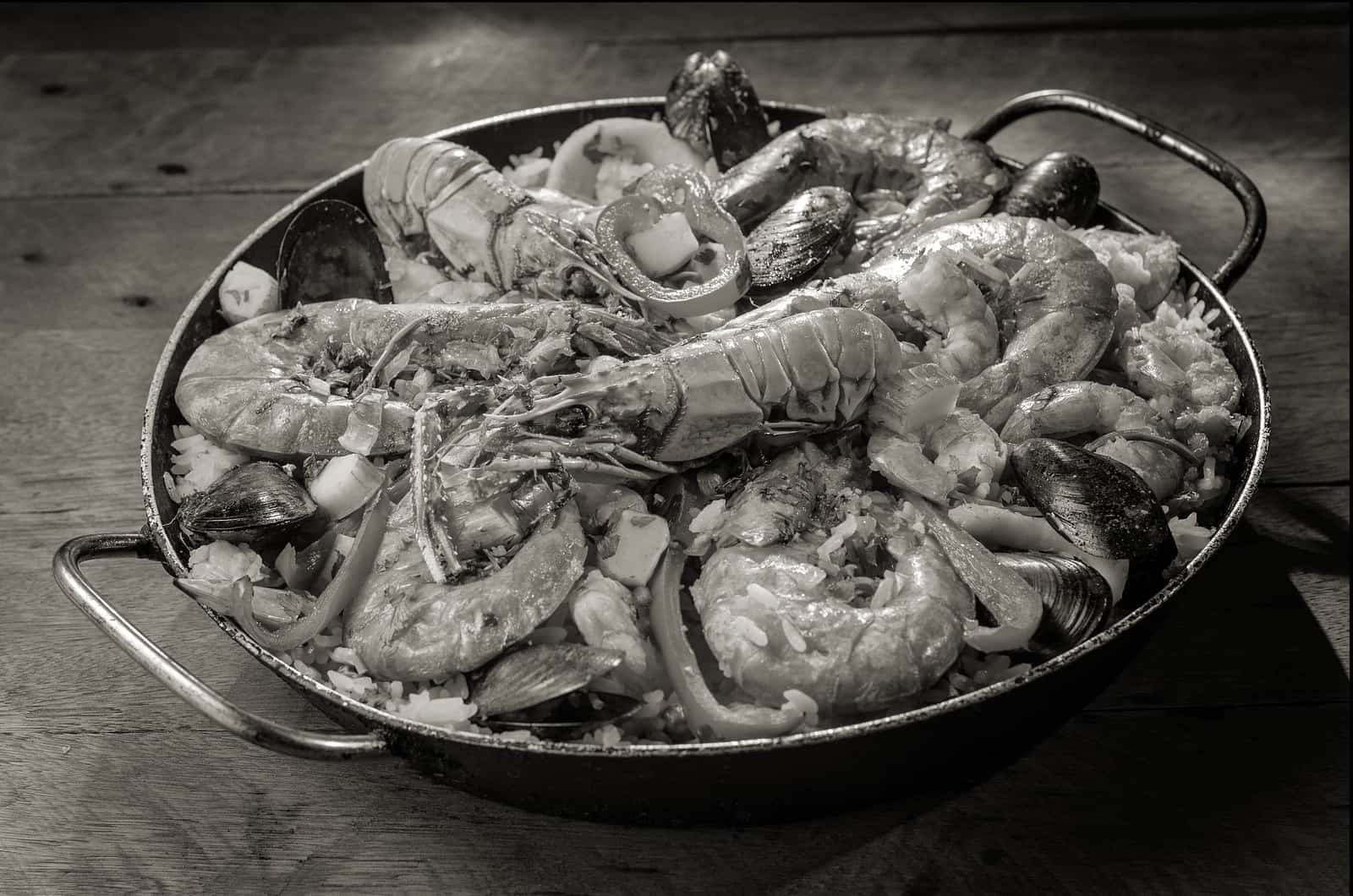
One shape in this hub is bought for a single dish and is worth its own page, because the cheap traditional version is published as unsuitable for induction and for ovens — the best paella pans, ranked by heat source before price.
Common questions
›What is the difference between carbon steel and cast iron?
Chemically almost nothing: both are iron with roughly 1 to 3 percent carbon. The difference is forming. Cast iron is poured and must be thick; carbon steel is rolled from sheet at 2 to 3 mm, so it weighs about half as much for the same diameter and responds faster.
›How do you season a new carbon steel pan?
de Buyer's published method: scrub off the factory beeswax with hot water and no soap, dry, wipe on a thin layer of high smoke point oil such as grapeseed or avocado, and heat until the oil just begins to smoke, then let it cool. Repeat two or three times.
›How thick should a carbon steel pan be?
Around 3 mm for searing and stability on a flat cooktop, around 2 mm if you want a pan light enough to toss food in. de Buyer publishes 2.5 mm on its smaller MINERAL B PRO pans and 3 mm on the larger ones.
›Does carbon steel rust?
Yes, quickly, if it is left wet. Dry it on the burner after washing and wipe on a trace of oil. That is the whole maintenance requirement, and it is the reason carbon steel is not the right material for everyone.
Sources
Every figure on this page came from one of these. Follow them and check our arithmetic — that is the point.