Heads up: some links on this page earn us a commission at no extra cost to you. It does not change what we recommend or the order. How we are funded.
The short answer
Carbon steel is worth it if you sear regularly, want cast-iron behavior at roughly half the weight, and will dry the pan on the burner after every wash without resenting it. It is not worth it if you cook a lot of acidic food, want a pan you can leave in the sink, or are looking for a general-purpose everyday pan. That is a habits question, not a quality one.
The question underneath the question
"Is carbon steel worth it" is usually asked as a value question, and it is not one. Carbon steel is inexpensive — a good 3 mm French pan costs less than a single premium clad skillet, and Lodge's costs less again.
The real question is whether you will do the maintenance. Not whether you can — it takes about a minute — but whether, on the fourth consecutive Tuesday when you are tired and the sink is full, you will put the wet pan back on the burner to dry it. Because if you will not, the pan rusts, and a rusty pan you feel guilty about is worse than no pan at all.
So this page is about matching a material to a temperament, and it is genuinely fine for the answer to be no.
What carbon steel genuinely does better
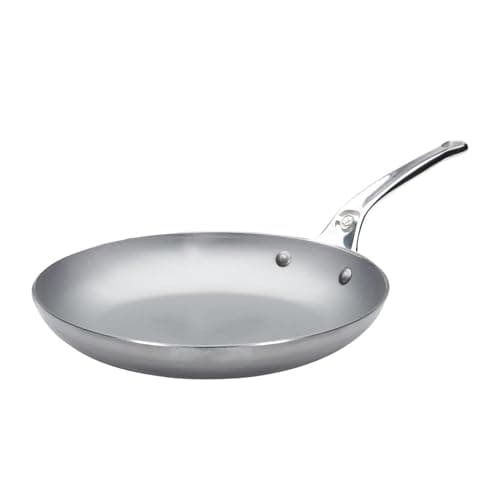
Searing at low weight. de Buyer publishes 4.6 lb for an 11-inch pan at 3 mm, against Lodge's 5.66 lb for a smaller 10.25-inch cast iron skillet. Similar conduction — around 45 W/m-K against cast iron's 50 — for meaningfully less mass.
Responding to the burner. A thinner section changes temperature within a minute. Cast iron takes several, which is why professional kitchens use carbon steel.
Tossing food. Pressed sloped sides let you flip and toss; a cast iron skillet's vertical walls do not.
Improving. The seasoning genuinely gets better with use, and after six months the pan releases food in a way it did not when new.
Being restorable. Strip it to bare metal and start again, as many times as you like. No coated pan can do that.
The costs, stated plainly
It rusts overnight
Not eventually. Leave a washed carbon steel pan wet on the draining board and there will be orange spots by morning. The pan has to be dried on the heat, every time.
It is reactive
Tomato, wine, vinegar and lemon strip the seasoning and taste of the pan. That rules out a category of cooking that most people do more of than they realize — pan sauces, braises, anything deglazed.
Most of them arrive unusable
The beeswax has to be scrubbed off and the pan seasoned before the first meal. That is twenty minutes and a smoky kitchen, and it is where a lot of pans get abandoned. See how to season a carbon steel pan.
The documentation is thin
de Buyer publishes composition, thickness and weights, and publishes no oven maximum, no dishwasher guidance and no warranty term. Matfer publishes very little directly at all. If you like to know what you are buying, this category will frustrate you.
Who should buy one
If this is you
Verdict
You sear meat or vegetables several times a week
Yes. This is the material's job and it does it well
You want cast iron performance without the weight
Yes. About a pound lighter for a larger pan
You enjoy maintaining tools
Yes. The seasoning routine is genuinely satisfying if that is your temperament
You cook a lot of tomato, wine or citrus
No. Buy clad stainless
You want one pan to do everything
No. Buy clad stainless
You leave pans in the sink overnight
No, honestly. Buy cast iron, which is more forgiving, or stainless, which is indifferent
You want it because it looks good on a hanging rail
No. It will look good and go unused
How to find out cheaply
Buy Lodge's pre-seasoned carbon steel skillet rather than a French pan. It is thinner and warps more readily, and Lodge does not publish a country of manufacture for the line the way it does for its cast iron — but it arrives ready to cook in, so you skip the step that puts people off.
Use it for two months. If you find yourself doing the dry-and-oil routine without thinking about it, buy the de Buyer and enjoy it. If the pan spends most of its time in the cupboard because you cannot face the ritual, you have learned something useful for the price of a cheap pan.
If the answer is no, buy this instead
Cast iron if you wanted the searing. It is cheaper, pre-seasoned, more forgiving about being left damp, and the only real trade is weight. See the best cast iron skillets.
Clad stainless if you wanted a versatile everyday pan. Non-reactive, zero maintenance, dishwasher-tolerant on most brands, and effectively permanent. See the best stainless steel cookware.
A cheap coated pan if what you actually wanted was release rather than searing. Carbon steel is not nonstick, whatever the enthusiasts say, and a seasoned pan still wants fat and a proper preheat for eggs.
The honest summary: carbon steel is an excellent pan for a specific job and a specific temperament. It is not a better version of a general-purpose pan, and buying it as one is how it ends up unused.
What to buy, if you are buying
These are the products this page's reasoning actually points at. Same rules as everywhere else on the site: published specs, a stated trade-off, and a live price only where one exists.
Top pick · The cheapest way to find outSpecs read September 3, 2026
No photo
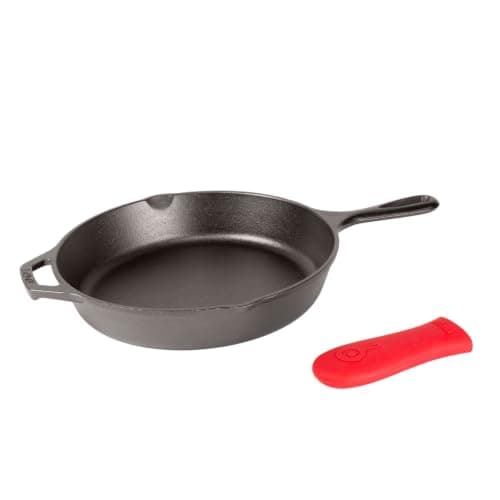
Lodge Seasoned Carbon Steel Skillet, 12 in
Pre-seasoned and usable immediately, so you can test whether the daily routine suits you before committing to an expensive pan.
Best for: A first carbon steel pan, bought to find out whether you like the material
Published specifications for the Lodge Seasoned Cast Iron Skillet, 10.25 in (L8SK3)
Diameter
10.25 in
Weight
5.66 lb
Oven maximum
550F
Induction
Yes - bare iron is ferrous
Seasoning
Pre-seasoned with soy-based vegetable oil, no synthetic chemicals
Warranty
Lifetime
Made in
USA
Care
Hand wash. Lodge's own instructions permit warm soapy water
Good
Effectively unbreakable and fully restorable - a rusted one can be stripped and re-seasoned
Holds heat better than anything else at the price, which is what a sear needs
Lodge publishes its seasoning method openly, so the maintenance is not a mystery
Not good
Heavy
Heats unevenly on a small burner: cast iron conducts at roughly 50 W/m-K, so it is slow to spread and slow to react
Bare iron is reactive; long tomato braises will taste of it
The trade-off. It weighs 5.66 lb empty. You will feel that every time you move it full, and it is the single most common reason a cast iron skillet ends up in a cupboard.
Skip this if. You have wrist or shoulder trouble, or you cook mostly acidic braises. Carbon steel does most of the same jobs at roughly half the weight.
If you sear regularly, want cast iron behavior at less weight, and will dry the pan on the burner after every wash, yes. If you cook a lot of acidic food or want one pan for everything, no. It is a habits question rather than a quality one.
›Is carbon steel better than cast iron?
It is lighter and more responsive - de Buyer publishes 4.6 lb for an 11-inch pan against Lodge's 5.66 lb for a 10.25-inch skillet - and it lets you toss food. Cast iron holds heat better, arrives pre-seasoned and is more forgiving about being left damp.
›How much maintenance does carbon steel need?
About a minute per use: wash, dry on the burner rather than with a towel, and wipe a trace of oil on the warm surface. Skip the drying step once and leave the pan wet and it will have rust spots by morning.
›Is carbon steel nonstick?
No. A well-seasoned pan is slick and releases better than bare stainless, but it still wants fat and a proper preheat. If you want genuine release for eggs, buy a coated pan.
›What is the cheapest way to try carbon steel?
Lodge's pre-seasoned carbon steel skillet. It is thinner and warps more readily than the French pans, and it arrives usable, so you can test whether the daily routine suits you before spending more.
Sources
Every figure on this page came from one of these. Follow them and check our arithmetic — that is the point.