One is a tool that improves with your attention. One is an appliance that needs none. Most kitchens want the appliance first.
Where we stand
We do not make or sell carbon steel or stainless steel cookware. Both link to the same retailer, both pay us the same commission rate, and we earn exactly the same whichever one you buy — or nothing at all if you buy neither, which is sometimes the right answer. Most of the comparison pages that rank for this question are published by companies that sell one of the two. How we are funded.
These are different kinds of object
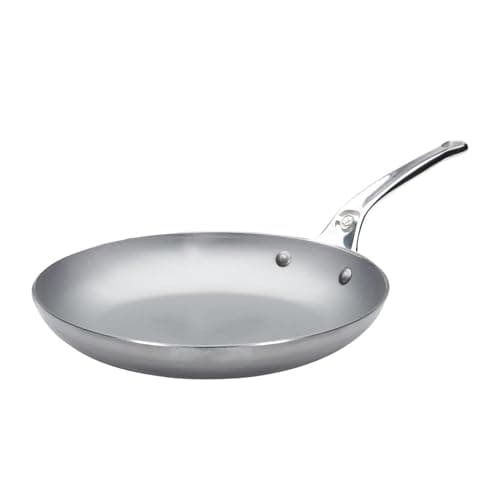
Carbon steel is a tool. It arrives incomplete — often literally, under a coat of beeswax — and it becomes good through use and maintenance. Cook in it, dry it, oil it, and in six months you have a pan that releases food beautifully and is genuinely yours.
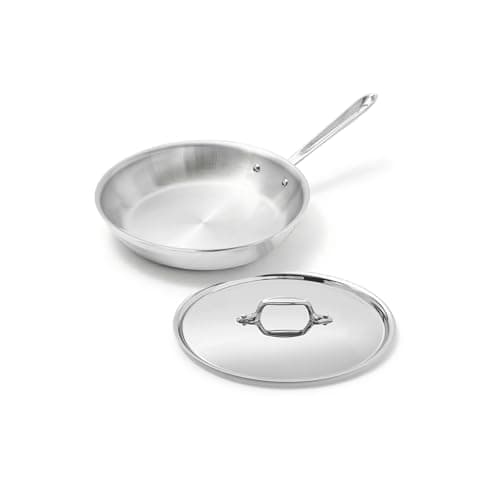
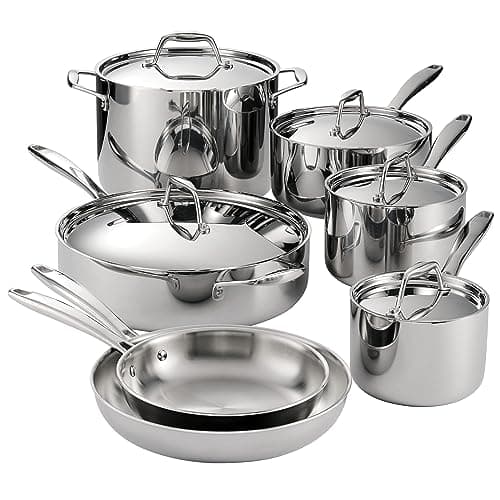
Clad stainless is an appliance. It arrives finished, does the same thing on day one and in year twenty, asks nothing of you, and never becomes more than it was. That is not a criticism — for most kitchens it is exactly what you want.
The comparison below is real, but the decision usually comes down to which of those two relationships with a pan you want.
Carbon steel is a single metal all the way through: de Buyer publishes "Iron 99%, Carbon 1%". It conducts at around 45 W/m-K, which is not good, but the pan is thin so heat does not have far to travel.
Clad stainless is a sandwich, and it exists because type 304 stainless conducts at only 15 to 16 W/m-K — about a fifteenth of aluminum's 237. The stainless is there for durability and non-reactivity; the aluminum in the middle does the actual heat spreading.
The result is that a clad pan is more even across its base, while a carbon steel pan has more concentrated heat where the burner is. For searing, concentrated heat plus mass wins. For a sauce, evenness wins.
Searing: carbon steel
Carbon steel takes and holds a higher surface temperature than a clad pan will comfortably reach, and it does not have a coating or a bonding layer to worry about. A well-seasoned carbon steel pan at high heat produces a crust a clad pan struggles to match.
It is also more forgiving at high temperature. Clad pans have published ceilings — 500F for the Cuisinart and Tramontina lines, 600F for All-Clad's D3 — and those exist because bonded layers have limits. Bare steel does not have that problem; the limit is what the seasoning tolerates.
Anything acidic: stainless, without qualification
Carbon steel is reactive, and worse than cast iron in practice because the seasoning layer is thinner and newer. Deglaze with wine and you take seasoning off with the fond. Simmer a tomato sauce and you will taste the pan and undo months of buildup.
Stainless is completely indifferent. This one difference is why stainless is the material a kitchen is built around and carbon steel is a specialist you add — most people cook more acid than they realize.
Maintenance: an honest accounting
Carbon steel: wash it, then dry it on the burner — not with a towel — and wipe a trace of oil on the warm surface. Every time. Skip it once and leave the pan wet, and you will find orange spots in the morning.
Stainless: wash it. Dishwasher if the maker allows it — Cuisinart's MultiClad Pro does, All-Clad's D3 publishes handwash only. Leave it wet, leave it dirty, scrub it with steel wool. Nothing happens.
That is about ninety seconds a day of difference. Whether ninety seconds is trivial or intolerable is a genuine personal question, and it is the one that decides this purchase for most people.
What it gets right
- Carbon steel: sears better than clad stainless, and gets better the more you use it
- Carbon steel: sloped sides let you toss food, and it weighs less than cast iron
- Stainless: completely non-reactive, so acidic cooking is unrestricted
- Stainless: zero maintenance, dishwasher-tolerant on most brands, and permanent
What it costs you
- Carbon steel: reactive, rusts overnight if left wet, and often needs beeswax removed before first use
- Carbon steel: de Buyer publishes no oven maximum, dishwasher guidance or warranty terms
- Stainless: sticks without a proper preheat, and always will
- Stainless: costs considerably more than carbon steel for the same diameter
On release, which surprises people
A well-seasoned carbon steel pan releases food better than a clad stainless pan does. Not as well as a coated pan, but noticeably better than bare steel, because the polymerized oil layer is genuinely slick.
That takes months of regular use to develop, and a single acidic deglaze can set it back. Stainless never gets there and never gets worse — its release depends entirely on your preheat, which is a technique you can learn in one evening. See why food sticks to stainless.
Which should you buy
Stainless first, in almost every case. If you are building a kitchen, clad stainless is the spine: it handles acid, it needs nothing from you, and it covers the widest range of cooking adequately. Picks are in the best stainless steel cookware.
Carbon steel second, if you sear a lot and the maintenance sounds like a pleasure rather than a chore. It is genuinely better at that one job and it is cheap. Picks in the best carbon steel pans.
Not both, immediately. Buy the stainless, cook for a couple of months, and see whether you are reaching for a searing pan you do not have. If you are, you now know exactly why you want carbon steel, which is a better basis for buying one than an article.
If you have already decided you want a searing pan and are choosing between carbon steel and cast iron rather than stainless, the comparison you want is cast iron versus carbon steel.