Chemically almost the same material. One is poured and thick, one is rolled and thin, and everything else follows from that.
Where we stand
We do not make or sell cast iron or carbon steel. Both link to the same retailer, both pay us the same commission rate, and we earn exactly the same whichever one you buy — or nothing at all if you buy neither, which is sometimes the right answer. Most of the comparison pages that rank for this question are published by companies that sell one of the two. How we are funded.
de Buyer publishes its MINERAL B PRO body as "Iron 99%, Carbon 1%". Cast iron is iron with roughly 2 to 4 percent carbon. That extra carbon is what makes cast iron castable and brittle, and its absence is what makes carbon steel formable and tough — but thermally they are close cousins: around 50 W/m-K for cast iron, around 45 for carbon steel.
The difference that matters is manufacturing. Cast iron is poured into a sand mold, and because cast iron is brittle it has to be thick to survive being dropped or heated unevenly. Carbon steel is rolled from sheet and pressed into shape, and steel is tough enough to work at 2 to 3 mm.
Everything below is downstream of that one fact.
Weight, which is the headline
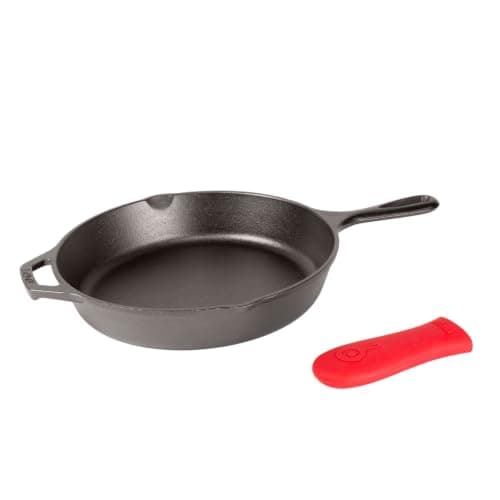
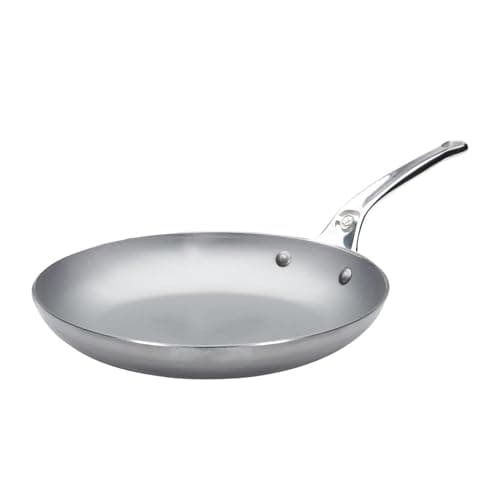
Lodge publishes 5.66 lb for the 10.25-inch skillet. de Buyer publishes 4.6 lb for the 11-inch MINERAL B PRO at 3 mm — a larger pan, weighing about a pound less. Their 9.5-inch at 2.5 mm is 3 lb.
That gap is the single most common reason people move to carbon steel, and it is not a marginal difference in daily use. A pan you can lift and pour from one-handed gets used; a pan that needs two hands full lives in a cupboard.
Heat retention, where cast iron still wins
Mass is stored energy, so the heavier pan holds temperature better when cold food lands in it. For a hard sear on a thick steak, cast iron genuinely recovers faster and gives a better crust.
But the margin is smaller than the weight difference implies, because carbon steel at 3 mm still carries real mass and conducts nearly as well. For most home searing — chicken thighs, chops, vegetables, a normal steak — you would struggle to tell them apart. For a very thick steak straight from the fridge, cast iron is the better tool.
Responsiveness, where carbon steel wins
A thinner section changes temperature faster. Turn the heat down under a carbon steel pan and it responds within a minute; do the same under cast iron and you are waiting several. When something is about to catch, that difference is the whole game.
This is also why carbon steel is the professional kitchen's default. A line cook needs a pan that follows the burner, not one that argues with it.
Shape, which nobody puts in the comparison table
Carbon steel pans have sloped, flared sides because they are pressed from sheet. Cast iron skillets have near-vertical walls because that is what casting produces.
The practical consequence: you can toss and flip food in a carbon steel pan, and you cannot really do it in a cast iron skillet. If you cook a lot of vegetables, or you like moving food around without a utensil, that is a bigger daily difference than any thermal property on this page.
Cast iron's vertical walls hold more, which suits shallow braises and cornbread.
What it gets right
- Cast iron: unmatched heat retention for the price, and pre-seasoned so it works out of the box
- Cast iron: effectively indestructible and restorable from rust indefinitely
- Carbon steel: roughly a pound lighter for a larger pan, and it responds when you change the heat
- Carbon steel: sloped sides let you toss food, which cast iron cannot
What it costs you
- Cast iron: 5.66 lb for a 10.25-inch pan, which is the reason most of them stop getting used
- Cast iron: slow to heat, slow to change, and needs moving around a small burner
- Carbon steel: usually arrives coated in beeswax and unusable until you strip and season it
- Carbon steel: thinner seasoning strips faster with acid, and it rusts overnight if left wet
Seasoning: one is done for you, one is not
Lodge cast iron "comes seasoned and ready to use — straight from the foundry", pre-seasoned with soy-based vegetable oil. You can cook in it the day it arrives.
Most French carbon steel does not. de Buyer ships pans coated in beeswax to prevent rust in transit, and publishes the removal instruction: "wash the pan thoroughly with hot water and a scrub brush or sponge to remove all beeswax — no soap needed", then oil it with something high smoke point and "heat until the oil begins to smoke lightly, then let it cool."
That is twenty minutes and a smoky kitchen before the first meal, and it is the step where people give up. Lodge's pre-seasoned carbon steel skips it, at the cost of being thinner and more warp-prone. Full method in how to season a carbon steel pan.
One documentation difference worth noting
Lodge publishes a 550F oven ceiling. de Buyer publishes no oven maximum at all for the MINERAL B PRO, and no dishwasher guidance or warranty term on that page either; the 500F figure you will see comes from retailers, not from de Buyer.
That is not a safety problem — the pan is steel with a steel handle — but it is a real difference in how much the manufacturer is willing to put in writing, and on a site that judges products by what they document, it counts.
Which should you buy
Cast iron if: you want maximum searing power for the least money, you do not mind the weight, you want a pan that works the day it arrives, and cornbread or shallow braises are on your list.
Carbon steel if: weight is a genuine consideration, you want to toss food, you want a pan that responds to the burner, or you like the idea of a tool that improves with your maintenance.
Neither if: most of your cooking is acidic. Both are reactive and a long tomato sauce will taste of the pan and strip the seasoning. That is a job for clad stainless or enameled cast iron.
You do not need both. They are 85 percent the same pan, and owning one of each is a common way to end up with a cupboard where the heavier one never comes out. Pick the one whose trade-off you would rather live with. Picks are in the best cast iron skillets and the best carbon steel pans.