Heads up: some links on this page earn us a commission at no extra cost to you. It does not change what we recommend or the order. How we are funded.
The short answer
Yes, for the great majority of people. Carbon steel is iron with a small percentage of carbon and no coating at all - the cooking surface is polymerized oil, the same as on cast iron. Small amounts of iron transfer into food, more from a new pan and much more from long acidic cooking, which is a non-issue for most people and a reason to talk to a clinician if you have an iron-storage condition. The one real step is on arrival: new bare pans ship with an anti-rust factory coating that must be scrubbed off before you cook.
What carbon steel actually is
Carbon steel is iron alloyed with a small proportion of carbon - typically around one percent or less - and essentially nothing else. It is the same family of material as cast iron, which has more carbon and is cast rather than rolled. The comparison between them is in cast iron versus carbon steel.
What matters for a safety question is what is absent. There is no chromium, no nickel, no aluminum, no manufactured coating and no enamel. A carbon steel pan is bare metal with a film of cooked oil on it, and that is the entire material inventory.
The seasoning is cooking oil
Seasoning is oil heated past its smoke point until it polymerizes - the fat molecules cross-link into a hard, solid film bonded to the steel. de Buyer publishes the process for its pans, and Lodge publishes its own method for the pre-seasoned range.
Three consequences, and they are the reason the safety conversation about bare pans looks nothing like the one about coated pans:
There is no manufactured coating chemistry to ask about. The surface is fat that has been heated.
It is repairable. Strip it and rebuild it - nothing about a bare pan is unsafe, it is simply bare steel. The method is in seasoning carbon steel.
Flakes of seasoning are hardened food fat. Unappetizing, not hazardous, and a sign the seasoning was built too thick - covered in carbon steel problems and fixes.
Contrast that with a nonstick coating, which is a manufactured polymer with a lifespan no maker publishes - is nonstick cookware safe covers the FDA and EPA positions on that material.
The step people actually miss
This is the most useful thing on the page. New bare carbon steel ships with a factory coating - typically a wax or a food-safe protective film - applied to stop it rusting in transit. It is not seasoning and you are not meant to cook on it. de Buyer publishes instructions to scrub it off before first use.
Scrub the pan with hot water and an abrasive pad. Soap is fine here; there is no seasoning to protect yet.
Keep going until the water runs clear and the surface feels like bare metal rather than slightly waxy.
Dry it immediately on a burner. Bare unseasoned steel will start rusting within minutes.
Season it in thin coats before you cook.
Pre-seasoned pans skip all of this. Lodge's carbon steel arrives seasoned to its published method, which is a genuine convenience and the reason it appears on this page.
Iron transfer
Cooking in bare steel transfers some iron into food. The mechanism is uncontroversial; the amount varies with conditions, and the conditions are known.
What increases iron transfer
Why
A new or newly stripped pan
The seasoning film is the barrier; less film means more contact
Acidic ingredients
Acid dissolves iron far faster than neutral food does
Long cooking times
Contact time multiplies everything else
High-moisture cooking
Water is the medium the transfer happens in
Scraping and stirring
Mechanical contact with the metal rather than the film
A quick sear in a mature pan sits at the low end of every row. A twenty-minute tomato sauce in a new pan sits at the high end of all of them.
We will not publish a milligram figure. We run no lab and test nothing, and any number we quoted would be borrowed from a study we had not read in context - the method is here, and it is the same reason this site carries no star ratings.
For most people dietary iron from a pan is unremarkable. The group for whom it is a genuine question is people with an iron-storage condition such as hemochromatosis, and that is a conversation with a clinician rather than with a cookware site. If bare steel is ruled out, clad stainless and enameled cast iron both give you a non-reactive surface - is stainless steel cookware safe covers the nickel question that comes with the first of those.
Acid: the practical rule
Acidic food in bare carbon steel does three things: dissolves iron faster, strips seasoning, and can pick up a metallic taste. None of it is dangerous and all of it is avoidable.
Short contact is fine. Deglazing with wine, a squeeze of lemon at the end, a quick pan sauce - a mature pan handles these.
Long acidic cooking is not. Move a simmered tomato sauce to clad stainless, enameled cast iron or glass.
Never store food in the pan. This is the worst case and the easiest to avoid.
Carbon steel is thinner than cast iron and its seasoning is correspondingly thinner and younger, so it minds acid slightly more. The equivalent page for cast iron is is cast iron cookware safe.
Rust is not a safety problem
Rust is iron oxide. It is not toxic, it does not ruin a pan, and it comes off with a scrubber. What it tells you is that the seasoning has failed in that spot, so re-season after removing it.
Carbon steel rusts faster than cast iron because it is thinner - it cools faster and holds less residual heat to drive off moisture. Dry it on the burner every time, which is the single habit that prevents almost all of it. Recovery is the same process as for cast iron: restoring rusty cast iron.
The surface being built here is cooking oil, heated until it hardens. There is no other coating on a carbon steel pan.
Heat and fumes
Bare steel produces no coating fumes because there is no coating. Overheating a carbon steel pan smokes the oil on it, which is a kitchen-ventilation matter rather than a material one, and the pan itself is unbothered - Lodge publishes 550F across its seasoned range and the steel does not care above that.
This is the one clear safety advantage of bare metal over coatings, and it is why searing and high-heat stir frying belong to this material. The published ceilings for everything else are in oven-safe cookware temperatures.
The practical verdict
Scrub the factory coating off on arrival unless the pan is sold pre-seasoned. This is the only genuine safety step in the category.
Keep long acidic cooking out of it. One rule, and it solves the only real chemistry issue.
Dry it on the burner after every wash.
If you have an iron-storage condition, ask a clinician and default to stainless or enamel.
Rust and flaking seasoning are cosmetic. Both are fixed rather than replaced.
Bare steel pans, and the non-reactive pot for acid
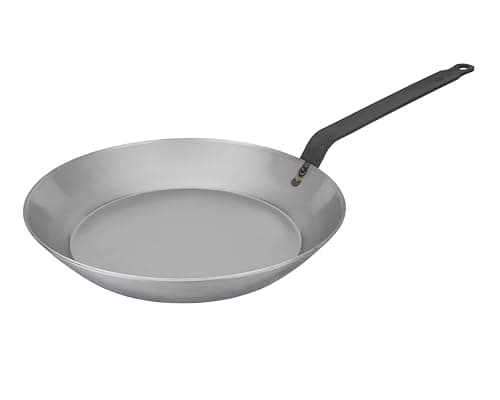
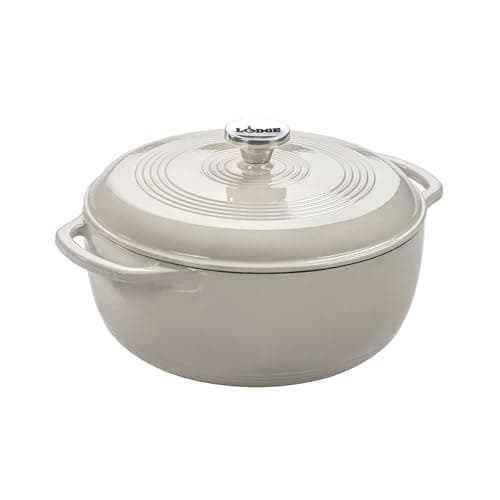
Three pans with no coating and one enameled pot for the long tomato braise none of them should do.
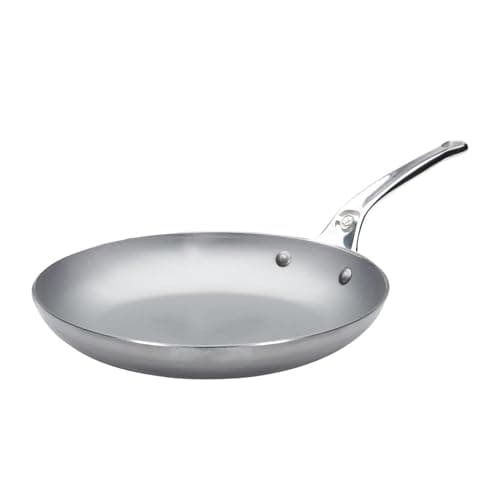
de Buyer MINERAL B PRO Carbon Steel Fry Pan, 11 in
Someone who wants cast-iron searing without cast-iron weight
These are the products this page's reasoning actually points at. Same rules as everywhere else on the site: published specs, a stated trade-off, and a live price only where one exists.
Top pick · The best-documented carbon steelSpecs read September 3, 2026
de Buyer MINERAL B PRO Carbon Steel Fry Pan, 11 in
3 mm of published French steel, and de Buyer prints the first-use and seasoning instructions rather than leaving you to guess.
Best for: Someone who wants cast-iron searing without cast-iron weight
Published specifications for the Lodge Enameled Cast Iron Dutch Oven, 6 qt
Material
Cast iron with porcelain enamel, inside and out
Capacity
6 qt
Induction
Yes - the iron under the enamel is ferrous
Seasoning
None required - enamel is not a seasoning surface
Acid
Safe for tomato and wine, unlike bare iron
Oven maximum
Set by the knob material - check the specific SKU; Lodge publishes a lower ceiling than for bare iron
Good
Non-reactive, so it handles the acidic cooking bare iron cannot
No seasoning to maintain
Considerably cheaper than the French enameled pots it copies
Not good
Chipped enamel is not repairable, unlike bare iron's seasoning
Oven ceiling is lower than bare cast iron because of the knob
Heavy, and the enamel makes it heavier than bare iron of the same capacity
The trade-off. The enamel is a glass layer. Chip it and the pot is not restorable the way bare iron is, and Lodge's enamel chips more readily than the premium brands'.
Skip this if. You already own a large stainless stockpot and rarely braise. This duplicates it for most weeknight cooking.
For almost everyone, yes. It is iron with a small percentage of carbon and no coating at all - the cooking surface is polymerized cooking oil. The one real step is scrubbing off the factory anti-rust coating before first use on a bare pan.
›Do you have to remove the coating on a new carbon steel pan?
Yes, on bare pans. New carbon steel ships with a wax or protective film to stop it rusting in transit, and de Buyer publishes instructions to scrub it off before first use. Pre-seasoned pans like Lodge's arrive ready to cook.
›Does carbon steel leach iron into food?
Some iron transfers, more from a new pan and much more from long acidic cooking. For most people that is unremarkable dietary iron. If you have an iron-storage condition such as hemochromatosis, that is a conversation with a clinician.
›Can you cook tomatoes in carbon steel?
Briefly, yes - deglazing with wine or finishing with lemon is fine on a mature pan. A long acidic simmer dissolves iron faster, strips seasoning and can leave a metallic taste, so cook that in clad stainless, enameled cast iron or glass.
›Is flaking seasoning on carbon steel dangerous?
No. Seasoning is polymerized cooking oil, so flakes are hardened food fat - unappetizing rather than hazardous. It means the seasoning was built too thick or too fast; scrub the loose layer back and rebuild it in thinner coats.
Sources
Every figure on this page came from one of these. Follow them and check our arithmetic — that is the point.