Almost nothing kills a cast iron pan. Rust looks terminal and is usually twenty minutes of work, and the pans people throw away are almost always fixable.
Heads up: some links on this page earn us a commission at no extra cost to you. It does not change what we recommend or the order. How we are funded.
The short answer
Diagnose first. Orange dust that wipes off is surface rust. Rough scale you can feel is deep rust. Black flakes are failed seasoning, not rust at all.
Surface rust: scrub with steel wool and soapy water, dry on the burner immediately, then re-season.
Deep rust: the same, with more mechanical effort, or a vinegar and water soak for no more than an hour, watched.
Flaking seasoning: strip it back to bare metal in an oven self-clean cycle or with lye, and start the seasoning again.
Three different problems that all look like ruin
The first thing to do is work out which of three things you are looking at, because the fixes are different and doing the wrong one wastes an afternoon.
Surface rust
Orange or reddish-brown, powdery, and it comes off on a finger. It happens after a pan is left wet overnight, or stored in a humid garage. The metal underneath is untouched. This is the most common and the least serious.
Deep rust or scale
Dark brown to black, rough and pitted, and you can feel it as texture. This is what you find on a pan that spent a decade in a shed. The iron has genuinely lost material, and the pan will end up with a slightly rougher cooking surface than it started with, which is cosmetic rather than fatal.
Flaking or sticky seasoning
Black flakes lifting off in sheets, or a tacky brown film that never hardens. This is not rust. It is polymerized oil that was applied too thickly or never fully cured, and no amount of scrubbing at the rust will fix it. It has to come off entirely. The correct method is in cast iron seasoning and care.
Fixing surface rust, in twenty minutes
Scrub. Steel wool or a chainmail scrubber, warm water and, yes, dish soap. Modern dish soap is a detergent, not lye, and it will not strip polymerized seasoning. Keep going until no orange comes off on a paper towel.
Rinse and dry immediately. Not on a rack. On a burner, on medium, until it is hot to a hovering hand and there is no visible moisture. This is the step people skip and it is the step that matters - bare iron flash-rusts in minutes.
Oil while warm. A very small amount of a neutral high-smoke-point oil, rubbed over every surface including the handle and the outside, then wiped back off as though you made a mistake. The pan should look dry, not glossy.
Bake it upside down. 450F to 500F for an hour, with foil or a sheet pan underneath. Let it cool in the oven.
Repeat two or three times for a pan that was badly rusted. Thin layers, repeated, always beat one thick one.
Lodge publishes 450F to 500F as the seasoning temperature range for its own pans, so this is not folklore - it is the maker's own instruction, applied to a pan that needs it more than a new one does.
Deep rust: mechanical, chemical, or electrolysis
Method
Time
Notes
Steel wool and elbow grease
30-90 min
Always works; the limit is your patience and the pan's texture
Vinegar and water, 1:1 soak
Up to 1 hour, watched
Effective and aggressive. Left too long it will start eating the iron itself - set a timer, check every 15 minutes
Oven self-clean cycle
One cycle
Burns everything back to gray metal. Check the oven manual first; some makers advise against it, and it produces a lot of smoke
Lye bath
Days
The traditional restorer's method. Effective, slow and genuinely hazardous - full protective equipment or do not attempt it
Electrolysis
Hours to days
The gentlest on the iron and the most involved to set up
For a single family skillet, steel wool or a watched vinegar soak is almost always the right answer. The other methods belong to people restoring pans as a hobby.
Whichever you use, the pan comes out as bare gray metal with no protection at all, and it must be dried and oiled within minutes. A stripped pan left on a counter for an hour will begin rusting again in front of you.
The oiling step after stripping is not optional and it is not a later job. Bare iron flash-rusts in minutes.
Why it rusted, so it does not happen again
Air drying. A cast iron pan on a drying rack will rust. Dry it on the burner, every time.
Soaking. Ten minutes in a sink of water is enough to start it.
Storing with the lid on. Traps moisture. Store lids separately, or put a paper towel between pan and lid.
Acidic food left in the pan. Tomato sauce sitting overnight strips seasoning and then rusts what it exposed. This is the gap that an enameled pot exists to fill.
Humid storage. Garages, basements and cupboards next to a dishwasher are all worse than they look.
When a pan is genuinely finished
Almost never, but there are two real cases.
A crack. A hairline crack across the base, usually from thermal shock - a hot pan into cold water, or a cold pan onto a screaming burner. It will leak eventually and it cannot be repaired. Hold the pan up and tap it; a good pan rings, a cracked one thuds.
Warping. A base that has bowed enough to spin on a flat cooktop. Rare in modern castings, more common in thin vintage pans that were dropped or heated unevenly. Not repairable at home.
Pitting, discoloration, a rough surface and even significant rust are all cosmetic in comparison. A pan that looks appalling and rings true is worth the afternoon.
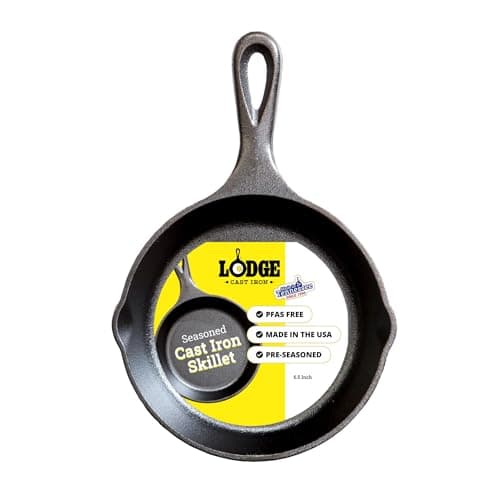
If the pan is cracked, this is the replacement cost
Worth knowing before you spend a weekend on a restoration. A new pre-seasoned skillet costs less than most people expect, which is part of the calculation.
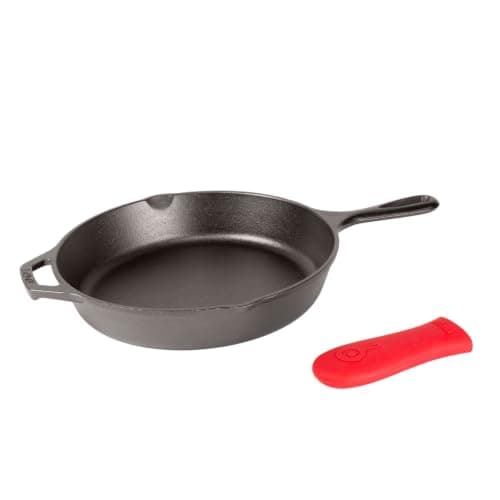
Lodge Seasoned Cast Iron Skillet, 10.25 in (L8SK3)
Searing, cornbread, and anyone who wants one pan that cannot be worn out
These are the products this page's reasoning actually points at. Same rules as everywhere else on the site: published specs, a stated trade-off, and a live price only where one exists.
Top pick · The pan worth restoringSpecs read September 3, 2026
Lodge Seasoned Cast Iron Skillet, 10.25 in (L8SK3)
If the pan you are restoring is beyond saving, this is what replacing it costs - which is part of the calculation.
Best for: Searing, cornbread, and anyone who wants one pan that cannot be worn out
Published specifications for the Lodge Seasoned Cast Iron Skillet, 10.25 in (L8SK3)
Diameter
10.25 in
Weight
5.66 lb
Oven maximum
550F
Induction
Yes - bare iron is ferrous
Seasoning
Pre-seasoned with soy-based vegetable oil, no synthetic chemicals
Warranty
Lifetime
Made in
USA
Care
Hand wash. Lodge's own instructions permit warm soapy water
Good
Effectively unbreakable and fully restorable - a rusted one can be stripped and re-seasoned
Holds heat better than anything else at the price, which is what a sear needs
Lodge publishes its seasoning method openly, so the maintenance is not a mystery
Not good
Heavy
Heats unevenly on a small burner: cast iron conducts at roughly 50 W/m-K, so it is slow to spread and slow to react
Bare iron is reactive; long tomato braises will taste of it
The trade-off. It weighs 5.66 lb empty. You will feel that every time you move it full, and it is the single most common reason a cast iron skillet ends up in a cupboard.
Skip this if. You have wrist or shoulder trouble, or you cook mostly acidic braises. Carbon steel does most of the same jobs at roughly half the weight.
Scrub it with steel wool, warm water and dish soap until no orange comes off on a paper towel, dry it immediately on a burner rather than a rack, rub in a very thin film of neutral oil, then bake it upside down at 450F to 500F for an hour.
›Can you use dish soap on rusty cast iron?
Yes. Modern dish soap is a detergent, not lye, and it does not strip polymerized seasoning. On a rusted pan you are removing the rust anyway, so soap is entirely appropriate and makes the job faster.
›Does vinegar remove rust from cast iron?
Yes, and aggressively. A one-to-one vinegar and water soak works, but it must be watched and limited to about an hour, checking every fifteen minutes. Left longer it starts etching the iron itself rather than just the rust.
›Is a rusty cast iron pan ruined?
Almost never. Rust, pitting and discoloration are all cosmetic and fixable. The only genuinely terminal faults are a crack, which you can hear as a thud rather than a ring when you tap the pan, and a base warped enough to spin.
›What is the black stuff flaking off my cast iron pan?
Failed seasoning, not rust. It is polymerized oil applied too thickly or never fully cured. Scrubbing at it will not help; it has to be stripped back to bare metal and the seasoning started again in thin layers.
Sources
Every figure on this page came from one of these. Follow them and check our arithmetic — that is the point.