Heads up: some links on this page earn us a commission at no extra cost to you. It does not change what we recommend or the order. How we are funded.
The short answer
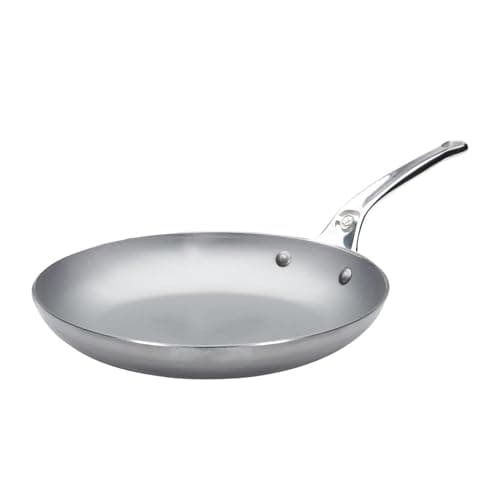
Carbon steel is fully oven, broiler and grill safe as long as the handle is bare metal. The steel itself tolerates any temperature a domestic oven or a charcoal grill produces, and high heat builds seasoning rather than damaging it. The limits are all in the handle: wooden handles, common on woks, are not oven safe at all, and epoxy-coated or lacquered handles are rated lower than the pan. Check what your handle is made of before assuming.
The metal has no meaningful limit
Carbon steel is iron with a small amount of carbon and nothing else - no coating, no cladding, no bonded layers to delaminate and no enamel to craze. There is no temperature a home oven, a broiler or a charcoal grill reaches that troubles it.
High heat is also how seasoning is built. Oil polymerizes into a hard film at and above its smoke point, so a pan that spends time under a broiler or over coals is being seasoned by the experience rather than damaged by it. This is the opposite of every coated pan, and it is the material's central advantage - seasoning carbon steel.
The handle is the whole question
This is where carbon steel differs from cast iron, and it is why this page exists separately from cast iron in the oven and on the grill. A cast iron skillet's handle is cast as one piece with the pan - there is nothing to melt, and no ceiling to check. Carbon steel handles are separate parts, riveted or welded on, and they vary enormously.
Handle type
Oven
Broiler
Grill or fire
Bare riveted steel
Yes, unlimited
Yes
Yes
Epoxy-coated or lacquered steel
Check the maker's rating
No
No
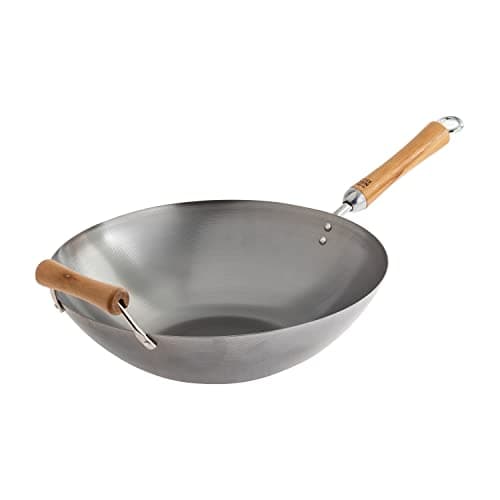
Wood, on a wok
No
No
Handle stays outside the flame
Wood, riveted on a skillet
No
No
No
Stainless, riveted
Yes, unlimited
Yes
Yes
Silicone sleeve over steel
Remove the sleeve first
Remove it
Remove it
The pan is not the variable. Identify the handle and you have your answer.
A bare steel handle reaches the same temperature as the pan and gives no warning. Assume every carbon steel handle is scorching hot at all times, including on the stovetop, and keep a dry towel or a handle cover within reach.
Before the first high-heat session
Most carbon steel pans ship with a protective coating to prevent rust in transit - de Buyer uses beeswax, others use a food-safe lacquer or oil. That coating must come off before the pan is used at all, and it will smoke heavily and smell if you put a coated pan straight into a hot oven.
Scrub it off with hot water and a little soap, dry the pan on the burner, then season it. Only then is the pan ready for a broiler or a grill - carbon steel problems and fixes covers what goes wrong if you skip this.
In the oven
Finishing on the stove, then the oven
The strongest use case. Sear a steak or a chicken thigh on the stovetop, then move the whole pan into a hot oven to finish through. Carbon steel is better at this than cast iron for one reason: it is substantially lighter, so moving a hot loaded pan from hob to oven and back is a manageable single-handed job rather than a two-handed event - best pans for searing steak.
Roasting
Carbon steel roasts vegetables and small joints well, and takes any temperature. It is shallower than a roasting pan, which helps browning in a fan oven - cookware for convection ovens.
Baking
It works, with one caveat. Anything acidic - a tomato tart, a fruit galette with a lot of juice - will attack the seasoning during a long bake and may pick up a metallic note. Short bakes and non-acidic ones are fine - cooking acidic foods and reactive cookware.
Under the broiler
Entirely fine with a bare metal handle, and genuinely useful - the broiler is the closest a home kitchen gets to commercial overhead heat, and carbon steel is what professional kitchens use under it.
Two practical points. The handle will be dangerously hot and gives no visual clue, so use a mitt every single time without thinking about it. And the intense radiant heat will darken the pan further, which is seasoning building rather than damage.
On the grill and over fire
Carbon steel is arguably better outdoors than cast iron, because the weight penalty matters more when you are carrying a pan to a grill or a campsite and the thermal mass matters less when the heat source is enormous.
On a gas or charcoal grill: use it as a flat cooking surface for vegetables, shrimp and anything that would fall through the grates.
Over a campfire: excellent, and this is what carbon steel woks and paella pans were designed around. Expect soot on the outside, which wipes off and does not matter.
On a wok burner or outdoor ring: the natural home for a carbon steel wok, and the reason wok handles are wooden - they sit outside the flame and stay holdable - best carbon steel woks.
Directly in coals: possible with a bare-handled pan. The seasoning will burn off in places and need rebuilding, which is a chore rather than a disaster.
Where carbon steel loses to cast iron outdoors is covered cooking. A thin steel pan has no lid and not enough mass to hold a stable braise.
What high heat actually costs you
Color change. Carbon steel discolors unevenly with high heat - blues, browns and patchy blacks. It is cosmetic and it is what the material does.
Warping is possible on thin pans. Very thin carbon steel can oil-can under uneven heat. It frequently settles back with use, and never run cold water into a hot pan - why pans warp.
Seasoning can burn off in patches at grill and fire temperatures. Wipe with oil while warm afterward and it rebuilds.
Rust after an outdoor session is the real risk, because pans get put away damp or left out overnight. Dry on heat, oil, then store.
Riveted wooden handles will char. There is no recovery and no reason to find out.
Carbon steel or cast iron for this?
Take carbon steel when you need to move the pan, when you want it to respond to heat changes quickly, or when weight is a consideration. Take cast iron when the pan will sit still and needs to hold a temperature - a large cold steak, a long bake, or a covered braise where the lid and the mass do the work.
These are the products this page's reasoning actually points at. Same rules as everywhere else on the site: published specs, a stated trade-off, and a live price only where one exists.
Top pick · Best for the oven and the grillSpecs read September 3, 2026
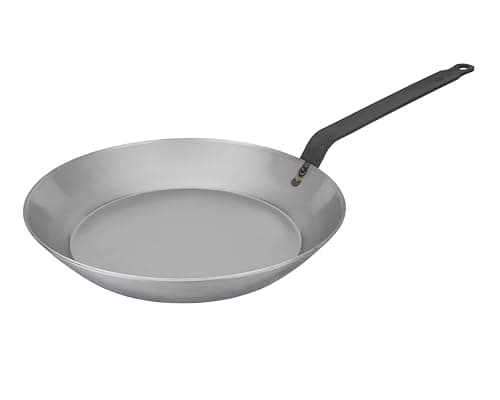
Matfer Bourgeat Black Carbon Steel Fry Pan, 11 in (062004)
A one-piece riveted steel handle with nothing on it to burn or melt, which is exactly what unlimited oven use requires.
Best for: Someone who would rather buy the pan a commercial kitchen buys
Yes, provided the handle is bare metal. The steel itself tolerates any temperature a home oven produces and high heat builds seasoning rather than harming it. Wooden handles are not oven safe, and epoxy-coated or lacquered handles carry a lower rating set by the coating.
›Can you put carbon steel under the broiler?
Yes, with a bare metal handle, and it is one of the material's genuine strengths - professional kitchens use carbon steel under overhead heat for exactly this reason. The handle will be dangerously hot with no visual warning, so use a mitt every time.
›Can you use a carbon steel pan on a grill or over a fire?
Yes, and it is arguably better than cast iron outdoors because it weighs much less while the enormous heat source makes thermal mass less important. Expect soot on the outside, expect seasoning to burn off in patches, and dry and oil the pan before storing it.
›Can a carbon steel wok go in the oven?
Usually not, because most woks have wooden handles that will char. The wooden handle is the correct design for a pan meant to sit over a flame, since it stays outside the heat and remains holdable. Check your specific wok before assuming.
›Does high heat damage carbon steel seasoning?
Ordinary oven and broiler heat builds seasoning rather than damaging it, because polymerization happens at and above an oil's smoke point. Grill and open-fire temperatures can burn seasoning off in patches, which is repaired by wiping the warm pan with oil afterward.
Sources
Every figure on this page came from one of these. Follow them and check our arithmetic — that is the point.