Heads up: some links on this page earn us a commission at no extra cost to you. It does not change what we recommend or the order. How we are funded.
The short answer
Material
Reactive?
Acidic cooking
Stainless steel
No
Unlimited - the default choice
Enameled cast iron
No
Unlimited - glass surface
Glass and ceramic
No
Unlimited
Coated nonstick
No
Unlimited, within its heat limits
Bare cast iron
Mildly, once seasoned
Short simmers only, roughly 30 minutes
Carbon steel
Mildly, once seasoned
Short simmers only - acid strips seasoning
Bare aluminum
Yes
Avoid - metallic taste and pitting
Unlined copper
Strongly
Avoid entirely for food
What is actually happening
Acidic foods - tomatoes, wine, vinegar, citrus, and to a lesser degree buttermilk and some fruits - dissolve small quantities of metal from a reactive pan surface. The dissolved metal goes into the food, where you taste it, and leaves the pan, where you see it as dulling, darkening or pitting.
That is the entire mechanism. Everything else on this page is which metals do it, how fast, and whether it matters.
The nonreactive materials, and why
Stainless steel
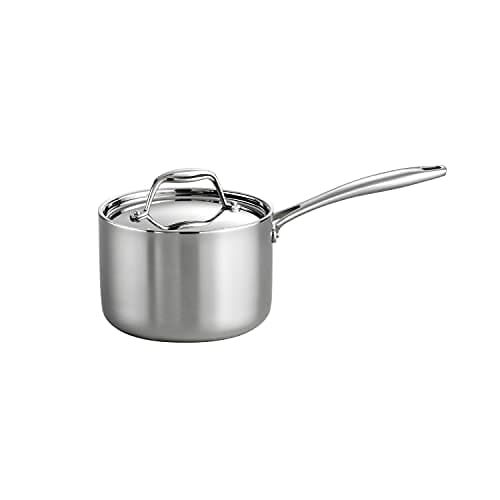
Stainless is stainless because chromium in the alloy forms a thin, self-repairing chromium oxide layer on the surface. Acid does not get through it in any timescale relevant to cooking. This is why stainless is the default for tomato sauces, pan sauces deglazed with wine, and anything with lemon in it - is stainless steel cookware safe covers the material in full.
Enamel
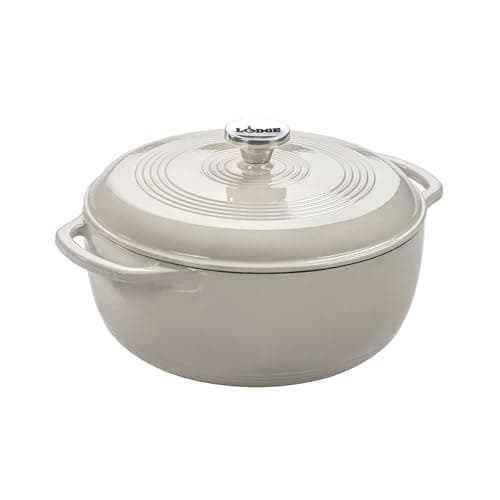
Enamel is glass fused to iron. The food never touches metal, so an enameled Dutch oven is fully nonreactive and will hold a tomato braise for as long as you want. This is most of why the shape and the finish became the standard for long-cooked acidic dishes - enameled cast iron care.
Glass, ceramic and coatings
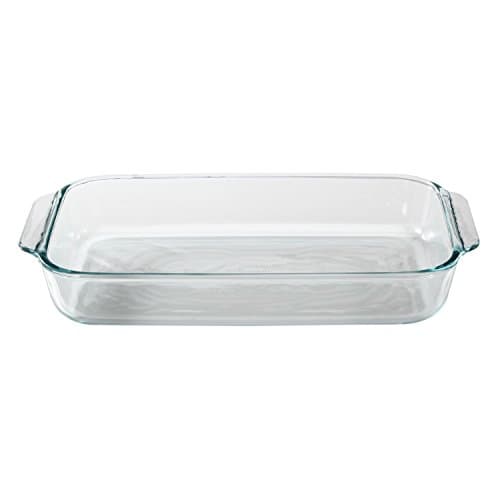
Glass and glazed ceramic react with nothing. Nonstick coatings, PTFE and ceramic alike, are inert to food acids - a coated pan's limits are heat and abrasion, not chemistry - is nonstick safe.
The reactive materials
Bare aluminum: the main offender
Uncoated aluminum reacts readily. Simmer tomato sauce in a bare aluminum pan and you get a distinctly metallic taste and a pan that turns dull gray where the sauce sat. This is the main reason the light commercial aluminum pans professionals favor are a poor general-purpose choice at home - restaurant cookware for home kitchens.
Two important exceptions. Anodized aluminum has a hardened, sealed surface and is substantially less reactive, which is a genuine selling point of hard-anodized lines - best hard-anodized cookware. And the aluminum core of a clad pan never touches food at all, so a clad stainless pan is nonreactive regardless of what is inside it.
Unlined copper
Copper reacts strongly with acid and copper is not something to be ingesting in quantity. Culinary copper is therefore lined, historically with tin and now usually with stainless. Unlined copper has exactly one traditional food use, egg whites, and one common one, jam - both short, both specific. If the lining on a copper pan has worn through to bare copper, that pan needs re-lining before further use - best copper cookware.
Bare cast iron and carbon steel: the nuanced case
Seasoning is a layer of polymerized oil, and it is a genuine barrier - but it is a thin organic one, and acid degrades it. A quick pan sauce with a splash of wine in a well-seasoned skillet is completely fine and is standard technique. A two-hour tomato simmer is not: it will strip seasoning, expose bare iron, put an unmistakable metallic note into the sauce, and leave you re-seasoning the pan.
The practical rule is about thirty minutes on a well-established seasoning, and less on a new pan. Deglazing, which takes a minute, is never a problem. This is one of the most common causes of a sauce tasting wrong for no apparent reason - cast iron problems and fixes and carbon steel problems and fixes.
A new cast iron or carbon steel pan is far more reactive than a mature one, because the seasoning is thin. Save the tomato sauce until the pan has had a few months of ordinary cooking.
How acidic is acidic?
Ingredient
Roughly
Matters in a seasoned iron pan?
Lemon juice, vinegar
Strongly acidic
Yes - keep contact brief
Tomatoes, tomato paste
Acidic
Yes for long simmers, no for a quick saute
Wine, for deglazing
Acidic
No - the contact is a minute or two
Buttermilk, yogurt
Mildly acidic
Rarely, unless left standing
Fruit, in a cobbler
Mildly acidic
No - short bake, and mostly sugar
Stock, water, dairy
Neutral
No
Time and temperature matter as much as acidity. Hot and long is what does damage; cold and brief does very little. Marinating in a metal bowl overnight is worse than a hot fifteen-minute simmer, which surprises people.
Is it dangerous, or just unpleasant?
For seasoned iron, the effect is culinary rather than a health concern - iron is a nutrient, and the quantities involved are small. People with hemochromatosis are the exception and should raise it with a doctor rather than with a cookware site.
For aluminum, the practical issue is taste and pan damage; the dietary contribution from cookware is small relative to other sources. For unlined copper, the caution is real and is the reason culinary copper has been lined for centuries.
Where a recipe wants gentle heat and contains acid - lemon curd, hollandaise - stainless or glass over water solves both problems at once.
These are the products this page's reasoning actually points at. Same rules as everywhere else on the site: published specs, a stated trade-off, and a live price only where one exists.
Top pick · The nonreactive defaultSpecs read September 3, 2026
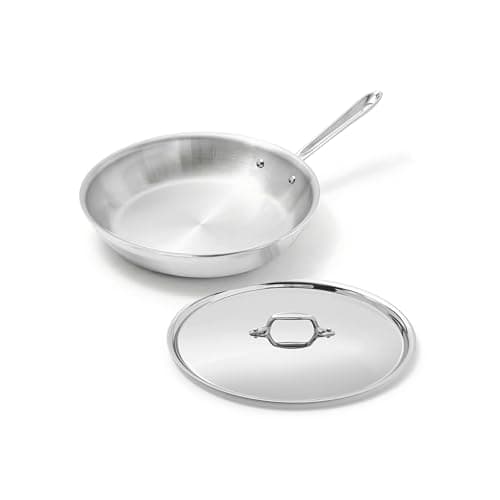
All-Clad D3 Stainless 10 in Fry Pan
Fully clad stainless with a stainless cooking surface - the pan that does not care what you put in it.
Best for: One good open-stock stainless pan bought instead of a cheap full set
Published specifications for the All-Clad D3 Stainless 10 in Fry Pan
Construction
Fully bonded tri-ply, aluminum core
Oven maximum
600F, oven and broiler safe
Induction
Yes - compatible with any stovetop
Dishwasher
Handwash only (All-Clad published)
Handle
Double-riveted stainless
Weight
3.0 lb (model 4110)
Warranty
Limited lifetime
Made in
Bonded, engineered and assembled in Canonsburg, PA
Good
600F is the highest oven ceiling of any stainless pan on this site
The one pan here whose manufacturing location is published down to the town
Genuinely repairable-adjacent: rivets are the only failure point and the warranty covers them
Not good
Hand wash only
The flared rim makes it a poor pan for anything with liquid
Costs several times what a Tramontina or Cuisinart pan of the same construction costs
The trade-off. Hand wash only. All-Clad publishes that plainly, and it is a real daily cost on a pan you will use every day.
Skip this if. You want a dishwasher-safe pan, or you are buying a whole kitchen on a fixed budget - one D3 skillet costs what a full clad set can cost.
Published specifications for the Lodge Enameled Cast Iron Dutch Oven, 6 qt
Material
Cast iron with porcelain enamel, inside and out
Capacity
6 qt
Induction
Yes - the iron under the enamel is ferrous
Seasoning
None required - enamel is not a seasoning surface
Acid
Safe for tomato and wine, unlike bare iron
Oven maximum
Set by the knob material - check the specific SKU; Lodge publishes a lower ceiling than for bare iron
Good
Non-reactive, so it handles the acidic cooking bare iron cannot
No seasoning to maintain
Considerably cheaper than the French enameled pots it copies
Not good
Chipped enamel is not repairable, unlike bare iron's seasoning
Oven ceiling is lower than bare cast iron because of the knob
Heavy, and the enamel makes it heavier than bare iron of the same capacity
The trade-off. The enamel is a glass layer. Chip it and the pot is not restorable the way bare iron is, and Lodge's enamel chips more readily than the premium brands'.
Skip this if. You already own a large stainless stockpot and rarely braise. This duplicates it for most weeknight cooking.
Briefly, on a well-seasoned pan - a quick saute or a deglaze is fine. A long simmer is not, because acid degrades the polymerized oil layer, exposes bare iron and puts a metallic taste in the sauce. About thirty minutes is the practical limit, and less on a new pan.
›What is nonreactive cookware?
Cookware whose food-contact surface does not dissolve into acidic food. Stainless steel, enamel, glass, glazed ceramic and nonstick coatings are all nonreactive. Bare aluminum, unlined copper and bare cast iron are reactive to varying degrees.
›Why does my tomato sauce taste metallic?
The pan is reacting with the acid. Bare aluminum is the usual cause, and a long simmer in bare cast iron or carbon steel is the other. Move the sauce to stainless or enameled cast iron and the taste does not occur.
›Is it safe to cook acidic food in aluminum?
The dietary contribution from cookware is small relative to other sources, so the practical problems are taste and pan damage rather than safety. Bare aluminum pits and dulls where acidic food sits. Anodized aluminum is substantially less reactive, and the aluminum core of a clad pan never touches food at all.
›Can you leave acidic food in a stainless steel pan?
Yes, stainless is unaffected by food acids in any cooking timescale. Storing leftovers in the pan is still worth avoiding for other reasons, but the acid itself is not a problem with a stainless surface.
Sources
Every figure on this page came from one of these. Follow them and check our arithmetic — that is the point.