One is a fluoropolymer film with a temperature limit. One is a silica-derived coating that quietly stops releasing. Neither lasts, and neither maker will say how long.
Heads up: some links on this page earn us a commission at no extra cost to you. It does not change what we recommend or the order. How we are funded.
The short answer
PTFE
Ceramic (sol-gel)
What it is
Polytetrafluoroethylene, a fluoropolymer film
Silica-derived coating, sprayed and cured
Release when new
Excellent
Excellent, often slightly better
Release over time
Degrades, generally more slowly
Degrades faster, often without looking worn
Heat limit
Degrades above roughly 500F, can release fumes
Coating rated far higher; the pan body is the limit
Metal utensils
Only on lines published as metal-utensil safe
No
Main concern raised
PFAS chemistry and fume risk when overheated
None specific; the concern is durability
Published lifespan
None
None
Where we stand
We do not make or sell PTFE nonstick cookware or ceramic nonstick cookware. Both link to the same retailer, both pay us the same commission rate, and we earn exactly the same whichever one you buy — or nothing at all if you buy neither, which is sometimes the right answer. Most of the comparison pages that rank for this question are published by companies that sell one of the two. How we are funded.
Two completely different things sold under one word
PTFE
Polytetrafluoroethylene is a fluoropolymer - a long chain of carbon and fluorine. It is extremely slippery, chemically inert, and it has been used in cookware since the 1950s. It is applied in layers and bonded to the pan body, and in a modern pan there are usually two or three layers with a reinforcing layer underneath.
PFOA, the processing aid that generated most of the historical concern, has not been used in US cookware manufacture for over a decade. PTFE itself is a different substance from PFOA, and the FDA maintains a public list of authorized PFAS uses in food contact applications which includes it. The full treatment is in is nonstick cookware safe.
Ceramic
Despite the name, these coatings are not ceramic in the pottery sense. They are sol-gel coatings derived from silicon dioxide - sand - sprayed onto the pan and cured. GreenPan publishes exactly that about Thermolon, along with a PFAS-free and PFOA-free claim and an 850F rating for the coating itself.
That 850F number is worth being careful with. It describes the coating, not the pan. The aluminum body and the handle will fail long before the coating reaches its limit, and the figure gets quoted as though it were an oven rating. It is not.
The two failure modes are genuinely different
This is the part that matters most in practice and it is almost never explained.
PTFE fails mechanically. It gets scratched, gouged and worn through in patches. You can usually see it going - the surface dulls, marks accumulate, and eventually bare metal appears. It gives you warning.
Ceramic fails chemically. Heat cycling gradually changes the surface and it stops releasing, often while still looking immaculate. Owners consistently describe a ceramic pan that looks new and sticks. There is no visual warning, which makes the loss feel more abrupt.
Neither maker publishes a service life for either. That silence is the subject of how long nonstick lasts, and it applies equally to both materials.
Heat behavior, which is the real safety difference
PTFE begins to degrade above roughly 500F and can release fumes at higher temperatures. Those fumes are the basis of the well-known hazard to pet birds, whose respiratory systems are far more sensitive than ours. Reaching those temperatures requires preheating an empty pan on high - normal cooking with food in the pan does not get there, because the food and the moisture in it hold the surface down.
Ceramic does not have this failure mode. Overheat a ceramic pan and it loses release faster; it does not off-gas in the same way. If you have birds, or if you know you preheat empty pans on high and are not going to stop, that is a real reason to choose ceramic.
Ceramic pans usually look perfect right up to the point they stop working, which is the opposite of how PTFE ages.
How to choose, in four questions
Do you want to avoid fluoropolymers on principle? Then ceramic, and accept the shorter release life. This is a values question and it is a legitimate one.
Do you have pet birds? Ceramic, or no coated pans at all.
Is your utensil drawer unpoliced? PTFE, specifically a line published as metal-utensil safe. No ceramic coating is.
Do you want the longest working life for the money? PTFE, treated properly - or a stainless pan and a preheat, which never wears out at all.
The answer a lot of kitchens land on
Own one coated pan and one uncoated one. The coated pan does eggs, fish and pancakes; the uncoated pan does everything that needs heat. That way the coating is only asked to do the job it is good at, it lasts far longer because it never sees high heat, and nothing important depends on it.
Both coatings link to the same retailer and pay the same commission, so this page earns identically whichever you choose - or nothing, if you buy neither.
GreenPan Ceramic Nonstick Cookware Set
Someone who wants nonstick without PTFE and has read what that trades away
These are the products this page's reasoning actually points at. Same rules as everywhere else on the site: published specs, a stated trade-off, and a live price only where one exists.
Top pick · Best ceramicSpecs read September 3, 2026
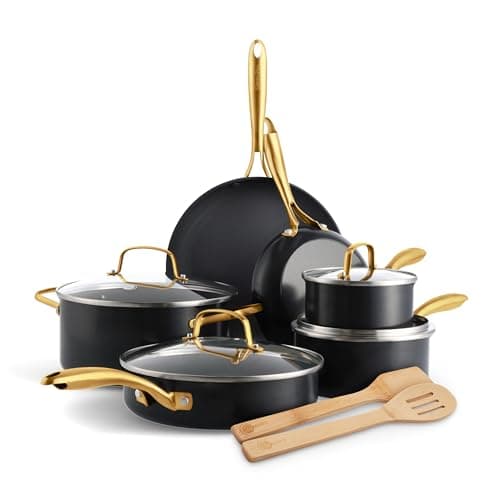
GreenPan Ceramic Nonstick Cookware Set
The only maker here that publishes what its coating is made of, which on a product defined by its coating is the whole argument.
Best for: Someone who wants nonstick without PTFE and has read what that trades away
Published specifications for the GreenPan Ceramic Nonstick Cookware Set
Coating
Thermolon, from sand-derived Silicon Dioxide (SiO2), sprayed
Coating chemistry
PFAS-free, PFOA-free, free of lead and cadmium (GreenPan published)
Coating heat resistance
850F / 450C for the coating itself (GreenPan published)
Body oven maximum
Varies by line and is lower than the coating figure - check the specific line
Coating lifespan
Not published. No ceramic maker publishes one
Good
GreenPan publishes what the coating is made of in plain terms, which most ceramic brands do not
The coating will not release fumes if you overheat it the way PTFE can
Genuinely good release when new
Not good
Release degrades and nobody will tell you how fast
The 850F figure is for the coating, not the pan, and gets quoted as if it were the pan
Ceramic dislikes high heat and dishwashers, which is most of what a set gets used for
The trade-off. Ceramic nonstick loses release with use and no maker publishes a lifespan, GreenPan included. Treat it as a consumable, not a lifetime purchase.
Skip this if. You are buying a set expecting it to last as long as clad stainless. It will not, and the honest move is to buy one ceramic pan alongside a stainless set.
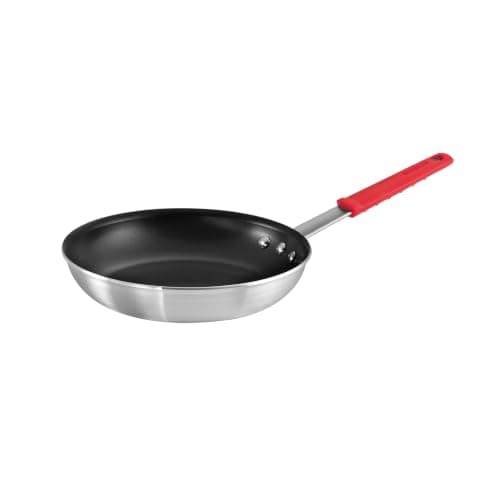
Published specifications for the Tramontina Professional Restaurant Fry Pan, 10 in
Body
Heavy-gauge aluminum
Coating
PTFE nonstick
Induction
No - aluminum body is not ferrous
Coating lifespan
Not published, by this or any nonstick maker
Good
Cheap enough that replacing it every couple of years is a real plan rather than a failure
Heavy gauge for a nonstick pan, so it does not warp on the first hot burner
Silicone handle sleeve that actually stays cool
Not good
Not induction compatible
PTFE, which some buyers will rule out on principle
No published coating lifespan, so the value case is unverifiable by design
The trade-off. It is PTFE. That is fine at normal cooking temperatures, and it is not a pan to preheat empty on high.
Skip this if. You want to avoid PTFE entirely. Buy ceramic instead and accept the shorter release life rather than pretending either one lasts forever.
Neither is better outright. Ceramic avoids fluoropolymers and has no fume risk when overheated; PTFE generally keeps releasing longer and is the only one available in metal-utensil-safe form. Neither manufacturer publishes a service life.
›What is ceramic nonstick actually made of?
A sol-gel coating derived from silicon dioxide - sand - sprayed onto the pan and cured. It is not ceramic in the pottery sense. GreenPan publishes this about Thermolon along with PFAS-free and PFOA-free claims.
›Why did my ceramic pan stop working when it still looks new?
Because ceramic coatings fail chemically rather than mechanically. Heat cycling gradually changes the surface so it stops releasing, with no visual warning. PTFE by contrast wears through visibly, in patches.
›Is PTFE cookware safe?
PTFE is chemically inert at normal cooking temperatures and is on the FDA's list of authorized PFAS uses in food contact applications. It degrades above roughly 500F, which requires preheating an empty pan on high, and those fumes are dangerous to pet birds.
›Does the 850F rating on a ceramic pan mean it is oven safe to 850F?
No. That figure describes the coating alone. The aluminum body and the handle assembly have far lower limits and are what actually govern how hot the pan can go.
Sources
Every figure on this page came from one of these. Follow them and check our arithmetic — that is the point.