Heads up: some links on this page earn us a commission at no extra cost to you. It does not change what we recommend or the order. How we are funded.
The short answer
Buy one well-made inexpensive coated pan, 8 or 10 inches, and use it only for eggs, pancakes and delicate fish. No manufacturer of PTFE or ceramic publishes a coating lifespan, so a coated pan is a consumable — spending heavily on one is buying a wear item at a keepsake price.
Quick picks
The whole answer, on one screen. Tap a row to jump to the full write-up. Every pick below carries a stated trade-off further down — including the one at the top.
#
Product
Best for
Price
1
Tramontina Professional Restaurant Fry Pan, 10 in
Heavy-gauge aluminum so it does not warp on the first hot burner, a silicone handle that stays cool, and cheap enough that replacing it is a plan rather than a failure.
A coated pan is a specialist. This is the clad set it should sit alongside, and it will still be in the kitchen when the coated pan has been replaced twice.
Prices last checked October 19, 2026. Prices move constantly — the number on Amazon when you click is the real one.
How we chose, and why the answer is cheap
We have not cooked in these. We looked at body construction, handle design, induction compatibility, and what each maker publishes about the coating. The method is here.
The recommendation to buy cheaply is not laziness, it is the conclusion the evidence supports. Search any nonstick manufacturer's site for how long the coating lasts and you will find nothing — not GreenPan, which publishes more than anyone about what Thermolon is made of, and not any PTFE brand.
A product category where nobody will state a service life is a category of consumables. Once you accept that, the buying logic follows: get good body construction and a decent handle at the lowest sensible price, and treat the coating as a thing that expires.
What actually matters on a coated pan
The coating is not where the differences are — most manufacturers buy coatings from the same handful of suppliers. The pan underneath is where quality varies.
Body gauge. Thin stamped aluminum warps on the first hot burner, and a warped pan rocks and heats unevenly forever after. Heavy gauge is the single most useful thing to pay for.
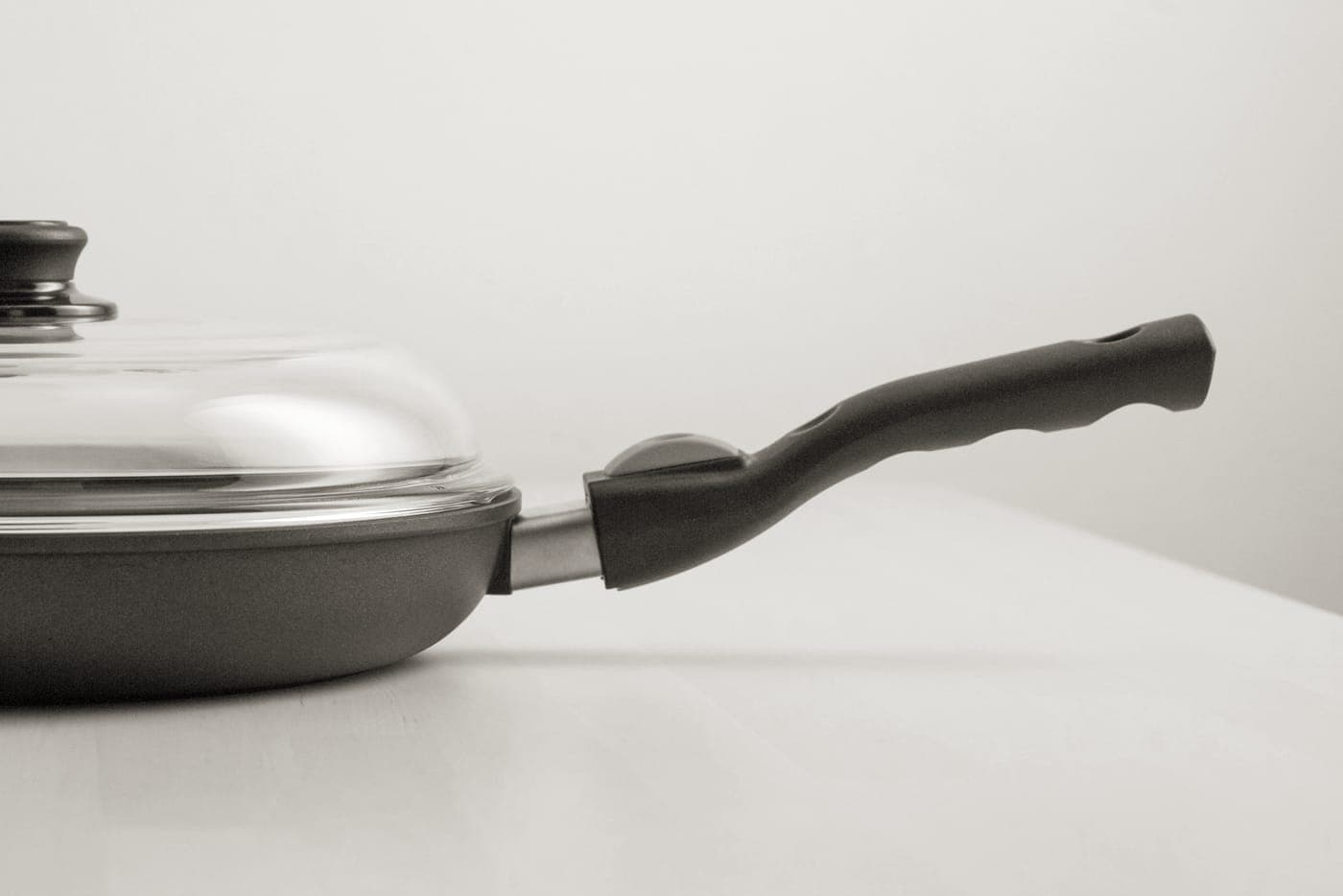
Handle attachment. Riveted outlasts screwed. A screwed handle loosens and cannot usually be re-tightened properly.
Handle material. Silicone or phenolic stays cool; bare metal does not, and on a pan you use for eggs every morning that matters.
Flat base. Set it on a counter and check it does not rock. Essential on glass-top and induction hobs.
Induction compatibility. Most coated pans are aluminum and therefore not magnetic. If you have induction, check for a bonded magnetic base — the Tramontina Professional pan here is not induction compatible.
One pan, 8 or 10 inches
Eight inches for one or two eggs, an omelette, a single fillet. Ten inches for three or four eggs and pancakes.
Do not buy a 12-inch coated pan. At that size you are into territory where you should be browning, and browning is precisely what a coated surface cannot do — it is designed to prevent the protein-to-metal bonding that browning depends on. A 12-inch coated pan is a large pan that cannot do the job large pans are for.
Making it last, which is mostly two rules
Never preheat empty. An empty coated pan on high heat is the single fastest way to destroy a coating, and it is also the genuine safety risk. Fat in first, then heat.
Medium heat, always. Nothing you should be cooking in a coated pan needs more.
Hand wash even where the pan is rated dishwasher safe. Detergent is aggressive and shortens coating life.
Wooden or silicone utensils. Metal scores the coating and the coating is the pan.
No cooking spray. It leaves a polymerized varnish that ruins release and is genuinely difficult to remove.
Do not stack unprotected. A tea towel or a pan protector between stacked pans costs nothing.
The first two rules do most of the work. A coated pan that is never run hot and never heated empty will outlast one that is by years.
Medium, with something in it. That is the entire operating envelope of a coated pan and staying inside it is most of what determines its life.
PTFE or ceramic?
PTFE releases better and lasts longer in general use. It is authorized for food contact under 21 CFR 177.1550, and the FDA states that "studies show negligible amounts of PFAS in this coating can migrate to food." Its weakness is that an overheated pan can produce fumes.
Ceramic contains no PFAS and handles overheating far better — GreenPan publishes that Thermolon withstands 850F. Its weakness is that release declines faster, and nobody publishes how fast.
If the environmental argument about fluoropolymers matters to you, buy ceramic — that is a coherent reason and it is the honest one. If it does not, PTFE is the more practical pan. Fuller treatment in is nonstick cookware safe and is ceramic cookware safe.
When to replace it
When food starts sticking and you find yourself using more fat and more heat to compensate. That is the pan telling you it is finished, and the temptation to push through is exactly how a mildly worn pan becomes an overheated one.
There is no salvage. Coatings cannot be restored, and pans sold as "re-coatable" are almost never worth the cost. This is the fundamental difference between coated cookware and cast iron seasoning, which can be redone indefinitely.
If you find yourself replacing coated pans often, the usual cause is using one as a general-purpose pan. A coated pan for eggs and a clad or iron pan for everything else is cheaper over five years than replacing a coated pan every eighteen months.
Every pick, in full
Each write-up below gives the published specs, what the pan is genuinely good at, what it costs you, and who should skip it. The trade-off line is there on the top pick too — a recommendation with no downside is an advertisement.
Top pick · Best overallSpecs read September 3, 2026
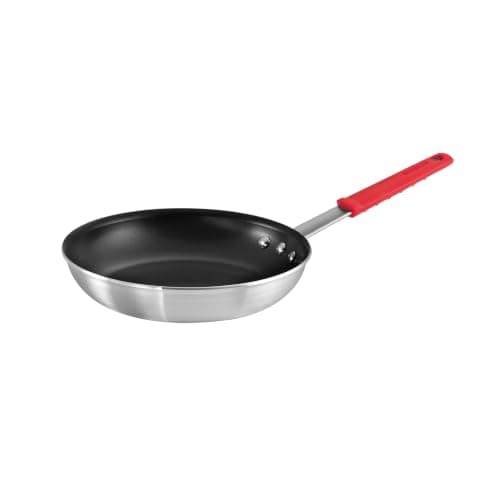
Tramontina Professional Restaurant Fry Pan, 10 in
Heavy-gauge aluminum so it does not warp on the first hot burner, a silicone handle that stays cool, and cheap enough that replacing it is a plan rather than a failure.
Best for: Eggs, pancakes and fish, in a kitchen that also owns a stainless or iron pan
Published specifications for the Tramontina Professional Restaurant Fry Pan, 10 in
Body
Heavy-gauge aluminum
Coating
PTFE nonstick
Induction
No - aluminum body is not ferrous
Coating lifespan
Not published, by this or any nonstick maker
Good
Cheap enough that replacing it every couple of years is a real plan rather than a failure
Heavy gauge for a nonstick pan, so it does not warp on the first hot burner
Silicone handle sleeve that actually stays cool
Not good
Not induction compatible
PTFE, which some buyers will rule out on principle
No published coating lifespan, so the value case is unverifiable by design
The trade-off. It is PTFE. That is fine at normal cooking temperatures, and it is not a pan to preheat empty on high.
Skip this if. You want to avoid PTFE entirely. Buy ceramic instead and accept the shorter release life rather than pretending either one lasts forever.
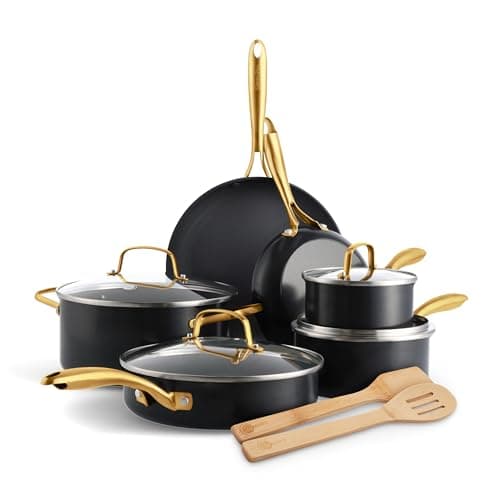
Published specifications for the GreenPan Ceramic Nonstick Cookware Set
Coating
Thermolon, from sand-derived Silicon Dioxide (SiO2), sprayed
Coating chemistry
PFAS-free, PFOA-free, free of lead and cadmium (GreenPan published)
Coating heat resistance
850F / 450C for the coating itself (GreenPan published)
Body oven maximum
Varies by line and is lower than the coating figure - check the specific line
Coating lifespan
Not published. No ceramic maker publishes one
Good
GreenPan publishes what the coating is made of in plain terms, which most ceramic brands do not
The coating will not release fumes if you overheat it the way PTFE can
Genuinely good release when new
Not good
Release degrades and nobody will tell you how fast
The 850F figure is for the coating, not the pan, and gets quoted as if it were the pan
Ceramic dislikes high heat and dishwashers, which is most of what a set gets used for
The trade-off. Ceramic nonstick loses release with use and no maker publishes a lifespan, GreenPan included. Treat it as a consumable, not a lifetime purchase.
Skip this if. You are buying a set expecting it to last as long as clad stainless. It will not, and the honest move is to buy one ceramic pan alongside a stainless set.
#3 · What should be doing the rest of your cookingSpecs read September 3, 2026
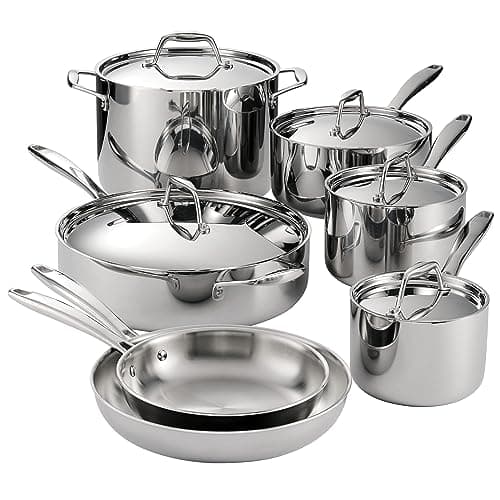
Tramontina Signature Tri-Ply Clad 12-Piece Set
A coated pan is a specialist. This is the clad set it should sit alongside, and it will still be in the kitchen when the coated pan has been replaced twice.
Best for: A first kitchen that should not need replacing
Published specifications for the Tramontina Signature Tri-Ply Clad 12-Piece Set
Construction
Tri-ply: 18/10 stainless, aluminum core, magnetic stainless exterior
Pieces
8 in and 10 in fry pans; 1.5, 2 and 3 qt covered saucepans; 5 qt covered deep saute; 8 qt covered stockpot
Oven maximum
500F on the 80116-249DS listing; other SKUs in the line are listed at 350F
Induction
Yes - magnetic stainless exterior
Dishwasher
Listed dishwasher safe
Handles
Precision cast, riveted
Certification
NSF-certified on the 80116-249DS line
Country of origin
Not asserted - retail listings disagree across SKUs (Brazil and China both appear)
Good
Fully clad, not disc-bottom: the aluminum runs up the sidewalls, so sauces do not scorch in a ring at the base
NSF certification on the flagship SKU is a real, checkable third-party mark rather than a marketing badge
Induction-ready without paying an induction premium
Not good
Retail listings disagree on the oven maximum across SKUs in the same line, which is a documentation problem, not a cooking one
Handles run hot on gas
The 12-piece count includes lids; the useful-item count is seven
The trade-off. Handles are the weak point. They are riveted and sturdy, but they get hot on a gas ring in a way the more expensive clad brands' do not.
Skip this if. You want a set you can leave in the oven above 500F, or you cook mostly eggs and pancakes and would rather spend the money on one good nonstick pan.
A well-made inexpensive one, 8 or 10 inches, with a heavy-gauge body and a riveted cool handle. No manufacturer publishes a coating lifespan, so a coated pan is a consumable and spending heavily on one buys a wear item at a keepsake price.
›How do you make a nonstick pan last longer?
Never preheat it empty, keep the heat at medium, hand wash it, use wooden or silicone utensils, avoid cooking spray, and do not stack pans unprotected. The first two rules account for most of the difference.
›When should you replace a nonstick pan?
When food starts sticking and you are compensating with more fat and more heat. There is no way to restore a coating, and pushing a worn pan harder is how it ends up overheated.
›Should I buy a big nonstick pan?
No. Above about 10 inches you are into pans meant for browning, and a coated surface is specifically designed to prevent the bonding that browning depends on. Sear in stainless or cast iron instead.
›Are expensive nonstick pans better?
The body and handle can be better made. The coating usually is not - most brands buy from the same handful of suppliers, and none of them publishes a lifespan. Pay for gauge and handle, not for the coating.
Sources
Every figure on this page came from one of these. Follow them and check our arithmetic — that is the point.