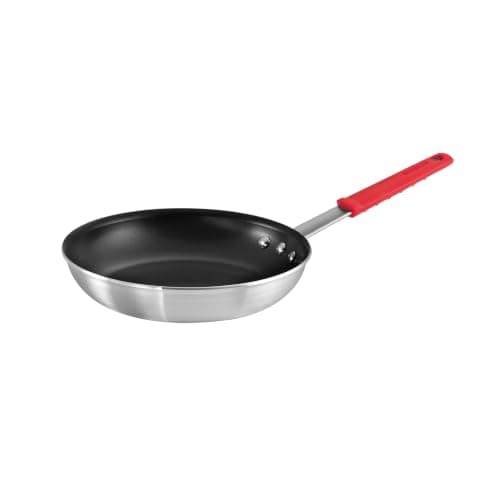
Eggs are the job nonstick actually wins. Which means the specification that matters is not the coating brand - it is the size, the slope and how well you can control the heat.
Heads up: some links on this page earn us a commission at no extra cost to you. It does not change what we recommend or the order. How we are funded.
The short answer
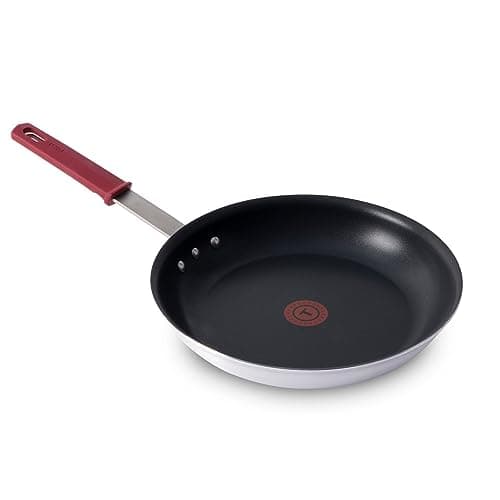
Buy an 8 or 10 inch coated skillet with well-sloped walls, and spend as little as you reasonably can, because the coating is a consumable no maker publishes a lifespan for. The Tramontina Professional is the default: heavy gauge for a coated pan, a cool silicone handle, and cheap enough that replacing it is a plan rather than a failure. Pay more only for something you will notice every day - OXO's handle and rolled pour edge, or T-fal's heat indicator, which fixes the mistake that ruins most eggs.
Quick picks
The whole answer, on one screen. Tap a row to jump to the full write-up. Every pick below carries a stated trade-off further down — including the one at the top.
#
Product
Best for
Price
1
Tramontina Professional Restaurant Fry Pan, 10 in
Heavy gauge for a nonstick pan so it does not warp, a handle that stays cool, and a price that makes replacement a plan.
Prices last checked October 20, 2026. Prices move constantly — the number on Amazon when you click is the real one.
How we chose these
We have not cooked in them. Everything here is compiled from what the manufacturers publish - body material, coating type and chemistry, oven ceiling, induction compatibility, dishwasher guidance and handle construction - plus the geometry you can read off a product photograph. The method is here.
One specification is missing from every pan on this page and it is the one buyers most want: how long the coating lasts. Not one manufacturer publishes it. That absence shapes every recommendation below and is examined in how long nonstick lasts.
What actually matters for eggs
Size: 8 or 10 inches, and no more
Two eggs need a small pan. In a 12-inch skillet they spread thin, cook unevenly and are impossible to fold, and the extra surface simply burns butter. Eight inches suits one or two eggs and a folded omelet; ten inches suits three eggs or a scramble for two. Twelve inches is a pan for other jobs.
Wall angle: sloped, and generously
A spatula has to meet the food rather than the wall. The flatter the slope, the easier the slide-and-fold motion an omelet needs. This is the geometry argument made in full in saute pan versus skillet, and eggs are the clearest case for the sloped shape.
Heat control, which is where eggs actually go wrong
Eggs want moderate, steady heat. Too low and they weep; too high and the whites set into rubber before the yolk moves. The pans that suit eggs best are the ones that hold a moderate temperature rather than the ones that get hottest - which is why a thin pan on a strong burner is harder to cook eggs in than a heavier one on a modest flame.
Body and weight
Heavier gauge resists warping, and a warped nonstick pan is the most common way these pans die - the base spins on a smooth top and never sits flat again. Hard-anodized bodies resist the denting that ruins cheap aluminum. What anodizing does and does not do is in best hard-anodized cookware.
What the four publish
Body
Coating
Oven max
Induction
The reason to pick it
Tramontina Professional
Heavy-gauge aluminum
PTFE
Not published
No
Price, weight and a cool handle
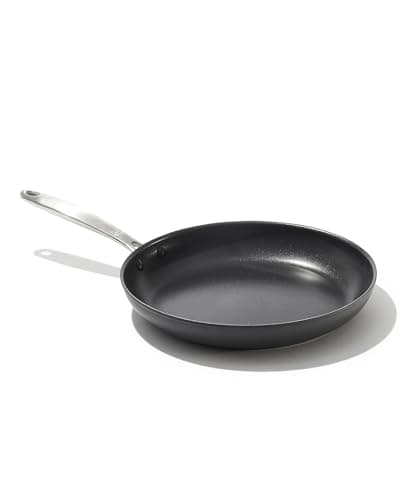
OXO Good Grips Pro
Hard-anodized aluminum
Three-layer PTFE, published PFOA-free
430F
No
Handle and rolled pour edge
T-fal Professional
Aluminum
PTFE
400F
No
Thermo-Spot heat indicator
GreenPan Valencia
Aluminum
Thermolon ceramic, published PFAS-free
Varies by line
Varies by line
No PTFE at all
Every figure is the maker's own. None of the four publishes a coating lifespan, which is why no cost-per-year column exists on this page.
None of the standard lines here are induction compatible - Calphalon, OXO and T-fal all publish that their standard aluminum and hard-anodized ranges are not. If you cook on induction, that narrows the coated category sharply, and the magnet test in cookware for induction settles any listing claim in five seconds.
PTFE or ceramic, for this job specifically
For eggs, PTFE releases better for longer and ceramic releases beautifully at first and fades faster. Neither maker will tell you how much faster, because neither publishes a lifespan at all. The two coatings also fail differently - PTFE wears smooth and stops releasing, ceramic loses its release while still looking new - and the comparison is in PTFE versus ceramic nonstick.
If avoiding PTFE is a decision you have already made, buy ceramic deliberately and treat it as a shorter-lived consumable. GreenPan publishes what Thermolon is made of in plain terms, which most ceramic brands do not, and the safety evidence is in is ceramic cookware safe.
A little fat in a nonstick pan is not a failure of the coating. It conducts heat into the egg white and is why a pan-cooked egg browns at the edge rather than steaming.
The technique the pan cannot do for you
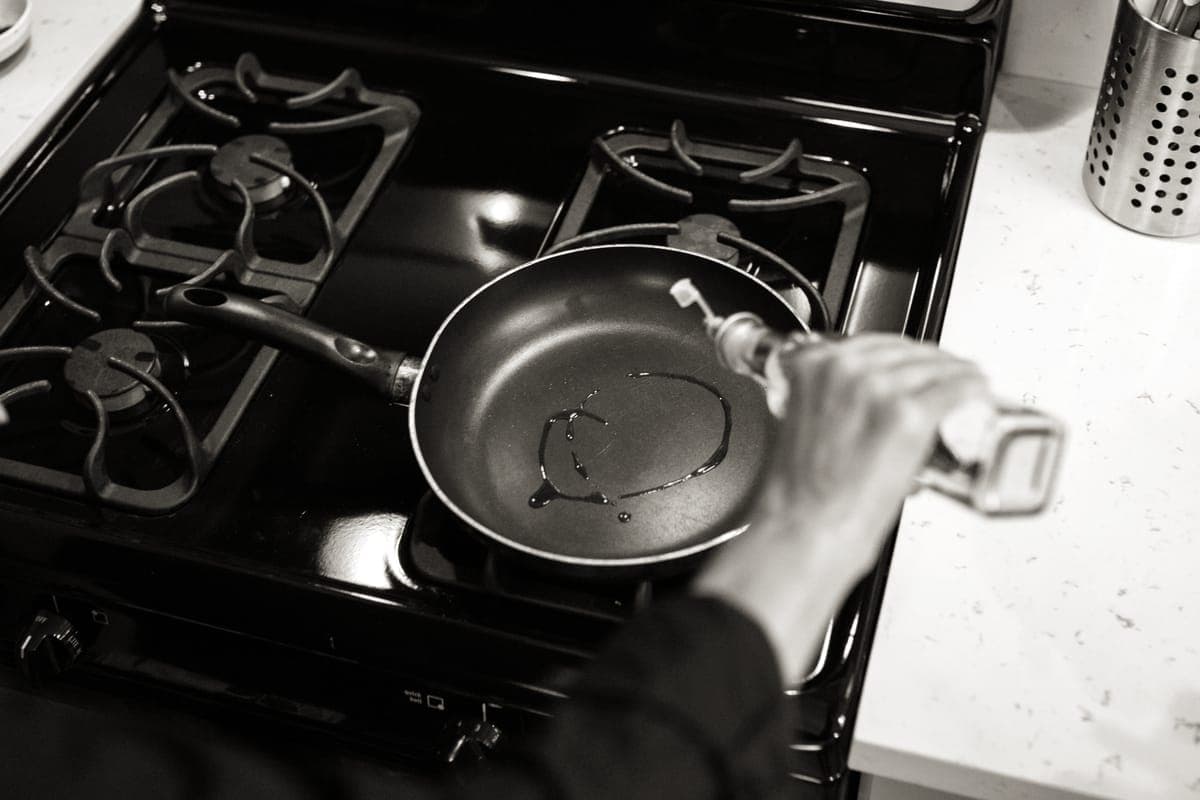
Preheat on medium-low for a minute or two. Not high. A coated pan on high with nothing in it is the one situation worth avoiding, for the reasons in is nonstick cookware safe.
Add butter or oil even though you do not have to. It carries heat into the white and improves the edge.
Use a silicone or nylon spatula unless the maker publishes metal-utensil safety - Calphalon Premier does, and almost nothing else in this category does.
Do not run cold water into a hot pan. Thermal shock warps thin aluminum, and a warped pan is finished.
Nonstick is the easiest answer, not the only one. A well-seasoned carbon steel skillet cooks eggs cleanly and does it for decades, at the cost of weeks of seasoning first - the trade is set out in carbon steel versus nonstick. A well-seasoned cast iron skillet does the same and is heavier.
What does not work is stainless, for eggs specifically. It can be done with enough heat control and enough fat, and there is no reason to make your mornings a technical exercise - the mechanism is explained in why food sticks to stainless steel.
What to avoid
12-inch pans for two eggs. Buy the size that matches the food.
Expensive coated pans bought as lifetime purchases. The warranty excludes coating wear everywhere - cookware warranties explained has the wording.
Steep-walled pans. An omelet needs a ramp.
Very thin pans on a powerful gas burner. They warp, and they overshoot the temperature eggs want.
Aerosol cooking spray. It leaves a residue that builds up and is the one product genuinely worth avoiding on a coated surface.
Each write-up below gives the published specs, what the pan is genuinely good at, what it costs you, and who should skip it. The trade-off line is there on the top pick too — a recommendation with no downside is an advertisement.
Top pick · Best pan for eggsSpecs read September 3, 2026
Tramontina Professional Restaurant Fry Pan, 10 in
Heavy gauge for a nonstick pan so it does not warp, a handle that stays cool, and a price that makes replacement a plan.
Best for: Eggs, pancakes and fish, in a kitchen that also owns a stainless or iron pan
Published specifications for the Tramontina Professional Restaurant Fry Pan, 10 in
Body
Heavy-gauge aluminum
Coating
PTFE nonstick
Induction
No - aluminum body is not ferrous
Coating lifespan
Not published, by this or any nonstick maker
Good
Cheap enough that replacing it every couple of years is a real plan rather than a failure
Heavy gauge for a nonstick pan, so it does not warp on the first hot burner
Silicone handle sleeve that actually stays cool
Not good
Not induction compatible
PTFE, which some buyers will rule out on principle
No published coating lifespan, so the value case is unverifiable by design
The trade-off. It is PTFE. That is fine at normal cooking temperatures, and it is not a pan to preheat empty on high.
Skip this if. You want to avoid PTFE entirely. Buy ceramic instead and accept the shorter release life rather than pretending either one lasts forever.
Published specifications for the OXO Good Grips Pro Hard-Anodized Nonstick Fry Pan, 10 in
Body
Hard-anodized aluminum
Coating
Three-layer PTFE nonstick, published PFOA-free
Oven maximum
430F published for the line
Induction
No on the standard hard-anodized line
Dishwasher
Dishwasher safe
Edge
Rolled, for pouring without dripping down the side
Coating lifespan
Not published
Good
The rolled pour edge is a small thing you notice every single time you use it
The hard-anodized body resists the denting that ruins cheap aluminum pans
Handle stays cool and does not rotate the way riveted plastic ones eventually do
Not good
Not induction compatible
Oven ceiling capped by the handle, not the pan
Still a coating, still a consumable, still no published lifespan
The trade-off. The handle that makes it comfortable is a stainless-and-silicone assembly, and that is what caps the oven rating below the body's own limit.
Skip this if. You need induction. The standard hard-anodized body is not ferrous.
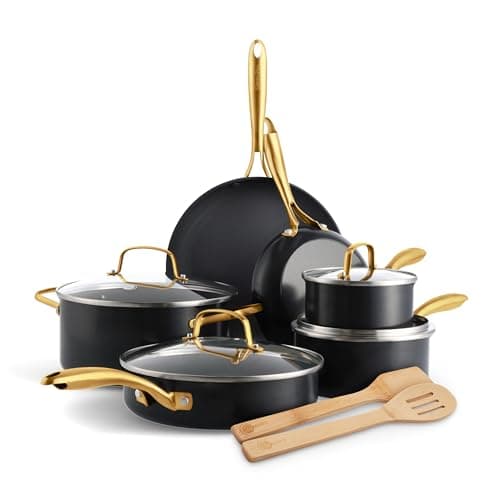
Published specifications for the GreenPan Ceramic Nonstick Cookware Set
Coating
Thermolon, from sand-derived Silicon Dioxide (SiO2), sprayed
Coating chemistry
PFAS-free, PFOA-free, free of lead and cadmium (GreenPan published)
Coating heat resistance
850F / 450C for the coating itself (GreenPan published)
Body oven maximum
Varies by line and is lower than the coating figure - check the specific line
Coating lifespan
Not published. No ceramic maker publishes one
Good
GreenPan publishes what the coating is made of in plain terms, which most ceramic brands do not
The coating will not release fumes if you overheat it the way PTFE can
Genuinely good release when new
Not good
Release degrades and nobody will tell you how fast
The 850F figure is for the coating, not the pan, and gets quoted as if it were the pan
Ceramic dislikes high heat and dishwashers, which is most of what a set gets used for
The trade-off. Ceramic nonstick loses release with use and no maker publishes a lifespan, GreenPan included. Treat it as a consumable, not a lifetime purchase.
Skip this if. You are buying a set expecting it to last as long as clad stainless. It will not, and the honest move is to buy one ceramic pan alongside a stainless set.
Eight inches for one or two eggs and a folded omelet, ten inches for three eggs or a scramble for two. A 12-inch pan spreads two eggs too thin to cook evenly and makes folding an omelet almost impossible.
›Do you need oil in a nonstick pan for eggs?
You do not need it for release, but a little butter or oil carries heat into the white and gives a better edge. Cooking eggs completely dry is possible and it produces a paler, flatter result.
›Is ceramic or PTFE better for eggs?
PTFE releases well for longer. Ceramic releases beautifully when new and fades faster, and no maker of either publishes a lifespan. Choose ceramic if avoiding PTFE matters to you, and treat it as a shorter-lived consumable.
›Why do eggs stick to my nonstick pan?
Usually the coating has worn - release loss is the normal end of life and it happens before any visible damage. The other causes are a pan overheated on high, or a surface with built-up residue from aerosol cooking spray.
›Can you cook eggs in carbon steel or cast iron instead?
Yes, once the pan is properly seasoned - which takes weeks of regular cooking rather than one session. Both then release eggs cleanly and last indefinitely. A brand new bare pan will not, and stainless is the wrong tool for eggs entirely.
Sources
Every figure on this page came from one of these. Follow them and check our arithmetic — that is the point.