Heads up: some links on this page earn us a commission at no extra cost to you. It does not change what we recommend or the order. How we are funded.
The short answer
Cast iron is worth it if you sear meat, bake cornbread, or want one pan that will outlast every other pan you buy - it costs little, tolerates any heat, moves from stove to oven without thinking, and improves with use. It is not worth it if you mostly cook eggs and delicate fish, if lifting a heavy pan is difficult, or if you will not dry and oil it after washing. It is a specialist that happens to be cheap, not a general-purpose pan.
What you actually get
Thermal mass, which is the real product
A cast iron skillet stores a great deal of heat. When a cold steak hits it, the surface temperature barely drops, so the crust forms immediately instead of the meat stewing in its own juices while the pan recovers. This is the one thing cast iron does that thin pans genuinely cannot, and it matters most on domestic stoves, where burner output is modest - best pans for searing steak.
No ceiling
Lodge publishes 550F, and bare iron has no coating to degrade, no handle sleeve to melt and nothing that objects to a broiler or a grill. Stove to oven to table is a single motion - cast iron in the oven and on the grill.
It does not wear out
Coatings have an unpublished lifespan and a replacement cycle. Cast iron has neither. The surface is rebuildable by definition, because it is made of oil you apply yourself. Pans from a century ago are still in daily use, which is not a claim any other cookware category can make - buy-it-for-life cookware.
It costs very little
This is the part that changes the calculation. A Lodge skillet costs a fraction of a mid-range clad pan and less than many coated pans that will be landfill in three years. Even if you end up not liking it, the downside is small.
What it costs you
The drawback
How real it is
Weight
Very real. A 12 inch skillet is roughly 8 lb empty and awkward one-handed.
Slow to heat
Real. Several minutes on medium, and impatience causes most sticking complaints.
Uneven heating
Real. Iron conducts poorly; it stores heat well but spreads it badly.
Maintenance
Modest but non-negotiable. Dry on heat, wipe with oil. Thirty seconds.
Not nonstick
True. It gets good, never great, and eggs remain the hard case.
Acidic food limits
Real for long simmers, irrelevant for deglazing.
The handle gets hot
Always. There is no version where it does not.
Rusts if neglected
True, and entirely preventable with one habit.
The weight is the one that actually decides it. A pan that is unpleasant to lift, wash and store gets used once a month and then lives at the back of a cupboard. That is the most common cast iron outcome and nobody writes about it - cookware for arthritis and limited grip takes it seriously.
Three cooks who should skip it
You mostly cook eggs, fish and delicate things. A coated pan is simply better at this and no amount of seasoning closes the gap. Buy the coated pan - best nonstick pans.
Lifting a heavy pan is difficult. This is not a character flaw to be overcome. An eight-inch skillet may still work, or carbon steel, or neither.
You will not dry and oil it. An honest answer here saves money. Cast iron asks for thirty seconds after every wash, forever. If that is not going to happen, the pan will rust and you will not enjoy owning it.
There is a fourth case worth naming: a glass cooktop plus a habit of sliding pans around. Cast iron will scratch glass, and it is heavy enough to crack it if dropped - cast iron on glass-top stoves.
Compared with the alternatives
Cast iron
Carbon steel
Clad stainless
Coated
Weight
Heaviest
Moderate
Moderate
Lightest
Searing
Best
Very good
Good
Poor
Eggs
Fair
Good once seasoned
Poor
Best
Heat control
Slow to respond
Responsive
Most responsive
Responsive
Acidic food
Short only
Short only
Unlimited
Unlimited
Maintenance
Dry and oil
Dry and oil
None
None, but wears out
Lifespan
Indefinite
Indefinite
Indefinite
A few years
Cost
Lowest
Low
Highest
Low to moderate
Carbon steel is the comparison most people have not made, and it is the one that changes minds. It sears nearly as well, weighs substantially less, responds faster, and seasons the same way. What it gives up is thermal mass and the ability to hold a stable temperature under a large cold steak - cast iron versus carbon steel, and is carbon steel worth it asks this same question of the other material.
The Dutch oven makes the case more easily than the skillet does - there is no light substitute for a pot that holds heat like this.
If you buy one, which piece?
The skillet is the default recommendation and it is not obviously the right one.
A 10-inch skillet is the best first purchase for most people. Big enough for two, light enough to handle, and it covers searing, cornbread and roasting - what size skillet.
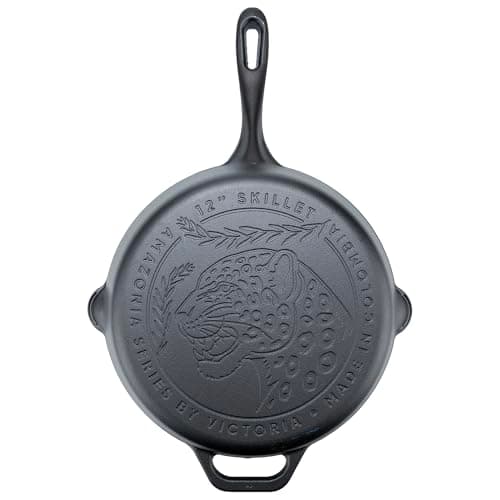
A 12-inch skillet is what people buy and then find heavy. Buy it second, if at all.
An enameled Dutch oven is arguably the stronger case for the material, because there is no lightweight substitute for a pot with that much thermal mass, and the enamel removes the seasoning and acid problems entirely - is a Dutch oven worth it.
Buy one ten-inch skillet. It costs little, it will tell you within a month whether the material suits how you cook, and if it does not, you have lost very little and gained a pan that bakes excellent cornbread.
What cast iron is genuinely bad at is being the only pan you own. Paired with a coated pan for eggs and a clad saucepan for everything wet, it is excellent. Asked to be a general-purpose skillet, it disappoints people, and that is mostly a marketing problem rather than a cookware one - what you actually need.
The pan, the lighter pan, and the two alternatives
Listed in the order most buyers should consider them. The honest answer for some readers is the fourth one.
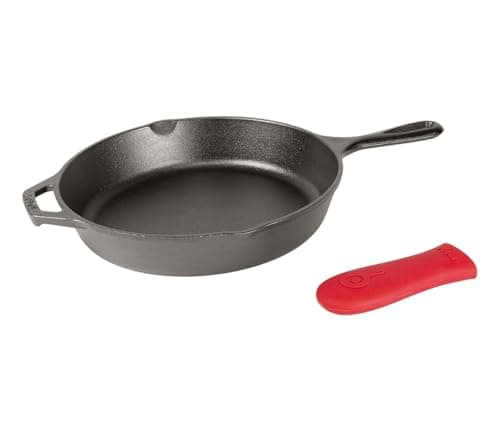
Lodge Seasoned Cast Iron Skillet, 10.25 in (L8SK3)
Searing, cornbread, and anyone who wants one pan that cannot be worn out
These are the products this page's reasoning actually points at. Same rules as everywhere else on the site: published specs, a stated trade-off, and a live price only where one exists.
Top pick · The one to start withSpecs read September 3, 2026
Lodge Seasoned Cast Iron Skillet, 10.25 in (L8SK3)
Ten inches, a named Tennessee foundry, 550F published and a lifetime warranty - the lowest-risk way to find out whether the material suits you.
Best for: Searing, cornbread, and anyone who wants one pan that cannot be worn out
Published specifications for the Lodge Seasoned Cast Iron Skillet, 10.25 in (L8SK3)
Diameter
10.25 in
Weight
5.66 lb
Oven maximum
550F
Induction
Yes - bare iron is ferrous
Seasoning
Pre-seasoned with soy-based vegetable oil, no synthetic chemicals
Warranty
Lifetime
Made in
USA
Care
Hand wash. Lodge's own instructions permit warm soapy water
Good
Effectively unbreakable and fully restorable - a rusted one can be stripped and re-seasoned
Holds heat better than anything else at the price, which is what a sear needs
Lodge publishes its seasoning method openly, so the maintenance is not a mystery
Not good
Heavy
Heats unevenly on a small burner: cast iron conducts at roughly 50 W/m-K, so it is slow to spread and slow to react
Bare iron is reactive; long tomato braises will taste of it
The trade-off. It weighs 5.66 lb empty. You will feel that every time you move it full, and it is the single most common reason a cast iron skillet ends up in a cupboard.
Skip this if. You have wrist or shoulder trouble, or you cook mostly acidic braises. Carbon steel does most of the same jobs at roughly half the weight.
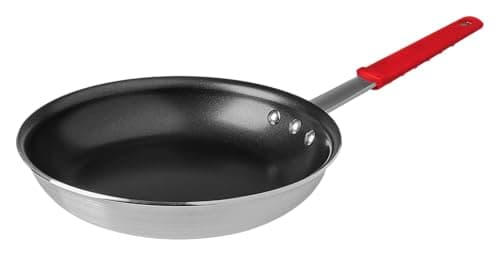
Published specifications for the Tramontina Professional Restaurant Fry Pan, 10 in
Body
Heavy-gauge aluminum
Coating
PTFE nonstick
Induction
No - aluminum body is not ferrous
Coating lifespan
Not published, by this or any nonstick maker
Good
Cheap enough that replacing it every couple of years is a real plan rather than a failure
Heavy gauge for a nonstick pan, so it does not warp on the first hot burner
Silicone handle sleeve that actually stays cool
Not good
Not induction compatible
PTFE, which some buyers will rule out on principle
No published coating lifespan, so the value case is unverifiable by design
The trade-off. It is PTFE. That is fine at normal cooking temperatures, and it is not a pan to preheat empty on high.
Skip this if. You want to avoid PTFE entirely. Buy ceramic instead and accept the shorter release life rather than pretending either one lasts forever.
Yes if you sear meat, bake, or want a pan that lasts indefinitely for very little money. No if you mostly cook eggs and delicate fish, find heavy pans difficult, or will not dry and oil it after washing. It is a cheap specialist rather than a general-purpose pan.
›Is cast iron better than nonstick?
At different things. Cast iron sears far better, tolerates any heat and lasts indefinitely. Coated pans release eggs and fish in a way no seasoned iron pan matches, and they need no maintenance. Most kitchens are better off owning one of each than choosing.
›Is cast iron or carbon steel better?
Carbon steel weighs substantially less, responds faster to heat changes and seasons the same way, which makes it the better everyday pan for many people. Cast iron holds more heat, which matters when a large cold steak hits the pan. Carbon steel is the comparison most buyers never make.
›Is cast iron too much maintenance?
The actual requirement is about thirty seconds: dry it on the burner rather than a towel, and wipe a little oil on while it is warm. That is the whole routine. The folklore around cast iron makes it sound far more demanding than it is.
›What size cast iron skillet should I buy first?
Ten inches. It cooks for two comfortably, handles searing, cornbread and roasting, and is light enough to use without resentment. Twelve-inch skillets are what people buy first and then find too heavy to lift one-handed when loaded.
Sources
Every figure on this page came from one of these. Follow them and check our arithmetic — that is the point.