Heads up: some links on this page earn us a commission at no extra cost to you. It does not change what we recommend or the order. How we are funded.
The short answer
Buy a heatproof bowl that fits one of your existing saucepans rather than a dedicated double boiler. The device does one thing - it holds the contents at or below the boiling point of water, because steam cannot get hotter than the water making it - and a glass or stainless bowl over a two to three quart saucepan does that just as well, costs less, stores flat and is useful for a dozen other jobs. Buy a dedicated insert only if you melt chocolate or make custards weekly.
Quick picks
The whole answer, on one screen. Tap a row to jump to the full write-up. Every pick below carries a stated trade-off further down — including the one at the top.
#
Product
Best for
Price
1
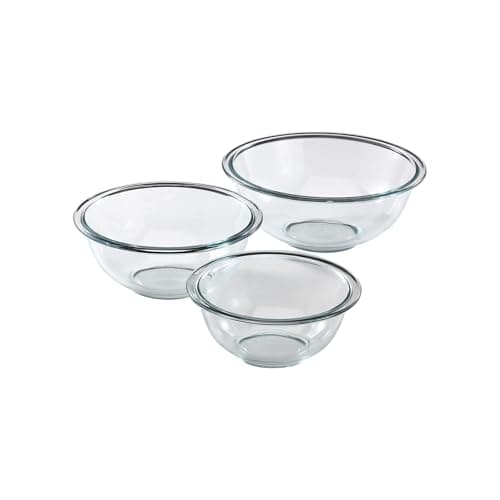
Pyrex 3-Piece Glass Mixing Bowl Set
A glass bowl over a saucepan is the classic improvised setup - you can see the contents, glass heats gently, and the bowls earn their space elsewhere.
Prices last checked September 24, 2026. Prices move constantly — the number on Amazon when you click is the real one.
What we can tell you here
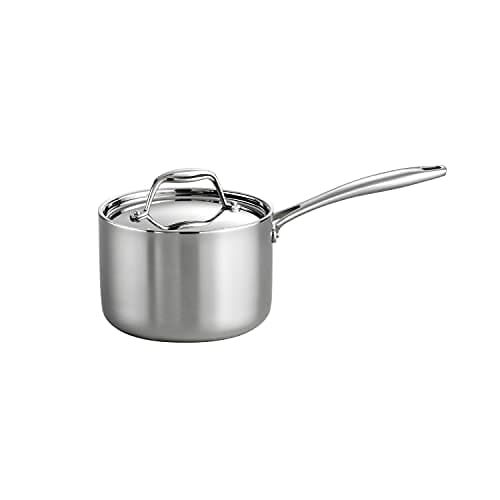
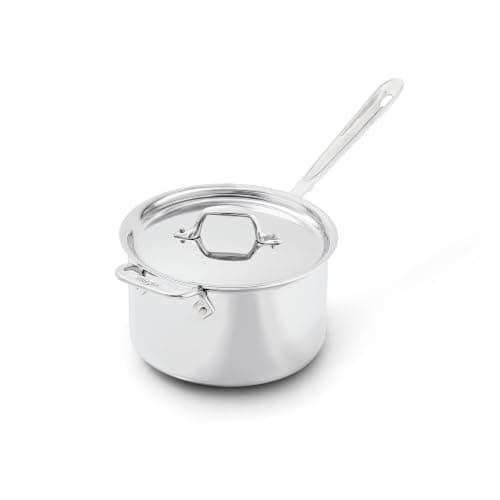
Our audited ledger contains saucepans and mixing bowls rather than a separately audited dedicated double boiler, which is partly a research gap and partly the recommendation: the improvised version is what most kitchens should use. This page recommends the audited pieces that make one, and points at a tagged category search for dedicated inserts. The method is here.
The one thing it does
Water boils at 212F at sea level and cannot go hotter while it remains liquid - additional heat converts it to steam rather than raising its temperature. Put a second vessel above it and the contents of that vessel are capped at roughly that temperature, no matter how aggressively the burner is running.
That cap is the entire product. It protects things that break above it: chocolate seizes and scorches, egg yolks scramble, butter separates, and delicate sauces split. A double boiler makes those failures structurally impossible rather than merely unlikely.
The bowl should not touch the water. Contact with the water transfers heat by conduction and defeats the gentleness that is the whole point - you want steam contact only. A visible gap of an inch or so is right.
What it is genuinely for
Job
Why gentle heat matters
Double boiler needed?
Melting chocolate
Scorches and seizes above roughly 120F
Yes - the classic use
Hollandaise, bearnaise
Yolks set and split with direct heat
Yes
Lemon curd
Eggs scramble; also acidic, so use stainless or glass
Yes
Custard bases, creme anglaise
Narrow window between thickened and scrambled
Yes
Melting butter and cheese
Butter separates, cheese goes stringy and greasy
Helpful
Warming sauces for service
Holds without further cooking
Helpful
Tempering chocolate
Requires precise temperature control
Yes, plus a thermometer
Reheating leftovers
No delicate proteins involved
No - use a saucepan
Notice how many of these involve eggs or chocolate. If you make neither, this is not a piece of equipment you need.
Why the improvised version is usually better
A dedicated double boiler is two pieces that nest and do one job. A bowl and a saucepan are two pieces you already own that do that job plus everything else they were bought for. The comparison is not close for most kitchens.
Storage. A dedicated insert is an awkward shape that nests with nothing. Bowls nest with each other - how to store pots and pans.
Visibility. A glass bowl lets you watch chocolate come together, which genuinely helps.
Bowl shape beats insert shape. A rounded bowl has no corners for custard to catch in, and a whisk reaches everywhere. Many dedicated inserts are straight-sided with a sharp base corner, which is exactly where eggs scramble.
Size flexibility. A small bowl for two ounces of chocolate, a large one for a batch of curd. An insert is one size forever.
Cost. Usually nothing, because both pieces are already in the kitchen.
The one real advantage a dedicated set has is stability. A purpose-made insert seats positively and will not slide, which matters if you are whisking hard. A bowl needs to be wide enough to sit securely on the rim without wobbling.
Choosing the bowl
Glass
Nonreactive, lets you see what is happening, heats gently and evenly. It is slower to respond, which in this application is a virtue. Observe the thermal shock rule and do not take a hot glass bowl to cold water - best mixing bowls.
Stainless steel
Faster, lighter, unbreakable and nonreactive, which matters for lemon curd and anything else acidic - cooking acidic foods and reactive cookware. The trade is that you cannot see the contents and it gets hot to the rim, so the bowl needs holding with a towel.
What not to use
Not plastic, which softens. Not bare aluminum, which reacts with acidic contents and discolors. Not a bowl so small it drops into the pan, and not one so large the rim overhangs by inches and lets steam escape around the sides rather than heating the base.
A rounded base is why bowls beat straight-sided inserts for custards - there is no corner for the whisk to miss.
Using one properly
An inch or two of water, no more. You need steam, not a bath, and too much water can lift the bowl.
Bring it to a bare simmer, then turn it down. A rolling boil adds no heat to the contents and only boils the water away faster.
Keep the bowl clear of the water. An inch of air gap.
Watch for water and steam getting in. A drop of water in melting chocolate seizes it instantly. This is the failure mode of the whole technique.
Do not walk away from eggs. The cap is on the temperature, not on overcooking - hollandaise will still split if you stop whisking.
Top the water up on long melts. A dry pan under a bowl heats the bowl directly and ruins the contents.
When you do not need one at all
A heavy clad saucepan on genuinely low heat does most of these jobs, and professionals frequently skip the double boiler entirely. Thermal mass and a low flame are a temperature limiter of a different kind - what size saucepan covers the pan, and best sauciers covers the rounded shape that suits custards best.
For chocolate specifically, a microwave in short bursts with stirring between is faster, harder to seize and completely respectable. The double boiler earns its place when the quantity is large, the recipe is egg-based, or you need to hold something warm for a while.
Each write-up below gives the published specs, what the pan is genuinely good at, what it costs you, and who should skip it. The trade-off line is there on the top pick too — a recommendation with no downside is an advertisement.
Top pick · The best double boiler for most kitchensSpecs read September 3, 2026
Pyrex 3-Piece Glass Mixing Bowl Set
A glass bowl over a saucepan is the classic improvised setup - you can see the contents, glass heats gently, and the bowls earn their space elsewhere.
Best for: Everyday prep, batters, and anything you want to microwave in the bowl you mixed it in
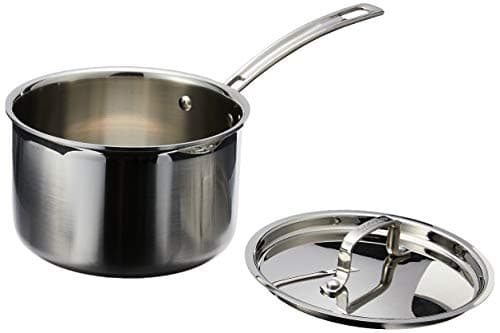
Published specifications for the Cuisinart MultiClad Pro Saucepan, 3 qt
Construction
Tri-ply: 18/10 stainless interior, pure aluminum core, brushed stainless exterior
Capacity
3 qt with lid
Oven maximum
500F per the Cuisinart use-and-care manual; retail listings say 550F
Induction
Yes
Dishwasher
Dishwasher safe
Handle
Riveted solid stainless, cool-grip profile
Warranty
Lifetime
Good
Genuinely dishwasher-safe clad stainless, which the premium brands are not
Fully clad rather than disc-bottom at an open-stock price
Lifetime warranty
Not good
Published oven maximum contradicts the retail listing for the same pan
The handle spine is divisive on larger pieces
No published country of manufacture
The trade-off. The oven ceiling is 500F per Cuisinart's manual, not the 550F some retail listings advertise. That is a documentation problem the buyer inherits.
Skip this if. You want the higher oven ceiling or the published US factory. That is All-Clad, and you pay for it.
Anything that breaks above the boiling point of water: melting chocolate, hollandaise, lemon curd, custard bases and tempering. The upper vessel is heated by steam rather than by the burner, so its contents cannot exceed roughly 212F no matter how hot the stove is.
›Can you use a bowl instead of a double boiler?
Yes, and for most kitchens it is the better option. A heatproof glass or stainless bowl seated on a two to three quart saucepan does exactly the same job, costs nothing extra, stores better and has a rounded base that suits whisking custards.
›Should the bowl touch the water in a double boiler?
No. Contact with the water transfers heat by conduction and defeats the gentleness the method exists for. Leave roughly an inch of air gap, use only an inch or two of water, and hold it at a bare simmer rather than a rolling boil.
›Why did my chocolate seize in a double boiler?
Almost certainly water got in, either as a splash or as condensed steam from around the edge of the bowl. A single drop is enough. Use a bowl wide enough to seal the pan rim, and keep the water at a bare simmer so less steam escapes at the sides.
›Do you need a double boiler for melting chocolate?
Not necessarily. A microwave in short bursts with stirring between is faster and harder to seize. The double boiler is worth it for large quantities, for egg-based recipes, and when you need to hold something warm without further cooking.
Sources
Every figure on this page came from one of these. Follow them and check our arithmetic — that is the point.