Heads up: some links on this page earn us a commission at no extra cost to you. It does not change what we recommend or the order. How we are funded.
The short answer
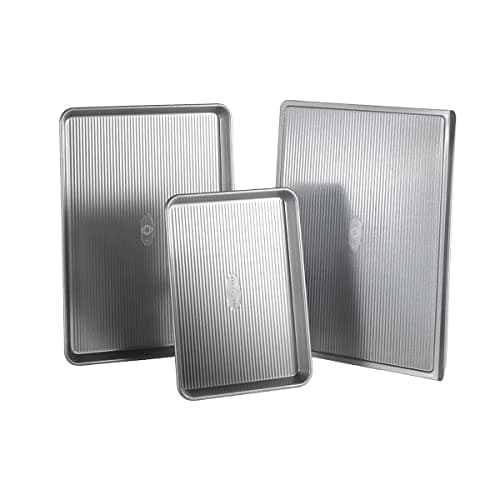
Two bare aluminum half sheets. Roasting, sheet-pan dinners, cookies, toasting, resting. The most-used pieces in the kitchen.
A cooling rack that fits inside them. Turns a sheet pan into a roasting rack and a draining rack.
A square 8 or 9-inch pan. Brownies, traybakes, small casseroles.
A loaf pan, if you bake bread. Genuinely optional otherwise.
Why the list is this short
Because most bakeware exists to make one specific thing, and most people make three or four specific things repeatedly. A muffin pan is essential if you make muffins and furniture if you do not, and no article can tell you which of those you are.
So this list contains only pieces that are useful across many recipes, plus one — the loaf pan — that is conditional and flagged as such. Everything else is on the "add when you want it" list further down.
The half sheets, which do most of the work
A half sheet is about 18 by 13 inches — Nordic Ware publishes 17.9 by 12.9 by 1 inch — and it is the single most-used piece in most kitchens, bakeware or otherwise.
Roasting vegetables. Sheet-pan dinners. Cookies. Toasting nuts and spices. Catching drips under a pie. Holding prepped ingredients before they go in the pan. Resting fried food on a rack. Reheating almost anything.
Buy bare aluminum with an encapsulated steel rim. Aluminum conducts at 237 W/m-K against steel's 45, which is why it browns evenly, and the steel rim is what stops it warping. Full reasoning in sheet pan materials compared.
Buy two. The second costs almost nothing and the first time you need to rotate trays, or roast vegetables and protein separately, you will want it.
The cooling rack, which is the sleeper
Buy one sized to sit inside the half sheet. That combination is genuinely three tools:
A roasting rack. Lifts meat out of its own juices so the underside browns instead of stewing.
A draining rack. Fried food stays crisp on a rack and goes soggy on paper towels.
A cooling rack. Airflow underneath so the bottom of a cake does not steam itself soft.
Check it is oven safe before buying, because many are not, and check it actually fits inside the rim of your sheet rather than sitting on top of it.
Space between the pieces is why two sheets beat one. Crowded vegetables release moisture faster than it can evaporate and steam instead of roasting.
The square pan
An 8 or 9-inch square pan covers brownies, traybakes, cornbread, small casseroles and crumbles. It is the most versatile shaped piece and the one worth owning before any other.
Metal rather than glass. Glass conducts poorly and keeps cooking after you take it out — fine for a casserole you serve from the dish, poor for anything you want to stop cooking at a specific moment.
The loaf pan, conditionally
Only if you bake bread or make loaf cakes. It does almost nothing else, and it is the piece most likely to be bought aspirationally by someone who intends to start baking bread.
If you do bake bread, buy aluminized steel with a coating. This is the clearest case in bakeware where release matters more than browning evenness — a loaf welded into a bare pan is a genuinely miserable outcome. USA Pan builds this way, with a coating published as free of PTFE, PFOA and BPA, and states the pans are not dishwasher safe.
What to add when you have wanted it three times
Piece
Buy it when
Skip it if
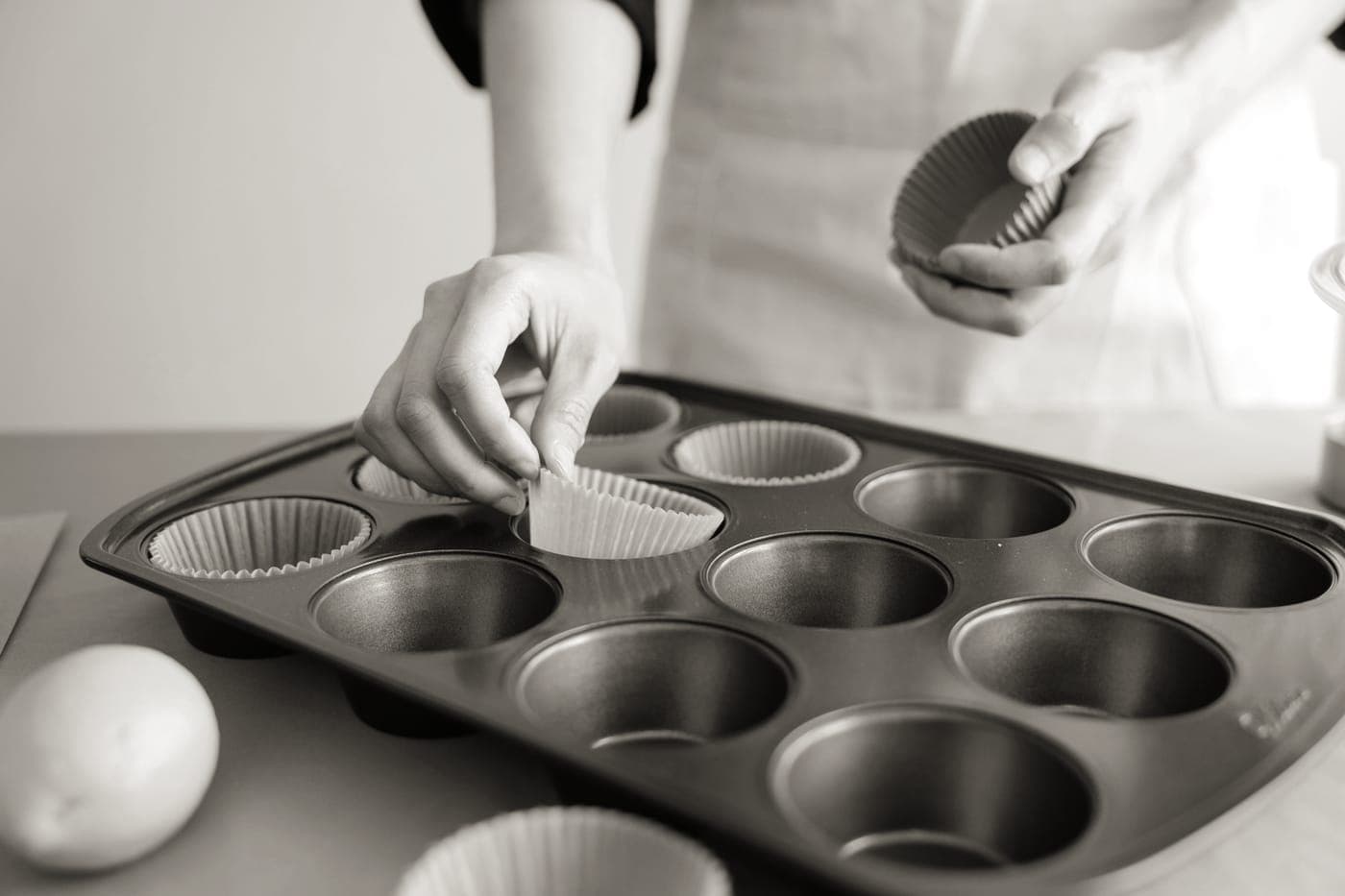
Muffin pan
You have made muffins twice using something else and been annoyed
You have baked cornbread in a skillet and wanted the crust on every portion, not just the edge pieces
You have not tried it in the skillet you already own
Quarter sheet pan
You cook for one, or use a toaster oven
You already have two half sheets
Roasting tin with a rack
You roast large joints regularly
A half sheet and a cooling rack does it
The rule that works: buy the piece after you have specifically wanted it three times, not when it is on sale.
What not to buy
A bakeware set. The pieces are cheap individually so the bundling saves little, and sets pad hard. See the best bakeware sets for the arithmetic.
Dark coated steel. Burns undersides. This is the material behind most home baking frustration.
Silicone bakeware. Floppy, does not brown, holds odors, and needs a tray under it anyway.
Insulated air-gap sheets. They deliberately impede heat transfer, which prevents the browning you wanted.
Cooking spray. Not bakeware, but it belongs on this list. It builds a varnish that ruins release permanently. Use parchment.
Total for the whole list: two sheet pans, a rack, a square pan and parchment. It is less than any bakeware set costs and it will do more, for longer. If you also want the cookware side of this, read what cookware you actually need.
What to buy, if you are buying
These are the products this page's reasoning actually points at. Same rules as everywhere else on the site: published specs, a stated trade-off, and a live price only where one exists.
Top pick · The two pieces to buy firstSpecs read September 3, 2026
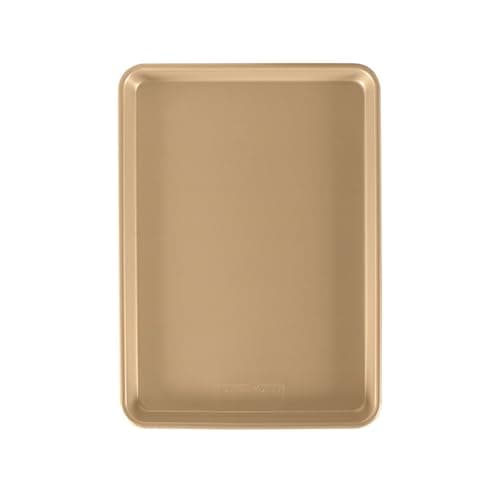
Nordic Ware Naturals Half Sheet, 18 x 13 in
Bare aluminum with an encapsulated steel rim. Two of these plus parchment does most of what a full bakeware set claims to.
Best for: Roasting vegetables, sheet-pan dinners, cookies - the pan you use most weeks
Published specifications for the Nordic Ware Naturals Half Sheet, 18 x 13 in
Exterior dimensions
17.9 x 12.9 x 1 in
Material
Aluminum
Rim
Encapsulated steel rim
Gauge
Not published by Nordic Ware
Warranty
Lifetime
Dishwasher
Hand wash recommended. Automatic dishwasher use is not advised
Made in
America of domestic and imported materials
Good
Aluminum conducts at 237 W/m-K, which is why it browns evenly and a steel pan does not
The encapsulated steel rim is the reason it does not warp in a hot oven
Lifetime warranty on a pan this cheap
Not good
Nordic Ware does not publish a gauge figure, so thickness cannot be compared like for like
Bare aluminum stains and reacts with acid
Not dishwasher safe by the maker's own advice
The trade-off. Bare aluminum discolors and reacts with acid. It will look used within a month and Nordic Ware advises against the dishwasher.
Skip this if. You want a pan that stays looking new, or you will not hand wash. Buy an aluminized-steel coated pan instead and accept the coating as a wear item.
Two bare aluminum half sheets, a cooling rack that fits inside them, an 8 or 9-inch square pan, and a loaf pan if you bake bread. Everything else covers a specific hobby rather than general baking.
›Why buy two sheet pans instead of one?
Because the moment you bake in quantity you need to rotate trays, and the moment you roast a full dinner you want vegetables and protein separated. The second sheet costs very little and is the cheapest capability upgrade in the kitchen.
›Do I need a cooling rack?
It is the most underrated piece here. Sized to fit inside a half sheet it becomes a roasting rack, a draining rack for fried food and a cooling rack, so one cheap item does three jobs.
›Should bakeware be metal or glass?
Metal for anything you want browned, because glass conducts poorly. Glass for casseroles and gratins, where heat retention is the point and you serve from the dish. Glass also keeps cooking after you remove it.
›Is a loaf pan necessary?
Only if you bake bread or loaf cakes. It does almost nothing else and it is the piece most often bought by someone who intends to start baking bread rather than someone who does.
Sources
Every figure on this page came from one of these. Follow them and check our arithmetic — that is the point.