Heads up: some links on this page earn us a commission at no extra cost to you. It does not change what we recommend or the order. How we are funded.
The short answer
Bare aluminum with parchment. It has no coating at all, so there is nothing to wear off or migrate, and it is cheaper than anything marketed as non-toxic. If you want release on shaped pieces, USA Pan publishes its AMERICOAT silicone coating as free of PTFE, PFOA and BPA — a checkable claim, which is more than most of the category offers.
What "non-toxic" means on a bakeware listing
Nothing regulated. No agency defines or certifies the term, and any manufacturer can print it. In practice on bakeware it means one of three things: no PTFE coating, no PFAS of any kind, or no BPA — and the third is about plastics and has limited relevance to a metal pan.
It is worth separating those, because they carry different weight and a listing that leads with the weakest one is telling you something.
The genuinely clean answer nobody sells hard
Bare aluminum has no coating. There is nothing sprayed on it, nothing to scratch through, nothing to wear off and nothing to migrate. It is also the best material for flat baking on conduction grounds — 237 W/m-K against steel's 45 — and it is the cheapest option in the category.
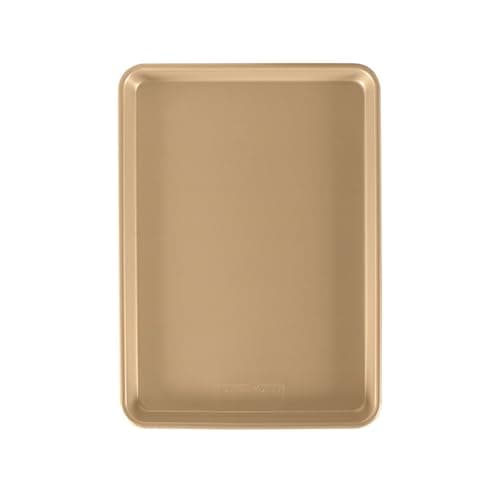
Nordic Ware's Naturals half sheet is exactly this: aluminum with an encapsulated steel rim, published dimensions of 17.9 by 12.9 by 1 inch, a lifetime warranty, and made "in America of domestic & imported materials".
Nobody markets bare aluminum as non-toxic bakeware because there is no premium available in it, which is exactly the same reason nobody markets clad stainless that way. See the best non-toxic cookware sets for the same argument on the cookware side.
The aluminum question, addressed directly
If bare aluminum has no coating, are you eating aluminum? This is the obvious objection and it deserves a straight answer rather than a dismissal.
Aluminum does react with acid. A long roast of tomatoes, lemon or vinegar directly on bare aluminum will pit the surface and can pick up a faint metallic taste. That is a genuine effect, and it is why the standard advice is to use parchment for anything acidic — which you should be doing anyway for release.
For non-acidic baking on a lined or unlined aluminum pan, the transfer is minimal, and it sits against a background of aluminum occurring naturally in food and water. If you want to eliminate the variable entirely, parchment does it for pennies and improves your baking at the same time.
The coatings, in the makers' own words
Coating
What it is
Published claims
Wears out?
None (bare aluminum)
No coating
Nothing to claim
No
AMERICOAT (USA Pan)
Silicone-based nonstick on aluminized steel
Published free of PTFE, PFOA and BPA
Eventually, slowly
PTFE bakeware coatings
Fluoropolymer
FDA-authorized for food contact, 21 CFR 177.1550
Yes
Ceramic (sol-gel silica) bakeware
Sprayed silicon dioxide
PFAS-free; GreenPan publishes Thermolon as sand-derived SiO2
Yes, and no maker publishes how fast
Silicone bakeware (the whole pan)
Flexible silicone rubber
Generally regarded as inert at baking temperatures
Degrades and holds odors
Claims quoted from each manufacturer's published material where available.
Where a coating genuinely earns its place
Shaped pieces. A loaf welded into a bare pan, or muffins that leave half of themselves behind, is a real and miserable problem that parchment cannot fully solve because you cannot line a muffin cup neatly.
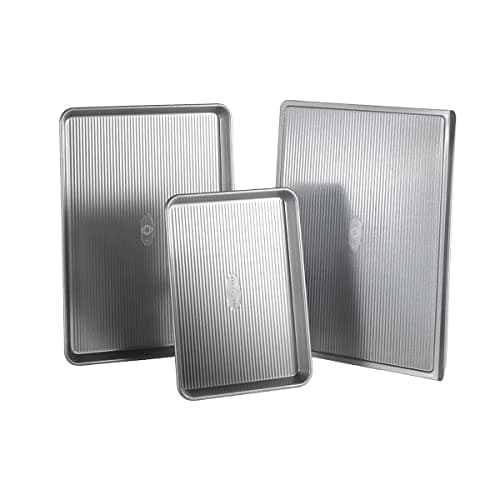
USA Pan is the clearest published option here: aluminized steel — steel with an aluminum-silicon layer bonded to it — with the AMERICOAT silicone coating published as free of PTFE, PFOA and BPA, a lifetime warranty, made in the USA, and explicitly not dishwasher safe.
The trade-offs are published too, which is the point: the corrugated surface that helps release traps batter and slows washing, and a silicone coating is still a coating and will eventually wear. Both facts are on the record rather than being discovered later.
On PTFE bakeware, briefly
The same regulatory position applies as for pans. PTFE is authorized for food contact under 21 CFR 177.1550 and the FDA states that "studies show negligible amounts of PFAS in this coating can migrate to food."
The FDA's January 2025 action, which withdrew 35 notifications for PFAS grease-proofers, concerned paper and paperboard food packaging, not cookware or bakeware coatings. You will see it cited otherwise. Fuller treatment in is nonstick cookware safe.
The practical argument against PTFE bakeware is not really a safety one; it is that bakeware does not need it. Parchment handles flat pans, and silicone-coated aluminized steel handles shaped ones.
Parchment, which quietly solves most of this
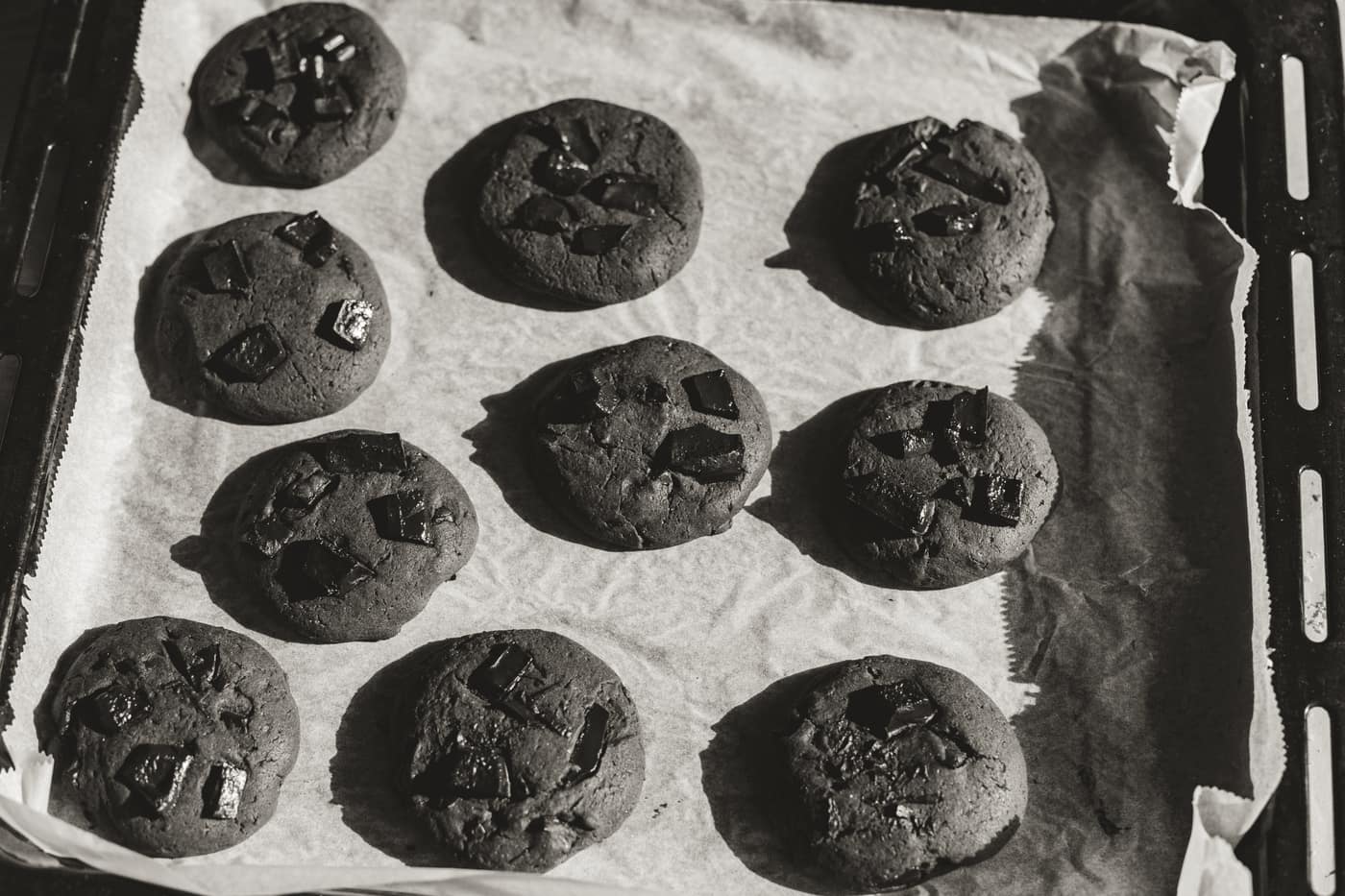
Parchment paper gives release on any pan, protects bare aluminum from acidic food, prevents sugar bonding to the surface, and means you never need a coating on a flat pan.
Use it instead of cooking spray, always. Spray polymerizes into a hard varnish on bakeware that is genuinely difficult to remove and progressively ruins release — it is the most common way people destroy their own bakeware while trying to look after it.
The whole answer in one line: bare aluminum sheets plus parchment for flat baking, silicone-coated aluminized steel for shaped pieces, and no cooking spray on anything. It is the cheapest option available and the one with the least to go wrong.
What to buy, if you are buying
These are the products this page's reasoning actually points at. Same rules as everywhere else on the site: published specs, a stated trade-off, and a live price only where one exists.
Top pick · Best uncoatedSpecs read September 3, 2026
Nordic Ware Naturals Half Sheet, 18 x 13 in
No coating at all, which sidesteps the question entirely. Bare aluminum, steel rim, lifetime warranty, made in America.
Best for: Roasting vegetables, sheet-pan dinners, cookies - the pan you use most weeks
Published specifications for the Nordic Ware Naturals Half Sheet, 18 x 13 in
Exterior dimensions
17.9 x 12.9 x 1 in
Material
Aluminum
Rim
Encapsulated steel rim
Gauge
Not published by Nordic Ware
Warranty
Lifetime
Dishwasher
Hand wash recommended. Automatic dishwasher use is not advised
Made in
America of domestic and imported materials
Good
Aluminum conducts at 237 W/m-K, which is why it browns evenly and a steel pan does not
The encapsulated steel rim is the reason it does not warp in a hot oven
Lifetime warranty on a pan this cheap
Not good
Nordic Ware does not publish a gauge figure, so thickness cannot be compared like for like
Bare aluminum stains and reacts with acid
Not dishwasher safe by the maker's own advice
The trade-off. Bare aluminum discolors and reacts with acid. It will look used within a month and Nordic Ware advises against the dishwasher.
Skip this if. You want a pan that stays looking new, or you will not hand wash. Buy an aluminized-steel coated pan instead and accept the coating as a wear item.
Bare aluminum with parchment. It has no coating at all, so nothing can wear off or migrate, and it is also the best material for even browning at 237 W/m-K. It is cheaper than anything marketed at the question.
›Is aluminum bakeware safe?
For non-acidic baking, yes, and using parchment removes the variable entirely. Aluminum does react with acid, so a long tomato or citrus roast directly on a bare pan will pit the surface and can taste metallic.
›Is USA Pan bakeware PTFE-free?
USA Pan publishes its AMERICOAT silicone coating as free of PTFE, PFOA and BPA, on an aluminized steel body made in the USA with a lifetime warranty. The pans are stated as not dishwasher safe.
›Is silicone bakeware non-toxic?
Silicone is generally regarded as inert at baking temperatures. The practical objections are performance rather than safety: it is floppy so it needs a tray underneath, it does not brown food, and it holds odors over time.
›Should I use cooking spray on bakeware?
No, on any material. Cooking spray polymerizes into a hard varnish that is difficult to remove and progressively ruins release. Parchment or a wipe of oil does the job without the residue.
Sources
Every figure on this page came from one of these. Follow them and check our arithmetic — that is the point.