Heads up: some links on this page earn us a commission at no extra cost to you. It does not change what we recommend or the order. How we are funded.
The short answer
The most genuinely non-toxic cookware brands are the ones with no coating to discuss: Lodge and Victoria in cast iron, de Buyer in carbon steel, and All-Clad, Tramontina, Demeyere and Misen in clad stainless. None of them leads with the word. Among coated brands, Caraway publishes third-party PFAS testing with linked results, GreenPan publishes what Thermolon is made of, and USA Pan states its AMERICOAT silicone is free of PTFE, PFOA and BPA. Scanpan and Carote publish the least you can check.
Quick picks
The whole answer, on one screen. Tap a row to jump to the full write-up. Every pick below carries a stated trade-off further down — including the one at the top.
#
Product
Best for
Price
1
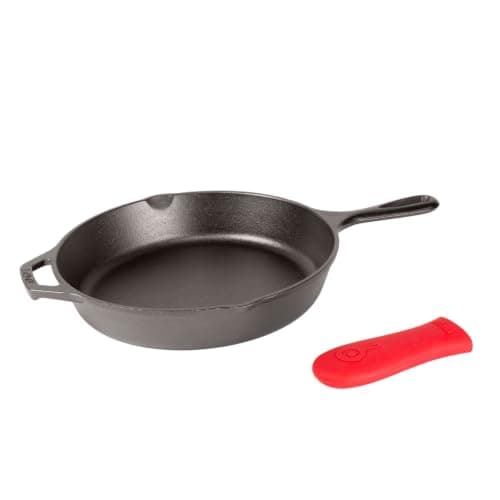
Lodge Seasoned Cast Iron Skillet, 10.25 in (L8SK3)
Bare cast iron: no coating, no proprietary chemistry, 550F and a lifetime warranty published. The honest cost is weight and a thirty-second routine after every wash.
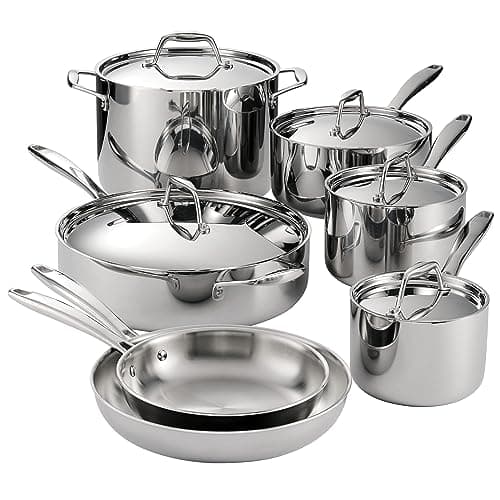
Tri-ply clad stainless with NSF certification and nothing on the cooking surface to wear through. Its own published oven ceilings contradict each other across listings, which is a real documentation fault.
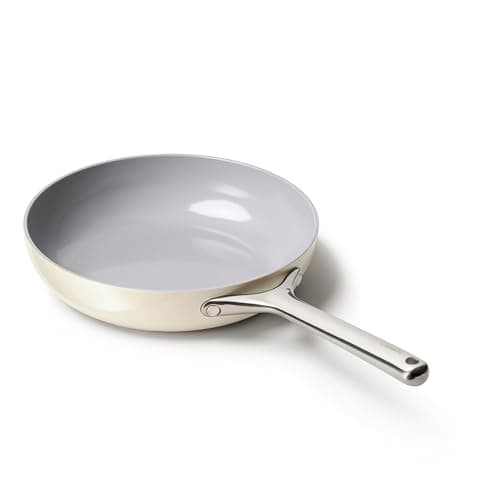
The only brand here publishing third-party PFAS testing with linked results, at 550F. It is also published as not dishwasher safe, and the coating still wears out on an unpublished schedule.
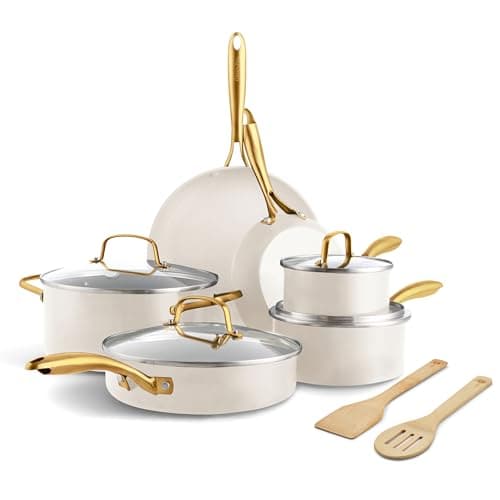
Publishes what Thermolon is actually made of, which almost no coated brand does. Its widely quoted 850F figure applies to the coating in isolation rather than the finished pan.
Prices last checked October 5, 2026. Prices move constantly — the number on Amazon when you click is the real one.
What we are actually ranking
We do not run a lab. We have not tested a single pan for leaching, and any site claiming it has, without publishing the method and the results, should be read carefully.
What we can do is read what thirty-one brands publish about their own materials and check whether the claims are specific, sourced and internally consistent. That is the whole basis of this ranking, and it is a better proxy than it sounds: a brand that will name a coating's composition and link a test report has accepted accountability for it, and a brand that will not has told you something too. The method is here.
The six criteria, in the order they matter
Is there a coating at all? This dominates everything below it. A bare metal or glass surface has no proprietary chemistry, nothing to wear through and nothing to disclose.
If coated, is the chemistry named? Not "ceramic" or a trademark - the actual composition.
Is there third-party testing you can read? One brand clears this bar.
Is a heat ceiling published? Overheating, not composition, is the realistic exposure route for a coated pan, so a published ceiling is a safety specification - is nonstick safe.
Does the warranty say what it excludes? Coating wear is excluded everywhere. Brands that say so plainly are being straight with you.
Do the published figures describe the pan or just the coating? This one catches a specific, widely repeated error, covered below.
Notice what is not a criterion: the word "non-toxic" on the box. It is unregulated in cookware and carries no definition, which is why it clusters on the products that most need reassurance - best non-toxic cookware sets takes the term apart.
The finding that reorders the list
Work through the audits and an inversion appears. The brands that market "non-toxic" hardest are, almost without exception, the ones selling a coating. The brands whose products have no coating at all - cast iron, carbon steel, clad stainless, glass - barely use the word.
That is not a conspiracy, it is positioning: a coating is the thing a buyer might worry about, so it is the thing that needs reassuring language. But it means the search term and the answer point in opposite directions. If your actual goal is a pan with nothing in it to worry about, you are shopping in the wrong aisle - healthiest cookware materials ranks the materials themselves.
Tier 1: brands with nothing to disclose
These rank first because the question barely applies to them. There is no coating, so there is no composition to publish, no wear surface to fail and no warranty exclusion to read.
Lodge — cast iron
Publishes 5.66 lb for the 10.25 in skillet, 550F, a lifetime warranty and a named Tennessee foundry, plus a care instruction that contradicts the soap folklore. More usable disclosure than brands costing several times as much. Honest cons: heavy, needs drying and oiling after every wash, and acidic cooking is limited to short contact - the Lodge audit.
Victoria — cast iron
Seasoned cast iron made in Colombia, with a longer handle and a lighter casting for the size. Honest cons: thinner castings heat less evenly than Lodge's, and the brand publishes less than Lodge does - the Victoria audit.
de Buyer — carbon steel
Publishes composition percentages and per-size thickness and weight, which is the most granular material disclosure in our ledger. Honest cons: there are three things it does not publish at all, the beeswax shipping coating must be scrubbed off before first use, and seasoning is a real commitment - the de Buyer audit.
A stainless cooking surface is non-reactive and has nothing applied to it. All-Clad publishes 600F and a named Pennsylvania factory; Demeyere publishes a rating for almost everything, five-ply rim to rim and Belgian manufacture; Misen names every layer from an 18/0 exterior to an 18/10 interior at 3.0 mm and 800F; Tramontina publishes tri-ply construction and NSF certification.
Honest cons: All-Clad is hand-wash-only per its own manual and expensive; Tramontina's published oven ceilings contradict each other across listings; Misen publishes no country of manufacture; Demeyere is the priciest route to a non-reactive surface. And all of them require preheating technique that a coating does not - why food sticks to stainless steel.
Pyrex — glass bakeware
Tempered soda-lime glass with no coating, no seasoning and no reactive surface, published as dishwasher, microwave and freezer safe. Honest cons: not broiler safe, and there is a thermal-shock rule that genuinely matters - the Pyrex audit.
Tier 2: coated, and the best documented
If you want food release without technique, you are buying a coating. These three publish the most about theirs.
Brand
What it publishes
The gap
Caraway
Third-party PFAS testing with linked results; 550F; aluminum body and ceramic coating
Published as NOT dishwasher safe; little manufacturing information
GreenPan
What Thermolon is made of - the clearest composition disclosure in ceramic
The 850F figure is the coating, not the pan; no lifespan stated
USA Pan
AMERICOAT silicone stated free of PTFE, PFOA and BPA; made in Pennsylvania
Bakeware only, so it does not solve the skillet question
Caraway is the only brand in thirty-one audits that publishes third-party PFAS testing and links the results. Whatever you think of the pans, that is the single strongest non-toxic disclosure available in this category, and it is the reason it ranks here despite a coating that wears out like any other - the Caraway audit and is ceramic cookware worth it.
Tier 3: coated, partially documented
HexClad publishes tri-ply construction, a ceramic coating under a laser-etched hex grid and a 900F oven claim. Cons: its warranty contains a seasoning clause that excludes damage from not seasoning a pan sold as nonstick - do nonstick pans need seasoning.
Our Place publishes its Thermakind coating and a three-year warranty that is more honest than most lifetime ones, because it attaches an actual number to the coating. Cons: the ten-function claim for the Always Pan is generous.
Zwilling publishes Clad CFX as PTFE-free and names Vietnam as the country. Cons: a 400F oven ceiling, the lowest figure in our entire ledger.
Calphalon publishes 450F, metal-utensil safety and dishwasher safety - unusually complete for a coated line. Cons: the lifetime warranty explicitly excludes the coating, which is the part that fails.
OXO publishes a 430F ceiling and a three-layer PFOA-free coating. Cons: no metal-utensil statement, and no induction on the standard line.
T-fal publishes 400F, dishwasher safety and the Thermo-Spot indicator. Cons: a thin body is the real trade-off.
Circulon attaches a number to the coating in its warranty terms, which only one other brand here does. Cons: it does not publish what its surface is made of, the warranty is voided by cooking spray, and its own page gives contradictory metal-utensil guidance - care guidance says wood, nylon or silicone while the Q&A says metal safe - the Circulon audit.
Every brand in tiers 2 and 3 is selling this. The ranking is about who will tell you what it is.
Tier 4: the ones you cannot check
Not an accusation that anything is wrong with these pans. It is a statement that you have no way to find out.
Scanpan publishes recycled cast aluminum, a rivetless locking handle, 500F, metal-utensil safety and Danish manufacture - genuinely good disclosure on everything except the one thing this page is about. It does not publish what its STRATANIUM surface is made of, and there is no PFAS statement on the product page - the Scanpan audit.
Carote sells enormously and publishes almost nothing you can verify. If the price is the appeal, that is a legitimate reason to buy it, but it cannot be recommended on material disclosure - the Carote audit.
The two figures that get misquoted constantly
GreenPan's 850F
It applies to the Thermolon coating in isolation, not to the finished pan, which is limited by its aluminum body and its handle. It is repeated across the internet as a pan rating and it is not one. Treat it as a materials-science fact about a film, not as permission to put the pan under a broiler - oven-safe cookware temperatures.
"PFOA-free"
True of essentially every pan sold today, because PFOA was phased out of US manufacturing years ago. It distinguishes nothing between two modern pans and should carry no weight in a purchase. "PTFE-free" is a real distinction; "PFOA-free" is not - nonstick coating names decoded.
What no brand publishes
Across all thirty-one audits, not one coated brand publishes a coating lifespan - the figure a buyer actually wants. Every warranty in the category excludes coating wear. Circulon and Our Place at least attach a number to the coating in their warranty terms, which is the closest anyone comes.
That absence is the most important thing on this page. A coating you cannot get a lifespan for is a replacement cycle you cannot budget for, whatever its chemistry - how long nonstick lasts.
Heat is the real exposure route
For a coated pan in normal use, composition matters less than temperature. Coatings degrade when badly overheated, and an empty pan on high heat is how that happens - not a gentle fry. This is why a published ceiling is a safety specification and why the 400F to 450F range across these brands is worth obeying.
It also means the practical advice is identical regardless of which brand you pick: never preheat a coated pan empty, keep it off the broiler, and skip aerosol cooking spray, which builds a residue that ruins release and prompts people to replace a pan that was fine - how to clean nonstick pans.
Which brand to buy
You want nothing to worry about, cheaply:Lodge cast iron. No coating, no chemistry, published specs, lifetime warranty.
You want a whole non-toxic kitchen without maintenance:a Tramontina clad stainless set. Nothing applied to the cooking surface, and it survives a dishwasher.
You want release without technique, and want it checkable:Caraway, the only brand publishing third-party PFAS testing with results you can read.
You want ceramic from the brand that explains it best:GreenPan Thermolon.
Baking rather than frying: USA Pan for coated aluminized steel, or Pyrex glass for a surface that reacts with nothing at all - non-toxic bakeware.
The combination most kitchens should land on is a clad stainless set or a cast iron skillet for the cooking that matters, plus one inexpensive coated pan for eggs, replaced when release goes. That gives you one consumable instead of a kitchen full of them - what to replace nonstick pans with and cast iron versus ceramic.
Two brands with nothing to disclose, two that disclose the most
Every claim on this page is read from the brand's own published material and is traceable to one of our thirty-one brand audits. We have not tested any pan for leaching and do not claim to have.
Lodge Seasoned Cast Iron Skillet, 10.25 in (L8SK3)
Searing, cornbread, and anyone who wants one pan that cannot be worn out
Each write-up below gives the published specs, what the pan is genuinely good at, what it costs you, and who should skip it. The trade-off line is there on the top pick too — a recommendation with no downside is an advertisement.
Top pick · Nothing to discloseSpecs read September 3, 2026
Lodge Seasoned Cast Iron Skillet, 10.25 in (L8SK3)
Bare cast iron: no coating, no proprietary chemistry, 550F and a lifetime warranty published. The honest cost is weight and a thirty-second routine after every wash.
Best for: Searing, cornbread, and anyone who wants one pan that cannot be worn out
Published specifications for the Lodge Seasoned Cast Iron Skillet, 10.25 in (L8SK3)
Diameter
10.25 in
Weight
5.66 lb
Oven maximum
550F
Induction
Yes - bare iron is ferrous
Seasoning
Pre-seasoned with soy-based vegetable oil, no synthetic chemicals
Warranty
Lifetime
Made in
USA
Care
Hand wash. Lodge's own instructions permit warm soapy water
Good
Effectively unbreakable and fully restorable - a rusted one can be stripped and re-seasoned
Holds heat better than anything else at the price, which is what a sear needs
Lodge publishes its seasoning method openly, so the maintenance is not a mystery
Not good
Heavy
Heats unevenly on a small burner: cast iron conducts at roughly 50 W/m-K, so it is slow to spread and slow to react
Bare iron is reactive; long tomato braises will taste of it
The trade-off. It weighs 5.66 lb empty. You will feel that every time you move it full, and it is the single most common reason a cast iron skillet ends up in a cupboard.
Skip this if. You have wrist or shoulder trouble, or you cook mostly acidic braises. Carbon steel does most of the same jobs at roughly half the weight.
#2 · The non-toxic set nobody markets as oneSpecs read September 3, 2026
Tramontina Signature Tri-Ply Clad 12-Piece Set
Tri-ply clad stainless with NSF certification and nothing on the cooking surface to wear through. Its own published oven ceilings contradict each other across listings, which is a real documentation fault.
Best for: A first kitchen that should not need replacing
Published specifications for the Tramontina Signature Tri-Ply Clad 12-Piece Set
Construction
Tri-ply: 18/10 stainless, aluminum core, magnetic stainless exterior
Pieces
8 in and 10 in fry pans; 1.5, 2 and 3 qt covered saucepans; 5 qt covered deep saute; 8 qt covered stockpot
Oven maximum
500F on the 80116-249DS listing; other SKUs in the line are listed at 350F
Induction
Yes - magnetic stainless exterior
Dishwasher
Listed dishwasher safe
Handles
Precision cast, riveted
Certification
NSF-certified on the 80116-249DS line
Country of origin
Not asserted - retail listings disagree across SKUs (Brazil and China both appear)
Good
Fully clad, not disc-bottom: the aluminum runs up the sidewalls, so sauces do not scorch in a ring at the base
NSF certification on the flagship SKU is a real, checkable third-party mark rather than a marketing badge
Induction-ready without paying an induction premium
Not good
Retail listings disagree on the oven maximum across SKUs in the same line, which is a documentation problem, not a cooking one
Handles run hot on gas
The 12-piece count includes lids; the useful-item count is seven
The trade-off. Handles are the weak point. They are riveted and sturdy, but they get hot on a gas ring in a way the more expensive clad brands' do not.
Skip this if. You want a set you can leave in the oven above 500F, or you cook mostly eggs and pancakes and would rather spend the money on one good nonstick pan.
#3 · Most checkable coatingSpecs read September 3, 2026
Caraway Ceramic Fry Pan, 10.5 in
The only brand here publishing third-party PFAS testing with linked results, at 550F. It is also published as not dishwasher safe, and the coating still wears out on an unpublished schedule.
Best for: Buyers who want documented PFAS testing and will hand wash
#4 · Clearest coating compositionSpecs read September 3, 2026
GreenPan Ceramic Nonstick Cookware Set
Publishes what Thermolon is actually made of, which almost no coated brand does. Its widely quoted 850F figure applies to the coating in isolation rather than the finished pan.
Best for: Someone who wants nonstick without PTFE and has read what that trades away
Published specifications for the GreenPan Ceramic Nonstick Cookware Set
Coating
Thermolon, from sand-derived Silicon Dioxide (SiO2), sprayed
Coating chemistry
PFAS-free, PFOA-free, free of lead and cadmium (GreenPan published)
Coating heat resistance
850F / 450C for the coating itself (GreenPan published)
Body oven maximum
Varies by line and is lower than the coating figure - check the specific line
Coating lifespan
Not published. No ceramic maker publishes one
Good
GreenPan publishes what the coating is made of in plain terms, which most ceramic brands do not
The coating will not release fumes if you overheat it the way PTFE can
Genuinely good release when new
Not good
Release degrades and nobody will tell you how fast
The 850F figure is for the coating, not the pan, and gets quoted as if it were the pan
Ceramic dislikes high heat and dishwashers, which is most of what a set gets used for
The trade-off. Ceramic nonstick loses release with use and no maker publishes a lifespan, GreenPan included. Treat it as a consumable, not a lifetime purchase.
Skip this if. You are buying a set expecting it to last as long as clad stainless. It will not, and the honest move is to buy one ceramic pan alongside a stainless set.
The brands with no coating at all, because there is no proprietary chemistry to disclose: Lodge and Victoria in cast iron, de Buyer in carbon steel, and All-Clad, Tramontina, Demeyere and Misen in clad stainless. None of them markets itself as non-toxic, which is the inversion at the heart of this question.
›Which cookware brand publishes the most about its coating?
Caraway is the only brand in our thirty-one audits that publishes third-party PFAS testing with linked results. GreenPan publishes what Thermolon is actually made of, which is the clearest composition disclosure in ceramic, and USA Pan states its AMERICOAT silicone is free of PTFE, PFOA and BPA.
›Is non-toxic cookware a meaningful label?
No. The term is unregulated in cookware and has no definition, which is why it appears most heavily on coated pans, where a buyer is most likely to want reassurance. Judge a brand on whether it names its materials and publishes test results instead.
›Does PFOA-free mean a pan is non-toxic?
It means almost nothing today. PFOA was phased out of US cookware manufacturing years ago, so essentially every pan on sale qualifies and the phrase distinguishes nothing. PTFE-free is a genuine distinction; PFOA-free is not.
›Which brands publish the least about their materials?
Carote publishes almost nothing you can verify, and Scanpan - which discloses well on construction, heat and origin - does not publish what its STRATANIUM surface is made of or give a PFAS statement on the product page. Neither is evidence of a problem; it just means you cannot check.
›Do any brands publish how long a nonstick coating lasts?
Not one, across all thirty-one brands we have audited, and every warranty in the category excludes coating wear. Circulon and Our Place at least attach a number to the coating in their warranty terms, which is the closest anyone comes to a stated lifespan.
Sources
Every figure on this page came from one of these. Follow them and check our arithmetic — that is the point.