Heads up: some links on this page earn us a commission at no extra cost to you. It does not change what we recommend or the order. How we are funded.
The short answer
Lodge publishes more usable information than almost anyone in cookware: 5.66 lb for the 10.25-inch skillet, 550F oven safe, lifetime warranty, made in the USA, pre-seasoned with soy-based vegetable oil and no synthetic chemicals, plus a full seasoning method. Its own care instruction says to wash with warm soapy water, which contradicts the most repeated advice about cast iron.
What this review is
An audit of what Lodge publishes about its own products, not an account of cooking with them — we have not. There is no star rating here and no aggregateRating in the structured data, because a rating implies a test we did not run. The method is here.
Lodge turns out to be an unusually good subject for this approach, because it publishes genuinely more than most cookware companies — and because one of the things it publishes contradicts what almost everyone believes about its products.
The care instruction that contradicts the internet
Lodge's published seasoning and care guidance says, plainly: "Use warm, soapy water to wash your pan, then dry completely" with "a paper towel or lint-free cloth."
The manufacturer of the most-owned cast iron in the world tells you to use soap. The folklore says never to. The folklore has a real origin — dish soap was once lye-based and harsh enough to attack a fat film — but modern detergent is a mild surfactant, and seasoning is a polymerized layer chemically bonded to the iron, not loose grease.
This is the single best illustration of why reading a manufacturer's own documentation is worth doing. The correct answer was published, freely, the entire time. Full detail in seasoning and caring for cast iron.
What Lodge publishes
Specification
What is published
Assessment
Weight
5.66 lb for the 10.25 in L8SK3
Published, which many cast iron brands do not do
Oven maximum
550F for bare seasoned cast iron
Clear and consistent
Seasoning
Pre-seasoned with soy-based vegetable oil, no synthetic chemicals
Specific rather than vague. Rare in this category
Seasoning method
450-500F, one hour, pan upside down, oil too thin to drip
Fully published with temperatures and times
Care
Warm soapy water, dry completely
Published, and contradicts common advice
Warranty
Lifetime
Clear
Made in
USA, for the cast iron lines
Clear
Carbon steel country of origin
Not published on the listings read
A gap, and conspicuous against the cast iron
Read from Lodge's published material and retail specification listings on 2026-09-03.
The one conspicuous gap
Lodge states clearly that its cast iron is made in the USA, and it is a significant part of the brand's identity. It does not publish a country of manufacture for its seasoned carbon steel line on the listings we read.
That silence is more noticeable precisely because of how prominently the company advertises its cast iron manufacturing. It is not a safety issue or a quality claim; it is a difference in transparency between two lines carrying the same badge, and a buyer who assumes the carbon steel is also US-made is assuming rather than reading.
What Lodge actually makes
Bare seasoned cast iron. Skillets, griddles, Dutch ovens, combo cookers. The core of the business and the reason to buy the brand. Every relevant figure published; 550F; lifetime warranty; made in the USA.
Enameled cast iron. Dutch ovens and braisers. Non-reactive, so acidic cooking is fine, and no seasoning required. Note that the oven ceiling is set by the knob material and is lower than bare iron's 550F — check the specific SKU.
Seasoned carbon steel. Skillets and griddles, pre-seasoned so they are usable out of the box. Thinner than the French carbon steel pans and more prone to warping; no published country of manufacture.
What it gets right
Publishes weight, oven ceiling, seasoning composition, care method and warranty - more than most cookware brands
The published seasoning method includes actual temperatures and times, and works
Lifetime warranty on cookware that costs a fraction of any other pan on this site
Bare cast iron is restorable from rust indefinitely, which no coated product can claim
What it costs you
5.66 lb for a 10.25-inch skillet is the most common reason these pans stop being used
The sandcast surface is textured rather than machined smooth, so release is poorer when new
Enameled pieces chip more readily than the premium French pots they resemble
No published country of manufacture for the carbon steel line, unlike the cast iron
On the sandcast surface
Lodge pans have a pebbled cooking surface rather than the machined-smooth one you get from boutique makers. This is a genuine difference and it is a finish difference, not a performance one.
A machined pan releases food better when new, because there is less texture for food to key into. A Lodge pan gets there over months as seasoning builds up and fills the texture. Both end up slick; one starts that way and costs several times as much.
The material underneath is identical — gray cast iron, conducting at roughly 50 W/m-K, with the same heat retention per unit mass. Nobody has invented better cast iron.
Who should skip Lodge
Anyone for whom the weight is a genuine problem. This is the honest and most common reason. 5.66 lb empty for the 10.25-inch, and a 12-inch full of food is a two-handed lift. If wrists or shoulders are a consideration, carbon steel does most of the same job at roughly half the mass.
Anyone who cooks mostly acidic food. Bare iron is reactive. A long tomato braise will taste of the pan and strip the seasoning. Buy the enameled line or clad stainless instead.
Anyone who wants a responsive pan. Cast iron takes minutes to change temperature. If you want a pan that follows the burner, this is the wrong material.
Anyone expecting a nonstick surface. A well-seasoned pan is slick, not nonstick. Eggs still want fat and a proper preheat.
Where it sits
Against boutique cast iron: identical material, worse surface finish when new, a fraction of the price, and the same lifetime warranty. The premium buys finish and balance, not longevity or performance.
Against Tramontina: a different category. Bare iron for searing, clad stainless for everything else. Most kitchens want both, and Lodge is cheap enough that adding it to a clad kitchen is barely a decision.
Against French carbon steel: Lodge wins on price, pre-seasoning and published documentation for its cast iron, and loses on weight. See cast iron versus carbon steel.
The reason Lodge comes out well in an audit like this is not that the pans are extraordinary — they are ordinary gray iron, which is the point. It is that the company publishes the figures and the method, including the advice that contradicts the folklore, and lets you check.
What to buy, if you are buying
These are the products this page's reasoning actually points at. Same rules as everywhere else on the site: published specs, a stated trade-off, and a live price only where one exists.
Top pick · The one to buySpecs read September 3, 2026
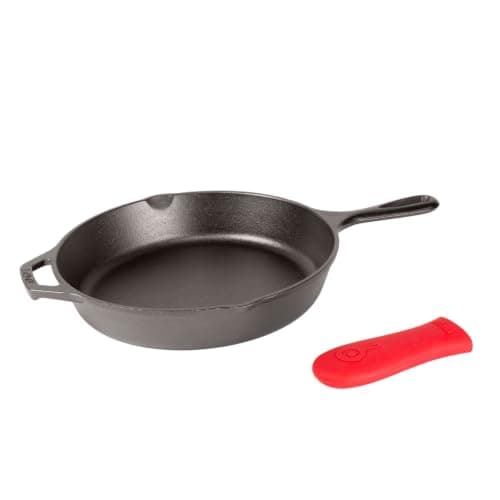
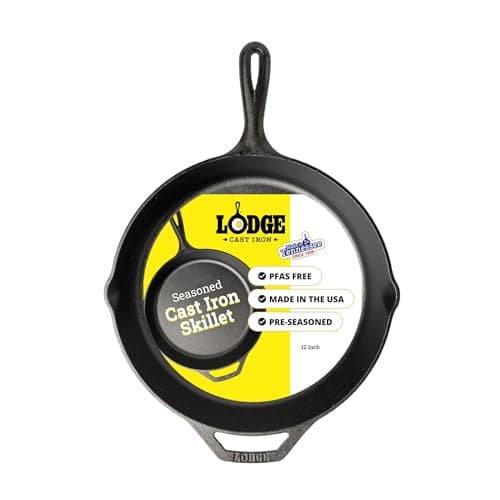
Lodge Seasoned Cast Iron Skillet, 10.25 in (L8SK3)
The default cast iron skillet for most kitchens, with every relevant figure published and a lifetime warranty at a fraction of any other pan on this site.
Best for: Searing, cornbread, and anyone who wants one pan that cannot be worn out
Published specifications for the Lodge Seasoned Cast Iron Skillet, 10.25 in (L8SK3)
Diameter
10.25 in
Weight
5.66 lb
Oven maximum
550F
Induction
Yes - bare iron is ferrous
Seasoning
Pre-seasoned with soy-based vegetable oil, no synthetic chemicals
Warranty
Lifetime
Made in
USA
Care
Hand wash. Lodge's own instructions permit warm soapy water
Good
Effectively unbreakable and fully restorable - a rusted one can be stripped and re-seasoned
Holds heat better than anything else at the price, which is what a sear needs
Lodge publishes its seasoning method openly, so the maintenance is not a mystery
Not good
Heavy
Heats unevenly on a small burner: cast iron conducts at roughly 50 W/m-K, so it is slow to spread and slow to react
Bare iron is reactive; long tomato braises will taste of it
The trade-off. It weighs 5.66 lb empty. You will feel that every time you move it full, and it is the single most common reason a cast iron skillet ends up in a cupboard.
Skip this if. You have wrist or shoulder trouble, or you cook mostly acidic braises. Carbon steel does most of the same jobs at roughly half the weight.
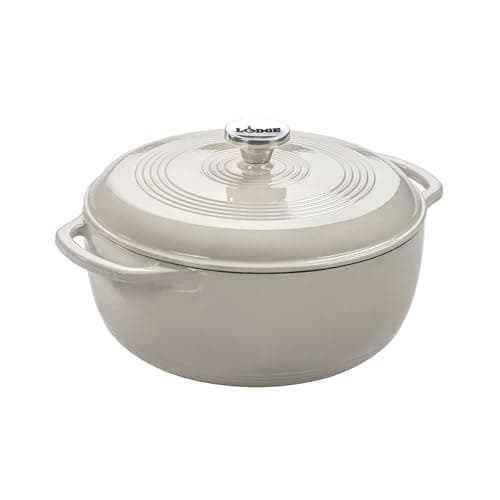
Published specifications for the Lodge Enameled Cast Iron Dutch Oven, 6 qt
Material
Cast iron with porcelain enamel, inside and out
Capacity
6 qt
Induction
Yes - the iron under the enamel is ferrous
Seasoning
None required - enamel is not a seasoning surface
Acid
Safe for tomato and wine, unlike bare iron
Oven maximum
Set by the knob material - check the specific SKU; Lodge publishes a lower ceiling than for bare iron
Good
Non-reactive, so it handles the acidic cooking bare iron cannot
No seasoning to maintain
Considerably cheaper than the French enameled pots it copies
Not good
Chipped enamel is not repairable, unlike bare iron's seasoning
Oven ceiling is lower than bare cast iron because of the knob
Heavy, and the enamel makes it heavier than bare iron of the same capacity
The trade-off. The enamel is a glass layer. Chip it and the pot is not restorable the way bare iron is, and Lodge's enamel chips more readily than the premium brands'.
Skip this if. You already own a large stainless stockpot and rarely braise. This duplicates it for most weeknight cooking.
#4 · The one with a documentation gapSpecs read September 3, 2026
No photo
Lodge Seasoned Carbon Steel Skillet, 12 in
Pre-seasoned and half the weight of the cast iron, but Lodge does not publish a country of manufacture for this line the way it does for its cast iron.
Best for: A first carbon steel pan, bought to find out whether you like the material
Yes, and it is unusually well documented. Lodge publishes the weight (5.66 lb for the 10.25-inch), a 550F oven ceiling, a soy-based pre-seasoning with no synthetic chemicals, a lifetime warranty, US manufacture, and a full seasoning method with temperatures and times.
›Can you use soap on Lodge cast iron?
Yes. Lodge's own published care instruction is to wash with warm soapy water and dry completely. Seasoning is polymerized oil chemically bonded to the iron, not loose grease that detergent removes.
›Is expensive cast iron better than Lodge?
It is smoother when new and often better balanced, not longer lasting or better at holding heat. Both are gray cast iron with identical thermal properties. A Lodge pan reaches the same slickness as seasoning builds.
›How hot can Lodge cast iron go?
Lodge publishes 550F for its bare seasoned cast iron. Enameled pieces are rated lower, because the ceiling is set by the knob material rather than the iron, so check the specific product.
›Where is Lodge carbon steel made?
Lodge does not publish a country of manufacture for its carbon steel line on the listings we read, which is conspicuous given how prominently it states US manufacture for its cast iron. Do not assume the two are the same.
Sources
Every figure on this page came from one of these. Follow them and check our arithmetic — that is the point.