Heads up: some links on this page earn us a commission at no extra cost to you. It does not change what we recommend or the order. How we are funded.
The short answer
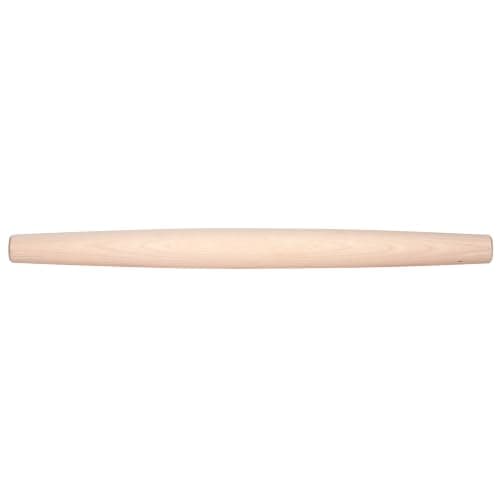
Buy by type, not by price - the four types do genuinely different things. For pastry and pie, buy a French tapered pin: the J.K. Adams maple one is 20.5 inches by 1.75 inches with a published lifetime warranty and a named Vermont workshop, and it is the only pin here that publishes both numbers that change how a pin rolls. For general use with handles, the GoodCook pin is a one-piece hardwood barrel on nylon bearings, made in the United States, with a limited lifetime warranty, for very little. For warm kitchens and butter pastry, a marble pin - the Fox Run - is the only one that does something the others physically cannot: it stays cold. And the finding that shaped this page: barrel length, the one measurement that decides how wide a pass you get, is not published by most makers - and where it is, the headline length flatters it. The Farberware pin is sold as 18 inches and has a 10-inch barrel.
Quick picks
The whole answer, on one screen. Tap a row to jump to the full write-up. Every pick below carries a stated trade-off further down — including the one at the top.
#
Product
Best for
Price
1
J.K. Adams French Tapered Rolling Pin, 20.5 in
20.5 in by 1.75 in of Vermont maple, 0.9 lb, lifetime warranty. Tapered ends let you pivot across a round of pastry without lifting. The one pin here that publishes both length and diameter. Skip it if you want to lean your weight on stiff dough.
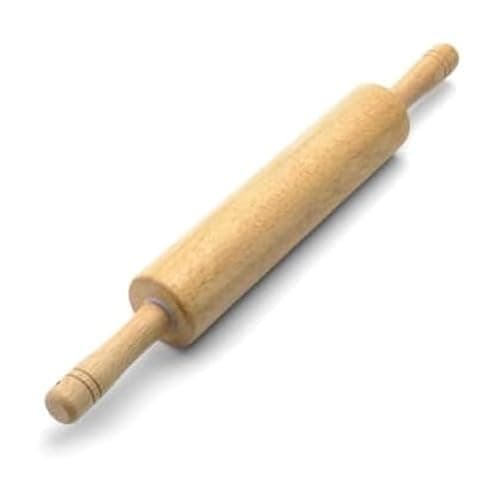
One-piece hardwood barrel on nylon bearings, published made in the United States with a limited lifetime warranty, at the price of a sandwich. Skip it if you need to know the barrel length before buying - that is the one number it does not publish.
Fox Run Polished Marble Rolling Pin with Wooden Cradle
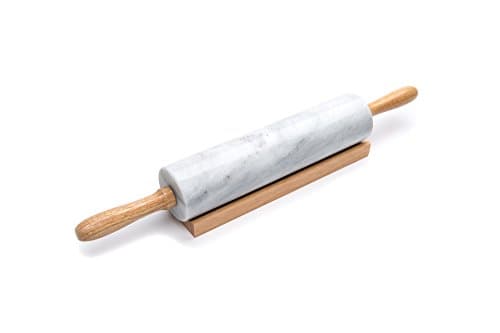
A 10-inch marble barrel on nylon bearings with its own wooden cradle. Stays cold, which is the only measurable advantage any pin can have on laminated dough. Skip it for anyone with wrist or grip trouble - it is roughly five times the weight of the wooden pins, and brittle.
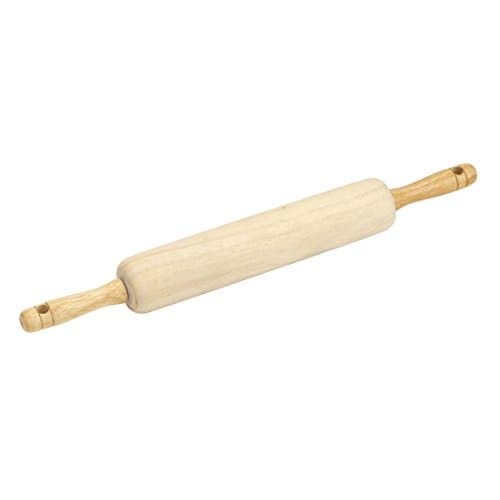
Hardwood with handles, under a pound and a half, and the pin most people picture. Skip it if you roll large sheets: it is sold as 18 inches but its own listing puts the barrel at 10, so most of that length is handle.
Prices last checked October 19, 2026. Prices move constantly — the number on Amazon when you click is the real one.
The finding: the number that matters is the one nobody prints
A rolling pin has two dimensions. Overall length is what the title advertises. Barrel length - the part that actually touches dough - is what determines how wide a sheet you can roll in one pass, and therefore how many passes a pie crust takes.
On a handled pin, those two numbers are very far apart, and the listings quote the flattering one.
Pin
Advertised length
Barrel length
Gap
Farberware Classic
18 in
10 in, per its own description
8 in is handle
GoodCook Classic
17.75 in
Not published
Unknown until it arrives
Fox Run marble
18 in overall
10 in
8 in is handle and hardware
J.K. Adams French tapered
20.5 in
20.5 in - the whole pin is barrel
None, by design
Read from each product's own published listing on the date stamped on this page. The tapered pin has no gap because it has no handles, which is the strongest practical argument for the shape.
That is the whole case for the French pin in one table. A 20.5-inch tapered dowel gives you twice the working width of an 18-inch handled pin, for similar money, because none of its length is spent on handles.
There is a second documentation gap underneath the first: none of the wooden pins names its wood species except the J.K. Adams, which says maple. “Hardwood” covers everything from beech to rubberwood, and density is what makes a wooden pin feel solid rather than hollow. If a listing will not say, you are buying on faith.
The four types, and who each is for
Type
How it works
Best for
The cost
French tapered
One solid dowel, no handles, no bearings - the whole pin turns under your palms
Pastry, pie, anything where you want to feel the dough
Takes a month to get used to if you learned on handles
Handled with bearings
The barrel spins on bearings while your hands stay still
Price is almost irrelevant to this choice. The four types cost roughly the same and are not substitutes for one another.
Why a tapered pin is the serious answer
It is the pin professional pastry work is done with, and the reasons are mechanical rather than traditional.
You feel the dough. With no bearings between your hands and the barrel, thickness differences come through your palms. That is how you stop rolling a crust unevenly before you can see it.
The taper pivots. Press slightly on one end and the pin arcs, which is how a round of pastry stays round without being lifted and turned every pass.
All of it is working surface. See the table above.
The cost is real and worth stating: a tapered pin is light, so you supply all the force. On cold, stiff bread dough a handled pin with bearings lets you put your bodyweight through your arms while your hands stay still, and that is genuinely easier. If most of what you roll is bread or pizza, buy handles.
Marble, and the one thing it actually does
Marble is the only pin material that changes the dough rather than the process. Butter pastry works because solid butter stays in layers; the moment it warms and smears, the layers go. A cold stone barrel pulls heat out of the dough as it passes, and in a warm kitchen that is a measurable advantage no wooden pin has.
Three caveats, all of which matter more than the advantage for most people.
Weight. The Fox Run pin is listed at five pounds in its dimensions and 4.6 in its own description - either way, roughly five times a wooden pin. That is useful on pastry and disqualifying for some hands - cookware for arthritis and limited grip.
Brittleness. A dropped wooden pin dents. A dropped stone pin breaks. This is why these ship with cradles - a round stone pin left on a counter rolls off it.
It is useless on bread. Cold is a disadvantage on yeasted dough, which wants to stay warm and relaxed.
Care, which is short and non-negotiable
No rolling pin on this page is dishwasher safe, and nothing about that is likely to change.
Scrape, do not soak. A bench scraper takes dried dough off wood without water. Soaking raises the grain and eventually splits a pin.
Wipe, dry immediately, store dry. Same rule as any wooden board - best cutting boards has the full version.
Oil occasionally. Food-safe mineral oil, which both wooden pins' makers recommend on the listing. Not cooking oil, which goes rancid.
Never put a pin in a dishwasher. It will come out furred, cracked, or with its bearings seized.
What we cannot tell you
What wood three of these four pins are made from. “Hardwood” is all the Farberware and GoodCook listings say, and density is the property that decides whether a wooden pin feels right. Only J.K. Adams names maple.
Nor can we tell you the barrel length of the GoodCook pin, which is not published anywhere we could find; nor reconcile the Fox Run's two different published weights, nor the Farberware's three different published lengths. We have reported all of those rather than picking the flattering figure. And we have not rolled dough with any of them - our editorial policy is explicit about that.
One pin for everything, as little money as possible:the GoodCook pin - bearings, a US factory and a limited lifetime warranty.
Butter pastry in a warm kitchen:the Fox Run marble pin, if you can comfortably handle five pounds.
You want the pin everyone pictures:the Farberware Classic - just know the barrel is 10 inches.
All four, with live prices
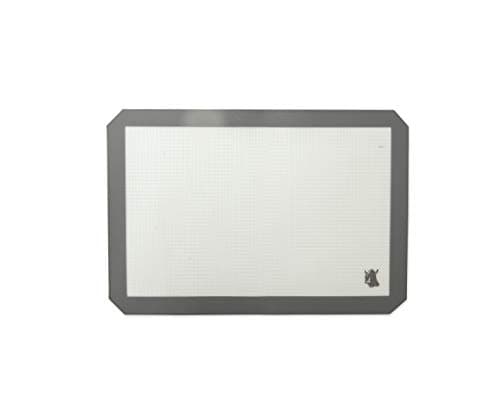
The silicone mat is included because a rolling surface is half of this job, and a mat with measured guides removes the need to flour a counter. Prices move constantly - the number on each button is the current one.
J.K. Adams French Tapered Rolling Pin, 20.5 in
Pastry, pie and anything where you want to feel the dough through the pin
Prices last checked October 19, 2026. Prices move constantly — the number on Amazon when you click is the real one.
Every pick, in full
Each write-up below gives the published specs, what the pan is genuinely good at, what it costs you, and who should skip it. The trade-off line is there on the top pick too — a recommendation with no downside is an advertisement.
Top pick · Best for pastry and pieSpecs read October 17, 2026
J.K. Adams French Tapered Rolling Pin, 20.5 in
20.5 in by 1.75 in of Vermont maple, 0.9 lb, lifetime warranty. Tapered ends let you pivot across a round of pastry without lifting. The one pin here that publishes both length and diameter. Skip it if you want to lean your weight on stiff dough.
Best for: Pastry, pie and anything where you want to feel the dough through the pin
Published specifications for the J.K. Adams French Tapered Rolling Pin, 20.5 in
Length
20.5 in
Diameter
1.75 in
Shape
French tapered dowel - no handles, no bearings
Material
Maple
Weight
0.9 lb
Made in
Vermont, USA
Warranty
Lifetime, per the listing
Care
Hand wash; the maker recommends conditioning with food-safe mineral oil
Dishwasher
No
Model
FRP-1-AM
Good
Publishes length AND diameter, which together are the only two numbers that change how a pin rolls
Tapered ends pivot, so you can steer a round of pastry without lifting the pin
A named US workshop and a published lifetime warranty on a wooden stick
Not good
No bearings - your hands turn with the barrel, which is a real adjustment
Bare wood: hand wash, dry, and oil it occasionally or it dries out and checks
A light pin does not help you flatten cold, stiff dough; you supply all the force
The trade-off. No handles and no bearings means the whole pin turns under your palms. That is the point of the shape, and it is also the thing people who learned on a handled pin dislike for the first month.
Skip this if. You want to lean your bodyweight on stiff bread dough, or you have wrist or grip trouble - a handled pin with bearings lets your hands stay still while the barrel rolls.
#2 · Best handled pin, and the best valueSpecs read October 17, 2026
GoodCook Classic Wooden Rolling Pin with Bearings
One-piece hardwood barrel on nylon bearings, published made in the United States with a limited lifetime warranty, at the price of a sandwich. Skip it if you need to know the barrel length before buying - that is the one number it does not publish.
Best for: Anyone who wants handles and bearings and does not want to spend much finding out whether they bake
Published specifications for the GoodCook Classic Wooden Rolling Pin with Bearings
Length
17.75 in overall
Diameter
2 in
Barrel length
Not published
Shape
Handled barrel on nylon bearings
Material
Hardwood - species not published
Weight
0.7 lb
Construction
One-piece barrel, per the listing
Made in
United States, per the listing
Warranty
Limited lifetime
Model
23830
Good
Bearings and handles at a price where a pin is close to disposable
One-piece barrel, so there is no glued seam to come apart
A published US factory and a limited lifetime warranty, which pins three times the price do not give
Not good
Barrel length not published, so you cannot tell how wide a pass you get until it arrives
Wood species not published
At 0.7 lb it is the lightest pin here, and light is a disadvantage on stiff dough
The trade-off. It publishes a limited lifetime warranty and a US factory but not the wood species, and not the barrel length - the number that decides how wide a pass you get.
Skip this if. You want a pin that feels like an heirloom, or you want to know what tree it came from.
#3 · Best for butter pastry in a warm kitchenSpecs read October 17, 2026
Fox Run Polished Marble Rolling Pin with Wooden Cradle
A 10-inch marble barrel on nylon bearings with its own wooden cradle. Stays cold, which is the only measurable advantage any pin can have on laminated dough. Skip it for anyone with wrist or grip trouble - it is roughly five times the weight of the wooden pins, and brittle.
Best for: Pie crust, puff pastry and anything laminated, in a warm kitchen
Published specifications for the Fox Run Polished Marble Rolling Pin with Wooden Cradle
Barrel length
10 in
Overall
18 in; listed as 2.5 by 18 by 2.5 in
Weight
5 lb in the listing's dimensions; 4.6 lb in its own description
Material
Marble barrel, wooden handles
Bearings
Nylon ball bearings
Included
Wooden cradle for storage
Warranty
Not published - the listing's warranty field says only “Warranty”
Dishwasher
No
Model
4050COM
Good
Stays cold, which is the one measurable advantage any rolling pin can have on butter pastry
Mass does the work - you steer rather than press
Comes with its own cradle, which matters because a round stone pin rolls off a counter
Not good
Two different weights on one listing
Heavy enough to be genuinely unsuitable for some hands and wrists
Brittle. Wood dents when dropped; stone cracks
The barrel is 10 in, same as the cheap handled pins, so you are buying temperature rather than width
The trade-off. It weighs roughly five times what the wooden pins weigh, and its own listing cannot agree with itself about the number - five pounds in the dimensions, 4.6 pounds in the description.
Skip this if. You have wrist or grip trouble, or you bake from a shelf you have to lift it down from. Stone is also brittle: a dropped marble pin is a broken marble pin.
#4 · The cheapest way to own oneSpecs read October 17, 2026
Farberware Classic Wood Rolling Pin, 18 in
Hardwood with handles, under a pound and a half, and the pin most people picture. Skip it if you roll large sheets: it is sold as 18 inches but its own listing puts the barrel at 10, so most of that length is handle.
Best for: A first rolling pin for cookies, pie and pizza, bought without thinking about it
Published specifications for the Farberware Classic Wood Rolling Pin, 18 in
Overall length
18 in in the title; 17.75 in in the listing's size field; 17.5 in in its dimensions
Barrel length
10 in, per the listing's own description
Shape
Handled barrel
Material
Hardwood - species not published
Weight
1.04 lb
Bearings
Not published
Warranty
Not published - the listing's warranty field says only “Warranty”
Care
Wipe clean; the listing recommends occasional food-grade mineral oil
Dishwasher
No
Made by
Lifetime Brands, under the Farberware name
Good
The least expensive pin here by a wide margin, and hardwood is hardwood
Handles let your hands stay still and your weight go into the dough
Publishes its barrel length, which several competitors do not
Not good
Three different overall lengths on one listing
A 10-inch barrel on an 18-inch pin - most of the length is handle
No wood species, no bearing type and no warranty term published
The trade-off. Its own listing gives three different overall lengths - 18 inches in the title, 17.75 in the size field, 17.5 in the dimensions - and names no wood species and no warranty term.
Skip this if. You roll large sheets of pastry. A 10-inch barrel means a 10-inch-wide pass, and you will be rolling the same dough twice as often as someone with a longer barrel.
It depends on what you roll. A French tapered pin is best for pastry and pie because you feel the dough through it and the taper lets you pivot a round without lifting it. A handled pin with bearings is better for bread and pizza, where you want to put your weight through stiff dough while your hands stay still. Marble is for butter pastry in a warm kitchen.
›What size rolling pin should I buy?
Look at barrel length rather than overall length, and be aware that most listings quote only the latter. A handled pin sold as 18 inches commonly has a 10-inch barrel, so most of the advertised length is handle. A 20.5-inch French tapered pin is barrel end to end, which is roughly twice the working width for similar money.
›Are marble rolling pins better?
For one job, yes. Marble stays cold, which keeps butter solid and layers intact in pastry - the only measurable advantage any pin material has. For everything else it is worse: roughly five times the weight of a wooden pin, brittle enough to break if dropped, and actively unhelpful on yeasted dough, which wants to stay warm.
›Can you put a rolling pin in the dishwasher?
No. Wooden pins come out furred and eventually split, and bearings seize. Scrape dried dough off with a bench scraper rather than soaking, wipe with a damp cloth, dry immediately, and condition occasionally with food-safe mineral oil - which is what both wooden pins' makers recommend on their own listings.
›Do I need a rolling pin with bearings?
Only if you want your hands to stay still while the barrel turns, which helps on cold stiff dough where you are pressing hard. On pastry it is a disadvantage, because the bearings remove the feedback that tells you the sheet is rolling unevenly before you can see it.
›What wood are rolling pins made from?
Usually not stated, which is a real gap. Of the pins on this page only J.K. Adams names its timber, which is maple; the others say only hardwood, a word that covers everything from beech to rubberwood. Density is what makes a wooden pin feel solid rather than hollow, so a listing that will not name the species is asking you to buy on faith.
Sources
Every figure on this page came from one of these. Follow them and check our arithmetic — that is the point.