Heads up: some links on this page earn us a commission at no extra cost to you. It does not change what we recommend or the order. How we are funded.
The short answer
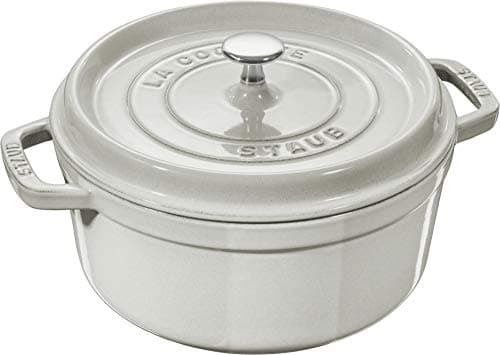
Staub publishes cast iron with enamel inside and out, a black matte textured interior that does not show staining, self-basting spikes on the underside of the lid, French manufacture, an induction-compatible base and a limited lifetime warranty. The oven ceiling is set by the knob and varies by SKU, so check the specific pot. The black interior is the reason to buy it and also its one real cost: you cannot see the fond develop, so you judge browning by smell and by lifting the food rather than by looking.
What this review checks
The same eight points as every brand review here: published construction, oven ceiling, induction compatibility, dishwasher guidance, handle and lid design, warranty terms, country of manufacture, and what the brand declines to state. We have not cooked in any of it. The method is here.
The black matte interior
This is what separates Staub from everything else in the category and it is worth being precise about. The interior enamel is black and textured rather than smooth and pale. Two consequences follow.
It never shows a stain. The single most common complaint about enameled cast iron - that a pale interior discolors within months and stays that way - simply does not apply. Le Creuset publishes that its own staining is permanent; Staub sidesteps the issue by not showing it.
The texture takes a sear. A matte, slightly rough surface grips food better than a glossy one, which is why a hard sear works better in this pot than in a smooth-glazed alternative.
The cost is real and it is not small: you cannot see the fond. On anything where you are building a pan sauce from what sticks to the bottom, you are judging by smell and by lifting a piece rather than by looking. If that is your main use, the pale interior is genuinely better, and that comparison is the heart of best enameled Dutch ovens.
What Staub publishes
Specification
Published figure
Comment
Material
Cast iron with enamel inside and out
No seasoning, no coating to wear
Capacity (flagship)
5.5 qt round cocotte
The same capacity as the Le Creuset Signature
Interior enamel
Black matte and textured
Does not show staining; hides fond
Lid
Self-basting spikes on the underside
Condensation drips back onto the food
Knob
Metal; oven rating set by the knob - check the SKU
Rated by SKU rather than by line
Induction
Yes
Ferrous iron under the enamel
Warranty
Limited lifetime
Original purchaser
Made in
France
Stated, as with Le Creuset
Recorded from Staub's published cookware specifications via Zwilling J.A. Henckels, its parent company.
The lid, and what the spikes do
Staub's signature feature is a set of raised spikes on the underside of the lid, which the company describes as self-basting: steam condenses on the lid, collects at the spikes, and drips back onto the food rather than running to the edge.
Two honest observations. The mechanism is real and it does distribute condensation more evenly than a smooth lid. And the heavier lid matters more than the spikes do on a long braise, because weight is what keeps the seal and holds the moisture in the pot. A heavy smooth lid does most of what a heavy spiked lid does.
This is a feature worth having and not a feature worth choosing the brand for. Buy Staub for the interior; treat the lid as a bonus.
Oven ceiling, and the SKU problem
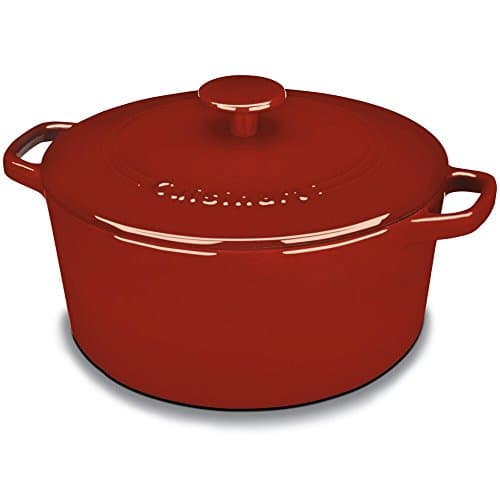
Staub rates its pots by the knob, and the knob varies across ranges. That means the honest answer to "how hot can a Staub go" is: check the pot you are buying, not the brand. It is the same situation as Lodge and Cuisinart enameled, and it is why our oven temperature page lists enameled cast iron as knob-dependent rather than giving a number.
If you bake bread, this is the specification to verify before buying, because most no-knead recipes preheat at 450F to 500F. Several brands sell a stainless replacement knob, which is the cheapest way to raise a ceiling you already own.
What it gets right
The black matte interior answers the staining complaint completely
Textured enamel grips a sear better than a glossy interior
Heavier lid than most, which matters on a long braise
Publishes France as the country of manufacture
Induction compatible, like all enameled cast iron
What it costs you
You cannot see the fond, which is a real loss for pan sauces
Heavy even by enameled cast iron standards
Oven ceiling is knob-dependent and varies by SKU
Priced with Le Creuset, so the same value question applies
Chipped enamel is unrepairable, as it is everywhere
Who should buy it
Buy Staub if a stained interior would bother you, or if you sear hard in the pot before braising. The 5.5 qt cocotte is the size to get.
Buy Le Creuset instead if you build sauces from fond and want to watch it develop.
Buy Lodge instead if you braise occasionally - the cooking is the same and the price is not.
Check the knob rating on the specific SKU before buying if you bake bread.
Staub and the pots it competes with
The decision between the two French pots is interior color, not quality. Everything below them is a price decision rather than a design one.
Staub Round Cocotte, 5.5 qt
Long wet braises, and anyone who resents watching a pale interior stain
These are the products this page's reasoning actually points at. Same rules as everywhere else on the site: published specs, a stated trade-off, and a live price only where one exists.
Top pick · The pot to buySpecs read September 3, 2026
Staub Round Cocotte, 5.5 qt
5.5 qt with a black matte textured interior that takes a hard sear and never shows a stain.
Best for: Long wet braises, and anyone who resents watching a pale interior stain
Published specifications for the Staub Round Cocotte, 5.5 qt
Material
Cast iron with enamel inside and out
Capacity
5.5 qt
Interior enamel
Black matte and textured - does not show staining
Lid
Self-basting spikes on the underside
Knob
Metal; the oven rating is set by the knob, so check the specific SKU
Induction
Yes
Warranty
Limited lifetime
Made in
France
Good
Black matte interior is the practical answer to the staining complaint about pale enamel
Heavier lid than most, which matters more than the spikes do on a long braise
Textured interior takes a hard sear better than a glossy enamel does
Not good
You cannot see the fond, which is a real loss on anything you are building a sauce from
Heavy even by enameled cast iron standards
Priced with Le Creuset, so the same skip-if applies
The trade-off. The black matte interior hides fond as well as it hides stains, so you judge browning by smell and by lifting the food rather than by looking.
Skip this if. You want to watch the fond develop. Buy the sand-colored interior instead and accept that it will discolor.
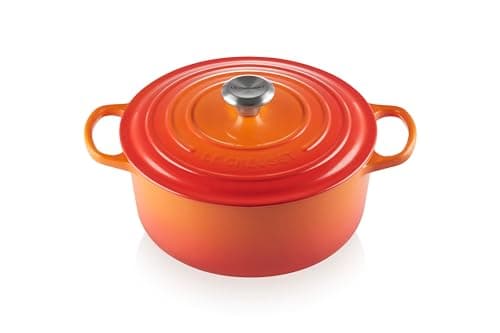
Published specifications for the Le Creuset Signature Round Dutch Oven, 5.5 qt
Material
Cast iron with porcelain enamel inside and out
Capacity
5.5 qt
Interior enamel
Sand-colored, so browning and fond stay visible
Knob
Stainless steel, rated to 500F
Induction
Yes - the iron under the enamel is ferrous
Dishwasher
Dishwasher safe; Le Creuset recommends hand washing
Warranty
Limited lifetime
Made in
France
Good
The pale interior is a genuine cooking advantage: you can see whether the fond is browning or burning
Wide, low-profile handles that a hand in an oven mitt actually fits
The one enameled pot with a real secondhand market, which changes the true cost of ownership
Not good
Costs several times a Lodge enameled pot of the same capacity
The pale interior stains permanently, and Le Creuset says so
Chipped enamel is not repairable on any enameled pot, this one included
The trade-off. You are paying a large multiple of what a Lodge enameled pot costs for a difference in enamel quality, finish and resale value rather than in cooking.
Skip this if. You braise a few times a year. The cooking difference over a Lodge enameled pot is small; the price difference is not.
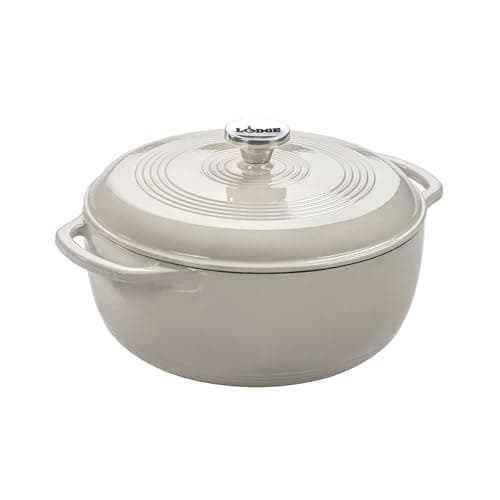
Published specifications for the Lodge Enameled Cast Iron Dutch Oven, 6 qt
Material
Cast iron with porcelain enamel, inside and out
Capacity
6 qt
Induction
Yes - the iron under the enamel is ferrous
Seasoning
None required - enamel is not a seasoning surface
Acid
Safe for tomato and wine, unlike bare iron
Oven maximum
Set by the knob material - check the specific SKU; Lodge publishes a lower ceiling than for bare iron
Good
Non-reactive, so it handles the acidic cooking bare iron cannot
No seasoning to maintain
Considerably cheaper than the French enameled pots it copies
Not good
Chipped enamel is not repairable, unlike bare iron's seasoning
Oven ceiling is lower than bare cast iron because of the knob
Heavy, and the enamel makes it heavier than bare iron of the same capacity
The trade-off. The enamel is a glass layer. Chip it and the pot is not restorable the way bare iron is, and Lodge's enamel chips more readily than the premium brands'.
Skip this if. You already own a large stainless stockpot and rarely braise. This duplicates it for most weeknight cooking.
›What is the difference between Staub and Le Creuset?
Interior enamel, primarily. Staub uses a black matte textured interior that never shows staining and takes a hard sear; Le Creuset uses a pale sand-colored interior that lets you see the fond and stains permanently. Both are French-made enameled cast iron of similar capacity and price.
›Do Staub lid spikes actually work?
The mechanism is real - condensation collects at the spikes and drips back onto the food rather than running to the edge. On a long braise, though, the lid's weight matters more than the spikes do, and a heavy smooth lid does most of the same job.
›How hot can a Staub cocotte go in the oven?
It depends on the knob, and Staub rates by SKU rather than by line. Check the specific pot before buying if you bake bread, since most no-knead recipes preheat at 450F to 500F. A stainless replacement knob raises the ceiling on a pot you already own.
›Is Staub induction compatible?
Yes. The iron under the enamel is ferrous, so every enameled cast iron pot works on induction. The base is flat and heavy, which suits an induction hob well.
›Can you see fond in a Staub pot?
Not easily - the black matte interior hides it. You judge browning by smell and by lifting a piece of food rather than by looking. If building sauces from fond is central to how you cook, the pale interior is the better choice.
Sources
Every figure on this page came from one of these. Follow them and check our arithmetic — that is the point.