Heads up: some links on this page earn us a commission at no extra cost to you. It does not change what we recommend or the order. How we are funded.
The short answer
Glass
Metal
Conduction
Poor - heats slowly and holds heat
Excellent, especially aluminum at 237 W/m-K
Browning the base
Slow and pale
Fast and even
Acidic food
Completely non-reactive
Reacts with bare aluminum; fine on coated or steel
Broiler
No
Yes
Thermal shock
Genuine breakage risk
None
Seeing the base
Yes, which is a real advantage
No
Best for
Casseroles, gratins, baked pasta, custards
Brownies, cakes, roasting, anything you want crisp
Where we stand
We do not make or sell glass bakeware or metal bakeware. Both link to the same retailer, both pay us the same commission rate, and we earn exactly the same whichever one you buy — or nothing at all if you buy neither, which is sometimes the right answer. Most of the comparison pages that rank for this question are published by companies that sell one of the two. How we are funded.
One property explains everything
Aluminum conducts heat at roughly 237 W/m-K. Steel manages around 15. Glass is around 1. That is not a small difference - it is two orders of magnitude between aluminum and glass, and every practical difference between the two materials comes out of it.
A metal pan takes heat from the oven and passes it to the food quickly and evenly. A glass dish absorbs heat slowly, holds it, and radiates it back gently. Metal browns. Glass warms.
Where glass genuinely wins
Anything acidic
Glass is completely inert. Tomato, wine, vinegar and lemon do nothing to it, ever. Bare aluminum reacts with all of them, discoloring the pan and occasionally giving the food a faint metallic edge. For a tomato-heavy lasagne baked for an hour, glass is the better dish.
Wet dishes with a long bake
Casseroles, gratins and baked pasta do not need a browned base - they need even, gentle heat that does not scorch the bottom layer before the middle is hot. Glass holding heat and releasing it slowly is exactly right for that.
Anything you want to look at
You can see the base. For a custard, a bread pudding or a deep-dish anything, being able to check whether the bottom is set without dismantling it is a genuine advantage, and it is the one thing no metal pan can offer.
Oven to table to fridge
Glass goes in the microwave, in the fridge and in the freezer, and it goes on the table looking like a serving dish. That is three fewer containers to wash. Check price on Amazon.
Where metal genuinely wins
Anything you want crisp
Brownies with an edge, roast potatoes, a pastry base, cookies. Browning happens when the surface gets hot and dry, and metal delivers heat to the surface far faster than glass. A brownie baked in glass will be cakier and paler underneath. Some people prefer that; it is not what most recipes intend.
Cakes
Glass over-bakes the edges of a cake while the middle catches up, because it holds heat and keeps cooking after the cake is out. Light metal is the right answer, as argued in best cake and loaf pans.
Anything under the broiler
Glass bakeware is not broiler safe. Not "better avoided" - not safe. The combination of intense direct radiant heat on one surface and a much cooler underside is exactly the stress that breaks it.
High heat
Above about 425F to 450F glass is out of its comfortable range on most makers' guidance, which rules it out for the high-temperature roasting a bare aluminum sheet pan does best.
Aluminum conducts at roughly 237 W/m-K, steel at about 15, glass at about 1. Everything else on this page is a consequence of those three numbers.
Thermal shock is the rule that actually matters
US Pyrex has been made from tempered soda-lime glass rather than borosilicate since the late 1990s. Tempered soda-lime is strong against impact and comparatively intolerant of sudden temperature change, which is why the breakage stories exist.
The rules that prevent it are simple and absolute:
Never put a hot dish on a wet or cold surface. A damp counter is enough.
Never add cold liquid to a hot dish.
Never take a dish from the freezer or fridge straight into a hot oven.
Never use it under a broiler or on a stovetop burner.
Never use a chipped dish. A chip is a stress concentration.
None of that is a reason to avoid glass. It is a reason to keep the rules, in the same way that not preheating a nonstick pan empty on high is a rule rather than a reason to avoid nonstick.
Converting a recipe between them
The standard adjustment is 25F. Going from a metal pan to glass, drop the oven by 25F and expect the bake to take slightly longer; glass keeps cooking after it comes out, so pull it a few minutes early.
Going the other way, from glass to metal, keep the temperature and check early - metal browns faster and a recipe written for glass will not expect it. The same 25F rule applies to dark metal pans against light ones, for the same reason.
What about ceramic and stoneware?
Ceramic and stoneware behave much like glass thermally - poor conductors, good heat retention, non-reactive - with the same thermal shock caution and generally a nicer appearance on a table. Stoneware is more forgiving of high heat than glass and usually heavier.
For practical purposes, anything in this paragraph goes in the glass column of the table above. The choice between them is aesthetic and about weight, not about how the food cooks.
One of each, which is what most kitchens should own
Both materials link to the same retailer and pay the same rate, so this page earns identically whichever you buy - or nothing, which is often the right answer if you already own one.
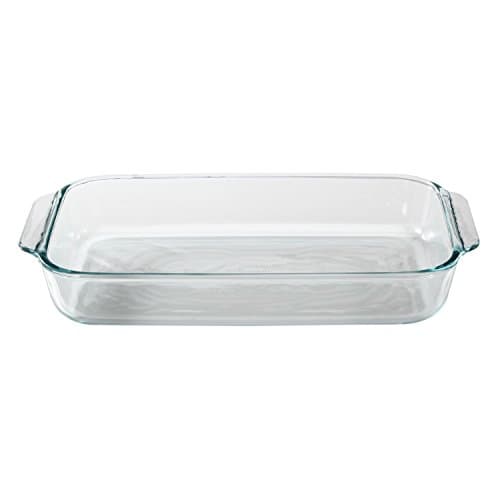
Pyrex Basics Oblong Glass Baking Dish, 3 qt
Casseroles, gratins and baked pasta - wet dishes that go oven to table to fridge
These are the products this page's reasoning actually points at. Same rules as everywhere else on the site: published specs, a stated trade-off, and a live price only where one exists.
Top pick · Best glass dishSpecs read September 3, 2026
Pyrex Basics Oblong Glass Baking Dish, 3 qt
Non-reactive, oven to table to fridge, and you can see whether the base is actually cooked - which no metal pan allows.
Best for: Casseroles, gratins and baked pasta - wet dishes that go oven to table to fridge
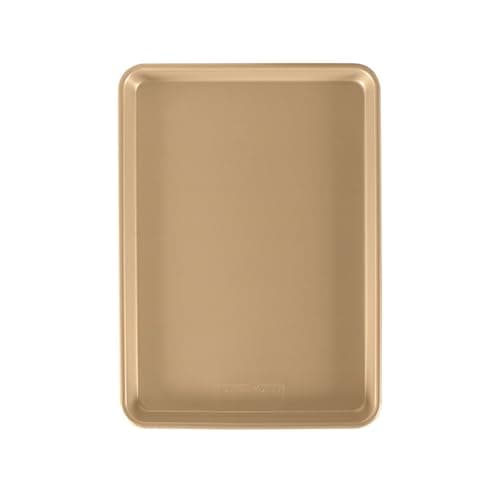
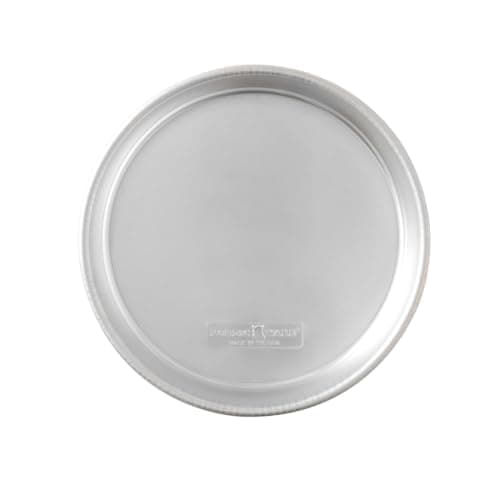
Published specifications for the Nordic Ware Naturals Half Sheet, 18 x 13 in
Exterior dimensions
17.9 x 12.9 x 1 in
Material
Aluminum
Rim
Encapsulated steel rim
Gauge
Not published by Nordic Ware
Warranty
Lifetime
Dishwasher
Hand wash recommended. Automatic dishwasher use is not advised
Made in
America of domestic and imported materials
Good
Aluminum conducts at 237 W/m-K, which is why it browns evenly and a steel pan does not
The encapsulated steel rim is the reason it does not warp in a hot oven
Lifetime warranty on a pan this cheap
Not good
Nordic Ware does not publish a gauge figure, so thickness cannot be compared like for like
Bare aluminum stains and reacts with acid
Not dishwasher safe by the maker's own advice
The trade-off. Bare aluminum discolors and reacts with acid. It will look used within a month and Nordic Ware advises against the dishwasher.
Skip this if. You want a pan that stays looking new, or you will not hand wash. Buy an aluminized-steel coated pan instead and accept the coating as a wear item.
Metal for anything you want browned or crisp, because aluminum conducts about 237 times better than glass. Glass for wet, acidic and long-baked dishes like lasagne and casseroles, where even gentle heat and a non-reactive surface matter more than browning.
›Do you need to lower the temperature for glass bakeware?
Yes, by about 25F, and pull the dish a few minutes early because glass keeps cooking after it comes out of the oven. Going the other way, from glass to metal, keep the temperature and check early because metal browns faster.
›Can glass bakeware go under the broiler?
No. Glass bakeware is not broiler safe. Intense radiant heat on the top surface with a much cooler underside is exactly the thermal stress that breaks tempered soda-lime glass.
›Why did my Pyrex dish shatter?
Almost always thermal shock. US Pyrex has been tempered soda-lime glass rather than borosilicate since the late 1990s, and it does not tolerate sudden temperature change - a hot dish on a wet counter, cold liquid into a hot dish, or a chipped rim.
›Is ceramic bakeware the same as glass?
Thermally, close enough. Ceramic and stoneware are also poor conductors with good heat retention and no reactivity, and they carry the same thermal shock caution. Stoneware tolerates high heat a little better and is usually heavier.
Sources
Every figure on this page came from one of these. Follow them and check our arithmetic — that is the point.