Heads up: some links on this page earn us a commission at no extra cost to you. It does not change what we recommend or the order. How we are funded.
The short answer
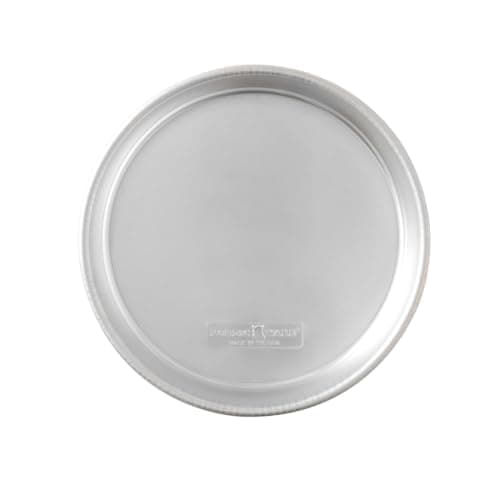
For cake, buy bare or anodized aluminum with straight sides: Nordic Ware Naturals for the cheap lifetime-warranted version, Fat Daddio's anodized for straight, seamless, professional geometry. For a loaf, buy USA Pan's corrugated aluminized steel, because a loaf has to come out whole and corrugation is what releases it. Skip dark nonstick cake pans - they over-brown edges and the coating is a wear item on a pan that could otherwise last forever.
Quick picks
The whole answer, on one screen. Tap a row to jump to the full write-up. Every pick below carries a stated trade-off further down — including the one at the top.
#
Product
Best for
Price
1
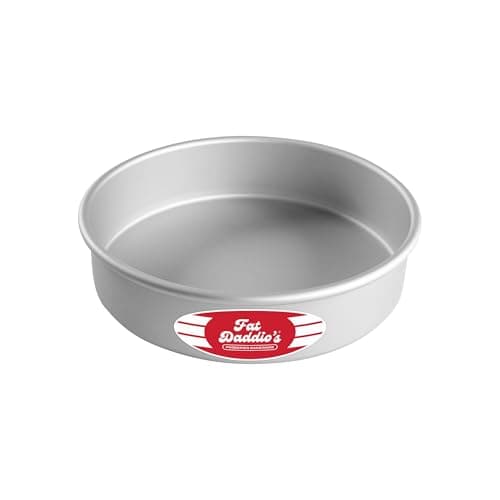
Fat Daddio's Anodized Aluminum Round Cake Pan, 8 in
Anodized aluminum, straight square sides and a seamless base, which is why professional layers stack flat instead of domed.
Prices last checked October 19, 2026. Prices move constantly — the number on Amazon when you click is the real one.
Two shapes, two different failure modes
A cake pan fails by producing a domed, dark-edged layer that has to be trimmed. A loaf pan fails by refusing to let go of the bread. Those are different problems and the specification that solves each is different, which is why the two shapes rarely have the same best answer.
Cake pan
Loaf pan
What decides it
Side angle and material conduction
Release, which means surface texture or coating
Ideal material
Bare or anodized aluminum
Aluminized steel with a coating, or aluminum plus a parchment sling
Ideal geometry
Straight sides, square to the base, seamless
Slightly tapered, corrugated interior
Coating
Not needed - grease and line instead
Genuinely useful
Dark finish
Actively bad - over-browns edges
Acceptable, and it helps crust
How we chose these
We have not baked in them. What is compared is published: material, coating chemistry where a maker states it, surface geometry, warranty term, dishwasher guidance and country of manufacture. The method is here.
Two makers stand out for disclosure rather than for marketing. USA Pan publishes that its AMERICOAT silicone coating is free of PTFE, PFOA and BPA, which is a checkable claim almost nobody else in bakeware makes. Nordic Ware publishes a lifetime warranty and a made-in-America statement, and publishes no gauge figure at all - which is on its product card, because a missing spec is a real answer.
Straight sides are the whole cake-pan argument
A layer cake needs flat layers. A pan whose sides slope outward produces a layer with a sloped edge, which does not stack, and the batter climbing a warm sloped wall sets earlier at the edge than in the middle - which is the mechanism behind a domed center.
Professional pans - Fat Daddio's being the standard example - are straight and square to the base, and seamless, so no rivet or join leaks batter or leaves a mark. The difference in the finished cake is genuinely visible. Check price on Amazon.
The second reason cakes dome is oven temperature, not the pan. If the edges set well before the middle, the oven is running hot regardless of what the dial says - an oven thermometer settles it in one bake.
Why dark cake pans over-brown
Dark surfaces absorb radiant heat more efficiently than light ones. In an oven that means a dark pan runs hotter at the edges than a light one at the same set temperature, and cakes come out with a dark, dry rim.
Standard practice with a dark pan is to drop the oven by about 25F and check early. That works, and it is one more thing to remember on a pan that also has a coating that will eventually fail. For cake specifically, a light bare aluminum pan is simply easier. The same logic in more depth is in sheet pan materials.
Loaf pans, and why corrugation matters
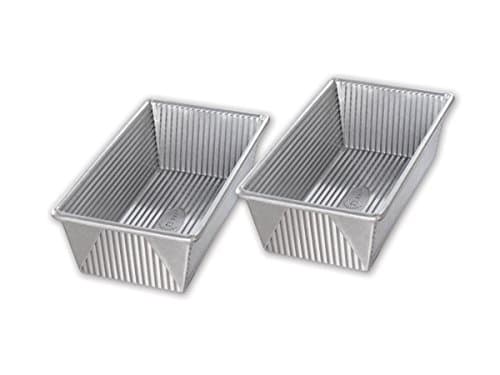
A loaf is the hardest release in home baking: it is tall, it is heavy, it is soft when it comes out of the oven, and it has to survive being inverted whole. A smooth pan holds it with the entire side surface. A corrugated pan touches it in ridges, which both reduces the contact area and gives steam a channel to escape along.
USA Pan builds its whole line around that, and pairs it with a silicone-based coating rather than PTFE. Check price on Amazon. The trade-off is real and published: the corrugation traps batter and USA Pan states the pans are not dishwasher safe.
1 lb pan: the standard sandwich loaf and most quick breads. This is the size to own.
1.5 lb pan: bigger sandwich loaves, and better for a wetter sourdough that will spread.
Pullman pan with a lid: square-sided sandwich bread. A specific tool for a specific loaf.
There is one material this section deliberately leaves out, because it inverts the argument above rather than competing with it: a cast iron loaf pan does not try to release cleanly, it tries to build a crust, which is right for banana bread and cornbread loaves and wrong for sandwich bread — cast iron bakeware covers what the extra weight buys and when it is the wrong trade.
Cake pans and loaf pans get bought together and judged separately. The pan that releases a loaf is not the pan that gives you a level layer.
Which sizes to actually own
Two 8-inch round cake pans. Two, because a layer cake needs two and baking them in sequence changes the result. Eight rather than nine gives a taller layer, which is what most modern recipes assume.
One 9-inch round. For recipes written for it, and for anything you want shallower.
One 1 lb loaf pan. Bread, banana bread, meatloaf.
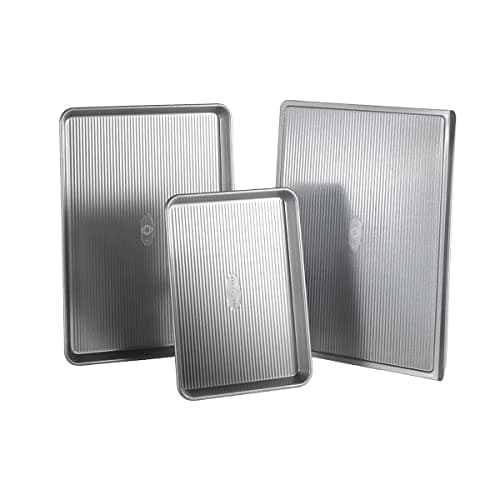
One 9 by 13 pan. Sheet cakes, brownies, bar cookies. In metal for browning, or in glass if it is mostly for casseroles - see glass versus metal bakeware.
That is five pans and it covers essentially all home baking. If you would rather buy it as one box, the bakeware set roundup covers what a full set should contain.
Lining, which is not a failure
There is a persistent idea that needing to grease and line a pan means the pan is not good enough. It does not. Bare aluminum is the best cake material precisely because it has no coating, and the cost of that is thirty seconds with butter and a parchment circle.
A coated cake pan trades that thirty seconds for a wear item. Given that a bare aluminum pan is warranted for life and a coated pan is not warranted where it matters, the trade is worse than it looks. The equivalent argument for cookware is in how long nonstick lasts.
The pans on this page
Two cake pans chosen for geometry, one loaf pan chosen for release, and the full set if you would rather buy once.
Fat Daddio's Anodized Aluminum Round Cake Pan, 8 in
Layer cakes that have to be level, and anyone tired of trimming domes
Each write-up below gives the published specs, what the pan is genuinely good at, what it costs you, and who should skip it. The trade-off line is there on the top pick too — a recommendation with no downside is an advertisement.
Top pick · Best cake panSpecs read September 3, 2026
Fat Daddio's Anodized Aluminum Round Cake Pan, 8 in
Anodized aluminum, straight square sides and a seamless base, which is why professional layers stack flat instead of domed.
Best for: Layer cakes that have to be level, and anyone tired of trimming domes
Bare or anodized aluminum with straight sides square to the base and no seams. Fat Daddio's anodized pans are the professional standard for that geometry; Nordic Ware Naturals is the cheap lifetime-warranted version of the same idea.
›Why do my cakes come out domed?
Usually because the oven runs hotter than the dial says, so the edges set before the middle. A sloped-sided pan makes it worse by setting the batter earlier at the wall. An oven thermometer and a straight-sided pan fix most of it.
›Should cake pans be nonstick?
No. A coating on a cake pan trades thirty seconds of greasing and lining for a wear item on a pan that would otherwise last a lifetime, and dark nonstick finishes over-brown the edges as well.
›What is the best loaf pan for bread?
USA Pan's corrugated aluminized steel 1 lb pan. The corrugation reduces contact area and gives steam a channel to escape, which is what releases a loaf whole. USA Pan publishes its coating as free of PTFE, PFOA and BPA.
›Do you need to lower the oven temperature for dark bakeware?
By about 25F, and check early. Dark surfaces absorb radiant heat more efficiently, so a dark pan runs hotter at the edges than a light one at the same setting. For cakes specifically, a light aluminum pan avoids the problem.
Sources
Every figure on this page came from one of these. Follow them and check our arithmetic — that is the point.