Bakeware fails in ways cookware does not: it warps, it darkens, and its coatings die in the dishwasher. Three different materials, three different rules.
Heads up: some links on this page earn us a commission at no extra cost to you. It does not change what we recommend or the order. How we are funded.
The short answer
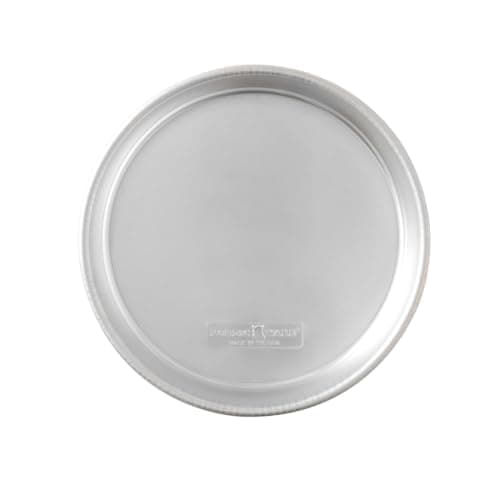
Bare aluminum will darken and stain permanently. Nordic Ware advises against the dishwasher; hand wash and accept the patina.
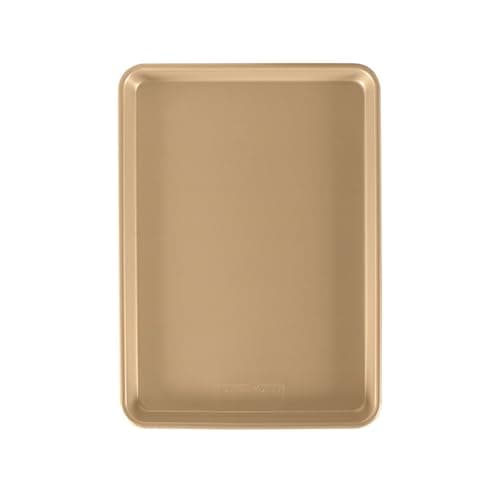
Coated aluminized steel is not dishwasher safe on most lines, including USA Pan's, which publishes that plainly. Warm water and mild soap.
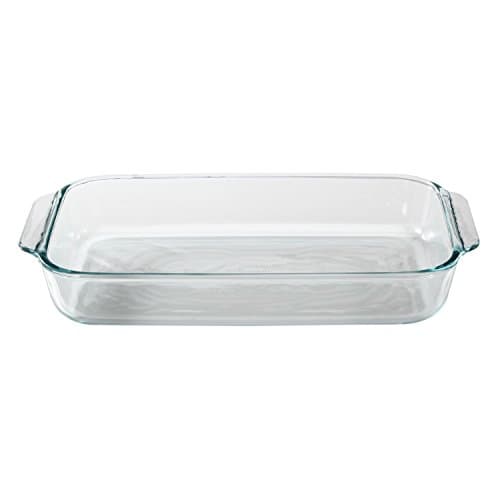
Glass is dishwasher safe and breaks on thermal shock, not on detergent. Never wash a hot dish.
Warping is thermal shock too - a hot pan into cold water, or a thin pan into a hot oven.
Four materials, four sets of rules
Bakeware care advice is usually written as though there were one kind of pan. There are four, and the rules genuinely conflict: what is right for glass will ruin a coated loaf pan, and what is right for bare aluminum would be pointless on glass.
Material
Dishwasher
Main enemy
What it will do anyway
Bare aluminum
No - it discolors
Acid and detergent
Darken and stain; this is cosmetic
Anodized aluminum
No - it dulls permanently
Detergent
Darken slowly with age
Coated aluminized steel
Usually no; check the maker
Abrasives and dishwasher detergent
Lose coating eventually
Glass
Yes
Thermal shock
Chip at the rim
The dishwasher column is the one people get wrong most often, and it is published by the maker in every case.
Why bare aluminum goes dark, and why that is fine
Aluminum oxidizes. Baking fats and sugars polymerize onto the surface, dishwasher detergent strips the oxide layer unevenly, and hard water leaves mineral deposits. The result is a pan that within a few months looks nothing like the one you bought.
None of that affects how it bakes in any way that matters, and a darker pan browns very slightly faster - which is why a well-used sheet pan is often the one people reach for. Nordic Ware warrants its Naturals line for life and advises against the dishwasher; both of those facts are consistent with a pan meant to look used.
If you genuinely want a sheet pan that stays looking new, buy a coated aluminized-steel pan and accept the coating as a wear item. That is the real trade, and it is laid out in sheet pan materials.
Warping, and the sound every baker knows
The bang from the oven when a sheet pan buckles is thermal stress. The pan heats unevenly - one area expands faster than the rest - and the metal releases the strain all at once.
Thin pans warp; thick pans do not. Gauge is the single biggest factor and almost nobody publishes it, Nordic Ware included.
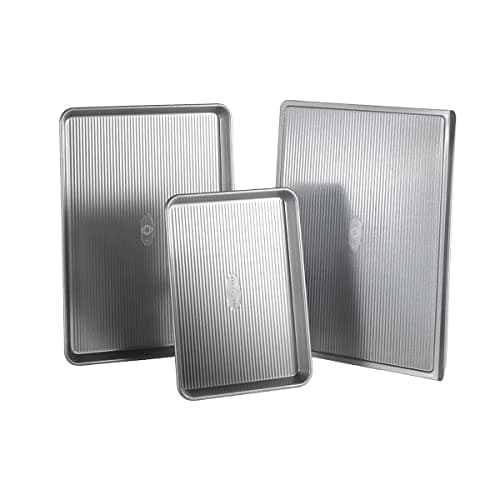
An encapsulated steel rim resists it. That rolled steel edge on a good half sheet is a stiffener, not a decoration, and it is why the Nordic Ware pan does not buckle.
Never run cold water onto a hot pan. This is the most reliable way to warp aluminum permanently.
Do not put a cold pan under a broiler. Extreme radiant heat on one side is the worst case.
A warped pan can sometimes be flattened on a hard flat surface with a mallet and a cloth, but it never comes back fully.
The rolled steel rim is a stiffener. Half sheets that warp are usually the ones without one.
Shifting baked-on grease without wrecking the pan
The brown polymerized film on an old sheet pan is oil that has cooked into a varnish. It is harmless and mostly not worth fighting. If you want it off, the order of escalation matters.
Hot water and a long soak. Free, and it removes more than people expect.
Baking soda paste. Mildly abrasive, safe on aluminum, safe on most coatings if you use a cloth rather than a scourer.
Baking soda plus a little hydrogen peroxide. Left for a couple of hours, this lifts polymerized grease well. Safe on bare metal, and worth testing on a coated pan first.
Barkeeper-type powdered cleaner. Effective on bare metal and glass. It will dull anodized aluminum and it will damage a coating.
Oven cleaner. Caustic. Never on aluminum - it attacks the metal itself, not just the deposit.
The stainless equivalent of this problem is covered in cleaning burnt stainless, where the chemistry is different because the metal is.
Coated pans: the rules that keep them alive
A silicone or PTFE coating on bakeware wears out the same way it does on a frying pan, and for the same reasons - see how long nonstick lasts.
No dishwasher unless the maker explicitly permits it. USA Pan publishes hand wash in warm water with mild soap.
No metal. No knives cutting brownies in the pan, no metal spatula lifting cookies.
No cooking spray. Aerosol sprays build a polymerized film on coated bakeware exactly as they do on frying pans, and it will not come off.
No stacking without a divider. The rim of the pan above scratches the coating of the pan below. Paper towels are enough.
Glass: dishwasher yes, temperature change no
Glass is the easiest bakeware to clean and the easiest to break. It is dishwasher, microwave and freezer safe, and it is entirely non-reactive, so nothing you bake in it will stain it in a way soaking will not fix.
The failure mode is thermal shock, and washing is where it usually happens: a dish straight out of the oven into a sink with water in it. Let it cool on a dry towel or a rack first, every time. The full set of rules is in glass versus metal bakeware.
Storage, which quietly does most of the damage
Stacked bakeware scratches itself. Sheet pans stored flat in a pile grind grit between them; coated pans stacked rim-to-surface scratch each other; glass dishes chip at the rim, and a chipped glass dish is the one you should stop using.
Store flat pans on edge in a vertical divider. It protects the surfaces, it is faster to get one out, and in a small kitchen it recovers more space than anything else - a point made at length in cookware for a small kitchen.
Pans whose makers publish their care rules
Every one of these states its dishwasher guidance in writing, which is the specification this page is really about.
Nordic Ware Naturals Half Sheet, 18 x 13 in
Roasting vegetables, sheet-pan dinners, cookies - the pan you use most weeks
These are the products this page's reasoning actually points at. Same rules as everywhere else on the site: published specs, a stated trade-off, and a live price only where one exists.
Top pick · The pan this page is mostly aboutSpecs read September 3, 2026
Nordic Ware Naturals Half Sheet, 18 x 13 in
Bare aluminum with a steel-encapsulated rim, which is the reason it does not warp - and a maker that publishes hand-wash guidance rather than hiding it.
Best for: Roasting vegetables, sheet-pan dinners, cookies - the pan you use most weeks
Published specifications for the Nordic Ware Naturals Half Sheet, 18 x 13 in
Exterior dimensions
17.9 x 12.9 x 1 in
Material
Aluminum
Rim
Encapsulated steel rim
Gauge
Not published by Nordic Ware
Warranty
Lifetime
Dishwasher
Hand wash recommended. Automatic dishwasher use is not advised
Made in
America of domestic and imported materials
Good
Aluminum conducts at 237 W/m-K, which is why it browns evenly and a steel pan does not
The encapsulated steel rim is the reason it does not warp in a hot oven
Lifetime warranty on a pan this cheap
Not good
Nordic Ware does not publish a gauge figure, so thickness cannot be compared like for like
Bare aluminum stains and reacts with acid
Not dishwasher safe by the maker's own advice
The trade-off. Bare aluminum discolors and reacts with acid. It will look used within a month and Nordic Ware advises against the dishwasher.
Skip this if. You want a pan that stays looking new, or you will not hand wash. Buy an aluminized-steel coated pan instead and accept the coating as a wear item.
Glass yes; bare aluminum, anodized aluminum and most coated aluminized steel no. Nordic Ware advises against the dishwasher for its bare aluminum pans, and USA Pan publishes hand wash in warm water with mild soap for its coated line.
›Why does my aluminum sheet pan turn dark?
Oxidation, polymerized baking fats and hard-water minerals. It is entirely cosmetic and a darker pan browns very slightly faster. If you want a pan that stays looking new, buy a coated aluminized-steel pan instead and treat the coating as a wear item.
›What makes a sheet pan warp in the oven?
Uneven thermal expansion. Thin pans warp and thick ones do not, and an encapsulated steel rim stiffens the pan against it. The most reliable way to warp one permanently is running cold water onto it while it is still hot.
›How do you remove baked-on grease from bakeware?
Start with a long hot soak, then a baking soda paste, then baking soda with a little hydrogen peroxide left for a couple of hours. Powdered cleaners work on bare metal and glass but dull anodized aluminum, and oven cleaner attacks aluminum itself.
›Can you use cooking spray on nonstick bakeware?
No. Aerosol sprays contain lecithin that polymerizes into a hard film bonded to the coating and cannot be removed without damaging it. Use oil or butter applied from a bottle, or grease and line the pan with parchment.
Sources
Every figure on this page came from one of these. Follow them and check our arithmetic — that is the point.