Heads up: some links on this page earn us a commission at no extra cost to you. It does not change what we recommend or the order. How we are funded.
The short answer
Buy six pieces, not sixteen: one 10-inch clad skillet, one 8-inch nonstick, one 2 qt and one 4 qt saucepan, one Dutch oven that doubles as a stockpot, and one half sheet. Choose straight-sided pieces with short or removable handles so they nest, skip the pieces that only do one thing, and buy open-stock rather than a set - a boxed set is sold on piece count, and piece count is exactly the thing a small kitchen cannot absorb.
The constraint is storage, and it changes every answer
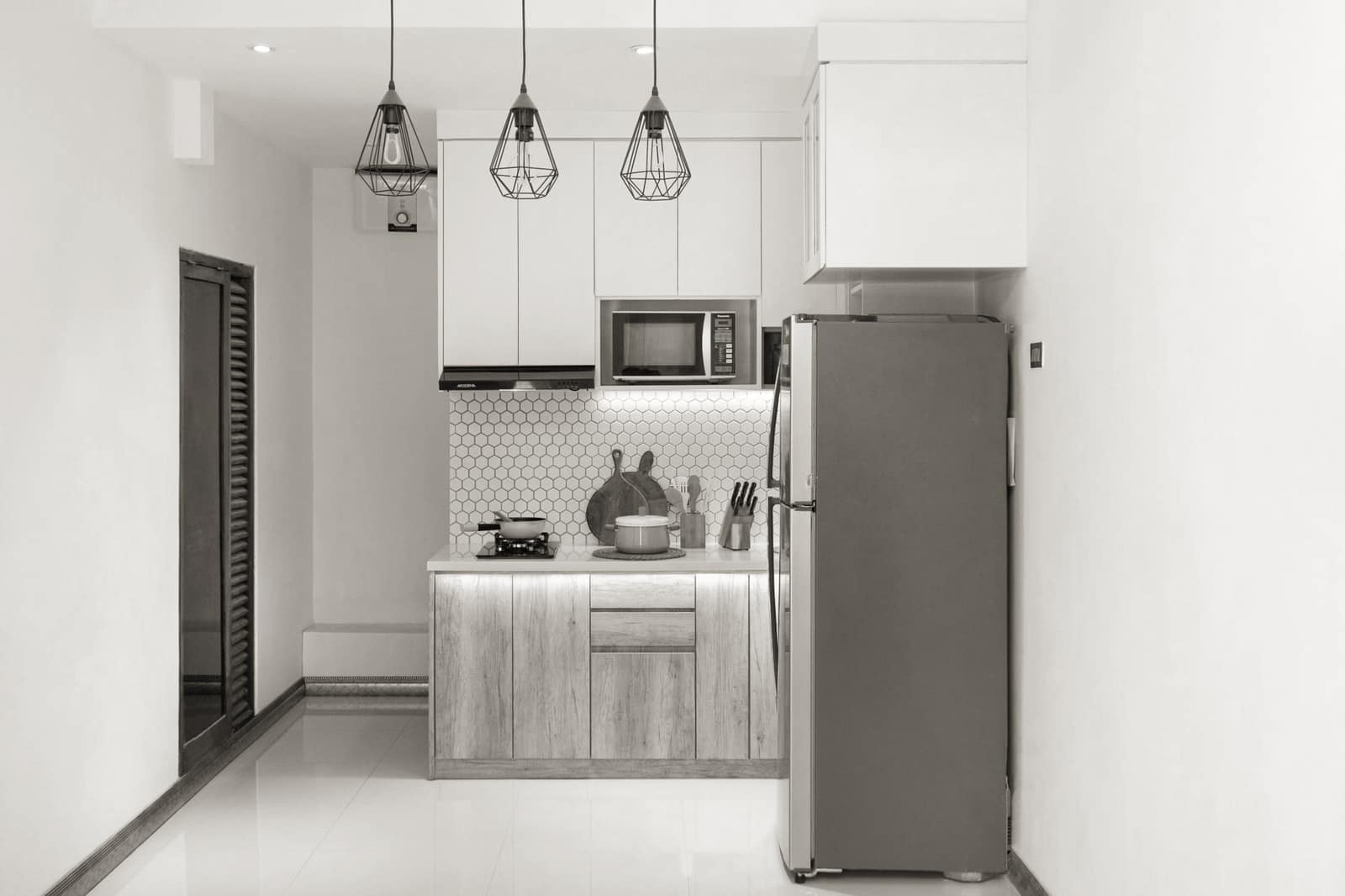
A normal cookware guide optimizes for cooking. In a small kitchen the cooking is rarely the problem - the problem is that a 12-piece set physically does not fit, and the pieces you use daily end up at the bottom of a stack behind the ones you use twice a year.
So the planning runs backwards. Measure the cupboard first: depth, height, and whether there is a shelf in the middle that halves the usable height. Almost every small-kitchen cupboard is around twelve inches deep and around fourteen inches of clear height, which rules out a stacked stockpot with the lid on and rules in almost everything else.
What actually nests, and what only claims to
Nesting is a geometry question. Round pans with straight or gently flared sides nest cleanly. Anything with a rivet standing proud on the inside wall, a heat-break gap in the handle, or a helper handle at the rim does not.
Piece
Nests?
Why
Clad saucepans of graduated size
Yes
Straight sides, flush interior rivets
Fry pans of different diameters
Partly
Handles splay, so a stack of three is as tall as two
Cast iron skillets
Yes, and heavily
Vertical walls stack tightly, but the stack is very heavy
Dutch oven with lid
No
The lid is the height problem; store it inverted on the pot
Woks
No
A wok is a shape that nests with nothing
Sheet pans
Yes
Flat storage on edge in a vertical divider is the best use of a narrow gap
The practical move is to buy saucepans as a graduated pair rather than two of the same size, and to accept that fry pans will not stack neatly no matter what you do. Store fry pans vertically in a rack or a plate divider instead - it is the single biggest space gain available in a small kitchen and it costs almost nothing.
The six pieces
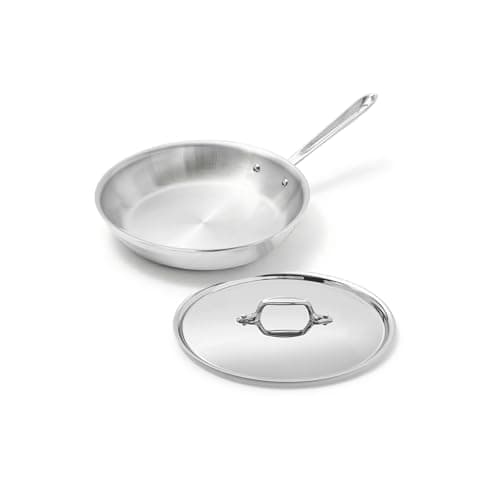
One 10-inch clad skillet. The general-purpose pan. Check price on Amazon for the reference version, or the equivalent piece from a Tramontina or Cuisinart clad line for a fraction of it.
One 8-inch nonstick. Eggs only. It is a consumable and it is the smallest pan in the kitchen, so it stores anywhere. A hard-anodized pan holds up better than a thin one to being shuffled around a crowded cupboard.
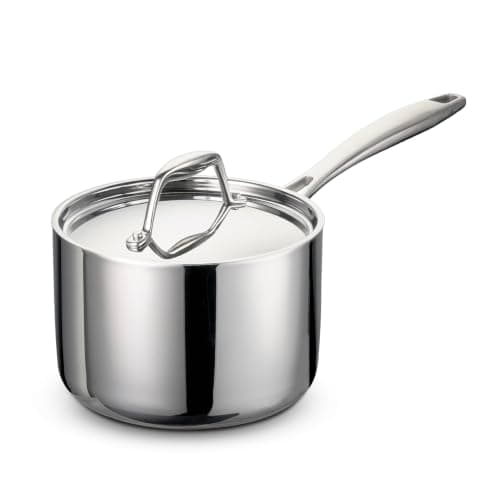
One 2 qt saucepan. Sauces, grains, reheating.
One 4 qt saucepan or saucier. Pasta for two, soup, blanching.
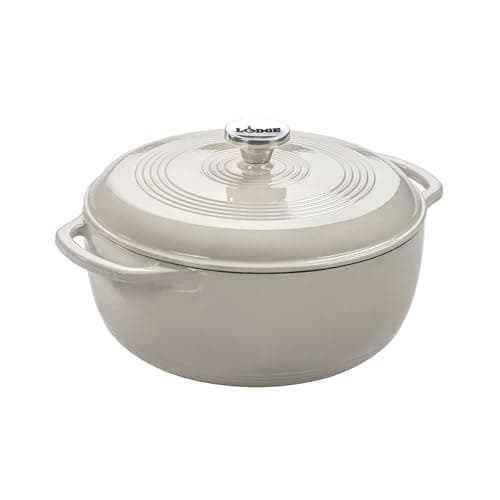
One 5 to 6 qt Dutch oven. This is the piece that earns its slot three times over: stockpot, braiser and oven casserole in one object.
That is six objects and about nine including lids. It is a complete kitchen, and it is roughly half the volume of a 12-piece boxed set that would leave you with two pans you never use and a steamer insert.
Why a boxed set is usually the wrong call here
A set is priced and marketed on piece count, and piece count is exactly what you are short of. A 12-piece set typically contains seven useful items, two lids counted separately, and at least one piece - a steamer insert, a tiny 1.5 qt saucepan - that will live at the back forever.
If a set is still the right economics for you, the reasoning is worked through in set versus open stock and what piece count you need. For a small kitchen specifically, buy the smallest set in a good line and add open-stock pieces rather than buying the biggest set and storing the surplus.
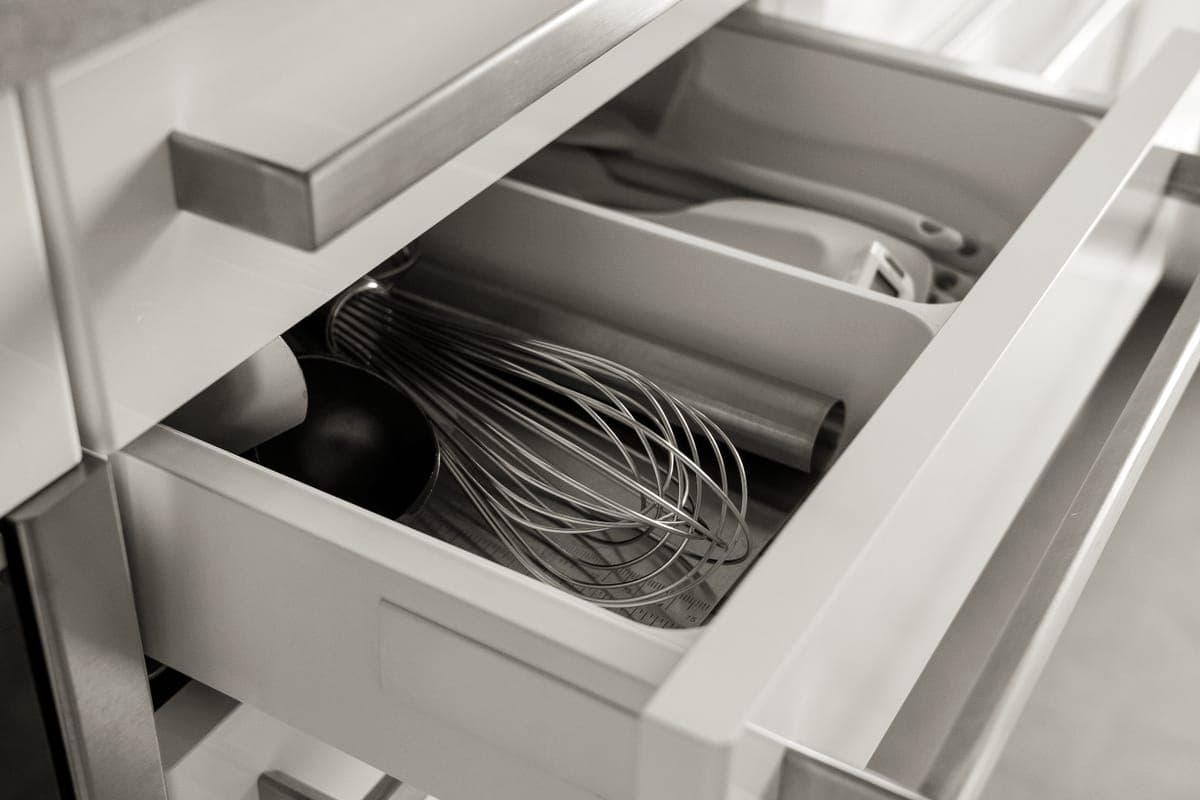
The same principle applies to tools: two good ones beat a block of twelve, and they fit in a jar.
Handles are the hidden dimension
Cupboard depth is measured front to back, but a fry pan is stored handle-out and the handle is often longer than the pan is wide. A 10-inch skillet with a nine-inch handle needs nineteen inches of clear space, and that is why the pan you bought does not fit a cupboard that measures fine.
Measure a pan handle-tip to rim, not across the cooking surface. Listings quote the cooking surface.
Short, angled handles - the sort on cast iron - are a storage advantage even though they are an ergonomic disadvantage.
Loop-handled pieces and two-handled pots take less depth than a single long handle does, which is another quiet argument for the Dutch oven.
A one-cupboard kitchen, bought open-stock
Four of the six. The nonstick pan and the second saucepan are size-dependent, so buy those to fit the shelf you measured.
All-Clad D3 Stainless 10 in Fry Pan
One good open-stock stainless pan bought instead of a cheap full set
Three storage moves worth more than any pan choice
Vertical dividers for flat things. Sheet pans, cutting boards and lids stored on edge in a cheap rack recover more usable volume than any other change.
Lids off the pots. Store lids separately in a rack; a stacked pot with the lid on wastes the height of the lid on every pot in the stack.
Hang the pan you use daily. The pan you reach for every night should not be in the stack at all. This is the argument for an 8-inch skillet over a 10 in a genuinely tiny kitchen.
These are the products this page's reasoning actually points at. Same rules as everywhere else on the site: published specs, a stated trade-off, and a live price only where one exists.
Top pick · Smallest useful skilletSpecs read September 3, 2026
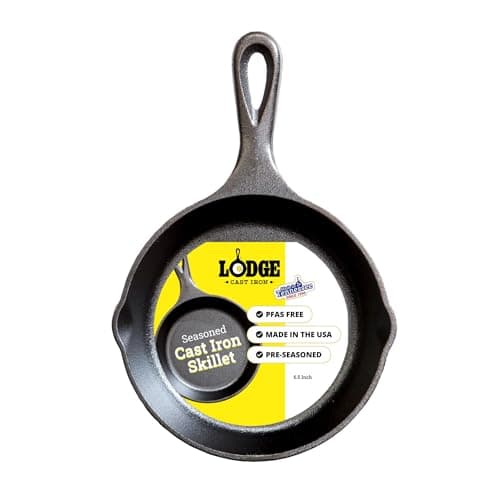
Lodge Cast Iron Skillet, 8 in
Fits a countertop oven, stores upright in a slot, and is the only cast iron pan light enough to keep on a hook.
Best for: Cooking for one, small ovens, and anyone who finds a 10-inch skillet heavy
Published specifications for the All-Clad D3 Stainless 10 in Fry Pan
Construction
Fully bonded tri-ply, aluminum core
Oven maximum
600F, oven and broiler safe
Induction
Yes - compatible with any stovetop
Dishwasher
Handwash only (All-Clad published)
Handle
Double-riveted stainless
Weight
3.0 lb (model 4110)
Warranty
Limited lifetime
Made in
Bonded, engineered and assembled in Canonsburg, PA
Good
600F is the highest oven ceiling of any stainless pan on this site
The one pan here whose manufacturing location is published down to the town
Genuinely repairable-adjacent: rivets are the only failure point and the warranty covers them
Not good
Hand wash only
The flared rim makes it a poor pan for anything with liquid
Costs several times what a Tramontina or Cuisinart pan of the same construction costs
The trade-off. Hand wash only. All-Clad publishes that plainly, and it is a real daily cost on a pan you will use every day.
Skip this if. You want a dishwasher-safe pan, or you are buying a whole kitchen on a fixed budget - one D3 skillet costs what a full clad set can cost.
Published specifications for the Lodge Enameled Cast Iron Dutch Oven, 6 qt
Material
Cast iron with porcelain enamel, inside and out
Capacity
6 qt
Induction
Yes - the iron under the enamel is ferrous
Seasoning
None required - enamel is not a seasoning surface
Acid
Safe for tomato and wine, unlike bare iron
Oven maximum
Set by the knob material - check the specific SKU; Lodge publishes a lower ceiling than for bare iron
Good
Non-reactive, so it handles the acidic cooking bare iron cannot
No seasoning to maintain
Considerably cheaper than the French enameled pots it copies
Not good
Chipped enamel is not repairable, unlike bare iron's seasoning
Oven ceiling is lower than bare cast iron because of the knob
Heavy, and the enamel makes it heavier than bare iron of the same capacity
The trade-off. The enamel is a glass layer. Chip it and the pot is not restorable the way bare iron is, and Lodge's enamel chips more readily than the premium brands'.
Skip this if. You already own a large stainless stockpot and rarely braise. This duplicates it for most weeknight cooking.
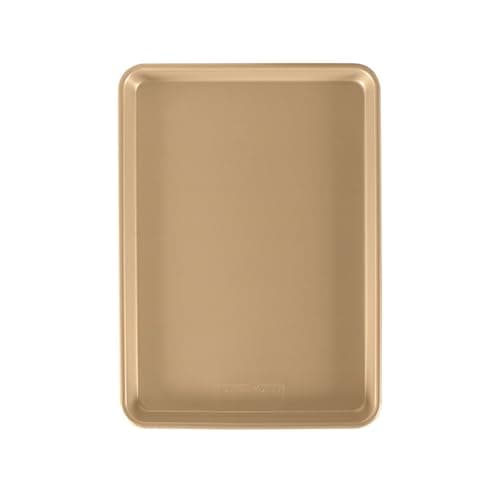
Six pieces bought open-stock: a 10-inch clad skillet, an 8-inch nonstick, a 2 qt and a 4 qt saucepan, a 5 to 6 qt Dutch oven and a half sheet pan. That covers everything a kitchen is asked to do and fits one cupboard.
›Do cookware sets nest?
Saucepans of graduated size nest well. Fry pans do not, because the handles splay, and lids never stack efficiently. Buy graduated saucepans, store fry pans on edge in a rack, and keep lids in a separate divider.
›Is a cookware set worth it in a small kitchen?
Usually not. Sets are priced on piece count and a 12-piece set typically contains at least two pieces you will never use, which is exactly the storage you do not have. Buy the smallest set in a good line and add open stock.
›How do you store pans without a lot of cupboard space?
Vertically. A cheap plate or tray divider lets you store sheet pans, lids and fry pans on edge, which recovers more volume than any other single change. Hang the pan you use daily so it is not in a stack at all.
›What size pan fits a small oven?
An 8-inch skillet and a quarter sheet fit most countertop and apartment ovens; a 10.25-inch cast iron skillet and a half sheet usually do not. Measure the oven interior at its narrowest point, not the door.
Sources
Every figure on this page came from one of these. Follow them and check our arithmetic — that is the point.