Heads up: some links on this page earn us a commission at no extra cost to you. It does not change what we recommend or the order. How we are funded.
The short answer
An 8-inch skillet for one portion of anything you want browned. A 12-inch pan with one chicken thigh in it will steam, because the empty metal keeps dumping moisture back.
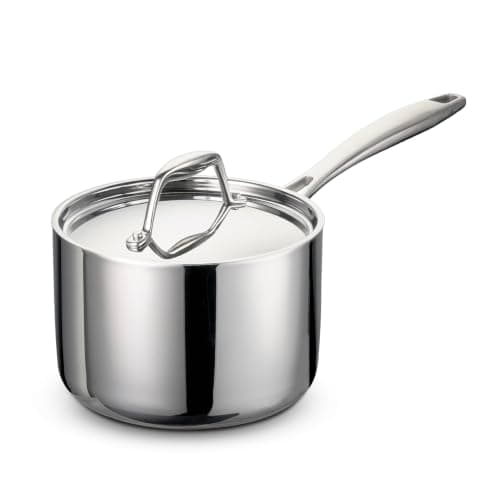
A 2 qt saucepan for grains, sauce and reheating. A 4 qt pot holding one cup of rice is a heat-distribution problem.
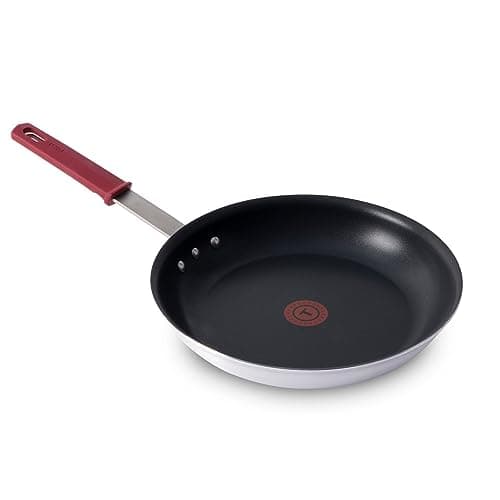
An 8-inch nonstick for eggs, treated as a consumable.
A quarter sheet so roasting one tray of vegetables does not mean heating a half sheet with a corner of food on it.
Why a big pan ruins a small portion
Browning needs the surface of the food to get above the boiling point of water. That only happens once the water on and around the food has evaporated. In a crowded pan the water cannot escape fast enough, which is why everyone tells you not to crowd the pan.
The opposite failure is less discussed and it is the one that ruins solo cooking. Put one chicken thigh in a 12-inch skillet and most of the pan is bare metal at high heat. That metal scorches the fat, sets off the smoke alarm, and the moisture leaving the food condenses on the cool spot under it instead of leaving the pan. You get a sad gray exterior and a smoky kitchen at the same time.
The fix is not a different technique. It is a pan whose base the food actually covers - roughly two thirds full is the target. For one portion that is an 8-inch pan, occasionally a 10.
The four pieces that cover solo cooking
Piece
Size
What it is for
Skillet
8 in
Searing and sauteing one portion
Saucepan
2 qt
Rice, pasta for one, sauce, reheating
Nonstick pan
8 in
Eggs, fish, pancakes - a consumable
Sheet pan
Quarter sheet, 9 x 13 in
Roasting vegetables for one or two
Four objects. Everything else a solo kitchen supposedly needs is a variation on one of these.
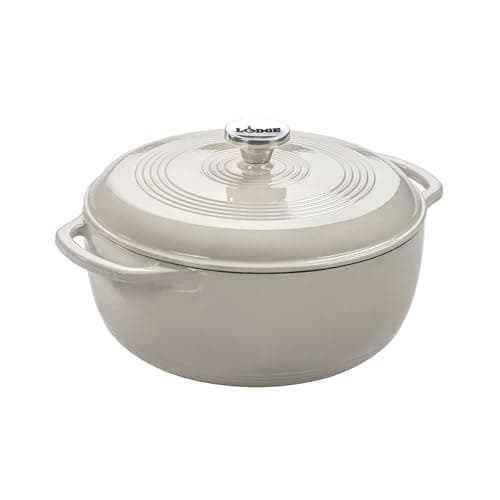
A Dutch oven is the tempting fifth, and it is the piece to add if you batch cook. If you do not batch cook, it will hold one portion of stew twice a year and take a whole cupboard shelf in between. The honest version of that argument is in how many pans a kitchen needs.
Material matters less than you have been told, at this size
Most material arguments are really about heat distribution across a large base. At 8 inches the base is small enough that even a cheap pan distributes heat reasonably, which means the material choice comes down to what you want to maintain rather than how it cooks.
Cast iron if you want an object that lasts forever and you do not mind drying it on the burner. The 8-inch is the one solo cooks actually keep using, because the 10.25 is heavy enough with food in it to be a two-hand lift.
Clad stainless if you want zero maintenance and you cook acidic things. It goes in the dishwasher in most lines.
Carbon steel if you like the ritual. It is lighter than iron at the same diameter, and the reasoning is in is carbon steel worth it.
Nonstick for eggs and nothing else. Buy the cheap one and replace it; the case is made in how long nonstick lasts.
A pan two thirds covered by food is the target. Below that you are heating bare metal; above it you are steaming.
Cook for one, or cook for four and eat for four days?
These are genuinely different equipment problems and it is worth deciding which you are before buying.
Cooking a single portion each time
Small pans, a small sheet, no stockpot. Everything above. The advantage is that nothing has to be stored, reheated or thrown out, and the whole kitchen fits in one cupboard - see cookware for a small kitchen.
If you cook for yourself most nights, the piece worth spending real money on is the skillet, because it is the only one you will use daily for decades. Everything else in a solo kitchen is either cheap and permanent - cast iron, a sheet pan - or cheap and disposable, like nonstick.
These are the products this page's reasoning actually points at. Same rules as everywhere else on the site: published specs, a stated trade-off, and a live price only where one exists.
Top pick · Best skillet for oneSpecs read September 3, 2026
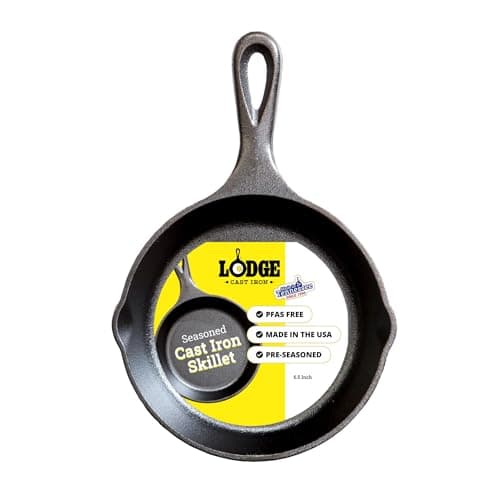
Lodge Cast Iron Skillet, 8 in
Small enough that one portion fills it, which is the entire difference between a sear and a steam.
Best for: Cooking for one, small ovens, and anyone who finds a 10-inch skillet heavy
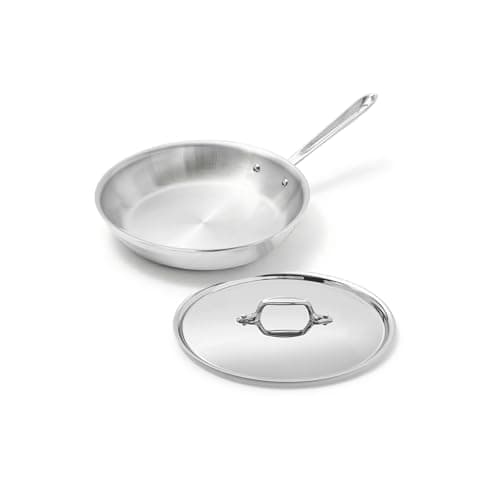
Published specifications for the All-Clad D3 Stainless 10 in Fry Pan
Construction
Fully bonded tri-ply, aluminum core
Oven maximum
600F, oven and broiler safe
Induction
Yes - compatible with any stovetop
Dishwasher
Handwash only (All-Clad published)
Handle
Double-riveted stainless
Weight
3.0 lb (model 4110)
Warranty
Limited lifetime
Made in
Bonded, engineered and assembled in Canonsburg, PA
Good
600F is the highest oven ceiling of any stainless pan on this site
The one pan here whose manufacturing location is published down to the town
Genuinely repairable-adjacent: rivets are the only failure point and the warranty covers them
Not good
Hand wash only
The flared rim makes it a poor pan for anything with liquid
Costs several times what a Tramontina or Cuisinart pan of the same construction costs
The trade-off. Hand wash only. All-Clad publishes that plainly, and it is a real daily cost on a pan you will use every day.
Skip this if. You want a dishwasher-safe pan, or you are buying a whole kitchen on a fixed budget - one D3 skillet costs what a full clad set can cost.
Eight inches for a skillet and 2 quarts for a saucepan. One portion should cover roughly two thirds of the pan base. In a 12-inch pan a single portion leaves most of the surface as bare hot metal, which scorches fat and steams the food.
›How many pans does one person need?
Four: an 8-inch skillet, a 2 qt saucepan, an 8-inch nonstick pan for eggs, and a quarter sheet pan. Add one large pot only if you batch cook, in which case a 5 to 6 qt Dutch oven covers it.
›Should someone cooking for one buy a cookware set?
Usually not. A 12-piece set is sized for a household and at least half of it will sit unused, which is a storage cost every day for a saving you take once. Buying four open-stock pieces in the right sizes works out better.
›Why does my food steam instead of browning?
Either the pan is crowded or, more often when cooking for one, the pan is far too large. Both prevent moisture from leaving fast enough for the surface to get above the boiling point of water, which is where browning starts.
›Is cast iron too heavy for cooking for one?
The 10.25-inch skillet is a genuine two-hand lift with food in it. The 8-inch is not, which is why it is the size that stays in daily use in solo kitchens rather than ending up at the back of a cupboard.
Sources
Every figure on this page came from one of these. Follow them and check our arithmetic — that is the point.