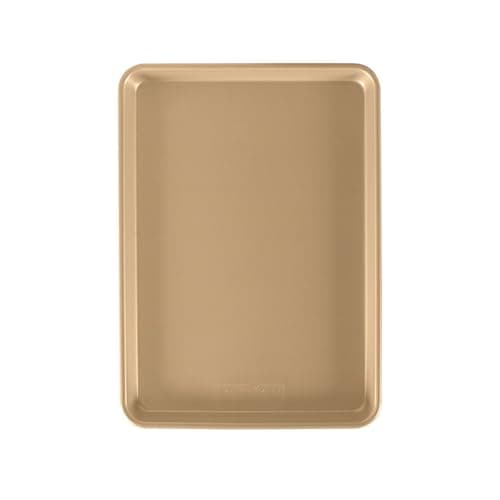
Size is the one roasting-pan question with an arithmetic answer. Measure the thing you are cooking, add two inches, and most people discover they need a smaller pan than they were about to buy.
Heads up: some links on this page earn us a commission at no extra cost to you. It does not change what we recommend or the order. How we are funded.
The short answer
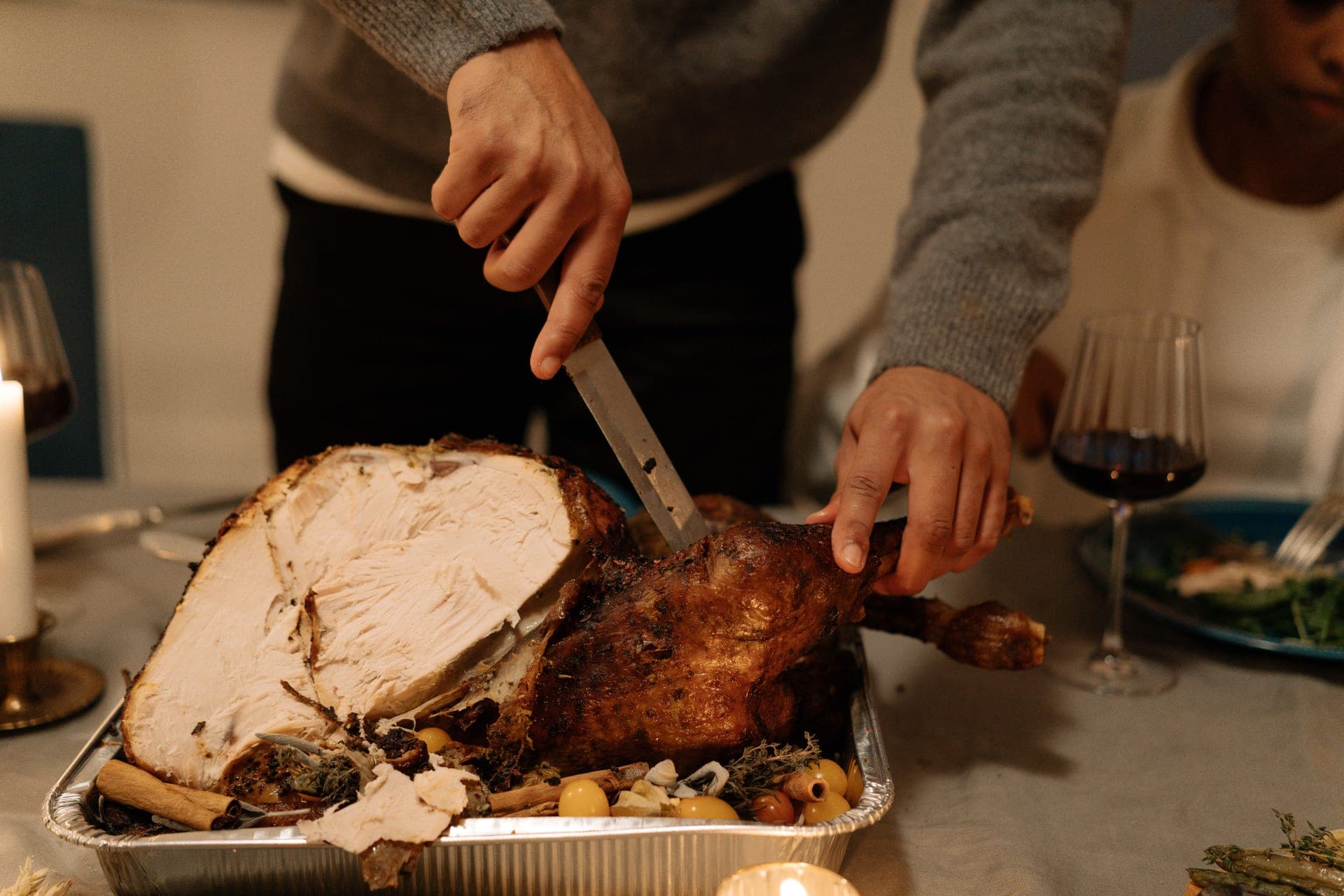
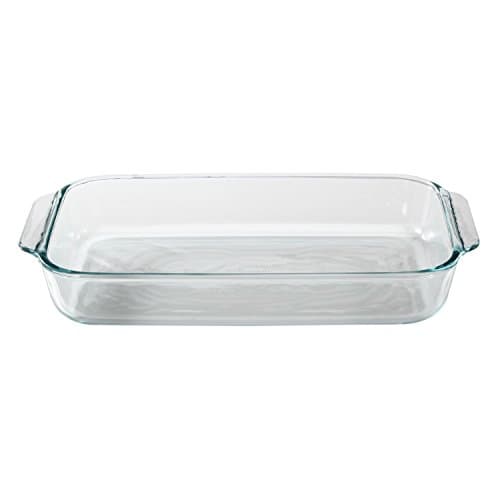
The rule is simple and it is about clearance, not capacity: the pan needs about two inches of space around whatever is in it so hot air can circulate, plus walls high enough to hold the fat without overflowing. For a bird up to roughly twelve pounds or a joint for six, a 9 by 13 inch dish works - that is the standard Pyrex oblong at 3 quarts. Above that you want something in the 16 by 13 inch class, which is also the size of a half sheet pan. And here is the part that saves most people money: for almost everything, a half sheet pan with a rack beats a true roasting pan - at 17.9 by 12.9 by 1 inches it has the footprint without the high walls, and low sides let steam escape, which is what browning requires. Buy a deep roasting pan only if you regularly cook a very large bird that renders enough fat to overflow a one-inch rim.
The two-inch rule, and why it is clearance not volume
Roasting pans are sold by dimensions and bought by anxiety, which is how people end up with a pan too big for their oven and too big for their food. The sizing question has an actual answer and it is geometric.
Hot air has to move around the food for the surface to brown and for the cooking to be even. Pack a bird in tightly and the sides nearest the walls steam instead of roasting. So: measure the length and width of what you are cooking, and add about two inches in each direction. That is the pan.
Wall height is a separate and smaller question. Walls exist to contain rendered fat and nothing else - they do not improve roasting, they work against it by trapping steam. You need enough height that fat does not spill, which for most things is very little - best roasting pans makes the full case against high sides.
Measure your oven before you measure anything else. A pan needs clearance on all sides inside the cavity too, and the most common roasting-pan mistake is buying one that technically fits and then cannot be lifted out with mitts on.
Size by what you are actually cooking
The bands below use the two-inch rule. Weights are the usual way people shop for a bird, so they are given as a guide rather than as a published specification of any pan.
What you are roasting
Pan size class
A pan that fits
Notes
Vegetables, sheet-pan dinners, chicken pieces
A half sheet, 18 by 13 in class
Nordic Ware half sheet, 17.9 by 12.9 by 1 in
Low sides are the point. Two pans beat one deep tray for the same quantity
A whole chicken, or a joint for four
9 by 13 in
Pyrex oblong, 3 qt at 9 by 13 in
Also the standard casserole size, so it earns its storage the rest of the year
A bird up to roughly 12 lb, or a joint for six
9 by 13 in, or a half sheet with a rack
Pyrex oblong, or the half sheet
This is where most households top out. A dedicated roasting pan is still unnecessary
A bird of roughly 12 to 18 lb
16 by 13 in class
A half sheet with a rack handles this
Watch the fat against a one-inch rim; line the pan and do not overfill
A bird over roughly 18 lb, or two birds
16 by 13 in with 2 to 3 in walls
A true roasting pan - we have not audited one
This is the only case that genuinely needs the deep pan. See the honesty note below
A braise, pot roast or anything wet
5 to 6 qt lidded pot
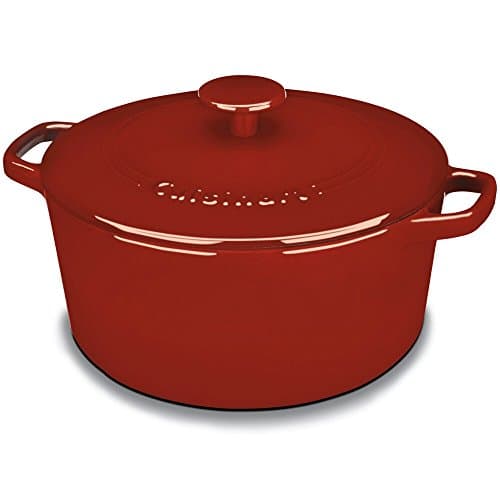
Cuisinart 5 qt enameled, Lodge or Le Creuset at 5.5 to 6 qt
Not a roasting question at all - a wet dish wants a lid and thermal mass
Pan dimensions are published figures from our product ledger. Bird-weight bands are a shopping guide, not a manufacturer specification.
Why a half sheet usually wins
A half sheet pan is 17.9 by 12.9 inches with a one-inch rim. A large roasting pan is roughly 16 by 13 inches with two-to-three-inch walls. The footprints are close; the walls are the whole difference, and the walls are the part that hurts.
Steam has to leave for browning to begin. High walls hold it against the food, which is why potatoes in a deep tray come out pale at the edges and the same potatoes on a sheet pan come out crisp. Bare aluminum also conducts faster than the heavy enamelware and stainless most roasting pans are made from, so bases brown better - roasting pan versus sheet pan.
The sheet pan's real limit is the one-inch rim. A very large, very fatty bird can render more than that holds, and a fat spill in a hot oven is genuinely unpleasant. That single scenario is the argument for a deep pan, and it is why the answer above is "over roughly eighteen pounds" rather than "never buy one".
Close footprints, different walls. The walls contain fat and trap steam, and only one of those is something you want.
The rack matters more than the extra inches
If you are buying for a big roast, spend on a rack before you spend on pan depth. A rack lifts the food clear of its own rendered fat, which stops the underside braising while the top roasts - and it gives air the circulation the two-inch rule is about in the first place.
A rack also turns a half sheet pan into a roasting pan for most purposes, which is the cheapest capability upgrade in this part of the kitchen. Whether you need one at all, and for what, is covered in best roasting pans, which has a section on exactly that.
The specification that decides whether you can use it
Worth repeating because it is the one people discover too late and it is never in the size table: a full roasting pan is heavy, hot and awkward, and the handles are whatever the maker gave you. Look for upright handles large enough for a hand in an oven mitt rather than the shallow indentations pressed into cheap tins.
Nobody publishes a usable figure for this, so you judge it from the product photograph - the same problem that separates enameled Dutch ovens in practice - what size Dutch oven.
The size question nobody asks until later
A large roasting pan is used once or twice a year and stored for the other fifty weeks, and it does not nest with anything. Before you size up, work out where it lives.
This is a genuine argument for the 9 by 13 glass dish over a bigger pan: at 3 quarts it roasts a chicken, bakes a gratin, holds a lasagna and goes in the dishwasher, so it earns its shelf all year - how to store pots and pans.
What we cannot tell you, and one thing we have not audited
We do not carry a dedicated roasting pan in our product ledger. The deep 16-by-13-inch pan the last row of the table calls for is a real recommendation and we have not audited a specific model, so we are not naming one rather than pointing you at a guess. The pans named on this page are ones whose published dimensions we have read.
We also have not roasted anything. This site compiles published manufacturer specifications and reasons from pan geometry; it runs no test kitchen, and the bird-weight bands above are shopping guidance rather than measurements - how we work.
Which to buy
For nearly all roasting:a half sheet pan, plus a rack if you roast big joints.
If you want one dish that does everything at 9 by 13:the 3 qt glass oblong. Not broiler safe, and respect the thermal-shock rule.
Prices last checked October 19, 2026. Prices move constantly — the number on Amazon when you click is the real one.
What to buy, if you are buying
These are the products this page's reasoning actually points at. Same rules as everywhere else on the site: published specs, a stated trade-off, and a live price only where one exists.
Top pick · The right size for most roastingSpecs read September 3, 2026
Nordic Ware Naturals Half Sheet, 18 x 13 in
17.9 by 12.9 by 1 in of bare aluminum with an encapsulated steel rim and a lifetime warranty. The large-roasting footprint without the steam-trapping walls. The limit is the one-inch rim: a very fatty bird can overflow it.
Best for: Roasting vegetables, sheet-pan dinners, cookies - the pan you use most weeks
Published specifications for the Nordic Ware Naturals Half Sheet, 18 x 13 in
Exterior dimensions
17.9 x 12.9 x 1 in
Material
Aluminum
Rim
Encapsulated steel rim
Gauge
Not published by Nordic Ware
Warranty
Lifetime
Dishwasher
Hand wash recommended. Automatic dishwasher use is not advised
Made in
America of domestic and imported materials
Good
Aluminum conducts at 237 W/m-K, which is why it browns evenly and a steel pan does not
The encapsulated steel rim is the reason it does not warp in a hot oven
Lifetime warranty on a pan this cheap
Not good
Nordic Ware does not publish a gauge figure, so thickness cannot be compared like for like
Bare aluminum stains and reacts with acid
Not dishwasher safe by the maker's own advice
The trade-off. Bare aluminum discolors and reacts with acid. It will look used within a month and Nordic Ware advises against the dishwasher.
Skip this if. You want a pan that stays looking new, or you will not hand wash. Buy an aluminized-steel coated pan instead and accept the coating as a wear item.
#2 · The 9 by 13 size, for smaller jointsSpecs read September 3, 2026
Pyrex Basics Oblong Glass Baking Dish, 3 qt
3 qt at 9 by 13 in, non-reactive, published dishwasher, microwave and freezer safe. Right for a bird up to roughly twelve pounds. Published NOT broiler safe, and glass browns bases poorly - the thermal-shock rule is real.
Best for: Casseroles, gratins and baked pasta - wet dishes that go oven to table to fridge
#3 · When the pan has to go on the hob tooSpecs read September 3, 2026
Cuisinart Chef's Classic Enameled Cast Iron Casserole, 5 qt
5 qt of enamel over cast iron, induction-ready, safe with tomato and wine. Smaller than a roasting pan but it makes gravy in the same vessel, which a disposable tray cannot. Oven ceiling is set by the knob, so check the SKU.
Best for: Finding out whether you actually braise before spending French money
Measure the bird and add about two inches in each direction - that clearance is what lets hot air circulate and the surface brown. Up to roughly twelve pounds a 9 by 13 inch dish works. From twelve to eighteen pounds you want the 16 by 13 inch class, which a half sheet pan with a rack covers. Above eighteen pounds is the one case that genuinely needs a deep roasting pan.
›Is a 9 by 13 pan big enough to roast a chicken?
Yes, comfortably, and for a joint for four to six people. It is also the standard casserole and lasagna size, so unlike a large roasting pan it earns its shelf space for the rest of the year rather than being stored for fifty weeks.
›Can I use a sheet pan instead of a roasting pan?
For almost everything, and it is usually better. A half sheet is 17.9 by 12.9 inches - close to a large roasting pan's footprint - with a one-inch rim instead of two-to-three-inch walls. Low sides let steam escape, which is what browning needs, and bare aluminum conducts faster than heavy enamelware. The limit is fat: a very large fatty bird can render more than a one-inch rim holds.
›How much space should there be around food in a roasting pan?
About two inches on each side. That gap is what allows hot air to move around the food so the surface browns and the cooking is even. Pack a bird in tightly and the sides nearest the pan walls steam rather than roast.
›Do I need a rack in a roasting pan?
For a large roast, yes, and a rack is worth buying before extra pan depth. It lifts the food clear of its own rendered fat so the underside does not braise while the top roasts, and it gives air the circulation that the two-inch clearance rule is about. A rack also turns a half sheet pan into a roasting pan for most purposes.
›Can glass bakeware be used for roasting?
Yes, with two published limits. Glass is not broiler safe, and it has a real thermal-shock rule - no hot dish onto a wet or cold surface, and no liquid added to a hot dish. Glass also heats more slowly and browns bases poorly compared with bare aluminum, so expect less color underneath.
Sources
Every figure on this page came from one of these. Follow them and check our arithmetic — that is the point.