Heads up: some links on this page earn us a commission at no extra cost to you. It does not change what we recommend or the order. How we are funded.
The short answer
Work backwards from the one thing that cannot move. Roast the centerpiece first and rest it - a large joint or bird holds heat for a long time out of the oven, and that resting window is the oven time you have for everything else. While it rests, run the oven hot for the dishes that need browning - potatoes and vegetables on bare aluminum sheet pans, which conduct faster than anything else and brown bases properly. Dishes within about 25°F of each other can share the cavity; split the difference and extend the time. Anything that only needs to be hot rather than browned - gravy, greens, sauces, reheating - belongs on the stovetop, not in the oven, and that single move is what makes the whole meal fit. The rule that governs the lot: every door opening costs you heat and the oven takes minutes to recover, so plan to open it as few times as possible.
The real constraint is recovery, not space
Most one-oven planning goes wrong because people count shelves. Shelf space is rarely the binding limit. The binding limits are one temperature at a time and how long the cavity takes to come back after the door opens.
A domestic oven loses a large part of its heat the moment the door swings, and the element then has to re-heat the air, the walls and the racks before anything starts cooking at the set temperature again. Open the door six times in an hour to check six things and you have spent a meaningful part of that hour below temperature.
Two consequences shape every decision below. Plan around a small number of long, undisturbed stretches rather than many short ones. And remember the dial is a request, not a reading - ovens run off their set point routinely, which is worth knowing before you blame a recipe - oven temperature accuracy.
Work backwards from the rest
The structural insight for a holiday meal is that the centerpiece wants to come out early. A large roast needs to rest, resting is not optional, and a big piece of meat loses heat slowly. That rest is a free oven window, and it is the only one you get.
Centerpiece in first, at its own temperature, undisturbed. This is the long stretch. Use a probe rather than the door if you have one.
Out, covered, resting. Now the oven is empty and you can turn it up, which you could not do while the roast was in.
Hot and fast while it rests. Potatoes, root vegetables, anything that needs a browned surface. This is where bare aluminum sheet pans earn their place.
Reheat the make-ahead dishes last, together. They only need to be hot, and they tolerate sharing a cavity.
Everything else on the hob throughout. Gravy, greens, sauces - see below.
What can share a cavity, and what cannot
Dishes within roughly 25°F of each other can cook together: split the difference, add time, and rotate position once. Beyond that the compromise starts costing the more sensitive dish.
Pairing
Share the oven?
Why
What to do instead
Two trays of roast vegetables
Yes
Same temperature, same tolerance. Swap racks once for evenness
Nothing. This is the easy case
Roast vegetables and a casserole
Yes, with care
Usually within the 25°F band; the casserole is forgiving
Put the vegetables on the upper rack where it is hotter
A roast and a gratin
Yes
Both are happy in a moderate oven over a long stretch
Give the gratin the lower rack and accept less browning on top
Anything and a pastry or pie
No
Pastry needs a specific temperature and a dry cavity; moisture from a roast ruins it
Bake pastry before the roast goes in, or after everything is out
Anything and bread
No
Bread needs a high, steady temperature and an undisturbed first stretch
Bake it earlier in the day - it is better at room temperature anyway
Two dishes needing the broiler
No
The broiler heats from one element at one distance; only the top rack is in range
Sequence them, two minutes each, at the very end
A rack-position note that matters: the top of a domestic oven runs hotter than the bottom. Put what you want browned high and what you want gently cooked low.
The move that actually makes it fit
If one thing on this page is worth taking away, it is this: a dish that only needs to be hot does not need an oven. Ovens are for browning, for enclosed even heat, and for things that cannot be stirred. Everything else is a hob job, and treating it as one frees the cavity for the dishes that genuinely need it.
Greens, beans, braised cabbage: a wide lidded pan on the hob, faster and easier to judge than an oven dish.
Gravy and sauces: always the hob, in the roasting vessel if it is stovetop-safe, which is the argument for an enameled cast iron pot over a disposable tray.
Mashed and pureed anything: hob, then hold it covered. It reheats badly in an oven and perfectly in a pan.
Stuffing, if you must: start it in a pan and finish it in the oven in the roast's rest window, uncovered, for the crust.
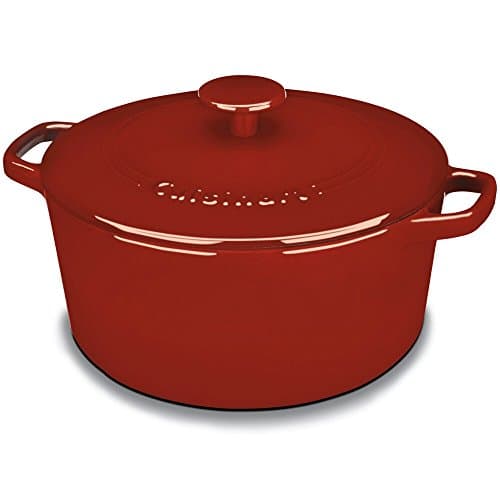
A lidded enameled cast iron pot is the single most useful vessel for this meal and not because it roasts. It browns on the hob, holds a long low heat, is safe with tomato and wine, and keeps food hot on the table long after it leaves the heat - which removes a dish from the oven roster entirely.
Which vessels, and the published limits that matter
Three material rules decide what can go where, and all three come from published maker guidance rather than folklore.
Bare aluminum sheet pans: browning, and the reason
Aluminum conducts heat faster and more evenly than steel, which is why bakeries use nothing else and why a half sheet browns bases better than a heavy ceramic dish. Low sides matter as much as the metal: steam has to leave for browning to start, and high walls trap it - roasting pan versus sheet pan.
The limit: bare aluminum is reactive, so a tomato or citrus dish should not sit in it overnight, and Nordic Ware advises against the dishwasher.
Glass: make-ahead, but two hard limits
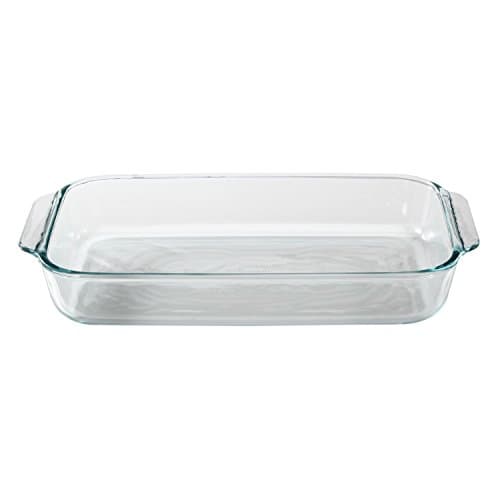
Glass is the best make-ahead material because it is non-reactive and goes fridge to oven to table. Pyrex publishes its 3 qt oblong at 9 by 13 in as dishwasher, microwave and freezer safe. It also publishes two limits you must respect: it is not broiler safe, and sudden temperature change can break it - no hot dish onto a wet or cold surface, no liquid added to a hot dish - glass versus metal bakeware.
Practically: take it out of the fridge while the oven preheats rather than moving it straight from cold to hot.
Enameled cast iron: the hob-to-oven-to-table piece
Enamel is glass fused to iron, so it needs no seasoning and is safe with acid. The figure to check is not the pot - it is the knob. The oven ceiling on an enameled pot is set by the knob material, which is why it has to be read per SKU rather than per line: Le Creuset publishes a stainless knob rated to 500F, and Lodge publishes a lower ceiling for enamel than for bare iron - oven-safe cookware temperatures.
Two sheet pans on two racks give more usable, better-browning surface than one deep tray, and they let you rotate position halfway.
A worked order of operations
Not a recipe - a sequence you can map your own dishes onto. The point is the shape: few door openings, one hot window, everything non-oven on the hob.
When
In the oven
On the hob
Why
The day before
Pastry and bread, if either is on the menu
Nothing
Both need an undisturbed cavity and neither is better fresh from the oven on the day
Morning
Nothing
Assemble make-ahead dishes into glass, into the fridge
Assembly is the slow part; cooking it later is the fast part
The long stretch
Centerpiece, undisturbed, probe rather than door
Stock or braise in an enameled pot
One opening instead of six. The hob work needs no oven at all
The rest window
Oven turned up - sheet pans of potatoes and vegetables
Gravy in the roasting juices; greens
This is your only hot window, and it exists because the roast must rest anyway
Last fifteen minutes
Make-ahead dishes in together to heat through
Hold everything covered
They only need to be hot, so they tolerate sharing a cavity
Last two minutes
Anything needing a broiler, one at a time, top rack
Off the heat
Only the top rack is in broiler range, and glass must not go under it
What we cannot tell you
Times and temperatures for your dishes, or how your particular oven behaves. Ovens vary by tens of degrees from their dials and we have not measured yours; this page is about sequencing and vessel limits, which are the parts that can be reasoned about from published specifications. We run no test kitchen - how we work.
If you are short one vessel
Most likely gap: a second half sheet pan. Two on two racks is the cheapest capacity increase available to you.
For make-ahead:a 9 by 13 in glass dish, which assembles the day before and goes fridge to oven.
Prices last checked October 19, 2026. Prices move constantly — the number on Amazon when you click is the real one.
What to buy, if you are buying
These are the products this page's reasoning actually points at. Same rules as everywhere else on the site: published specs, a stated trade-off, and a live price only where one exists.
Top pick · Two of these solve most of itSpecs read September 3, 2026
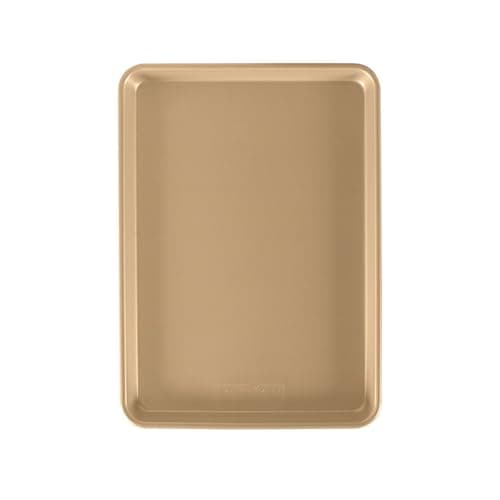
Nordic Ware Naturals Half Sheet, 18 x 13 in
17.9 by 12.9 by 1 in of bare aluminum with an encapsulated steel rim. Low sides let steam escape, which is what browning needs, and two pans on two racks is more usable capacity than one deep tray. Hand wash recommended by Nordic Ware.
Best for: Roasting vegetables, sheet-pan dinners, cookies - the pan you use most weeks
Published specifications for the Nordic Ware Naturals Half Sheet, 18 x 13 in
Exterior dimensions
17.9 x 12.9 x 1 in
Material
Aluminum
Rim
Encapsulated steel rim
Gauge
Not published by Nordic Ware
Warranty
Lifetime
Dishwasher
Hand wash recommended. Automatic dishwasher use is not advised
Made in
America of domestic and imported materials
Good
Aluminum conducts at 237 W/m-K, which is why it browns evenly and a steel pan does not
The encapsulated steel rim is the reason it does not warp in a hot oven
Lifetime warranty on a pan this cheap
Not good
Nordic Ware does not publish a gauge figure, so thickness cannot be compared like for like
Bare aluminum stains and reacts with acid
Not dishwasher safe by the maker's own advice
The trade-off. Bare aluminum discolors and reacts with acid. It will look used within a month and Nordic Ware advises against the dishwasher.
Skip this if. You want a pan that stays looking new, or you will not hand wash. Buy an aluminized-steel coated pan instead and accept the coating as a wear item.
#2 · The make-ahead dishSpecs read September 3, 2026
Pyrex Basics Oblong Glass Baking Dish, 3 qt
3 qt at 9 by 13 in, non-reactive, published dishwasher, microwave and freezer safe - so it assembles the day before and goes fridge to oven. Published NOT broiler safe, and the thermal-shock rule is real: no hot dish onto a cold surface.
Best for: Casseroles, gratins and baked pasta - wet dishes that go oven to table to fridge
#3 · Takes a dish off the oven rosterSpecs read September 3, 2026
Cuisinart Chef's Classic Enameled Cast Iron Casserole, 5 qt
5 qt of enamel over cast iron, induction-ready, safe with tomato and wine. It braises on the hob and holds heat long enough to serve from, which is how you move a course out of the oven entirely. Its oven ceiling is set by the knob, so check the SKU.
Best for: Finding out whether you actually braise before spending French money
›Can you cook two different dishes in the oven at once?
Yes, if their temperatures are within roughly 25°F of each other - split the difference, add time, and swap rack positions once. Beyond that band the compromise starts costing the more sensitive dish. Pastry and bread are the exceptions: both need an undisturbed cavity and should be baked separately.
›How do you cook a whole holiday dinner with one oven?
Work backwards from the centerpiece. Roast it first and undisturbed, then use the resting window - which it needs anyway - as your hot oven time for potatoes and vegetables on sheet pans. Reheat make-ahead dishes together at the end, and move everything that only needs to be hot rather than browned to the stovetop.
›Which oven rack is hottest?
The top of a domestic oven runs hotter than the bottom. Put what you want browned high and what you want gently cooked low, and rotate trays once if you are running two. Only the top rack is within range of the broiler element.
›Does opening the oven door really matter?
Yes, and it is the limit people underestimate. A domestic oven dumps a large part of its heat the moment the door opens, and the element then has to reheat the air, the walls and the racks before anything is cooking at the set temperature again. Plan a small number of long undisturbed stretches rather than many short ones.
›Can glass bakeware go straight from the fridge into the oven?
Treat it carefully. Pyrex publishes a thermal-shock rule: avoid sudden temperature change, do not put a hot dish on a wet or cold surface, and do not add liquid to a hot dish. In practice, take a chilled dish out while the oven preheats rather than moving it from cold straight into a hot cavity. Glass bakeware is also published as not broiler safe.
›What should I cook on the stovetop instead of the oven?
Anything that only needs to be hot rather than browned: greens, beans, braised vegetables, gravy, sauces and anything mashed. Ovens are for browning, for enclosed even heat and for things that cannot be stirred. Moving the rest to the hob is the single change that makes a one-oven meal fit.
Sources
Every figure on this page came from one of these. Follow them and check our arithmetic — that is the point.