Heads up: some links on this page earn us a commission at no extra cost to you. It does not change what we recommend or the order. How we are funded.
The short answer
Cook it in enameled cast iron and carry it in the pot. A Lodge enameled 6-quart or a Le Creuset Signature 5.5-quart has the two things that matter on a car journey - a heavy iron body that holds heat for the length of the trip, and a tight iron lid that stays on. The alternative, if you are making something baked and flat, is a Pyrex 3-quart oblong: lighter, cheaper, and it goes straight from the oven to the table - but understand that its plastic cover is a storage lid, not a travel lid, and nothing in the category is genuinely spill-proof. The three things that actually go wrong: the dish slides (put it in a box or on a towel in the footwell), the lid lifts on a corner, and the food is cold on arrival because it was carried in a thin metal pan with nothing to hold. Thermal mass is the whole answer to the last one.
The three things that go wrong
Everyone who has carried food to a gathering has had at least one of these happen. All three are vessel problems, not cooking problems.
It slides. A round pot on a car seat is a pendulum. This is the most common failure and it is entirely preventable: the dish goes in a crate, a box or a footwell, on a folded towel, flat and wedged.
The lid lifts. Most cookware lids rest; they do not fasten. A glass storage cover on a baking dish is designed to keep air out in a refrigerator, not to hold against a tilt. The heavier and better-seated the lid, the less this matters - which is one more argument for iron.
It arrives cold. Thin metal pans give up their heat in minutes. Heavy ones do not. If the food has to be hot when it lands, the mass of the vessel is doing that work, and no amount of foil substitutes for it.
Heat retention is the whole argument
Thermal mass is the one measurable property that separates these dishes on a journey. A heavy enameled iron pot and a thin aluminum tray can leave the oven at the same temperature and arrive a long way apart.
Vessel
Mass
Holds heat
Lid
Oven to table?
Enameled cast iron Dutch oven
Heaviest here
Best in class
Iron, seated in a rim - as close to secure as this category gets
Yes
Bare cast iron with a skillet lid
Heavy
Best in class
A skillet, which seats but is not a seal
Yes, but bare iron is reactive
Glass baking dish
Moderate
Moderate - better than metal, far behind iron
Plastic storage cover, not a travel lid
Yes
Aluminized steel or bare aluminum pan
Light
Poor
None. Foil only
Not really - it is a baking pan
Stainless stockpot
Moderate
Moderate
Stainless, loose
Serviceable for soup and chili
Read as a journey question rather than a cooking one. For a dish eaten where it is cooked, every row works; for a dish that travels, the top two are a different class.
A detail worth knowing because it reverses the intuition: a fuller pot stays hot longer than a half-empty one. Mass is mass, and the food is most of it. If you are making a small amount for a long journey, a smaller pot filled is better than a large pot half filled.
Material, and the one that bites
The material decision here is mostly about heat, with one exception that catches people every time: bare cast iron and acidic food. A tomato-based dish left sitting in a bare iron pot for the length of a party will strip seasoning and pick up a metallic edge. Enameled iron has a glass layer between the food and the metal and does not have this problem at all - cooking acidic foods in reactive cookware covers the full list of what reacts with what.
The same applies to bare aluminum, which is why a bare aluminum pan is the wrong choice for a tomato traybake even though it is the right choice for a sheet of cookies - sheet pan materials.
Choosing by what you are making
Chili, stew, curry, soup: enameled Dutch oven, every time. Deep, lidded, heavy, and you can reheat in the same pot on arrival.
Lasagna, gratins, traybakes, baked pasta: a glass or ceramic oblong dish. The shape is the dish. Accept that the heat window is shorter - best baking dishes and casseroles is where the product choice lives, and glass versus metal bakeware explains why glass behaves differently from the pan beside it.
Anything cold: the vessel barely matters and the lid matters most. This is the one case where a cheap sealed container beats good cookware.
Bread, cookies, anything dry: do not use cookware at all. A tin or a box is better in every respect.
What to do when you get there
Two things, both of which are easier if you planned the vessel properly.
Do not assume oven access. At a gathering the host's oven is full and has been for hours - cooking a holiday dinner with one oven is written from the host's side of exactly this problem. Bring something that is fine at the temperature it arrives at, or bring something that reheats on a hob.
Bring the serving spoon. Obvious, universally forgotten, and the reason a dish sits untouched for twenty minutes.
And if the pot is going to sit on someone else's table, the pot is on display. That is a real argument for enameled iron over a battered roasting pan, and it is the only argument on this page that is about appearance rather than physics.
What we cannot tell you
How long any of these will actually keep food above a safe serving temperature. That depends on the volume of food, its starting temperature, the ambient temperature of the car and how long the lid stays on - and no maker publishes a heat-retention figure for any cookware at all. We can rank the materials by mass, which is the honest version of the claim, and we will not invent a number of minutes.
Food safety timings are a matter for a food safety authority rather than a cookware site, and we have deliberately not reproduced any here - how we work.
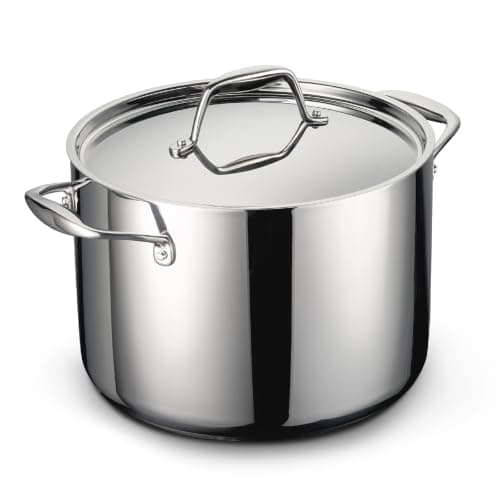
The stockpot is here for the case this page does not otherwise cover: a large volume of soup for a crowd, where capacity beats heat retention. Prices move constantly.
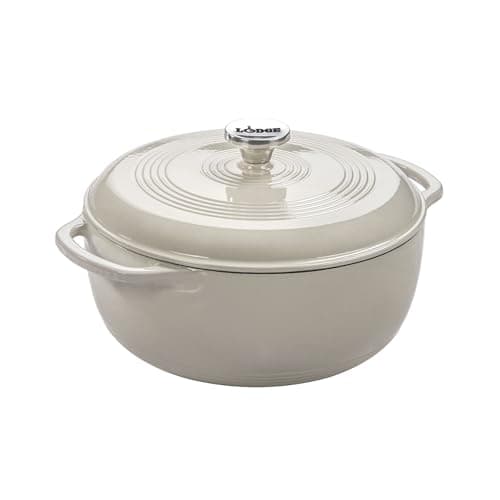
Lodge Enameled Cast Iron Dutch Oven, 6 qt
Braises, stews, tomato sauce, bread - anything long and wet
Prices last checked October 19, 2026. Prices move constantly — the number on Amazon when you click is the real one.
What to buy, if you are buying
These are the products this page's reasoning actually points at. Same rules as everywhere else on the site: published specs, a stated trade-off, and a live price only where one exists.
Top pick · Best potluck vessel overallSpecs read September 3, 2026
Lodge Enameled Cast Iron Dutch Oven, 6 qt
Six quarts, enameled inside so nothing reacts, and an iron lid that sits in a rim rather than on one. Heavy enough that the food is still hot when you arrive, which is the thing no light pan can do. Amazon suppresses its displayed price, so that button reads Check price. Skip it if you cannot carry a heavy pot full.
Best for: Braises, stews, tomato sauce, bread - anything long and wet
Published specifications for the Lodge Enameled Cast Iron Dutch Oven, 6 qt
Material
Cast iron with porcelain enamel, inside and out
Capacity
6 qt
Induction
Yes - the iron under the enamel is ferrous
Seasoning
None required - enamel is not a seasoning surface
Acid
Safe for tomato and wine, unlike bare iron
Oven maximum
Set by the knob material - check the specific SKU; Lodge publishes a lower ceiling than for bare iron
Good
Non-reactive, so it handles the acidic cooking bare iron cannot
No seasoning to maintain
Considerably cheaper than the French enameled pots it copies
Not good
Chipped enamel is not repairable, unlike bare iron's seasoning
Oven ceiling is lower than bare cast iron because of the knob
Heavy, and the enamel makes it heavier than bare iron of the same capacity
The trade-off. The enamel is a glass layer. Chip it and the pot is not restorable the way bare iron is, and Lodge's enamel chips more readily than the premium brands'.
Skip this if. You already own a large stainless stockpot and rarely braise. This duplicates it for most weeknight cooking.
#2 · Best for anything baked and flatSpecs read September 3, 2026
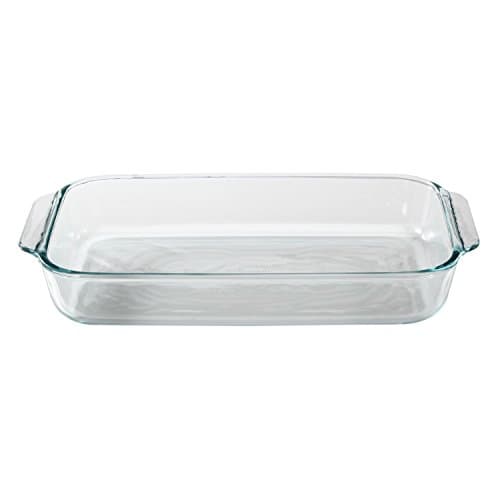
Pyrex Basics Oblong Glass Baking Dish, 3 qt
Three quarts of tempered glass that goes oven to table, published dishwasher, microwave, freezer and preheated-oven safe. The right shape for a traybake. Skip it if the journey is long - glass sheds heat far faster than iron, and the cover is for storage.
Best for: Casseroles, gratins and baked pasta - wet dishes that go oven to table to fridge
#3 · Best when the pot is also the serving dishSpecs read September 3, 2026
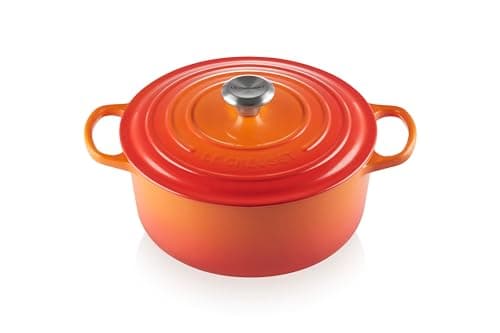
Le Creuset Signature Round Dutch Oven, 5.5 qt
5.5 quarts, pale interior, 500F stainless knob, limited lifetime warranty. It looks like something you meant to bring, which at a table full of dishes is not nothing. Skip it if you are worried about chips - enamel does not repair.
Best for: A braising pot bought once, kept for decades and handed on
Published specifications for the Le Creuset Signature Round Dutch Oven, 5.5 qt
Material
Cast iron with porcelain enamel inside and out
Capacity
5.5 qt
Interior enamel
Sand-colored, so browning and fond stay visible
Knob
Stainless steel, rated to 500F
Induction
Yes - the iron under the enamel is ferrous
Dishwasher
Dishwasher safe; Le Creuset recommends hand washing
Warranty
Limited lifetime
Made in
France
Good
The pale interior is a genuine cooking advantage: you can see whether the fond is browning or burning
Wide, low-profile handles that a hand in an oven mitt actually fits
The one enameled pot with a real secondhand market, which changes the true cost of ownership
Not good
Costs several times a Lodge enameled pot of the same capacity
The pale interior stains permanently, and Le Creuset says so
Chipped enamel is not repairable on any enameled pot, this one included
The trade-off. You are paying a large multiple of what a Lodge enameled pot costs for a difference in enamel quality, finish and resale value rather than in cooking.
Skip this if. You braise a few times a year. The cooking difference over a Lodge enameled pot is small; the price difference is not.
#4 · Best two-vessels-in-oneSpecs read September 3, 2026
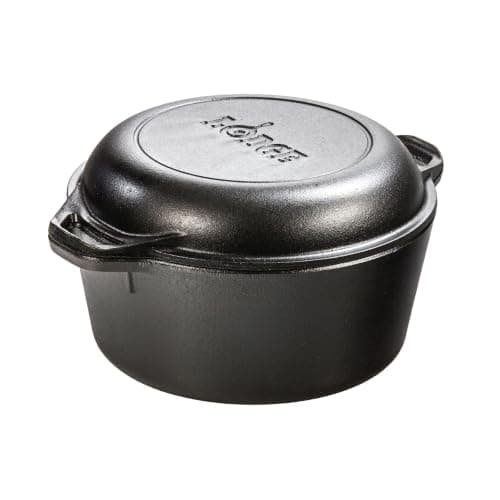
Lodge Cast Iron Double Dutch Oven, 5 qt
Five quarts of bare cast iron whose lid is a 10.25-inch skillet, so one object carries the main dish and a pan to reheat or brown in. Skip it for anything acidic - this one is bare iron, not enameled, and tomato will strip seasoning.
Best for: Camp cooking, bread, and anyone who wants iron rather than enamel in a pot
An enameled cast iron Dutch oven, cooked in and carried in. It has the two things that matter on a journey: enough mass to still be hot on arrival, and an iron lid that seats in a rim rather than resting on one. For anything baked and flat, a glass oblong dish is the right shape, with the understanding that glass sheds heat faster than iron.
›How do I keep food hot on the way to a party?
Use a heavy vessel. Thermal mass is the only property that does this work, and a heavy enameled iron pot and a thin metal tray that leave the oven together will arrive a long way apart. A fuller pot also stays hot longer than a half-empty one, so for a long journey a smaller pot filled beats a large pot half filled.
›Will a baking dish lid stop my food spilling in the car?
No. The plastic covers sold with glass baking dishes are storage lids designed to keep air out in a refrigerator, not to hold against a tilt. Nothing in normal cookware is genuinely spill-proof. Put the dish flat in a box or a footwell on a folded towel and wedge it so it cannot slide.
›Can I take a tomato dish in a cast iron pot?
In enameled cast iron, yes - there is a glass layer between the food and the metal. In bare cast iron, no: an acidic dish sitting in a bare iron pot for the length of a party will strip seasoning and can pick up a metallic edge. The same caution applies to bare aluminum pans.
›Should I bring something that needs reheating?
Assume you cannot use the host's oven. At a gathering it is full and has been for hours. Bring something that is fine at the temperature it arrives at, or something that can be refreshed on a hob in the pot you brought it in, which is another argument for carrying it in a Dutch oven.
›What size pot do I need for a potluck dish?
Five to six quarts covers almost every case, and a dish for a gathering is usually smaller than people expect because everyone has brought something. If you are taking soup for a large crowd an eight-quart stockpot is the capacity answer, at the cost of the heat retention a heavy iron pot gives you.
Sources
Every figure on this page came from one of these. Follow them and check our arithmetic — that is the point.