Heads up: some links on this page earn us a commission at no extra cost to you. It does not change what we recommend or the order. How we are funded.
The short answer
What you are baking
Best release method
Layer cake
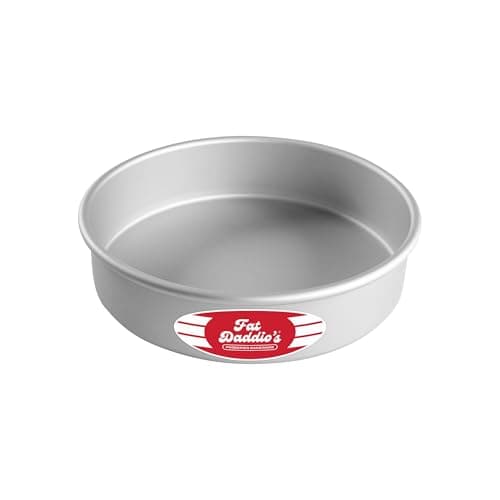
Grease, parchment circle in the base, grease again, then flour the sides
Bundt or shaped mold
Softened butter or shortening with a brush, then flour, every crevice
Sandwich loaf or quick bread
A parchment sling across the long axis, or a corrugated pan
Cookies
A bare sheet with parchment or a silicone mat - never grease
Brownies and traybakes
A parchment sling with overhang on two sides
Casseroles in glass
Light grease only, and serve from the dish
Roasted vegetables
Oil on the food, not on the pan
Why things stick
Batter and dough stick for two reasons. Sugar caramelizes against hot metal and glues itself there, and protein - egg and gluten - bonds to a surface as it sets. Both are worse where the pan is hottest, which is why the corners and the base go first.
A release method works by putting something between the food and the metal: fat, a fat and starch layer, a physical barrier, or a coating. They are not equally reliable, and the one most people rely on - the coating - is the only one with an expiry date.
The four methods, ranked by reliability
1. Parchment - the most reliable, by a distance
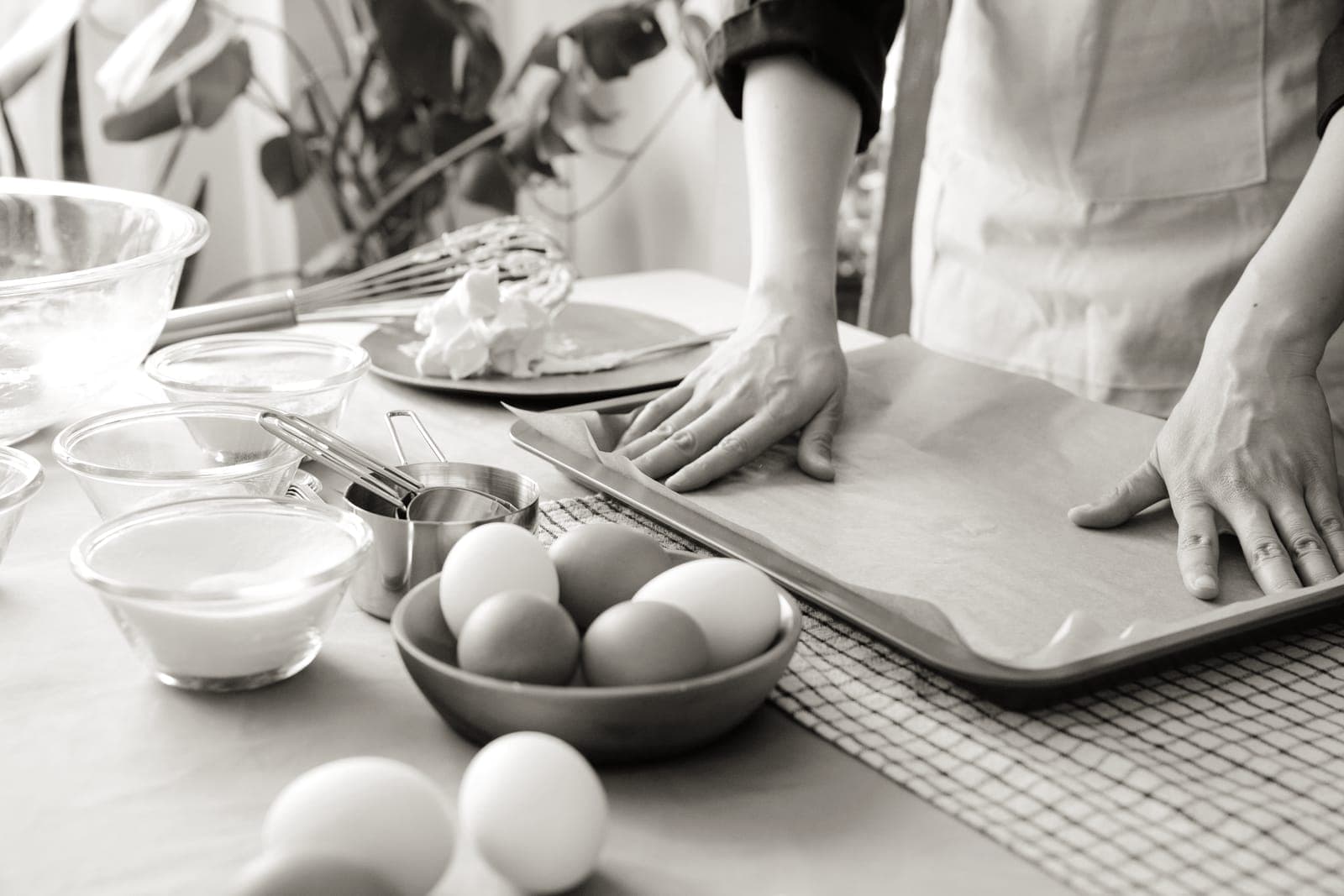
A physical barrier cannot fail the way a fat film or a coating can. For a round cake pan, cut a circle for the base and grease the sides. For loaves and traybakes, cut a strip wider than the pan and let it overhang two sides - a sling - so you lift the whole bake out without inverting it.
Parchment is also the answer for cookies, and greasing a cookie sheet is actively wrong: the extra fat makes the bottoms spread and fry.
2. Grease and flour - the traditional answer, and it works
Use softened butter or shortening, applied with a brush or a paper towel. Not melted butter - it runs off the sides and pools at the base.
Get into every corner and up the full height of the wall. The failure is almost always a missed spot rather than too little overall.
Add a spoon of flour, rotate and tap the pan until the fat is dusted, then invert and knock the excess out.
For chocolate cakes, use cocoa instead of flour, which avoids the white bloom on the crust.
3. The pan surface itself
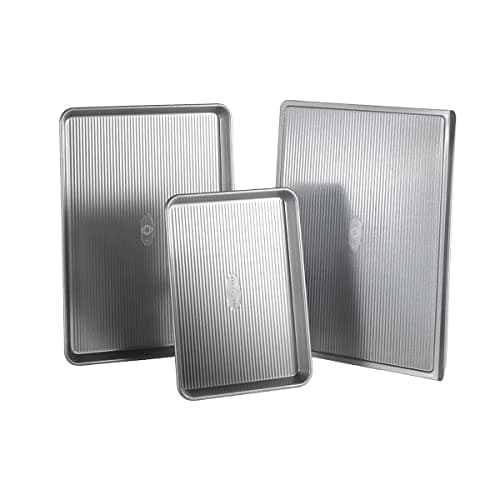
Corrugated bakeware - USA Pan is the example in our ledger - has a fluted surface that gives the crust less continuous contact area and a path for air. Combined with a silicone-based coating, it releases a loaf without lining, which no bare pan does. The trade is that the corrugation traps batter and is a nuisance to wash, and USA Pan publishes that its pans are not dishwasher safe.
4. Baking spray and coatings - the least reliable
Aerosol baking spray works and then stops working, because the propellants and emulsifiers leave a residue that builds into a sticky varnish over time. It is the same mechanism that ruins nonstick skillets, described in how to clean nonstick pans. Coatings on bakeware wear out on a schedule nobody publishes, exactly as they do on cookware.
The order above is deliberate. The methods that do not depend on a manufactured surface are the ones that will still work in ten years, which is also why a bare aluminum pan with a lifetime warranty is a better buy than a coated pan with a lifetime warranty that excludes the coating - cookware warranties explained covers that wording.
Release failures are often build-up rather than technique. A pan with a film of polymerized fat on it releases worse than a clean one, whatever you grease it with.
Bake by bake
Bake
Method
The specific trap
Layer cake
Grease, parchment circle, grease, flour the sides
Leaving the cake in the pan to cool completely - it steams and sticks
Bundt or shaped mold
Softened fat brushed into every crevice, then flour
Spray, which pools in the detail and burns on
Sandwich loaf
Parchment sling, or a corrugated pan
Turning it out too early, while the crumb is still fragile
Cookies
Parchment or a silicone mat on a bare sheet
Greasing the sheet, which spreads and fries the bases
Brownies
Parchment sling with overhang on two sides
Cutting in the pan, which scores the surface
Cheesecake
Parchment base plus a springform, and a water bath
Relying on the springform seal alone
Casserole in glass
Light grease, and serve from the dish
Thermal shock when the hot dish meets a wet counter
Roast vegetables
Oil the food, not the pan
A crowded pan, which steams instead of roasting
Most of the traps in the right-hand column are timing rather than technique - and timing is free.
The timing rule nobody mentions
When you turn a bake out matters as much as how you prepared the pan. Too early and the structure has not set, so it tears. Too late and it cools, contracts and glues itself to the metal, and steam condenses between the cake and the pan.
Cakes: ten minutes in the pan on a rack, then turn out. Not thirty.
Loaves: five to ten minutes, then out onto a rack so the base does not go soggy.
Cookies: two to three minutes on the sheet to firm, then move them.
Brownies and traybakes: cool completely, then lift out by the sling. These are the exception.
If a cake has already glued itself in, run a thin palette knife around the wall, sit the pan base on a warm damp cloth for a minute, and try again. It works more often than it deserves to.
Pan condition matters more than people think
A pan with a film of polymerized fat baked onto it releases worse than a clean one. That film builds up over years on bare aluminum and aluminized steel, and it is why an old sheet pan sticks in patches that map exactly to where food usually sits.
The cleaning routines - including what is safe on bare aluminum, anodized aluminum and coated bakeware - are in bakeware care and cleaning. The short version: baking soda paste on metal, nothing abrasive on a coating, and no dishwasher on bare aluminum, which Nordic Ware advises against.
What to buy for this
Parchment, in a roll or pre-cut sheets. The cheapest and most effective item on this page.
A bare aluminum sheet pan - a half sheet - which needs no coating because parchment does the work.
A corrugated loaf pan - the USA Pan 1 lb - if you want a loaf that releases without lining.
Pans that release, and pans that let you release them
Two rely on a published silicone coating and corrugation, two rely on bare metal and method. The bare ones will still be working when the coatings have gone.
USA Pan Aluminized Steel Bakeware
Loaf pans, muffin pans and cake pans that release without paper every time
These are the products this page's reasoning actually points at. Same rules as everywhere else on the site: published specs, a stated trade-off, and a live price only where one exists.
Top pick · Release built into the panSpecs read September 3, 2026
USA Pan Aluminized Steel Bakeware
Corrugation plus a published PTFE-free silicone coating, which releases a loaf without lining and is the most reliable coated answer here.
Best for: Loaf pans, muffin pans and cake pans that release without paper every time
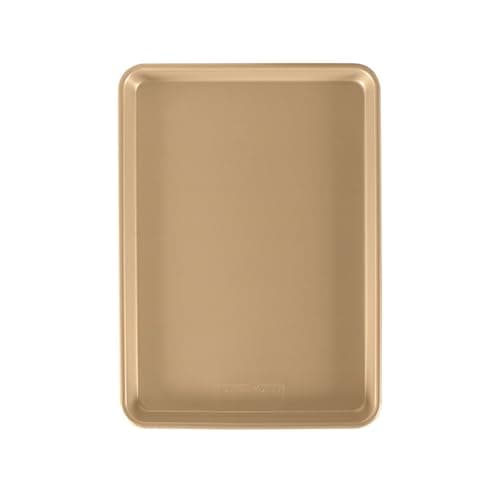
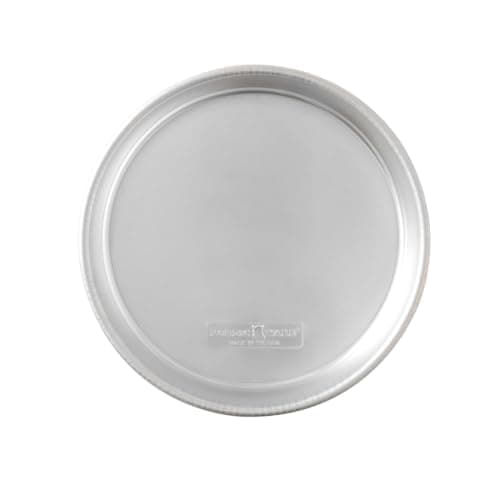
Published specifications for the Nordic Ware Naturals Half Sheet, 18 x 13 in
Exterior dimensions
17.9 x 12.9 x 1 in
Material
Aluminum
Rim
Encapsulated steel rim
Gauge
Not published by Nordic Ware
Warranty
Lifetime
Dishwasher
Hand wash recommended. Automatic dishwasher use is not advised
Made in
America of domestic and imported materials
Good
Aluminum conducts at 237 W/m-K, which is why it browns evenly and a steel pan does not
The encapsulated steel rim is the reason it does not warp in a hot oven
Lifetime warranty on a pan this cheap
Not good
Nordic Ware does not publish a gauge figure, so thickness cannot be compared like for like
Bare aluminum stains and reacts with acid
Not dishwasher safe by the maker's own advice
The trade-off. Bare aluminum discolors and reacts with acid. It will look used within a month and Nordic Ware advises against the dishwasher.
Skip this if. You want a pan that stays looking new, or you will not hand wash. Buy an aluminized-steel coated pan instead and accept the coating as a wear item.
›What is the best way to stop a cake sticking to the pan?
Grease the pan with softened butter or shortening, lay a parchment circle in the base, grease that too, then flour the sides. Turn the cake out after about ten minutes on a rack - leaving it to cool completely in the pan is what glues it in.
›Should you grease a cookie sheet?
No. Extra fat makes the bottoms spread and fry. Use parchment or a silicone mat on a bare sheet, which releases reliably and gives a better base than any greased surface.
›Is baking spray bad for pans?
It works and then stops working. The propellants and emulsifiers leave a residue that builds into a sticky varnish, which is the same mechanism that ruins nonstick skillets. Softened butter, oil from a bottle, or parchment are all more reliable.
›What is a parchment sling?
A strip of parchment cut wider than the pan and laid across it so it overhangs two sides. When the bake has cooled you lift the whole thing out by the overhang without inverting it. It is the standard method for brownies, traybakes and loaves.
›Why does my old baking pan stick when it never used to?
Almost always a film of polymerized fat baked onto the surface over years. It maps to where food usually sits, which is why the sticking is patchy. A baking soda paste on metal removes it; nothing abrasive on a coated pan.
Sources
Every figure on this page came from one of these. Follow them and check our arithmetic — that is the point.