Heads up: some links on this page earn us a commission at no extra cost to you. It does not change what we recommend or the order. How we are funded.
The short answer
Vintage cast iron is typically thinner, lighter and machined smooth, which is a real difference from a modern sand-cast pan and the main reason people hunt for it. Rust, however heavy, is not a defect - it scrubs off and the pan re-seasons. The two things that do end a pan are a crack and a warp, and both are checkable in thirty seconds. A rusty vintage skillet is usually a better buy than a new one at the same price; a cracked one is worth nothing.
What is actually different about older pans
Two things, and only two. Both are consequences of how pans were made before the mid-twentieth century rather than of any superior metal.
They are thinner and lighter
Older foundries cast thinner walls and bases. A vintage 10-inch skillet can weigh noticeably less than a modern one of the same diameter. That means less thermal mass - which is a small disadvantage for searing - and a pan that is easier to lift and faster to heat, which for most people is the better trade.
They were machined smooth
Pans were ground and polished after casting, leaving a glassy surface. Modern production skips that step, leaving the pebbled sand-cast texture you can feel on a new Lodge. A smooth surface takes seasoning more evenly and releases better sooner.
Neither of these makes the iron itself better. Cast iron is cast iron, and the thermal behavior described in cookware materials compared applies equally to a 1930s pan and a 2026 one.
A modern pan will become smooth on its own with years of use, as seasoning fills the texture. The difference between old and new narrows considerably after a few hundred meals, which is worth knowing before paying a premium for it.
Checking a pan before you buy it
Thirty seconds, four checks. Do these in order, because the first two are the only ones that can end the deal.
Look for cracks. Check the base, the walls and where the handle meets the body. A hairline crack is fatal and is not repairable. Some people ring the pan by tapping it - a clear tone rather than a dull thud - which is a reasonable indicator and not a substitute for looking.
Check it sits flat. Put it on a flat surface and press each edge. Any rock or spin means a warped base, which will not flatten and which matters enormously on a smooth top or induction hob - cast iron on glass top stoves covers why.
Ignore the rust. Orange bloom, heavy scale, even a pan that has been outside - all recoverable. This is where the bargains are, because rust frightens people off.
Feel the cooking surface. Run a hand across it. Glassy is the prize. Pitting - a rough, pocked texture from deep corrosion - is not fatal but will never fully smooth out.
What you find
Verdict
Effort to fix
Surface rust, orange bloom
Buy it
An hour of scrubbing plus a re-season
Heavy scale and black crust
Buy it
A full strip and re-season - a weekend
Sticky, gummy old seasoning
Buy it
Strip and re-season
Pitted cooking surface
Buy cheap
Nothing fixes it; it still cooks
Base rocks or spins
Walk away
Not fixable
Any crack, however fine
Walk away
Not fixable, and it can fail in use
A chunk missing from the rim
Walk away
Not fixable
Handle repaired or welded
Walk away
Unknown integrity under load
Only four of these eight are reasons not to buy, and none of them are rust.
Restoring what you find
The process is the same one used on any neglected pan and it genuinely works: remove the rust and old seasoning, get back to bare gray metal, then build seasoning in thin coats. The full method is in restoring rusty cast iron, and the seasoning half of it is in cast iron seasoning and care.
Two things worth adding for vintage specifically. Old seasoning is often decades thick and comes off harder than a modern pan's, so budget more time. And do not grind a machined surface with coarse abrasives - you are removing the thing that made the pan worth buying.
A chainmail scrubber is the one tool genuinely worth owning for this, because it removes rust and failed seasoning without attacking the metal underneath.
Makers, marks and the collector premium
Older American foundries - Griswold, Wagner, Birmingham Stove and Range and others - produced the pans that carry a collector premium today. Marks are usually cast into the base: a maker name, a size number, sometimes a pattern number.
Two honest observations. A marked collectible pan cooks no better than an unmarked one from the same era, so if you are buying to cook rather than to collect, unmarked pans are the value. And condition matters more than the name: a smooth, flat, uncracked unmarked pan is a better buy than a warped famous one.
We do not authenticate or value collectible cookware, and we have not audited any vintage pans - our ledger is modern production with published specifications, which is the method this site runs on. Treat maker attribution as outside our scope.
Where to look
Estate sales and house clearances, which is where the cheapest good pans are.
Thrift stores and charity shops, where rusty pans are frequently priced as junk.
Flea markets, where you can do the four checks in person.
Online auctions, where you cannot - so ask for photographs of the base on a flat surface and of the rim.
Family cupboards. A surprising number of these pans are sitting unused in relatives' houses.
Is it worth the hunt?
Honestly, it depends on whether you enjoy the hunt. A restored vintage skillet is a lovely object and a slightly better pan than a new one - lighter, smoother, and with history. It is not dramatically better, and the restoration is real work.
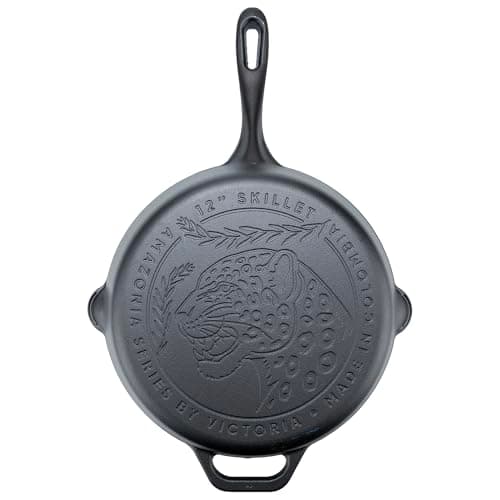
If you want a cast iron skillet this week, buy a new one. A pre-seasoned Lodge costs very little, arrives ready to cook and carries a lifetime warranty. If you want a lighter modern casting without hunting, Victoria is lighter for its size than most.
The strongest case for vintage is a large skillet. A good 12-inch vintage pan is meaningfully lighter than a modern 12-inch, and 12 inches is where modern cast iron gets genuinely heavy - which is the sizing argument in what size cast iron skillet.
This is not a ruined pan. Rust is the least serious fault cast iron can have, and it is why the best secondhand bargains look the worst.
If you are on the other side of this
A cast iron pan you no longer want is worth more than scrap and more than most people assume, rust included. Selling it, donating it or handing it on is a better ending than the recycling bin - which is one of the routes in what to do with old cookware.
Modern pans, for when the hunt is not worth it
Every vintage find is competing with these on price and availability. A rusty vintage pan is a good buy; a mediocre one at collector prices is not.
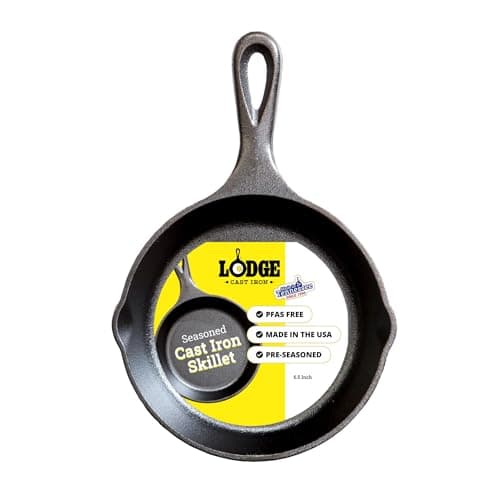
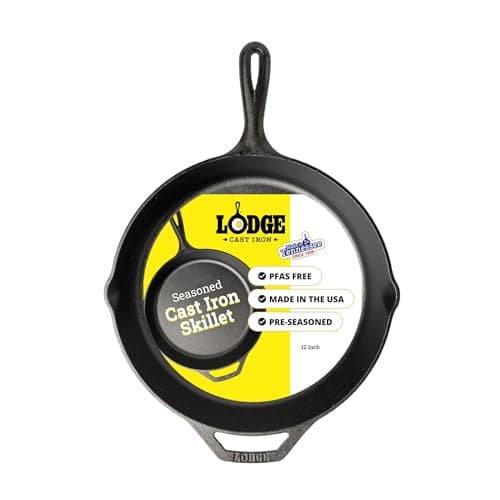
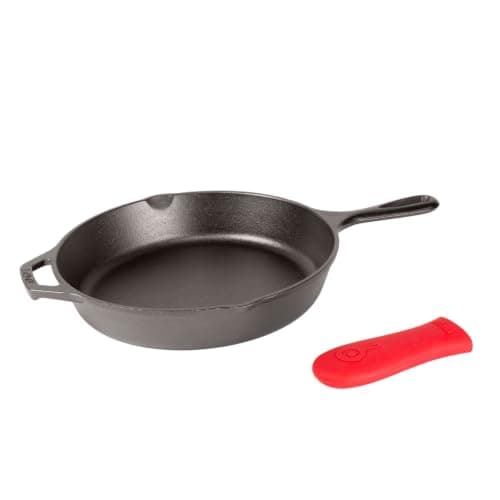
Lodge Seasoned Cast Iron Skillet, 10.25 in (L8SK3)
Searing, cornbread, and anyone who wants one pan that cannot be worn out
These are the products this page's reasoning actually points at. Same rules as everywhere else on the site: published specs, a stated trade-off, and a live price only where one exists.
Top pick · The modern baselineSpecs read September 3, 2026
Lodge Seasoned Cast Iron Skillet, 10.25 in (L8SK3)
Pre-seasoned, published to 550F, made in Tennessee and cheap - the pan any vintage find has to beat.
Best for: Searing, cornbread, and anyone who wants one pan that cannot be worn out
Published specifications for the Lodge Seasoned Cast Iron Skillet, 10.25 in (L8SK3)
Diameter
10.25 in
Weight
5.66 lb
Oven maximum
550F
Induction
Yes - bare iron is ferrous
Seasoning
Pre-seasoned with soy-based vegetable oil, no synthetic chemicals
Warranty
Lifetime
Made in
USA
Care
Hand wash. Lodge's own instructions permit warm soapy water
Good
Effectively unbreakable and fully restorable - a rusted one can be stripped and re-seasoned
Holds heat better than anything else at the price, which is what a sear needs
Lodge publishes its seasoning method openly, so the maintenance is not a mystery
Not good
Heavy
Heats unevenly on a small burner: cast iron conducts at roughly 50 W/m-K, so it is slow to spread and slow to react
Bare iron is reactive; long tomato braises will taste of it
The trade-off. It weighs 5.66 lb empty. You will feel that every time you move it full, and it is the single most common reason a cast iron skillet ends up in a cupboard.
Skip this if. You have wrist or shoulder trouble, or you cook mostly acidic braises. Carbon steel does most of the same jobs at roughly half the weight.
Slightly, in two specific ways: older pans are thinner and lighter, and they were machined smooth after casting rather than left with a sand-cast texture. The iron itself is no better, and a modern pan smooths out with years of use.
›Is rusty cast iron worth buying?
Usually yes - rust is the least serious fault cast iron can have and it scrubs off before a re-season. Rust frightens buyers off, which is exactly why the best secondhand bargains look the worst.
›What should you check before buying a used cast iron pan?
Four things: any crack, which is fatal; whether it sits flat, since a warp will not flatten; the state of the cooking surface; and the rust, which you can ignore. Only the crack and the warp end the deal.
›Does the maker's name matter on vintage cast iron?
For collectors, yes. For cooking, no - an unmarked pan from the same era cooks identically and costs much less. Condition matters more than the name, and we do not authenticate or value collectible cookware.
›Can you fix a warped cast iron pan?
No. A base that rocks or spins on a flat surface will not flatten, and on a smooth top or induction hob a warped pan makes poor contact. On gas it is usable, which is the only situation where a warped vintage pan is still worth having.
Sources
Every figure on this page came from one of these. Follow them and check our arithmetic — that is the point.