Heads up: some links on this page earn us a commission at no extra cost to you. It does not change what we recommend or the order. How we are funded.
The short answer
Use the widest, heaviest flat pan you own - a 12-inch cast iron or carbon steel skillet is ideal. A restaurant wok burner puts out several times what a domestic ring does, and without it a wok touches the heat across a small patch and never gets properly hot. A flat pan puts its entire base on the element. Then change the technique: cook in batches, get the pan properly hot before anything goes in, and stop stirring constantly.
What a wok actually needs
Wok cooking is built around a very hot, concentrated flame licking up the sides of a round bowl, with the food constantly moved between the searing base and the cooler walls. A restaurant wok burner produces several times the output of a domestic ring, and a wok ring holds the bowl down in the middle of it.
On a domestic stove none of that geometry exists. A round-bottom wok on a flat cooktop touches the element across a patch the size of a coin. Even a flat-bottom wok has walls that rise away from the heat, so only the base is genuinely hot and the sides do nothing. The stove-by-stove detail is in best carbon steel woks.
A flat 12-inch skillet, by contrast, puts its entire base in contact with the burner. For most home kitchens that is more usable searing area than a wok delivers.
What to use instead
Pan
How well it works
Why
12 in carbon steel skillet
Best overall
Big flat base, bare surface, light enough to toss
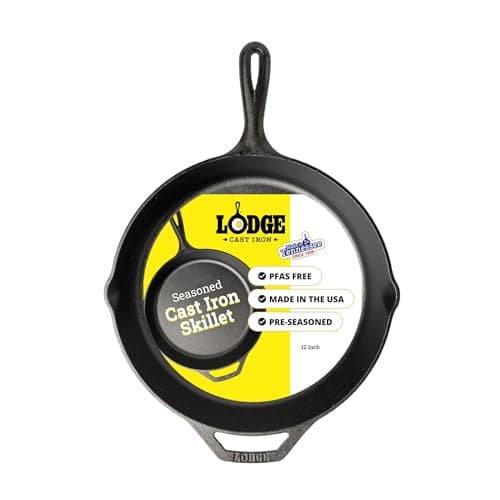
12 in cast iron skillet
Best heat retention
Cold vegetables barely dent it; heavy to move
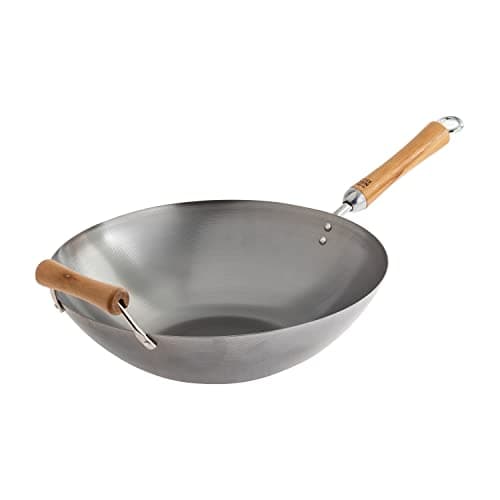
Flat-bottom carbon steel wok
Good
Some of the wok geometry, all of the base contact
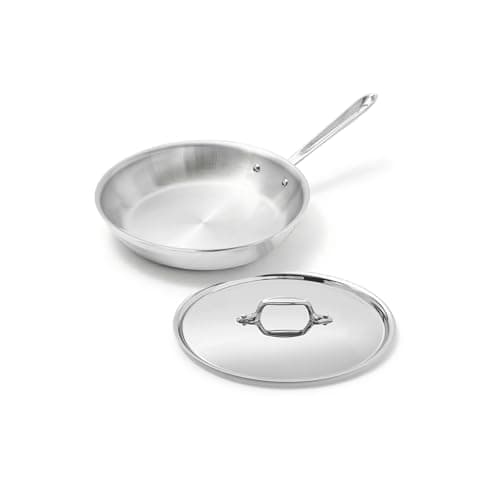
Clad stainless skillet
Workable
Less mass, so smaller batches; best for saucy dishes
Nonstick skillet
Poor
Stir frying wants heat the coating cannot take
Round-bottom wok on a flat hob
Bad
Coin-sized contact patch; it will never get hot
The ranking is by base contact area and stored heat. Both favor a wide flat pan on a domestic stove.
Three changes to the technique
1. Cook in batches, and mean it
The single biggest cause of gray, watery stir fry at home is a full pan. Crowding drops the temperature and the food releases moisture faster than it can evaporate, so it braises. Cook protein first, remove it, cook vegetables in two batches, then combine at the end with the sauce.
2. Preheat far longer than feels sensible
Because you cannot rely on a huge flame to recover, you rely on stored heat instead. Give a cast iron or carbon steel pan several minutes on medium-high before anything goes in, then add oil and let it shimmer. A properly preheated heavy pan is how you get char without a wok burner.
3. Stop stirring constantly
The constant motion in restaurant wok cooking exists because the flame is violent enough to burn anything that sits still. On a domestic burner the opposite is true: food needs contact time to brown. Spread it out, leave it for thirty to sixty seconds, then move it.
The name is misleading at home. What you are doing on a domestic stove is closer to a hard sauté than a stir fry, and the results are better for admitting it.
Preparation does more work than the pan
Everything cut before you start. The whole cook is five minutes; there is no time to chop.
Everything dry. Wet vegetables and wet protein steam. Pat them.
Uniform sizes, so nothing is raw when the rest is done.
Sauce mixed in advance, in a bowl, ready to pour in one motion.
Aromatics last, not first, if the pan is genuinely hot - garlic burns in seconds at searing temperatures.
If you want a wok anyway
There are good reasons to own one: the shape makes tossing easy, it holds a large volume, and it is the right tool if you have a powerful gas ring or an outdoor wok burner. If you buy one, buy a flat-bottom carbon steel wok around 14 inches and nothing else - not nonstick, not stainless, not cast iron, and not round-bottom unless you have a gas ring and a wok ring.
The seasoning method differs from a skillet's, because a wok is seasoned dry and hot up the sides. That process is in seasoning carbon steel and expanded for woks in the wok roundup.
Which to buy
You have a skillet already: use it, change the technique, buy nothing.
The wok is one case of a wider question, and the same three properties decide all of them - cookware substitutions: what to use instead works through every common swap, including which ones damage the pan.
Pans that stir fry well on a domestic stove
Base contact area and stored heat decide this. A wide flat pan beats a wok on almost every home burner.
No photo
Lodge Seasoned Carbon Steel Skillet, 12 in
A first carbon steel pan, bought to find out whether you like the material
These are the products this page's reasoning actually points at. Same rules as everywhere else on the site: published specs, a stated trade-off, and a live price only where one exists.
Top pick · Best stir fry pan without a wokSpecs read September 3, 2026
No photo
Lodge Seasoned Carbon Steel Skillet, 12 in
Twelve inches of bare carbon steel with Lodge's published 550F range - light enough to move, hot enough to char.
Best for: A first carbon steel pan, bought to find out whether you like the material
Published specifications for the All-Clad D3 Stainless 10 in Fry Pan
Construction
Fully bonded tri-ply, aluminum core
Oven maximum
600F, oven and broiler safe
Induction
Yes - compatible with any stovetop
Dishwasher
Handwash only (All-Clad published)
Handle
Double-riveted stainless
Weight
3.0 lb (model 4110)
Warranty
Limited lifetime
Made in
Bonded, engineered and assembled in Canonsburg, PA
Good
600F is the highest oven ceiling of any stainless pan on this site
The one pan here whose manufacturing location is published down to the town
Genuinely repairable-adjacent: rivets are the only failure point and the warranty covers them
Not good
Hand wash only
The flared rim makes it a poor pan for anything with liquid
Costs several times what a Tramontina or Cuisinart pan of the same construction costs
The trade-off. Hand wash only. All-Clad publishes that plainly, and it is a real daily cost on a pan you will use every day.
Skip this if. You want a dishwasher-safe pan, or you are buying a whole kitchen on a fixed budget - one D3 skillet costs what a full clad set can cost.
Yes, and on most domestic stoves a wide flat skillet works better. A wok's design assumes a restaurant burner; without one, a wok makes contact across a small patch while a 12-inch flat pan puts its whole base on the element.
›What is the best pan for stir frying at home?
A 12-inch carbon steel skillet - big flat base, bare surface that takes high heat, and light enough to move food around. A 12-inch cast iron skillet retains heat better still but is heavy to toss.
›Why is my stir fry watery?
The pan was crowded. Too much food at once drops the temperature and the ingredients release moisture faster than it can evaporate, so they braise instead of searing. Cook in batches and combine at the end.
›Should you stir constantly when stir frying at home?
No. Constant motion exists in restaurant wok cooking because the flame is violent enough to burn anything that sits still. On a domestic burner food needs contact time to brown - spread it out and leave it for thirty to sixty seconds.
›Is a nonstick pan good for stir frying?
No. Stir frying wants heat above what a coating tolerates, so you are either damaging the coating or cooking too cool to get any browning. Bare carbon steel or cast iron is the right surface.
Sources
Every figure on this page came from one of these. Follow them and check our arithmetic — that is the point.