Heads up: some links on this page earn us a commission at no extra cost to you. It does not change what we recommend or the order. How we are funded.
The short answer
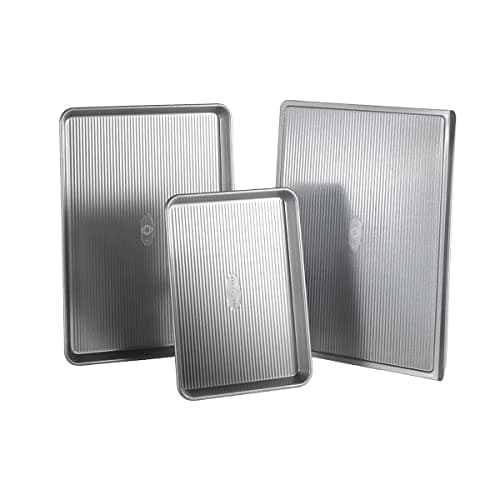
Use metal for anything where browning matters - cookies, cakes, bread, pastry, roasting. Use silicone for intricate shapes, small portions and anything you would otherwise struggle to unmold: mini muffins, madeleines, cake pops, frozen preparations and ice. Silicone is a poor conductor of heat, so it browns very little and bakes slower; metal conducts well and browns well but needs greasing or lining. Most kitchens want metal for nearly everything and silicone for two or three specific jobs.
One property explains the whole comparison
Silicone is an excellent thermal insulator. That is why you can grab a silicone mold straight out of a hot oven, and it is also why food inside it does not brown.
Browning is a surface reaction that needs the surface of the food to get hot and dry. Metal conducts oven heat straight into the food at the contact point, which is what creates a browned base and a crisp edge. Silicone barely transfers heat at all, so the batter touching it stays comparatively cool and pale, and it cooks mostly by hot air from above.
Everything else on this page follows from that single fact. Is silicone bakeware safe covers the material question - fillers, temperature limits and what to look for - which is separate from how it bakes.
Job by job
What you are baking
Better in
Why
Cookies
Metal
Silicone gives pale, soft, cakey results
Layer cakes
Metal
Structure needs a set crust; silicone also flexes as you move it
Bread and rolls
Metal
Crust is the point and silicone produces almost none
Pastry, pies, tarts
Metal
A soggy base is exactly what poor conduction gives you
Muffins and cupcakes
Either
Metal browns better, silicone unmolds better
Mini and intricate shapes
Silicone
Nothing else releases a detailed mold reliably
Madeleines, cake pops, financiers
Silicone
Release beats browning at this size
Brownies and bars
Metal
Edges want to set and silicone flexes when cutting
Frozen desserts, semifreddo
Silicone
No baking involved - pure release job
Ice, stock cubes, baby food
Silicone
Freezing and popping out is what it is best at
Roasting vegetables
Metal
Silicone cannot crisp anything
Silicone wins where release is the hard part and heat transfer is not.
Where silicone genuinely wins
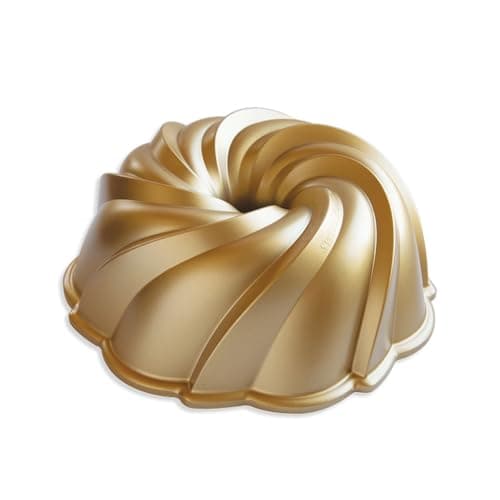
Release from complicated shapes. A flexible mold peels away from fluting and undercuts that a rigid pan would tear. This is the category's real purpose.
Nothing to grease. Genuinely convenient for repetitive small bakes.
It has no structure. A full silicone mold must go onto a sheet pan to be moved at all, which means you need the metal pan anyway.
It holds a greasy film. Silicone develops a tacky residue over time that a dishwasher does not always remove. Hot water with soap and a stint in a hot oven helps.
It picks up smells. Savory bakes can carry over.
Cheap silicone is suspect. A mold that shows white when pinched and twisted contains fillers. A pinch test is the standard check - is silicone bakeware safe.
Sizes are imprecise. Flexible walls mean capacity varies as it bulges, which makes recipe conversion less reliable - baking pan size conversion.
The combination that actually works
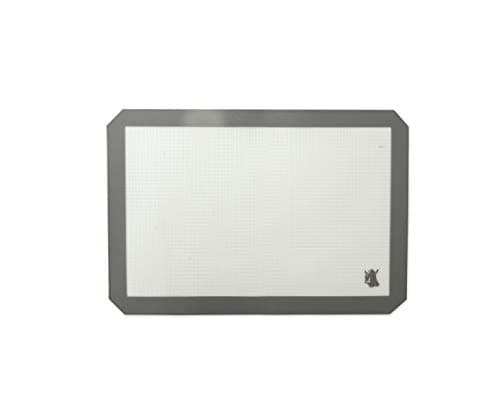
The most useful way to own silicone is not as pans but as liners. A silicone baking mat on a light aluminum sheet keeps the metal doing the conducting while the silicone handles release, which gets you most of both properties - best silicone baking mats.
The other version is a silicone coating on metal bakeware, which is a different product from silicone bakeware: the pan is aluminized steel and the silicone is a thin release layer. USA Pan's AMERICOAT is the example in our ledger, published as free of PTFE, PFOA and BPA - the USA Pan review.
If you are choosing silicone because you dislike nonstick coatings, note that a silicone mold and a silicone-coated metal pan are chemically much the same family - and the coated metal pan bakes far better.
Anything where a crisp base is the point is a metal job. Silicone cannot deliver a base like this at all.
Getting the best out of silicone
Always put it on a sheet pan - for support and for the extra conduction from below.
Raise the temperature slightly or add time, since bakes run slower.
Accept pale results, or finish briefly under the broiler if the recipe allows.
Let bakes cool before unmolding, because there is no rigidity to hold shape while hot.
Check the published temperature limit and stay under it.
Buy plain, thick, uncolored or lightly colored molds from makers that publish what is in them.
The verdict
Metal for anything where the result depends on browning, which is most baking. Silicone for small, intricate and frozen things, where release is the hard part and browning was never expected. Silicone mats on metal pans for everything else.
If you are starting from nothing, buy metal first and add silicone later for a specific problem you have actually hit - what bakeware you need.
Metal to bake, silicone to release
The silicone entry here is a mat rather than a mold, which is the form that keeps metal doing the conducting.
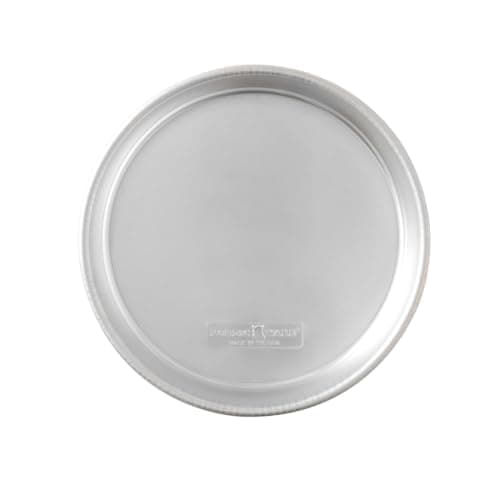
Nordic Ware Naturals Round Cake Pan, 9 in
Layer cakes, and anyone who has had a coated pan flake into a sponge
Silicone molds on Amazon — for intricate shapes and frozen preparations, where they genuinely win.
What to buy, if you are buying
These are the products this page's reasoning actually points at. Same rules as everywhere else on the site: published specs, a stated trade-off, and a live price only where one exists.
Top pick · The metal defaultSpecs read September 3, 2026
Nordic Ware Naturals Round Cake Pan, 9 in
Light aluminum conducts heat properly, which is the one thing silicone structurally cannot do.
Best for: Layer cakes, and anyone who has had a coated pan flake into a sponge
Metal, for anything where browning matters - cookies, cakes, bread, pastry and roasting. Silicone is a thermal insulator, so it browns very little and bakes slower. Silicone wins for intricate shapes, small portions and frozen preparations where release is the hard part.
›Why do my cakes not brown in silicone pans?
Because silicone barely conducts heat. Browning needs the food's surface to get hot and dry at the point of contact, and metal delivers that while silicone insulates instead. Putting the mold on a preheated metal sheet pan helps a little, but it cannot fully close the gap.
›Do you need to grease silicone bakeware?
Usually not, which is its main convenience. A very light greasing helps with sticky or high-sugar batters and with a mold that has developed a tacky film from age. Never use aerosol spray, which builds residue that makes release worse over time.
›Does silicone bakeware need to go on a baking sheet?
Yes, for two reasons. A full silicone mold has no structural rigidity, so it cannot be carried safely on its own, and the metal sheet underneath adds conduction that improves an otherwise pale base.
›Is silicone-coated metal bakeware the same as silicone bakeware?
No, and the difference matters. Silicone-coated bakeware is aluminized steel with a thin silicone release layer, so the metal still does the conducting and browning. It bakes far better than a silicone mold while still releasing cleanly.
Sources
Every figure on this page came from one of these. Follow them and check our arithmetic — that is the point.