Heads up: some links on this page earn us a commission at no extra cost to you. It does not change what we recommend or the order. How we are funded.
The short answer
Calphalon publishes hard-anodized aluminum under a multi-layer PTFE coating, a 450F oven ceiling on the Premier line, dishwasher safety, metal-utensil safety - which almost no other nonstick pan claims - and a lifetime warranty that explicitly excludes coating wear. The standard hard-anodized line is not induction compatible; Calphalon sells a separate induction range. The metal-utensil claim is genuinely useful in a household where the utensil drawer is not policed. The warranty is honest wording rather than a benefit.
What this review checks
Published construction, coating type, oven ceiling, induction compatibility, dishwasher guidance, utensil guidance, warranty terms and exclusions, and what the brand declines to state. We have not cooked in any of it. The method is here.
What hard-anodized actually means
Anodizing is an electrochemical process that thickens the natural oxide layer on aluminum, producing a surface much harder and less reactive than bare aluminum. Calphalon built its reputation on it, and it is a genuine engineering difference from the thin stamped aluminum most cheap coated pans use.
What it is not is a nonstick surface. The anodized layer is the body; the coating on top is a separate multi-layer PTFE film with all the properties and limitations of any PTFE coating. Anodizing the body does nothing about the coating's lifespan, and the distinction is drawn out in best hard-anodized cookware.
What Calphalon publishes
Specification
Published figure
Comment
Body
Hard-anodized aluminum
Harder and less reactive than bare aluminum
Coating
Multi-layer PTFE, published metal-utensil safe
The utensil claim is unusual and checkable
Oven maximum
450F published for the Premier line
The highest of the coated pans in our ledger
Induction
No on the standard hard-anodized line
A separate induction-compatible range exists
Dishwasher
Dishwasher safe
Published, not inferred
Coating lifespan
Not published
As with every nonstick maker
Warranty
Lifetime, excluding coating wear
The clearest wording in the category
Recorded from Calphalon's published specifications and care guidance.
The metal-utensil claim
This is the most practically useful thing Calphalon publishes. Almost every nonstick maker tells you to use silicone, nylon or wood; Calphalon publishes that the Premier coating tolerates metal utensils.
Two qualifications worth stating plainly. Metal-utensil safe means the coating survives contact, not that the pan lasts forever - it is still a coating and it still wears out on a schedule nobody publishes. And it is a claim about this line rather than about the brand, so it does not transfer to every Calphalon range.
Where it matters is in a household where the utensil drawer is not going to be policed: shared kitchens, houses with teenagers, anywhere a metal fish slice will end up in the pan whatever you say. In that setting it is a real advantage over a pan that requires discipline.
The warranty, which is the most honest thing here
Calphalon publishes a lifetime warranty that excludes coating wear. That is worth reading twice, because coating wear is the only thing that ever ends a nonstick pan. The warranty therefore covers the handle, the rivets, the body and manufacturing defects - all the parts that were never going to fail - and not the part that will.
We are calling this the most honest thing here rather than the worst, because every other coated brand excludes the same thing and most bury it. Calphalon states it. The consequence for buyers is that a lifetime warranty on a coated pan should not command a price premium, which is the argument in cookware warranties explained.
The induction gap
The standard hard-anodized line is not induction compatible, because anodized aluminum is not ferrous. Calphalon sells a separate induction-compatible range with a magnetic base layer, and the two are easy to confuse on a retail page.
If you cook on induction, check before buying and use the magnet test in cookware for induction. This same gap applies to OXO's and T-fal's standard lines, which is one reason coated cookware is a narrower category on induction than shoppers expect.
What it gets right
Hard-anodized aluminum resists the denting that ruins cheap coated pans
Metal-utensil safe is a published, checkable claim rather than a vague one
450F is the highest oven ceiling among the coated pans in our ledger
Published dishwasher safe
The warranty exclusion is stated plainly rather than buried
What it costs you
The lifetime warranty explicitly excludes the only part that fails
Not induction compatible in the standard line
No published coating lifespan, so cost per year is unknowable
Anodizing the body does nothing for the coating's longevity
Priced above pans that will need replacing on a similar schedule
Who should buy it
Buy Calphalon Premier if metal utensils will end up in the pan regardless, or if you want the highest coated oven ceiling. The 10-inch fry pan is the size most kitchens want.
Buy OXO instead if you cook eggs daily and care how the pan feels - the handle and pour edge are better.
Buy T-fal or Tramontina instead if you accept nonstick as a consumable and would rather spend less more often.
Do not buy any of them for induction without checking the specific line.
Calphalon against the rest of the coated category
Four coated pans, four published oven ceilings, and not one published coating lifespan between them.
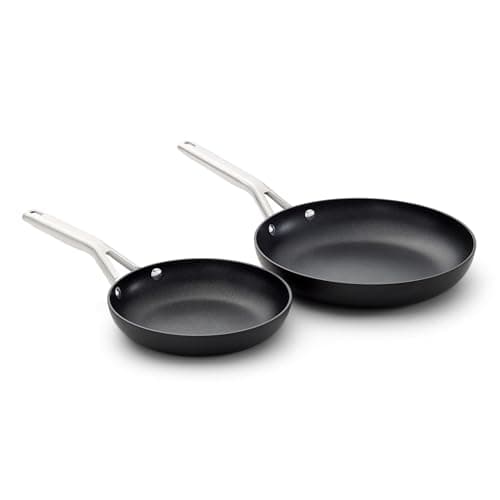
Calphalon Premier Hard-Anodized Nonstick Fry Pan, 10 in
A nonstick pan in a kitchen where the utensil drawer is not going to be policed
These are the products this page's reasoning actually points at. Same rules as everywhere else on the site: published specs, a stated trade-off, and a live price only where one exists.
Top pick · The pan to buySpecs read September 3, 2026
Calphalon Premier Hard-Anodized Nonstick Fry Pan, 10 in
Hard-anodized body, multi-layer PTFE published as metal-utensil safe, and the highest oven ceiling of the coated pans here.
Best for: A nonstick pan in a kitchen where the utensil drawer is not going to be policed
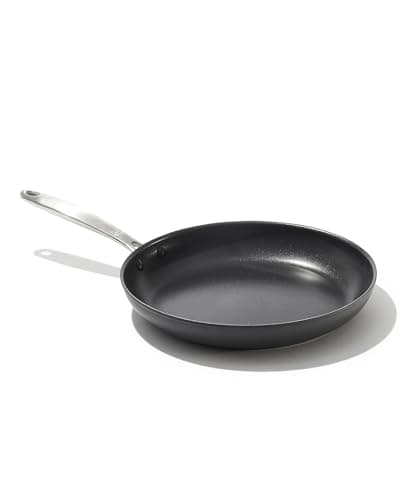
Published specifications for the OXO Good Grips Pro Hard-Anodized Nonstick Fry Pan, 10 in
Body
Hard-anodized aluminum
Coating
Three-layer PTFE nonstick, published PFOA-free
Oven maximum
430F published for the line
Induction
No on the standard hard-anodized line
Dishwasher
Dishwasher safe
Edge
Rolled, for pouring without dripping down the side
Coating lifespan
Not published
Good
The rolled pour edge is a small thing you notice every single time you use it
The hard-anodized body resists the denting that ruins cheap aluminum pans
Handle stays cool and does not rotate the way riveted plastic ones eventually do
Not good
Not induction compatible
Oven ceiling capped by the handle, not the pan
Still a coating, still a consumable, still no published lifespan
The trade-off. The handle that makes it comfortable is a stainless-and-silicone assembly, and that is what caps the oven rating below the body's own limit.
Skip this if. You need induction. The standard hard-anodized body is not ferrous.
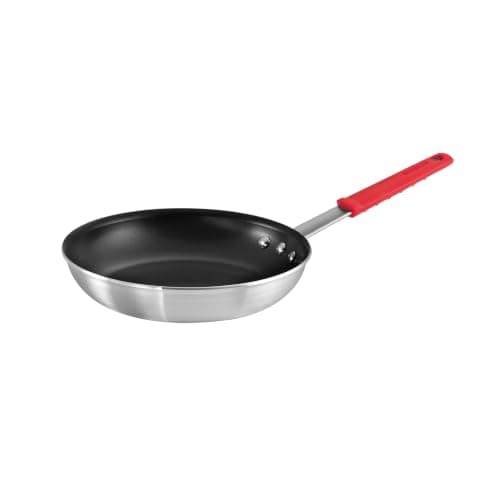
Published specifications for the Tramontina Professional Restaurant Fry Pan, 10 in
Body
Heavy-gauge aluminum
Coating
PTFE nonstick
Induction
No - aluminum body is not ferrous
Coating lifespan
Not published, by this or any nonstick maker
Good
Cheap enough that replacing it every couple of years is a real plan rather than a failure
Heavy gauge for a nonstick pan, so it does not warp on the first hot burner
Silicone handle sleeve that actually stays cool
Not good
Not induction compatible
PTFE, which some buyers will rule out on principle
No published coating lifespan, so the value case is unverifiable by design
The trade-off. It is PTFE. That is fine at normal cooking temperatures, and it is not a pan to preheat empty on high.
Skip this if. You want to avoid PTFE entirely. Buy ceramic instead and accept the shorter release life rather than pretending either one lasts forever.
The hard-anodized body is genuinely better built than the stamped aluminum most cheap coated pans use, and the metal-utensil-safe claim on the Premier line is unusual and useful. It is still a coated pan with no published lifespan, so buy it for the build rather than for longevity.
›Can you use metal utensils on Calphalon?
Calphalon publishes the Premier coating as metal-utensil safe, which almost no other nonstick pan claims. That means the coating survives contact, not that the pan lasts indefinitely, and it applies to that line rather than to every Calphalon range.
›How hot can Calphalon pans go in the oven?
Calphalon publishes 450F for the Premier line, which is the highest ceiling among the coated pans in our ledger. None of the coated pans here are broiler safe.
›Is Calphalon induction compatible?
The standard hard-anodized line is not, because anodized aluminum is not ferrous. Calphalon sells a separate induction-compatible range. Check the specific line, and use a magnet on the base if you are unsure.
›What does Calphalon's lifetime warranty cover?
Manufacturing defects - handles, rivets, body - for the life of the product, explicitly excluding coating wear. Since coating wear is the only thing that ends a nonstick pan, the warranty covers the parts that were never going to fail.
Sources
Every figure on this page came from one of these. Follow them and check our arithmetic — that is the point.