Sugar behaves nothing like a sauce. It climbs the walls, it triples when you add cream, and the moment it goes from amber to burnt is about fifteen seconds wide.
Heads up: some links on this page earn us a commission at no extra cost to you. It does not change what we recommend or the order. How we are funded.
The short answer
Make candy in a fully clad stainless saucepan one size larger than the recipe implies. The All-Clad D3 3-quart is the pick: its aluminum core runs up the sidewalls rather than stopping at the base, which is exactly where sugar scorches, and its bare stainless interior is pale enough to judge caramel color against. The Cuisinart MultiClad Pro 3-quart is the same construction for much less and is published dishwasher safe, which matters more here than on any other pan you own. Buy the 3-quart rather than the 2-quart for anything where cream or baking soda goes in: both treble the volume in about two seconds. Then you need somewhere to pour it - a bare aluminum half sheet for brittle and toffee, or a silicone mat rated above the temperature you are working at. What not to use: a dark nonstick interior, which hides the color change that is the entire skill; a glass dish, which Pyrex itself warns against subjecting to sudden temperature change; and a bare aluminum saucepan for anything containing lemon juice.
Quick picks
The whole answer, on one screen. Tap a row to jump to the full write-up. Every pick below carries a stated trade-off further down — including the one at the top.
#
Product
Best for
Price
1
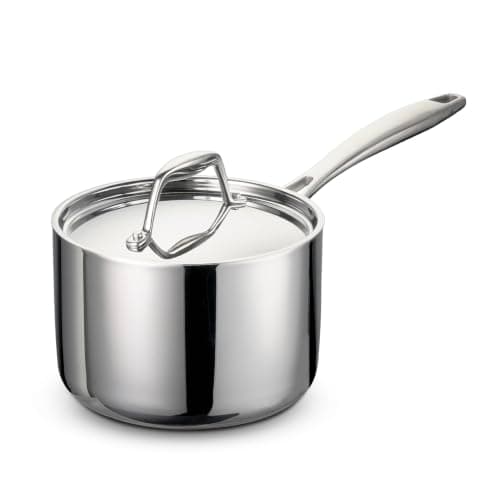
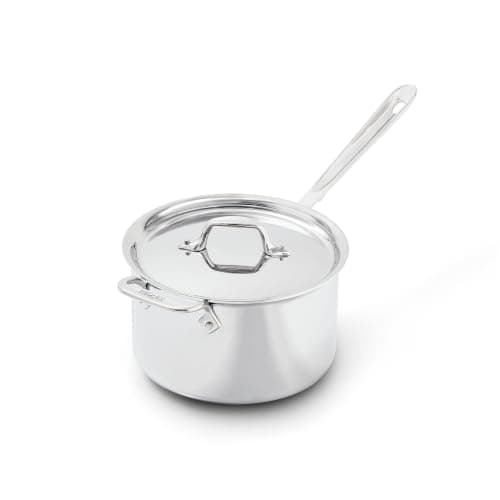
All-Clad D3 Stainless Saucepan, 3 qt
Tri-ply bonded up the sidewalls, which is where sugar actually scorches, with a pale interior you can read caramel color against. Published 600F, oven and broiler safe, induction, lifetime warranty, Canonsburg PA. Skip it if you want to put the pan in a dishwasher - All-Clad publishes hand wash only, and sugar work makes a mess.
The same fully clad tri-ply at a fraction of the price, published dishwasher safe, which on a pan that will have set caramel welded into it is worth more than the higher oven ceiling you give up. Skip it if you want documentation you can trust: the manual says 500F and the retail listing says 550F for the same pan.
Two quarts of fully clad stainless, published dishwasher safe and induction ready, for plain syrups and small batches. Skip it for caramel sauce or brittle - Tramontina's own listing notes it boils over easily with an unvented lid, and both of those recipes foam to several times their volume.
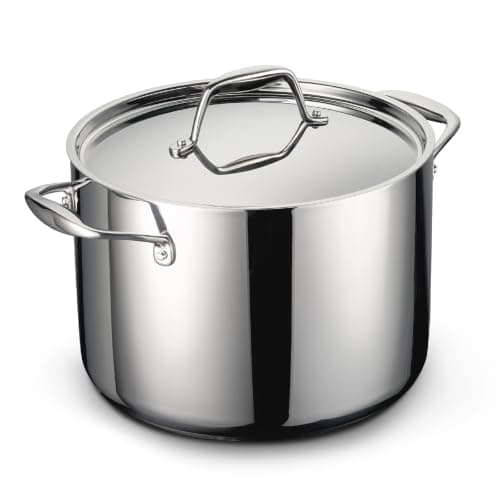
Eight quarts of headroom with cladding up the sides, which is the honest answer when the recipe calls for baking soda or a batch big enough to give away. Skip it for a single pan of fudge - a pot this wide leaves a layer too shallow for a clip-on thermometer to read properly.
Best for brittle, pralines and anything that foams
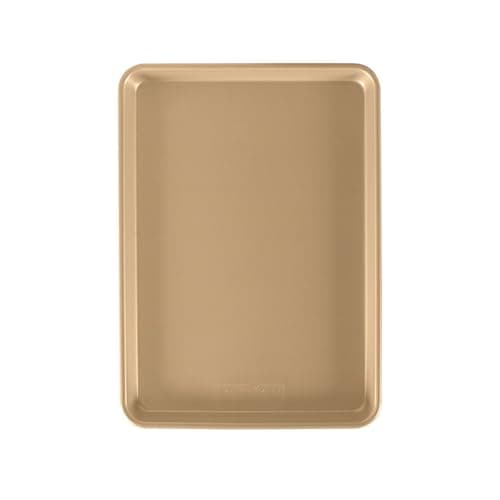
Bare aluminum with an encapsulated steel rim so it does not buckle, and a lifetime warranty: the sheet you pour toffee and brittle onto and break up when it sets. Skip it as a cooking vessel for anything acidic - Nordic Ware publishes that bare aluminum reacts with acid, and many caramel recipes contain lemon juice.
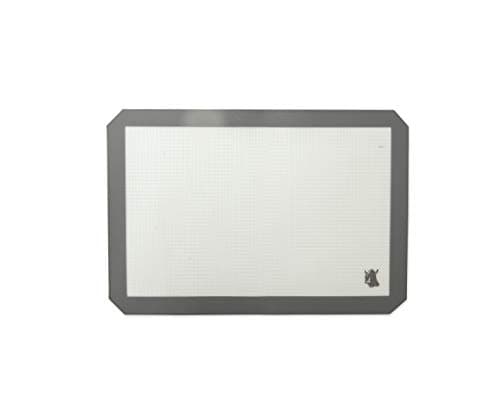
A published 450F ceiling - comfortably above any sugar stage you will work at - on a 16 by 11 inch surface that sits in a half sheet, so set caramels lift off without greasing a pan. Skip it if you want the underside to brown: a mat insulates, which is the point here and the problem everywhere else.
Prices last checked November 12, 2026. Prices move constantly — the number on Amazon when you click is the real one.
What changes when the pan has sugar in it
Every other page on this site about saucepans is written around food that lives between a simmer and a hard boil. Sugar does not. A syrup keeps climbing long after the water has gone, through the stages every candy recipe is written around - thread, soft ball, firm ball, hard ball, soft crack, hard crack - which run from roughly two hundred and thirty degrees to a little over three hundred.
Three consequences follow, and they are the whole of this page.
The sidewalls stop being decorative. Syrup creeps up the wall and sits there as a thin film. In a disc-bottom pan the wall above the disc is plain steel with nothing conductive in it, so that film overheats and darkens before the bulk of the syrup has moved. You get a scorch ring and a bitter batch from a pan that was never at the wrong temperature in the middle.
Volume is not what the recipe says. Caramel sauce foams when the cream goes in. Brittle foams when the baking soda goes in. Either can treble in the time it takes to stir once, and hot sugar going over the rim is the one genuine injury risk in home candy making.
You are judging by eye, in seconds. Caramel goes from pale amber to burnt across a window narrow enough that most people miss it once. You cannot see amber against a black interior.
A word on what this page is not. We have not made candy in any of these pans and we publish no temperature of our own. Everything below is either a specification the maker publishes - construction, capacity, ceilings, finish - or a direct consequence of one, and the places where a maker publishes nothing are named rather than filled. How we work.
Headroom beats everything else
This is the one place where our ranking differs from best stainless steel saucepans. That page ranks these same pans on construction, because for a sauce construction is what decides the result. For sugar, capacity comes first.
The rule that works: pick a pan that will be no more than a third full when the syrup goes in. A cup and a half of sugar and water is a shallow puddle in a 3-quart pan, and it will still climb toward the rim when the cream hits it. Tramontina says the quiet part out loud on its own 2-quart listing - the pan is small enough that it boils over easily, and the lid is not vented - and that is a fair description of the single most common candy failure.
What you are making
Pan to reach for
Why that one
Plain sugar syrup, simple syrup, poaching liquid
2 qt clad saucepan
Nothing gets added, so nothing foams. The small pan heats faster and wastes less
Caramel sauce (cream or butter added at the end)
3 qt clad saucepan
The cream addition is the foam event. Three quarts holds a one-cup batch through it
Fudge, soft caramels, fondant
3 qt clad saucepan
Long cook, constant stirring, and a depth a clip-on thermometer can actually read
Brittle and anything with baking soda
8 qt stock pot
Baking soda aerates the syrup on purpose. The volume change is the recipe working
Candied nuts, pralines, a double batch to give away
8 qt stock pot
Room to stir without throwing syrup, and sides tall enough to be safe
Capacity first, construction second. Every pan named here is fully clad, so the second question is already answered.
Why the interior has to be pale
Caramel is cooked by color, not by clock. The specification that matters is therefore an odd one: what the inside of the pan looks like.
Bare stainless is the right answer. It is light, it is uniform, and a film of amber syrup against it is obvious. All four vessels above have it.
Dark nonstick is the wrong answer, and it is the pan most people reach for because they are afraid of sticking. You cannot read color against it, and sticking is not the problem you have - sugar comes off any pan with boiling water, which is covered further down.
Black enamel and bare cast iron have the same problem. Staub builds its pots with a black matte interior precisely because it hides what happens inside - best enameled Dutch ovens goes through that trade in full. For braising it is a feature. For caramel it is a blindfold.
What the four vessels publish
Pan
Capacity
Clad to the rim
Interior
Dishwasher (published)
All-Clad D3
3 qt
Yes - core runs up the sidewalls
Bare stainless
No - hand wash only
Cuisinart MultiClad Pro
3 qt
Yes - tri-ply
Bare 18/10 stainless
Yes
Tramontina Tri-Ply Clad
2 qt
Yes - tri-ply
Bare 18/10 stainless
Yes
Tramontina Tri-Ply stock pot
8 qt
Yes - tri-ply
Bare 18/10 stainless
Yes
Oven ceilings are published for two of these and inconsistently published for the other two, which does not matter here: candy never goes in the oven. The dishwasher column is the one that decides a purchase.
The dishwasher column is not a convenience point on this page. A pan that has held set caramel is one of the harder cleaning jobs in a domestic kitchen, and All-Clad publishes hand wash only for the D3 line. That is a real cost for this specific use, which is why the Cuisinart ranks second here rather than further down.
Where it goes when it comes off the heat
Half of candy making is the surface you pour onto, and this is where people improvise badly.
A bare aluminum half sheet is the default for brittle, toffee and bark. It is flat, it has a rim, and the encapsulated steel rim is the reason it does not buckle under a thermal load - best sheet pans has the full argument for the construction.
A silicone mat is the default for caramels you need to lift off whole. Nordic Ware publishes a 450F ceiling on its mat, which is clear of any sugar stage, and publishes that it must not be exposed to an open flame - relevant only if you are tempted to put it on the hob, which some people do.
A glass dish is the one to avoid. Pyrex publishes the rule itself: avoid sudden temperature change, no liquid added to a hot dish, no hot dish onto a cold or wet surface. Pouring three-hundred-degree syrup into a room-temperature glass pan is the textbook version of the thing the maker tells you not to do - glass vs metal bakeware covers why thermal shock is the rule that really matters with glass. Line a metal pan instead.
The aluminum rule nobody mentions
A good share of caramel recipes contain lemon juice or cream of tartar, both of which are there to stop the sugar crystallizing. Both are acids.
Nordic Ware publishes plainly that bare aluminum discolors and reacts with acid. That is fine on a sheet pan you are pouring onto for ninety seconds and it is not fine in a pan you are boiling acidulated syrup in for twenty minutes - cooking acidic foods and reactive cookware sets out which metals react and which do not. The short version for this page: boil sugar in stainless, pour it onto aluminum, and do not mix the two jobs up.
The instrument, which is not optional
Color tells you when caramel is done. Nothing tells you when fudge is done except a thermometer, because the difference between a set fudge and a sauce is a few degrees either side of the soft-ball stage.
A clip-on candy thermometer and an instant-read are different instruments, and this site has only audited the second - best instant-read thermometers is what we have, including why a thermometer matters more with heavy pans than light ones. We have deliberately not picked a candy thermometer rather than recommend a category whose specifications we have not read.
Cleaning it, which is easier than people think
The fear of sugar welding itself to a pan is why people reach for nonstick, and it is misplaced. Set sugar is water-soluble. Fill the pan with water, put it back on the hob and bring it to a boil: the candy dissolves, including the film up the sides and anything stuck to a spoon left in there. It is the one cleaning job in a kitchen that genuinely does itself.
Scorched sugar is a different thing - that is burnt-on carbon and behaves like any other - how to clean a burnt stainless pan is the method. That one is an argument for a dishwasher-safe pan rather than against stainless.
What we cannot tell you
Whether your hob holds a steady low heat. Most candy failures that are not capacity failures are heat-control failures, and that is a property of the stove rather than the pan - what stove heat settings actually mean is the closest we can get. Nor can we tell you what any of these cost when you click: the number on each button is live, and the stamp below says when it was last checked.
Every vessel here is fully clad stainless with a bare interior, and every surface here is published above the temperature sugar works at. Prices move constantly - the number on each button is the current one.
All-Clad D3 Stainless Saucepan, 3 qt
Rice, custards and reductions - anything that scorches in a disc-bottom pan
Prices last checked November 12, 2026. Prices move constantly — the number on Amazon when you click is the real one.
Every pick, in full
Each write-up below gives the published specs, what the pan is genuinely good at, what it costs you, and who should skip it. The trade-off line is there on the top pick too — a recommendation with no downside is an advertisement.
Top pick · Best pan for sugar workSpecs read September 3, 2026
All-Clad D3 Stainless Saucepan, 3 qt
Tri-ply bonded up the sidewalls, which is where sugar actually scorches, with a pale interior you can read caramel color against. Published 600F, oven and broiler safe, induction, lifetime warranty, Canonsburg PA. Skip it if you want to put the pan in a dishwasher - All-Clad publishes hand wash only, and sugar work makes a mess.
Best for: Rice, custards and reductions - anything that scorches in a disc-bottom pan
#2 · Best for anyone who will not scrub itSpecs read September 3, 2026
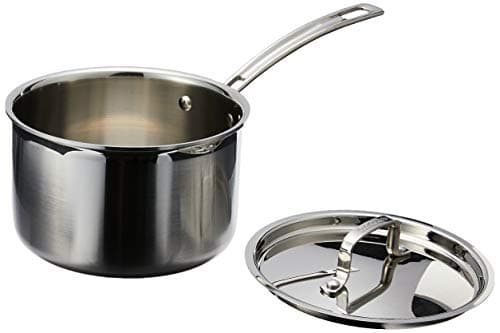
Cuisinart MultiClad Pro Saucepan, 3 qt
The same fully clad tri-ply at a fraction of the price, published dishwasher safe, which on a pan that will have set caramel welded into it is worth more than the higher oven ceiling you give up. Skip it if you want documentation you can trust: the manual says 500F and the retail listing says 550F for the same pan.
Best for: A clad saucepan in a kitchen that is not going to hand wash anything
Published specifications for the Cuisinart MultiClad Pro Saucepan, 3 qt
Construction
Tri-ply: 18/10 stainless interior, pure aluminum core, brushed stainless exterior
Capacity
3 qt with lid
Oven maximum
500F per the Cuisinart use-and-care manual; retail listings say 550F
Induction
Yes
Dishwasher
Dishwasher safe
Handle
Riveted solid stainless, cool-grip profile
Warranty
Lifetime
Good
Genuinely dishwasher-safe clad stainless, which the premium brands are not
Fully clad rather than disc-bottom at an open-stock price
Lifetime warranty
Not good
Published oven maximum contradicts the retail listing for the same pan
The handle spine is divisive on larger pieces
No published country of manufacture
The trade-off. The oven ceiling is 500F per Cuisinart's manual, not the 550F some retail listings advertise. That is a documentation problem the buyer inherits.
Skip this if. You want the higher oven ceiling or the published US factory. That is All-Clad, and you pay for it.
#3 · Best for small batches with nothing addedSpecs read September 3, 2026
Tramontina Tri-Ply Clad Covered Saucepan, 2 qt
Two quarts of fully clad stainless, published dishwasher safe and induction ready, for plain syrups and small batches. Skip it for caramel sauce or brittle - Tramontina's own listing notes it boils over easily with an unvented lid, and both of those recipes foam to several times their volume.
Best for: Sauces, grains and reheating, in the size a kitchen actually uses daily
#4 · Best for brittle, pralines and anything that foamsSpecs read September 3, 2026
Tramontina Tri-Ply Clad Covered Stock Pot, 8 qt
Eight quarts of headroom with cladding up the sides, which is the honest answer when the recipe calls for baking soda or a batch big enough to give away. Skip it for a single pan of fudge - a pot this wide leaves a layer too shallow for a clip-on thermometer to read properly.
Best for: Stock, chili, pasta for a family, and batch cooking on a Sunday
#5 · Best surface to pour ontoSpecs read September 3, 2026
Nordic Ware Naturals Half Sheet, 18 x 13 in
Bare aluminum with an encapsulated steel rim so it does not buckle, and a lifetime warranty: the sheet you pour toffee and brittle onto and break up when it sets. Skip it as a cooking vessel for anything acidic - Nordic Ware publishes that bare aluminum reacts with acid, and many caramel recipes contain lemon juice.
Best for: Roasting vegetables, sheet-pan dinners, cookies - the pan you use most weeks
Published specifications for the Nordic Ware Naturals Half Sheet, 18 x 13 in
Exterior dimensions
17.9 x 12.9 x 1 in
Material
Aluminum
Rim
Encapsulated steel rim
Gauge
Not published by Nordic Ware
Warranty
Lifetime
Dishwasher
Hand wash recommended. Automatic dishwasher use is not advised
Made in
America of domestic and imported materials
Good
Aluminum conducts at 237 W/m-K, which is why it browns evenly and a steel pan does not
The encapsulated steel rim is the reason it does not warp in a hot oven
Lifetime warranty on a pan this cheap
Not good
Nordic Ware does not publish a gauge figure, so thickness cannot be compared like for like
Bare aluminum stains and reacts with acid
Not dishwasher safe by the maker's own advice
The trade-off. Bare aluminum discolors and reacts with acid. It will look used within a month and Nordic Ware advises against the dishwasher.
Skip this if. You want a pan that stays looking new, or you will not hand wash. Buy an aluminized-steel coated pan instead and accept the coating as a wear item.
#6 · Best for caramels that have to come off cleanSpecs read September 3, 2026
Nordic Ware Silicone Baking Mat
A published 450F ceiling - comfortably above any sugar stage you will work at - on a 16 by 11 inch surface that sits in a half sheet, so set caramels lift off without greasing a pan. Skip it if you want the underside to brown: a mat insulates, which is the point here and the problem everywhere else.
Best for: Cookies, meringues and anything sticky that you bake at moderate temperatures
A fully clad stainless saucepan with a bare, pale interior and far more headroom than the recipe seems to need. Clad means the aluminum core runs up the sidewalls rather than stopping at the base, which is where a thin film of syrup scorches. The pale interior matters because caramel is judged by color, and you cannot see amber against a dark coating.
›Can you make candy in a nonstick pan?
You can, and most people should not. The problem is not the coating failing, it is that a dark interior hides the color change that tells you when caramel is done. Sticking is also the wrong thing to be afraid of: set sugar dissolves if you fill the pan with water and bring it back to a boil.
›What size saucepan do you need for candy?
One that is no more than a third full when the syrup goes in. Three quarts covers caramel sauce, fudge and soft caramels for a normal batch. Anything with baking soda in it, brittle especially, wants a stock pot, because the soda aerates the syrup on purpose and the volume change is part of the recipe working.
›Why did my caramel burn on the sides of the pan?
Almost certainly a disc-bottom pan. The aluminum stops at the base, so the walls above it are plain steel with nothing conductive in them. The thin film of syrup that creeps up the wall overheats and darkens while the bulk of the syrup in the middle is still at the right temperature, and the burnt film then flavors the whole batch.
›Can you pour hot caramel into a glass dish?
Pyrex publishes guidance against exactly this: avoid sudden temperature change, do not add liquid to a hot dish, do not set a hot dish on a cold or wet surface. Syrup above three hundred degrees going into a room-temperature glass pan is the clearest version of that risk. Pour onto a lined metal sheet pan or a silicone mat instead.
›Do you need a candy thermometer?
For caramel, no - color is the better guide, and a thermometer reading the wrong depth will lie to you. For fudge, caramels and anything that has to set to a specific texture, yes, because the difference between a set sweet and a sauce is a few degrees. A clip-on candy thermometer and an instant-read are different instruments; we have only audited instant-reads.
Sources
Every figure on this page came from one of these. Follow them and check our arithmetic — that is the point.