Heads up: some links on this page earn us a commission at no extra cost to you. It does not change what we recommend or the order. How we are funded.
The short answer
For most home ovens, a cast iron pizza pan is the best single choice: enough thermal mass to crisp a base properly, and far easier to load and unload than a stone. A perforated aluminum pan is the cheapest way to improve a base and the best for reheating. A rimmed steel pan is what you want for deep-dish and pan pizza. A plain half sheet pan makes excellent rectangular pizza and you probably already own one - try that before buying anything.
Quick picks
The whole answer, on one screen. Tap a row to jump to the full write-up. Every pick below carries a stated trade-off further down — including the one at the top.
#
Product
Best for
Price
1
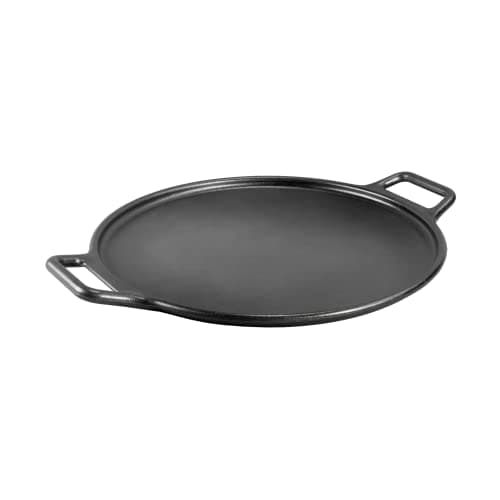
Lodge Seasoned Cast Iron Pizza Pan, 15 in
Fifteen inches of cast iron with enough thermal mass to crisp a base, and a handle at each side so you can actually get it out of the oven.
Prices last checked September 27, 2026. Prices move constantly — the number on Amazon when you click is the real one.
Pan or stone? Start here
A pizza stone or steel is a preheated slab that mimics an oven floor: you slide raw dough directly onto screaming hot material and the base sets instantly. It produces the best base a home oven can make, and it demands a peel, semolina, confidence and a long preheat - best pizza stones and steels.
A pan is a vessel. You build the pizza in it at room temperature and put the whole thing in the oven. The base is less dramatic, and everything about the process is easier: no peel, no launching, no dough folding over itself halfway onto a hot surface.
Pan
Stone or steel
Base crispness
Good to very good
Best available at home
Difficulty
Low - build and bake
Real - requires a peel and practice
Preheat
Short, or none
45 minutes or more
Risk of disaster
Almost none
A folded pizza on the oven floor
Deep-dish and pan styles
Yes
No - needs a rim
Other uses
Plenty
Bread, and not much else
Storage
Easy
Heavy and awkward
The honest recommendation for most people is a pan, not because it makes better pizza but because it makes pizza you will actually make more than twice. A stone that intimidates you bakes nothing.
The four kinds of pizza pan
Cast iron — the best all-round choice
Thermal mass is what crisps a base, and cast iron has more of it than any other pan material. Preheat it, build on it or slide the pizza in, and you get a base close to what a stone gives with none of the launching problem. It also comes out of the oven by its handles rather than on a peel.
The trade is weight and preheat time - it is slow to come up, which is the same property that makes it good once there - is cast iron worth it.
Perforated aluminum — the cheap upgrade
Holes let moisture escape from under the dough and let hot air reach the base directly, which is a genuine improvement over a solid thin pan. Light, cheap, and the best thing there is for reheating leftover slices or baking a frozen pizza properly.
It has little thermal mass, so it will not match cast iron on a from-scratch base.
Rimmed steel and deep-dish pans
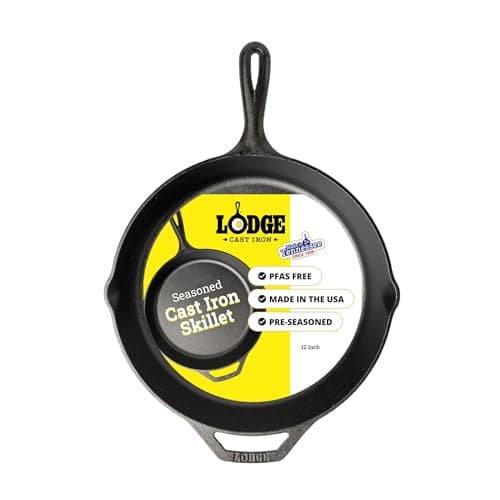
For Chicago deep-dish, Detroit-style and focaccia-adjacent pan pizza, you need walls. Anodized or blued steel pans with a two-inch rim are the specialist item; a cast iron skillet does the same job well, and a cake pan will do in a pinch.
The plain sheet pan
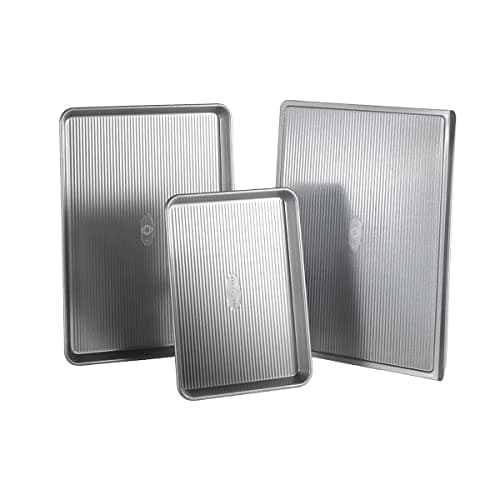
Rectangular pizza on a light aluminum half sheet, well oiled, is excellent and completely legitimate. It feeds more people than a round, it slices into squares, and you own one already - best sheet pans. A darker pan browns the base harder, which here is an advantage - dark versus light baking pans.
Material, ranked for base crispness
Cast iron — most thermal mass, best base from a pan.
Heavy carbon or blued steel — nearly as good, lighter, common in pizzerias.
Perforated aluminum — beats solid aluminum by letting steam out.
Aluminized steel — good general bakeware, decent pizza.
Solid thin aluminum — the weakest, and where soggy bases come from.
A great pan will not rescue the two things that actually cause disappointing home pizza.
Heat. Home ovens top out around 500F to 550F where a pizza oven runs far hotter. Use the highest setting your oven has, preheat properly, and put the pan in the lower third so the base gets the most direct heat - oven temperature accuracy.
Moisture. Wet sauce and watery mozzarella steam the base from above faster than any pan can crisp it from below. Less sauce, drained cheese, and no raw vegetables straight onto the dough.
Preheat the pan, especially cast iron. A cold pan means the base starts cooking last.
Oil the pan for pan styles. A generous film is what fries the crust edge in a Detroit or deep-dish pizza - it is a feature, not excess.
For pizza, dark is the right choice - the base wants all the radiant heat it can get.
Each write-up below gives the published specs, what the pan is genuinely good at, what it costs you, and who should skip it. The trade-off line is there on the top pick too — a recommendation with no downside is an advertisement.
Top pick · Best pizza pan overallSpecs read September 3, 2026
Lodge Seasoned Cast Iron Pizza Pan, 15 in
Fifteen inches of cast iron with enough thermal mass to crisp a base, and a handle at each side so you can actually get it out of the oven.
Best for: Home-oven pizza, flatbread and anything that needs a hot surface under it from the first second
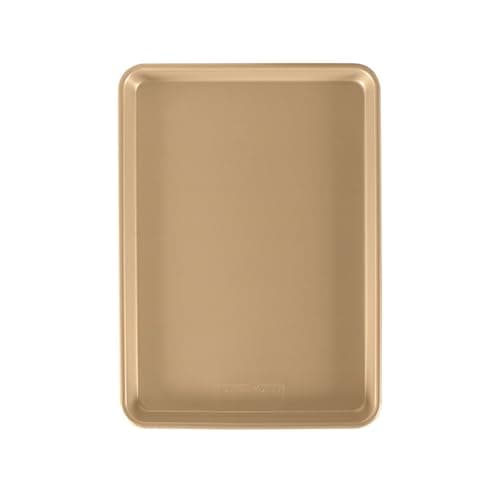
Published specifications for the Nordic Ware Naturals Half Sheet, 18 x 13 in
Exterior dimensions
17.9 x 12.9 x 1 in
Material
Aluminum
Rim
Encapsulated steel rim
Gauge
Not published by Nordic Ware
Warranty
Lifetime
Dishwasher
Hand wash recommended. Automatic dishwasher use is not advised
Made in
America of domestic and imported materials
Good
Aluminum conducts at 237 W/m-K, which is why it browns evenly and a steel pan does not
The encapsulated steel rim is the reason it does not warp in a hot oven
Lifetime warranty on a pan this cheap
Not good
Nordic Ware does not publish a gauge figure, so thickness cannot be compared like for like
Bare aluminum stains and reacts with acid
Not dishwasher safe by the maker's own advice
The trade-off. Bare aluminum discolors and reacts with acid. It will look used within a month and Nordic Ware advises against the dishwasher.
Skip this if. You want a pan that stays looking new, or you will not hand wash. Buy an aluminized-steel coated pan instead and accept the coating as a wear item.
A cast iron pizza pan, for most people. It carries enough thermal mass to crisp a base properly, and unlike a stone it has handles so you can build the pizza on it and lift it out without a peel. A perforated aluminum pan is the cheap alternative.
›Is a pizza pan or a pizza stone better?
A stone or steel gives a better base, because you launch raw dough onto preheated material the way an oven floor works. A pan gives up some crispness for a far easier process with no peel and no risk of folding the pizza onto the oven floor. A pan is the better buy for most home cooks.
›Do perforated pizza pans work?
Yes. The holes let steam escape from under the dough and let hot air reach the base directly, which is a real improvement over a solid thin pan. They have little thermal mass, so they will not match cast iron on a from-scratch pizza, but they are excellent for reheating and frozen pizza.
›Can you make pizza on a regular baking sheet?
Yes, and it is genuinely good. Oil a light or dark half sheet pan well, press the dough out to a rectangle, and bake in the lower third of the hottest oven you have. It feeds more people than a round pizza and needs no new equipment.
›Why is my pizza base soggy?
Almost always moisture rather than the pan - too much sauce, wet mozzarella, or raw vegetables releasing water onto the dough. After that, insufficient heat and a cold pan. Preheat the pan, use the lower third of the oven, and drain the cheese.
Sources
Every figure on this page came from one of these. Follow them and check our arithmetic — that is the point.