Best pans for shallow frying latkes, fritters and cutlets
Half an inch of oil is its own technique. Too little thermal mass and the first batch drops the oil fifty degrees; too much weight and you cannot safely move the pan.
Heads up: some links on this page earn us a commission at no extra cost to you. It does not change what we recommend or the order. How we are funded.
The short answer
Shallow fry in 3 mm carbon steel. The de Buyer MINERAL B PRO 11-inch is the pick: de Buyer publishes the thickness at 3 mm and the weight at 4.6 lb, which is the whole argument - it holds heat the way cast iron does and it weighs about half as much, and you are going to be lifting it with hot oil in it. A 12-inch cast iron skillet is the better answer if the pan never has to move and you want the widest floor you can get. Clad stainless is the right call for anyone who will not season a pan, at the cost of some recovery. What to avoid for this job specifically: a thin pressed pan, which drops temperature the moment the first cold latke lands; a griddle, which has no sides to hold oil; and the Matfer, excellent as it is, if you will be carrying it - its handle is published as welded straight to the body with no heat break at all. The oil goes to a sheet pan, not to paper on a plate.
Quick picks
The whole answer, on one screen. Tap a row to jump to the full write-up. Every pick below carries a stated trade-off further down — including the one at the top.
#
Product
Best for
Price
1
de Buyer MINERAL B PRO Carbon Steel Fry Pan, 11 in
3 mm of French carbon steel at a published 4.6 lb with a cast stainless Heat Stop handle, which is cast-iron recovery at roughly half the weight in your hand. Published composition, iron 99 percent and carbon 1 percent. Skip it if you will not scrub off the beeswax and season it before first use - an unseasoned carbon steel pan is a worse stainless pan that also rusts.
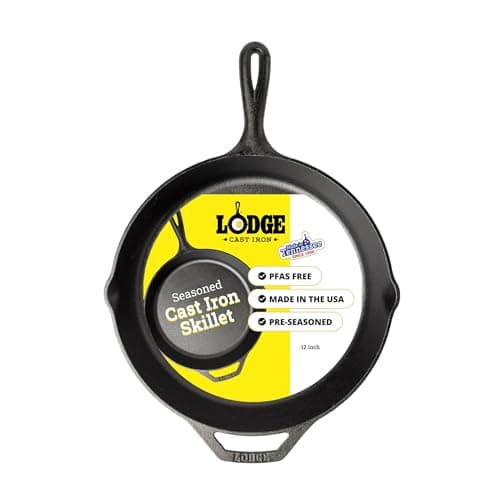
Twelve inches of cast iron, published 550F, induction, lifetime warranty, made in Tennessee: the widest flat floor here and the most thermal mass, so four latkes go in at once and the oil barely notices. Skip it if you have to carry it to the sink full, or if your wrists object - this is the heaviest pan on the page by a wide margin.
Matfer Bourgeat Black Carbon Steel Fry Pan, 12 5/8 in (62006)
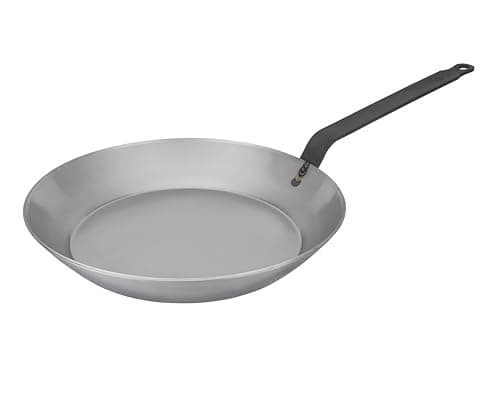
A single piece of uncoated high-carbon steel at a published 5.16 lb, free of PTFE and PFOA, published for every hob including induction and for open fires - and the largest pan here by rim diameter. Skip it if you will be moving the pan while it is hot: Matfer publishes the handle as welded to the body and rivet-less, which prevents rust and means it gets exactly as hot as the pan.
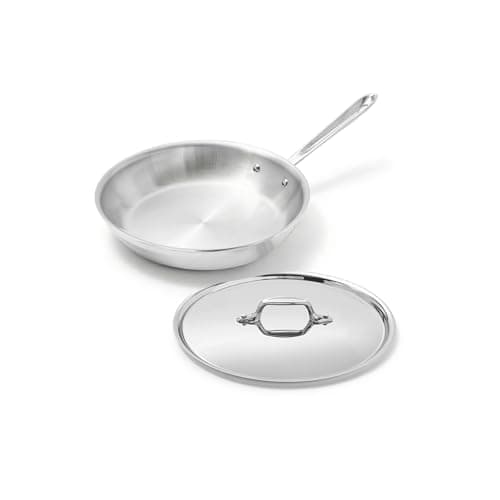
Fully bonded tri-ply, published 600F, induction, limited lifetime warranty, bonded in Canonsburg: no seasoning, no rust, and it does not care that half your fritters have apple in them. Skip it if you want the deepest browning - clad stainless recovers more slowly than 3 mm steel, so fry in smaller batches.
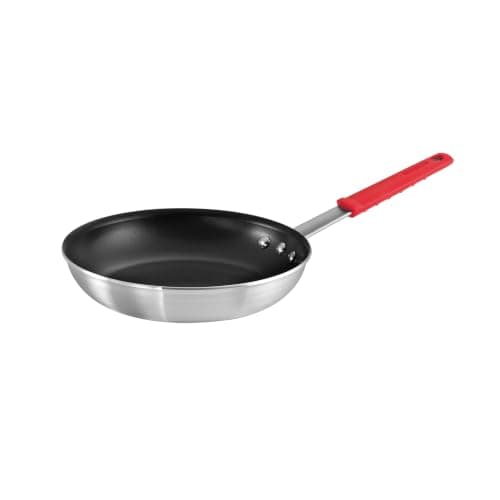
A restaurant-line PTFE pan at a price that treats the coating as the consumable it is, which is the honest way to buy nonstick. Skip it if you shallow fry often: it is the lightest pan here, so it has the least recovery, and Tramontina does not publish a coating lifespan - nor does any other nonstick maker.
Bare aluminum with an encapsulated steel rim and a lifetime warranty, which is where fried food should land - spread out, in one layer, in a pan that holds the drips. Skip it as a draining surface for anything acidic that will sit on it: Nordic Ware publishes that bare aluminum reacts with acid.
Prices last checked November 12, 2026. Prices move constantly — the number on Amazon when you click is the real one.
This is not deep frying, and the difference matters
Deep frying means the food is submerged and cooks from every side at once. The vessel question there is about depth, volume of oil and the height of the sides, and what to deep fry in at home answers it - the short version being that depth is a safety specification rather than a preference.
Shallow frying means a layer of oil roughly a quarter to half an inch deep. The food sits on the floor of the pan, browns on one side, and gets turned. Everything about the equipment follows from that:
Floor area is capacity. In deep frying you measure the basket. Here you measure the flat bottom, because a crowded pan steams.
Recovery is the performance number. A cold grated-potato cake carries a lot of water and a lot of mass relative to a thin layer of oil. The pan, not the burner, is what puts the temperature back.
The pan gets moved. Not with a quart of oil in it, but it does get carried, tipped and drained, which makes handle temperature a real specification rather than a comfort note.
Recovery, and why thin pans fail here
This is the one measurement that sorts the field, and two of the makers here publish it outright.
Pan
Published thickness
Published weight
What that buys
de Buyer MINERAL B PRO 11 in
3 mm (de Buyer, for the 11 and 12.5 in)
4.6 lb
Cast-iron behavior in the oil at roughly half the weight in your hand
Matfer Bourgeat 12 5/8 in
3 mm per commercial catalogs; not published on the Amazon listing
5.16 lb
The same recovery over a wider floor, with a handle that conducts fully
Lodge 12 in cast iron
Not published as a figure
Not published across all revisions; it is the heaviest here
The most mass and the widest floor, which is why it fries four at a time
All-Clad D3 10 in
Tri-ply, individual layers not published
3.0 lb (model 4110)
No seasoning and no rust, with less recovery than 3 mm steel
Tramontina Professional 10 in
Heavy-gauge aluminum, gauge not published
Not published
Release and low cost. The least recovery on the page
Three of five makers publish a usable thickness or weight figure. Where they do not, this table says so rather than estimating one.
Thin pressed steel is the specific thing to avoid here, which is worth saying because one of the most attractive-looking wide pans on this site is exactly that. The Garcima paella pans are published by retailers at 1 mm in the smaller sizes and 1.2 mm in the larger ones, and best paella pans explains why that is correct for paella - a thin pan over a wide fire, where the heat comes from underneath the whole base - and wrong over a single domestic burner. Shallow frying on one burner is the second case, so a paella pan is not the pan for latkes.
The handle is a safety specification here
Most pages treat a hot handle as a comfort problem. With a quarter inch of oil at frying temperature in the pan, it is not.
Matfer publishes something unusually clear about its own pan: the steel handle is welded to the body and rivet-less, which the listing credits with preventing rust and food buildup in the joint. That is a genuine advantage for cleaning, and it also means there is no break in the metal between the pan and your hand. The pan is excellent. It wants a folded towel, every time, with no exceptions, and that is a different thing to ask of someone carrying hot oil.
de Buyer goes the other way on the same question: a cast stainless handle, riveted, with what de Buyer calls a Heat Stop. Lodge cast iron has a bare iron handle and the same rule as Matfer. All-Clad is double-riveted stainless. Cookware handles explained has the general case.
Size, in batches rather than inches
The number that matters is how many pieces fit without touching, because the moment they touch they steam. Work from the food back to the pan.
What you are frying
Pan to reach for
Roughly per batch
Latkes and potato pancakes
12 in cast iron, or 11 in carbon steel
Four at a time in the 12 in, three in the 11 in
Breaded cutlets, schnitzel, chicken fried steak
11 in or larger - the piece dictates it
One or two, and they should not overlap
Corn fritters, zucchini fritters, pakora
Any of them; the 10 in nonstick is fine
Five or six small spoonfuls
Croquettes and arancini
Deep fry instead if they are round
Rolling them in shallow oil is how they break
Hash and anything you want crusted
12 in cast iron
One layer, pressed, left alone
The last row is the only one where a lid helps. Everything else here wants the moisture gone.
Seasoned, clad or coated
Seasoned carbon steel or cast iron. The best browning, the best recovery, and the oil maintains the seasoning rather than stripping it. The cost is upkeep - how to season a carbon steel pan is the routine, and Matfer publishes a specific restriction worth knowing: do not use that pan with lemon juice, vinegar or tomato sauce.
Clad stainless. Nothing to maintain and nothing to ruin, including with apple fritters and anything else acidic. You lose some recovery, so fry smaller batches and let the pan come back between them.
Nonstick. Genuinely useful for fritters that want to stick, and the least suited to the job otherwise, because the pans are light and light pans do not recover. Treat the coating as a consumable, which is what how long nonstick lasts concludes.
Draining, and the mistake almost everyone makes
Fried food goes onto a flat pan in a single layer, not onto a plate stacked with paper towels. On a plate the pieces sit in their own steam and the crust you just made goes soft within a minute; a half sheet gives every piece its own patch of air, and the rim catches the oil.
A rack in the sheet pan is better still if you own one - best cooling racks covers the ones that take oven heat. And the used oil does not go down the sink: let it cool in the pan, strain it into a jar, and treat it the way the deep frying page describes.
What not to use
A griddle. A flat griddle has no sides. Oil runs to the edge and then onto the hob, which is how kitchen fires start - grill pan vs griddle has the shapes.
A grill pan. The ridges hold the food out of the oil, which is the opposite of frying.
A thin pressed pan of any kind. Including paella pans, cheap stamped skillets and most pans sold as light. The first batch takes the heat out and the rest of the batches absorb oil instead of browning.
A nonstick pan you care about, preheated empty. Oil goes in first, always, which is the rule anyway.
What we cannot tell you
What temperature your oil is actually at. Shallow frying is usually done by eye and by sound, and the one tool that would settle it is a thermometer - best instant-read thermometers. We have also not fried in any of these pans: every number above is published by the maker or named as unpublished. Nor can we tell you what any of these cost when you click. The button carries the live number and the stamp below says when it was last checked.
Which to buy
You want one pan for this and you will maintain it:the de Buyer MINERAL B PRO 11-inch. Published thickness, published weight, a handle designed to stay cooler than the pan.
Ranked for a half inch of oil rather than for general use, which puts thickness and handle temperature ahead of everything else. Prices move constantly - the number on each button is the current one.
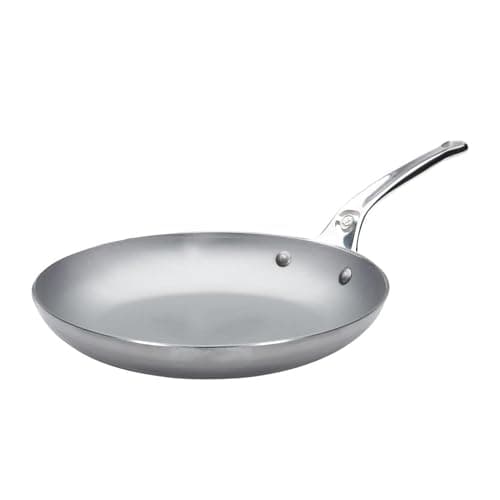
de Buyer MINERAL B PRO Carbon Steel Fry Pan, 11 in
Someone who wants cast-iron searing without cast-iron weight
Prices last checked November 12, 2026. Prices move constantly — the number on Amazon when you click is the real one.
Every pick, in full
Each write-up below gives the published specs, what the pan is genuinely good at, what it costs you, and who should skip it. The trade-off line is there on the top pick too — a recommendation with no downside is an advertisement.
Top pick · Best pan for shallow fryingSpecs read September 3, 2026
de Buyer MINERAL B PRO Carbon Steel Fry Pan, 11 in
3 mm of French carbon steel at a published 4.6 lb with a cast stainless Heat Stop handle, which is cast-iron recovery at roughly half the weight in your hand. Published composition, iron 99 percent and carbon 1 percent. Skip it if you will not scrub off the beeswax and season it before first use - an unseasoned carbon steel pan is a worse stainless pan that also rusts.
Best for: Someone who wants cast-iron searing without cast-iron weight
#2 · Best floor area, if the pan stays putSpecs read September 3, 2026
Lodge Seasoned Cast Iron Skillet, 12 in (L10SK3)
Twelve inches of cast iron, published 550F, induction, lifetime warranty, made in Tennessee: the widest flat floor here and the most thermal mass, so four latkes go in at once and the oil barely notices. Skip it if you have to carry it to the sink full, or if your wrists object - this is the heaviest pan on the page by a wide margin.
Best for: Cooking for three or more, or anything that needs surface area rather than depth
#3 · Best if you cook the way a restaurant doesSpecs read November 9, 2026
Matfer Bourgeat Black Carbon Steel Fry Pan, 12 5/8 in (62006)
A single piece of uncoated high-carbon steel at a published 5.16 lb, free of PTFE and PFOA, published for every hob including induction and for open fires - and the largest pan here by rim diameter. Skip it if you will be moving the pan while it is hot: Matfer publishes the handle as welded to the body and rivet-less, which prevents rust and means it gets exactly as hot as the pan.
Best for: Someone who would rather buy the pan a commercial kitchen buys, in a width that cooks for four or more
Published specifications for the Matfer Bourgeat Black Carbon Steel Fry Pan, 12 5/8 in (62006)
Material
Published as a single piece of uncoated high-carbon steel
Rim diameter
12 5/8 in in the listing title - but the same listing's own Size field reads 12 3/8 in. Matfer does not reconcile them
Thickness
3 mm per commercial catalog listings - the Amazon listing publishes no figure
Handle
Published welded to the body and rivet-less, which the listing credits with preventing rust and food buildup, and published ergonomically angled. It conducts heat fully
Weight
5.16 lb
Compatibility
Published for all hob types including induction, and for ovens, open fires and outdoor grills
Coatings
Published free of PTFE, PFOA and any other chemical coating
Acidic food
Published do not use - lemon juice, vinegar and tomato sauce are named on the listing
Warranty
Published one year against defects in material and workmanship, excluding normal wear and tear and any repair outside an authorized service center
Made in
France, published
Model and part number
Both fields read 62006
Sizes in the line
8 1/2, 9 3/8, 12 5/8 and 14 3/8 in live on the read date. The 11 in (062004) and 11 5/8 in (062005) have both gone unavailable, so there is nothing in the line between 9 3/8 and 12 5/8
Oven maximum
Not published. The pan is bare steel throughout; the practical limit is the seasoning
Good
Published free of PTFE, PFOA and any other chemical coating - nothing to strip or degrade
The welded rivet-less handle leaves no rivet heads inside the pan to clean around
Sold through restaurant supply, so specs are catalog-plain and not marketing-shaped
Published made in France, with a stated warranty term - more disclosure than most bare steel
Not good
The handle is a heat pipe - a towel is not optional, and welding means there is no heat break at all
Published as unsuitable for acidic ingredients, which rules out tomato and wine reductions
One year is a short warranty for a pan sold on lasting decades, and it excludes normal wear
The listing publishes no thickness, so the 3 mm figure comes from commercial catalogs rather than Matfer
Its own listing gives two different sizes - 12 5/8 in in the title, 12 3/8 in in the Size field
At 5.16 lb it is the heaviest carbon steel pan here, which is the cost of the width
Rusts fast if you leave it wet, like every bare steel pan
The trade-off. The all-steel handle is welded straight to the body, so it gets as hot as the pan, every time, with no heat break of any kind.
Skip this if. You want a comfortable handle, an out-of-the-box nonstick surface, or a pan in the 10 to 11 in range - Matfer has nothing live between 9 3/8 and 12 5/8 in. This is a bare tool that expects you to season it.
#4 · Best for anyone who will not season a panSpecs read September 3, 2026
All-Clad D3 Stainless 10 in Fry Pan
Fully bonded tri-ply, published 600F, induction, limited lifetime warranty, bonded in Canonsburg: no seasoning, no rust, and it does not care that half your fritters have apple in them. Skip it if you want the deepest browning - clad stainless recovers more slowly than 3 mm steel, so fry in smaller batches.
Best for: One good open-stock stainless pan bought instead of a cheap full set
Published specifications for the All-Clad D3 Stainless 10 in Fry Pan
Construction
Fully bonded tri-ply, aluminum core
Oven maximum
600F, oven and broiler safe
Induction
Yes - compatible with any stovetop
Dishwasher
Handwash only (All-Clad published)
Handle
Double-riveted stainless
Weight
3.0 lb (model 4110)
Warranty
Limited lifetime
Made in
Bonded, engineered and assembled in Canonsburg, PA
Good
600F is the highest oven ceiling of any stainless pan on this site
The one pan here whose manufacturing location is published down to the town
Genuinely repairable-adjacent: rivets are the only failure point and the warranty covers them
Not good
Hand wash only
The flared rim makes it a poor pan for anything with liquid
Costs several times what a Tramontina or Cuisinart pan of the same construction costs
The trade-off. Hand wash only. All-Clad publishes that plainly, and it is a real daily cost on a pan you will use every day.
Skip this if. You want a dishwasher-safe pan, or you are buying a whole kitchen on a fixed budget - one D3 skillet costs what a full clad set can cost.
#5 · Best cheap pan for the once-a-year jobSpecs read September 3, 2026
Tramontina Professional Restaurant Fry Pan, 10 in
A restaurant-line PTFE pan at a price that treats the coating as the consumable it is, which is the honest way to buy nonstick. Skip it if you shallow fry often: it is the lightest pan here, so it has the least recovery, and Tramontina does not publish a coating lifespan - nor does any other nonstick maker.
Best for: Eggs, pancakes and fish, in a kitchen that also owns a stainless or iron pan
Published specifications for the Tramontina Professional Restaurant Fry Pan, 10 in
Body
Heavy-gauge aluminum
Coating
PTFE nonstick
Induction
No - aluminum body is not ferrous
Coating lifespan
Not published, by this or any nonstick maker
Good
Cheap enough that replacing it every couple of years is a real plan rather than a failure
Heavy gauge for a nonstick pan, so it does not warp on the first hot burner
Silicone handle sleeve that actually stays cool
Not good
Not induction compatible
PTFE, which some buyers will rule out on principle
No published coating lifespan, so the value case is unverifiable by design
The trade-off. It is PTFE. That is fine at normal cooking temperatures, and it is not a pan to preheat empty on high.
Skip this if. You want to avoid PTFE entirely. Buy ceramic instead and accept the shorter release life rather than pretending either one lasts forever.
#6 · Best place to put it when it comes outSpecs read September 3, 2026
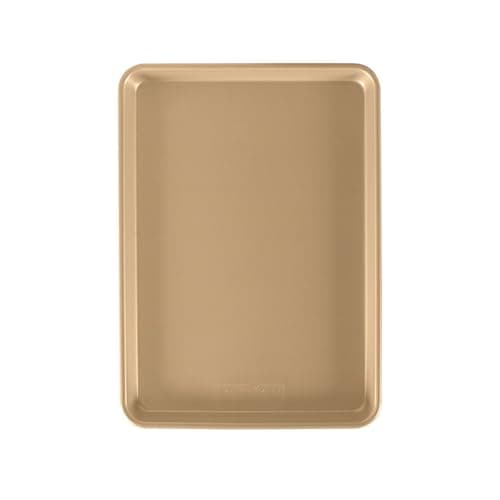
Nordic Ware Naturals Half Sheet, 18 x 13 in
Bare aluminum with an encapsulated steel rim and a lifetime warranty, which is where fried food should land - spread out, in one layer, in a pan that holds the drips. Skip it as a draining surface for anything acidic that will sit on it: Nordic Ware publishes that bare aluminum reacts with acid.
Best for: Roasting vegetables, sheet-pan dinners, cookies - the pan you use most weeks
Published specifications for the Nordic Ware Naturals Half Sheet, 18 x 13 in
Exterior dimensions
17.9 x 12.9 x 1 in
Material
Aluminum
Rim
Encapsulated steel rim
Gauge
Not published by Nordic Ware
Warranty
Lifetime
Dishwasher
Hand wash recommended. Automatic dishwasher use is not advised
Made in
America of domestic and imported materials
Good
Aluminum conducts at 237 W/m-K, which is why it browns evenly and a steel pan does not
The encapsulated steel rim is the reason it does not warp in a hot oven
Lifetime warranty on a pan this cheap
Not good
Nordic Ware does not publish a gauge figure, so thickness cannot be compared like for like
Bare aluminum stains and reacts with acid
Not dishwasher safe by the maker's own advice
The trade-off. Bare aluminum discolors and reacts with acid. It will look used within a month and Nordic Ware advises against the dishwasher.
Skip this if. You want a pan that stays looking new, or you will not hand wash. Buy an aluminized-steel coated pan instead and accept the coating as a wear item.
A 3 mm carbon steel pan or a 12-inch cast iron skillet. Both hold enough heat that a cold potato cake going into the oil does not drop the temperature, which is what makes latkes greasy rather than crisp. Carbon steel is the better of the two if you have to lift the pan: de Buyer publishes 4.6 lb for its 11-inch, which is far less than a 12-inch cast iron skillet.
›What is the difference between shallow frying and deep frying?
Depth, and it changes the equipment entirely. Deep frying submerges the food, so the question is about a pot, the volume of oil and the height of the sides. Shallow frying uses a quarter to half an inch of oil, so the food has a top side that has to be turned, and the question becomes floor area and how fast the pan recovers its heat.
›Can you shallow fry in a nonstick pan?
Yes, and it is genuinely useful for fritters that want to stick. The catch is that nonstick pans are light, and a light pan has little stored heat, so the oil temperature falls with each piece you add. Fry in smaller batches, put the oil in before the pan goes on the heat, and treat the coating as a wear item.
›Why do my fried foods come out greasy?
Almost always because the oil temperature dropped. Food absorbs oil when it is not hot enough to seal the surface immediately, and the usual causes are a pan too thin to recover, too much food at once, or food straight from the refrigerator. A heavier pan fixes two of those three.
›Can you use a paella pan for shallow frying?
Not well, on a domestic stove. Retailers publish the polished Garcima pans at 1 mm in the smaller sizes and 1.2 mm in the larger ones, which is deliberately thin so a wide fire heats the whole base evenly. On one burner that thinness becomes a problem: the pan heats in a ring and loses temperature the moment cold food lands on it.
›What should you drain fried food on?
A sheet pan, in a single layer, ideally with a rack. A plate stacked with paper towels traps steam under the pieces and softens the crust within a minute. A half sheet gives every piece air around it and the rim keeps the oil off the counter.
Sources
Every figure on this page came from one of these. Follow them and check our arithmetic — that is the point.