Cast iron is the one material where a set is almost always the wrong purchase - because the pieces are cheap individually and you only want two of them.
Heads up: some links on this page earn us a commission at no extra cost to you. It does not change what we recommend or the order. How we are funded.
The short answer
Buy the pieces individually. Cast iron is inexpensive enough that a set's discount is small, and most sets pad the count with a griddle or a small skillet you will not use. The two pieces almost every kitchen wants are a 10 or 12 inch skillet and a Dutch oven, and buying those two open stock costs about what a three-piece set does while getting you exactly the sizes you want.
Quick picks
The whole answer, on one screen. Tap a row to jump to the full write-up. Every pick below carries a stated trade-off further down — including the one at the top.
#
Product
Best for
Price
1
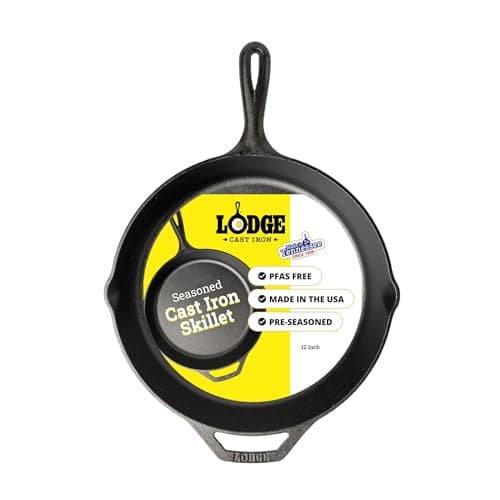
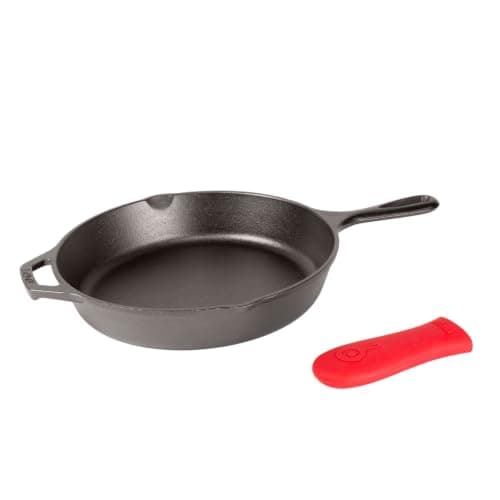
Lodge Seasoned Cast Iron Skillet, 10.25 in (L8SK3)
The 10-inch skillet is the piece every set is built around, and buying it alone is most of the value of any set.
Prices last checked October 22, 2026. Prices move constantly — the number on Amazon when you click is the real one.
How we chose these
We have not cooked in them. This page compares published sizes, weights, seasoning method, heat-source compatibility, care guidance and origin. The method is here.
A scope note: our audited ledger contains Lodge and Victoria pieces individually rather than boxed sets, so this page recommends the pieces and points at a tagged search for boxed sets. That reflects what we can cite, and it also happens to be the recommendation.
Why the set discount is small here
A clad stainless set is worth buying because the individual pieces are expensive and the box is genuinely cheaper per pan — the argument in set versus open stock.
Cast iron inverts that. The pieces are among the cheapest permanent cookware you can buy, so a set's saving is a small absolute number. Meanwhile the cost of getting a piece you do not want is the same as it always is. When the discount is small and the mismatch risk is unchanged, open stock wins.
Typical set
What is in it
What most people use
3-piece
8 in skillet, 10 in skillet, griddle or lid
The 10 in
5-piece
8, 10 and 12 in skillets, griddle, lid
The 10 and the 12
Set with Dutch oven
Skillet, Dutch oven, lid
Both - this is the useful one
Set with mini skillets
Two full-size, two 5 in servers
The full-size ones
Only the third row is a set worth buying, and that is because it contains the two shapes that do different jobs rather than three sizes of one shape.
The two pieces that matter
A skillet, 10 or 12 inches
This is the piece cast iron exists for: searing, roasting, cornbread, anything that wants stored heat. Ten inches suits most households and twelve is the second pan — the sizing case is in what size cast iron skillet.
A Dutch oven
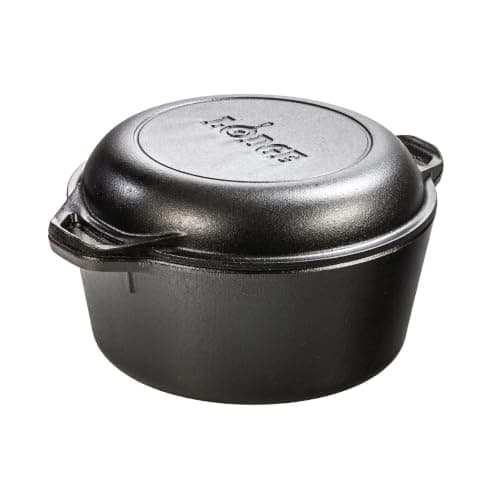
A completely different tool: a vessel rather than a surface, for braises, stock, bread and deep frying. The shape comparison is in cast iron skillet versus Dutch oven, and for most people it should be enameled rather than bare — best cast iron Dutch ovens covers the bare version.
A set containing one of each is a genuinely good purchase. A set containing three skillets is one useful pan and two duplicates.
The pieces sets pad with
An 8-inch skillet. Useful for one egg and little else once you own a 10 inch. Not useless, just rarely the second thing you would buy.
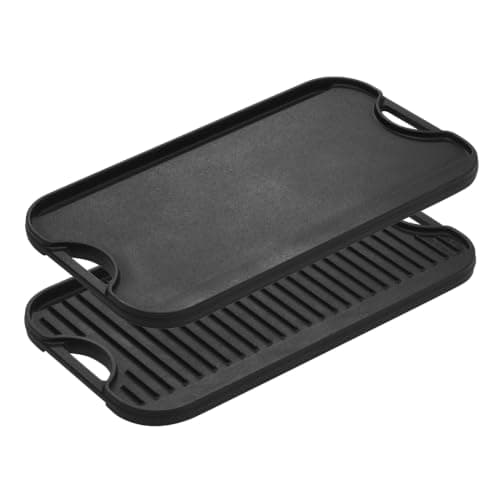
A griddle. Genuinely good for pancakes and bacon, and a poor fit for a smooth-top stove because a two-burner griddle bridges elements — cast iron on glass top stoves. Buy it deliberately.
Mini serving skillets. Presentation pieces. They inflate a piece count cheaply.
A skillet lid sold as a piece. The same counting habit that makes a twelve-piece clad set seven pans.
Silicone handle covers. Actually useful — but they cost very little and should not justify a set price.
Does the brand matter?
Less than in any other material. Cast iron is cast iron, and the thermal behavior is a property of the metal rather than the foundry. What differs between brands is handle geometry, casting weight and how much each company publishes — set out in our Lodge review and our Victoria review.
Lodge publishes its seasoning method, a 550F range, a named Tennessee foundry and a lifetime warranty. Victoria publishes Colombia, a longer handle and a lighter casting. Both are seasoned cast iron and both behave the same in a pan.
Secondhand is a genuine alternative here in a way it is not for coated cookware. A rusty vintage skillet restores completely and is often cheaper than a new set piece — buying vintage cast iron.
One set, one seasoning routine
Whatever you buy, every bare piece needs the same care: hand wash, dry on the burner, thin film of oil, never a dishwasher. The method is in cast iron seasoning and care.
That is an argument for owning fewer, larger pieces rather than more small ones. Every extra pan is another object in the routine, and pans that are not used do not build seasoning — they sit and slowly rust in a cupboard.
If you would still rather buy one box, cast iron sets on Amazon — check that it contains a skillet and a pot rather than three skillets.
Every pick, in full
Each write-up below gives the published specs, what the pan is genuinely good at, what it costs you, and who should skip it. The trade-off line is there on the top pick too — a recommendation with no downside is an advertisement.
Top pick · Best cast iron setSpecs read September 3, 2026
Lodge Seasoned Cast Iron Skillet, 10.25 in (L8SK3)
The 10-inch skillet is the piece every set is built around, and buying it alone is most of the value of any set.
Best for: Searing, cornbread, and anyone who wants one pan that cannot be worn out
Published specifications for the Lodge Seasoned Cast Iron Skillet, 10.25 in (L8SK3)
Diameter
10.25 in
Weight
5.66 lb
Oven maximum
550F
Induction
Yes - bare iron is ferrous
Seasoning
Pre-seasoned with soy-based vegetable oil, no synthetic chemicals
Warranty
Lifetime
Made in
USA
Care
Hand wash. Lodge's own instructions permit warm soapy water
Good
Effectively unbreakable and fully restorable - a rusted one can be stripped and re-seasoned
Holds heat better than anything else at the price, which is what a sear needs
Lodge publishes its seasoning method openly, so the maintenance is not a mystery
Not good
Heavy
Heats unevenly on a small burner: cast iron conducts at roughly 50 W/m-K, so it is slow to spread and slow to react
Bare iron is reactive; long tomato braises will taste of it
The trade-off. It weighs 5.66 lb empty. You will feel that every time you move it full, and it is the single most common reason a cast iron skillet ends up in a cupboard.
Skip this if. You have wrist or shoulder trouble, or you cook mostly acidic braises. Carbon steel does most of the same jobs at roughly half the weight.
Usually not. Cast iron pieces are cheap individually, so the set discount is a small absolute number, while the risk of getting a piece you do not want is unchanged. Buy a skillet and a Dutch oven open stock instead.
›What pieces should a cast iron set include?
A 10 or 12 inch skillet and a Dutch oven - a cooking surface and a vessel, which do genuinely different jobs. A set containing three sizes of skillet is one useful pan and two duplicates.
›Is Lodge or Victoria better for a cast iron set?
They are the same material and behave the same. Lodge publishes its seasoning method, a 550F range, a named Tennessee foundry and a lifetime warranty; Victoria publishes Colombian manufacture, a longer handle and a lighter casting.
›Should a cast iron set include a griddle?
Only if you specifically want one. A griddle is genuinely good for pancakes and bacon, and a two-burner griddle should be avoided on a smooth-top stove because it bridges elements and covers glass not designed to sit under a pan.
›Is buying vintage cast iron cheaper than a set?
Often, yes. Rust is fully recoverable and frightens buyers off, so a rusty vintage skillet is frequently cheaper than a new set piece and is lighter and smoother once restored.
Sources
Every figure on this page came from one of these. Follow them and check our arithmetic — that is the point.