A set is a different purchase. This is the single pan question: which frying pan has the least in it to worry about, and what each one asks of you in return.
Heads up: some links on this page earn us a commission at no extra cost to you. It does not change what we recommend or the order. How we are funded.
The short answer
The most non-toxic frying pan is one with nothing applied to the cooking surface at all: Lodge seasoned cast iron at 10.25 in, 5.66 lb and a published 550F ceiling, for anyone willing to dry and oil it after washing. If you want the same bare-metal surface without the weight, the de Buyer MINERAL B PRO carbon steel pan is 99% iron and 1% carbon by de Buyer's own published figures at 3 mm and 4.6 lb. If you want to never think about maintenance, clad stainless is non-reactive with nothing on it to wear through: the All-Clad D3 publishes 600F and a Canonsburg, Pennsylvania factory. And if you need food release without technique, the Caraway 10.5 in ceramic pan is the only pan in our thirty-one brand audits whose maker publishes third-party PFAS testing with linked results - bought knowing it is a consumable, published as not dishwasher safe, and rated 550F.
Quick picks
The whole answer, on one screen. Tap a row to jump to the full write-up. Every pick below carries a stated trade-off further down — including the one at the top.
#
Product
Best for
Price
1
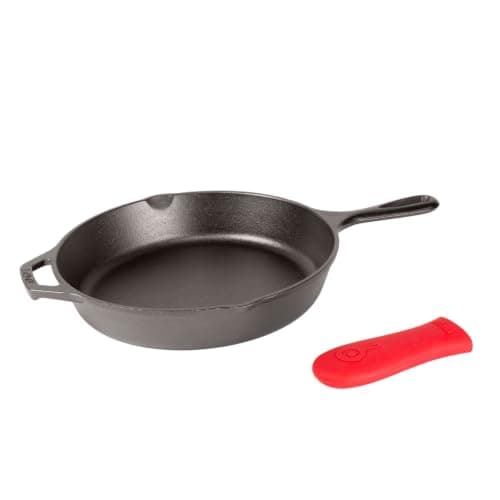
Lodge Seasoned Cast Iron Skillet, 10.25 in (L8SK3)
Bare seasoned cast iron: no coating, no proprietary chemistry, 550F and a lifetime warranty published. The seasoning is cooking oil polymerized onto iron, which is the only thing between food and metal.
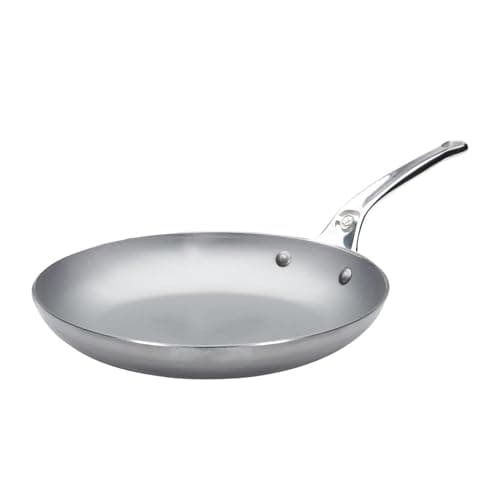
de Buyer MINERAL B PRO Carbon Steel Fry Pan, 11 in
The most granular material disclosure in our ledger: 99% iron, 1% carbon, 3 mm thick, 4.6 lb at 11 in. Bare steel with a seasoning layer you build yourself, and nothing else.
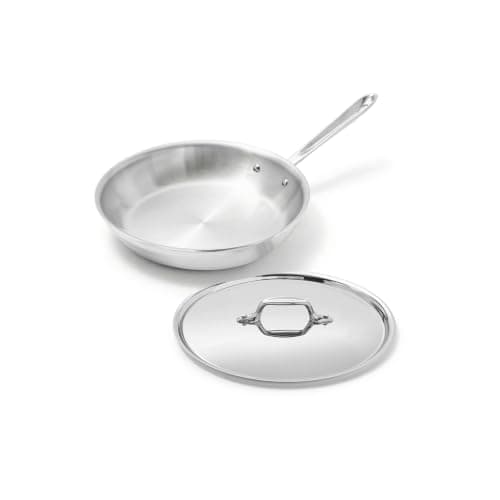
A fully bonded tri-ply pan with an 18/10 stainless cooking surface, published at 600F and oven and broiler safe. Nothing is applied to it, so there is nothing to wear through or degrade.
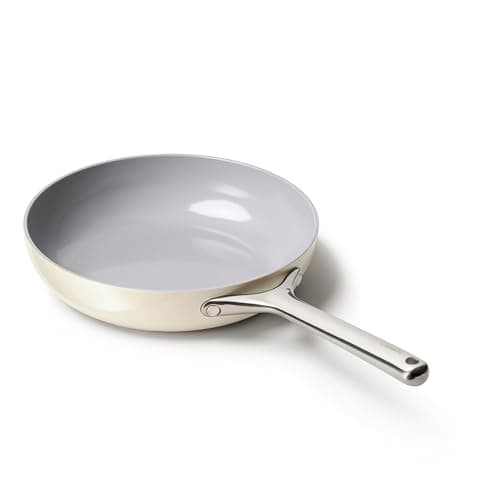
If you want release without technique, this is the coated pan with the strongest published evidence: third-party PFAS testing with linked results, and a 550F rating. It is still a coating and it will still wear out.
Prices last checked October 6, 2026. Prices move constantly — the number on Amazon when you click is the real one.
This is the single-pan question, not the set question
Three pages on this site already answer adjacent versions of this, and it is worth being precise about which one you are on, because the answers genuinely differ. Non-toxic cookware sets ranks sets. Healthiest cookware materials ranks the materials themselves. Non-toxic cookware brands ranks brands on what they publish. This page answers the narrowest and most common version: you want one frying pan, and you want the least in it to worry about.
That narrowing changes the recommendation. A set forces a compromise, because one material has to cover eggs and searing and sauces. A single pan does not: you can pick the surface with nothing on it and keep an inexpensive coated pan for the two things bare metal is bad at.
What "non-toxic" means on a frying pan listing
Nothing, legally. The term is unregulated in cookware and carries no definition, which is why it clusters on the products that most need reassurance. So this page does not rank on the word. It ranks on one checkable question: what is applied to the surface your food touches, and who will tell you what it is?
By that test the field splits cleanly in two. Bare iron, bare steel, stainless and glass have nothing applied, so there is no composition to disclose, nothing to wear through and nothing to overheat. Everything else is a coating, and a coating is a disclosure question - read nonstick coating names decoded for how the trade names map onto actual chemistry.
The four pans, and who each one is for
Every figure in this table is read from the maker's own published material on the date stamped on this page. Where a maker does not publish a number, the cell says so rather than guessing.
Pan
Cooking surface
What is applied
Published ceiling
Who it is for
Who should skip it
Lodge cast iron, 10.25 in
Bare cast iron
Nothing but polymerized soy-based vegetable oil, applied at the foundry
550F
Searing, cornbread, anyone who wants one pan that cannot be worn out
Anyone unwilling to dry and oil it after every wash, or who cooks a lot of tomato and wine
de Buyer MINERAL B PRO, 11 in
Bare carbon steel, 99% iron / 1% carbon
Nothing after you scrub off the shipping beeswax and season it yourself
Not published by de Buyer; retailers list 500F for the PRO line
Cast-iron searing at 4.6 lb instead of 8, with a cooking surface of 8.3 in
Anyone who wants a pan that works on day one with no preparation
All-Clad D3, 10 in
18/10 stainless steel
Nothing - the aluminum core is sealed between two steel layers and never touches food
600F, oven and broiler safe
A cook who wants zero maintenance and a non-reactive surface
Anyone who wants eggs to release without technique, or a dishwasher-safe pan - All-Clad publishes hand-wash only
Caraway ceramic, 10.5 in
Ceramic coating over an aluminum body
A ceramic coating, with third-party PFAS test results published and linked
550F
Buyers who want release without technique and want the chemistry checkable
Anyone expecting it to last like steel, or who will put it in a dishwasher - Caraway publishes that it is not dishwasher safe
Specifications read from each maker's published material. Blank is never guessed: where a figure is not published, the cell says so.
Why three of the four are bare metal
A bare metal surface removes the entire question rather than answering it. There is no proprietary film, so there is no composition to disclose; there is no wear surface, so there is no end-of-life you cannot predict; and there is no degradation temperature below the pan's own structural limit.
The honest cost is technique. Bare metal sticks until you learn to preheat it and until seasoning builds, which is a real skill with a real learning curve - why food sticks to stainless steel and seasoning and care are the two pages that matter if you buy one of these.
Cast iron, and the one limit people miss
Lodge publishes the figures: 10.25 in, 5.66 lb, 550F, lifetime warranty, a named Tennessee foundry, and a seasoning made from soy-based vegetable oil with no synthetic chemicals. Lodge's own care instructions permit warm soapy water, which contradicts most of the folklore about it.
The limit is acid. Long contact with tomato, wine or vinegar strips seasoning and transfers noticeably more iron - see cooking acidic foods and reactive cookware. For most people that is a reason to own a stainless pan alongside it, not a reason to skip cast iron.
Carbon steel, which asks the most up front
de Buyer publishes composition percentages and per-size thickness and weight, which is the most granular material disclosure anywhere in our ledger. It also publishes the one thing most buyers are not told: the pan ships coated in beeswax that has to be scrubbed off in hot water with no soap before the first seasoning.
Note the cooking-surface arithmetic too. The 11 in pan has an 8.3 in cooking surface, because the walls flare - what size carbon steel pan has the numbers.
Clad stainless, the one that asks nothing
Stainless is the only bare-metal option here that needs no seasoning, no drying ritual and no acid rule. The All-Clad D3 publishes 600F, oven and broiler safe, and an aluminum core fully bonded between steel layers, so the aluminum is structural and never a food-contact surface. That distinction is the whole reason the aluminum question does not apply to a clad pan.
A clad pan's aluminum is sealed between steel. It is doing the heat conduction and nothing else.
The one coated pan here, and why it earns the spot
If you cook eggs daily and do not want to learn a technique for them, a coating is what you are buying. The question is which maker will tell you what it is.
Across thirty-one brand audits, Caraway is the only one publishing third-party PFAS testing with results you can read. That is the strongest non-toxic disclosure available in this category, and it is why it is on this page despite the obvious objection: it is a coating, it wears out, and no maker in the category publishes a lifespan.
Buy a coated pan as a consumable, at a price you will not resent replacing. That single framing solves most of the anxiety around them - how long nonstick lasts explains why the replacement cycle is the part nobody will quote you.
The pans that did not make this list, and exactly why
None of this is a claim that anything is wrong with these pans. Each line is a published fact and a reason it does not fit a page about minimizing what is applied to the surface.
Pan
Published fact
Why it is not on this page
T-fal Professional, 12 in
PTFE coating, 400F published for the line, dishwasher safe
A fluoropolymer coating. A good budget egg pan - not the answer to this question
OXO Good Grips Pro, 10 in
Three-layer PTFE, published PFOA-free, 430F
PFOA-free is true of essentially every pan sold today and distinguishes nothing
PTFE, and the warranty excludes the part that actually fails
Scanpan Classic, 10.25 in
Recycled cast aluminum, 500F, made in Denmark, STRATANIUM surface
Good disclosure on everything except this: the surface composition is not published and there is no PFAS statement on the product page
HexClad Hybrid, 12 in
Published free from PTFE and PFAS, 900F, metal-utensil safe
Genuinely PTFE-free, but the warranty carries a seasoning clause that excludes damage from not seasoning a pan sold as nonstick
Zwilling Clad CFX, 10 in
Ceraforce XTREME ceramic, PTFE-free, made in Vietnam, 400F
A 400F oven ceiling - the lowest figure in our entire ledger, on a page where heat tolerance is the safety spec
Two of those deserve emphasis because they cut in opposite directions. Hard-anodized pans are aluminum bodies that have been anodized and then usually coated in PTFE anyway; anodizing hardens the body and does nothing to the coating. And titanium claims on coated pans almost never describe a titanium cooking surface.
Heat is the exposure route, not the metal
For a coated pan in normal use, temperature matters more than composition. Coatings degrade when badly overheated - above roughly 500F - and the way that happens is an empty pan left on high, not a gentle fry. Which makes a published ceiling a safety specification, and makes the spread across the category worth seeing in one place.
Pan
Published oven maximum
What that means in practice
Zwilling Clad CFX
400F
Below a typical roast. Stovetop and gentle oven only
T-fal Professional
400F
Never under a broiler, never preheated empty
OXO Good Grips Pro
430F
Fine for finishing, not for high-heat roasting
Calphalon Premier
450F
The top of the coated range
Scanpan Classic
500F
Unusually high for a coated pan
Caraway ceramic
550F
Published for the pan, not just the coating
Lodge cast iron
550F
No coating to degrade; the limit is structural
All-Clad D3
600F
Oven and broiler safe, published
Oven ceilings as published by each maker. GreenPan's widely quoted 850F figure is for the Thermolon coating in isolation, not a finished pan - see oven-safe cookware temperatures.
The practical rule is identical whichever pan you pick: never preheat a coated pan empty, keep it off the broiler, and skip aerosol cooking spray, which leaves a residue that ruins release and gets perfectly good pans thrown away.
What this page cannot tell you
We have not tested any of these pans for leaching. We own no lab, we run no migration tests, and any site claiming otherwise without publishing a method and results deserves a careful read. What we can do is read what each maker publishes and check whether it is specific, sourced and internally consistent - and say plainly where it is not.
Which one to buy
One pan, nothing applied, lowest cost:Lodge cast iron, 10.25 in. Accept the weight and the thirty-second routine after washing.
Bare metal, but you will be lifting it one-handed:de Buyer MINERAL B PRO. Budget an evening for the beeswax and the first seasoning.
Nothing applied and no maintenance at all:All-Clad D3, 10 in. Hand wash, and learn the preheat.
Release without technique, chemistry you can check:Caraway ceramic, 10.5 in. Treat it as a consumable and hand wash it.
The combination most kitchens actually land on is one bare-metal pan for the cooking that matters plus one inexpensive coated pan for eggs, replaced when release goes. That gives you a single consumable instead of a kitchen full of them - what to replace nonstick pans with.
The four pans on this page
Three with nothing applied to the cooking surface, and the one coated pan whose maker publishes third-party test results.
Lodge Seasoned Cast Iron Skillet, 10.25 in (L8SK3)
Searing, cornbread, and anyone who wants one pan that cannot be worn out
Each write-up below gives the published specs, what the pan is genuinely good at, what it costs you, and who should skip it. The trade-off line is there on the top pick too — a recommendation with no downside is an advertisement.
Top pick · Nothing applied to the surfaceSpecs read September 3, 2026
Lodge Seasoned Cast Iron Skillet, 10.25 in (L8SK3)
Bare seasoned cast iron: no coating, no proprietary chemistry, 550F and a lifetime warranty published. The seasoning is cooking oil polymerized onto iron, which is the only thing between food and metal.
Best for: Searing, cornbread, and anyone who wants one pan that cannot be worn out
Published specifications for the Lodge Seasoned Cast Iron Skillet, 10.25 in (L8SK3)
Diameter
10.25 in
Weight
5.66 lb
Oven maximum
550F
Induction
Yes - bare iron is ferrous
Seasoning
Pre-seasoned with soy-based vegetable oil, no synthetic chemicals
Warranty
Lifetime
Made in
USA
Care
Hand wash. Lodge's own instructions permit warm soapy water
Good
Effectively unbreakable and fully restorable - a rusted one can be stripped and re-seasoned
Holds heat better than anything else at the price, which is what a sear needs
Lodge publishes its seasoning method openly, so the maintenance is not a mystery
Not good
Heavy
Heats unevenly on a small burner: cast iron conducts at roughly 50 W/m-K, so it is slow to spread and slow to react
Bare iron is reactive; long tomato braises will taste of it
The trade-off. It weighs 5.66 lb empty. You will feel that every time you move it full, and it is the single most common reason a cast iron skillet ends up in a cupboard.
Skip this if. You have wrist or shoulder trouble, or you cook mostly acidic braises. Carbon steel does most of the same jobs at roughly half the weight.
#2 · Bare metal without the weightSpecs read September 3, 2026
de Buyer MINERAL B PRO Carbon Steel Fry Pan, 11 in
The most granular material disclosure in our ledger: 99% iron, 1% carbon, 3 mm thick, 4.6 lb at 11 in. Bare steel with a seasoning layer you build yourself, and nothing else.
Best for: Someone who wants cast-iron searing without cast-iron weight
#3 · Non-reactive and maintenance-freeSpecs read September 3, 2026
All-Clad D3 Stainless 10 in Fry Pan
A fully bonded tri-ply pan with an 18/10 stainless cooking surface, published at 600F and oven and broiler safe. Nothing is applied to it, so there is nothing to wear through or degrade.
Best for: One good open-stock stainless pan bought instead of a cheap full set
Published specifications for the All-Clad D3 Stainless 10 in Fry Pan
Construction
Fully bonded tri-ply, aluminum core
Oven maximum
600F, oven and broiler safe
Induction
Yes - compatible with any stovetop
Dishwasher
Handwash only (All-Clad published)
Handle
Double-riveted stainless
Weight
3.0 lb (model 4110)
Warranty
Limited lifetime
Made in
Bonded, engineered and assembled in Canonsburg, PA
Good
600F is the highest oven ceiling of any stainless pan on this site
The one pan here whose manufacturing location is published down to the town
Genuinely repairable-adjacent: rivets are the only failure point and the warranty covers them
Not good
Hand wash only
The flared rim makes it a poor pan for anything with liquid
Costs several times what a Tramontina or Cuisinart pan of the same construction costs
The trade-off. Hand wash only. All-Clad publishes that plainly, and it is a real daily cost on a pan you will use every day.
Skip this if. You want a dishwasher-safe pan, or you are buying a whole kitchen on a fixed budget - one D3 skillet costs what a full clad set can cost.
#4 · The only checkable coatingSpecs read September 3, 2026
Caraway Ceramic Fry Pan, 10.5 in
If you want release without technique, this is the coated pan with the strongest published evidence: third-party PFAS testing with linked results, and a 550F rating. It is still a coating and it will still wear out.
Best for: Buyers who want documented PFAS testing and will hand wash
A pan with nothing applied to the cooking surface. Bare cast iron, bare carbon steel and clad stainless steel all qualify: there is no proprietary coating to disclose, nothing to wear through and no degradation temperature below the pan's structural limit. Lodge's 10.25-inch cast iron skillet is the cheapest route to that, at 5.66 lb and a published 550F.
›Is there a non-toxic nonstick pan?
There are pans whose coatings are published as free of PTFE and PFAS, including GreenPan's Thermolon, HexClad's TerraBond and Zwilling's Ceraforce. But every coating is a proprietary film with an unpublished lifespan, so the honest framing is a consumable with better-documented chemistry rather than a non-toxic pan. Caraway is the only brand in our thirty-one audits that publishes third-party PFAS testing with linked results.
›Is stainless steel a non-toxic frying pan?
Yes, for practical purposes. An 18/10 stainless cooking surface is non-reactive and has nothing applied to it, and in a clad pan the aluminum core is sealed between steel layers and never touches food. The caveat is nickel: a small number of people with a diagnosed nickel sensitivity react to it, which is why 18/0 and titanium-surfaced pans exist.
›Does PFOA-free mean a frying pan is safe?
It means almost nothing today. PFOA was phased out of US cookware manufacturing years ago, so essentially every pan on sale qualifies and the phrase distinguishes nothing between two modern pans. PTFE-free is a real distinction; PFOA-free is not.
›Is cast iron or stainless steel better if I am worried about chemicals?
Neither has anything applied to the cooking surface, so pick on behavior rather than chemistry. Cast iron transfers some iron, which is positive for most people, and it is limited on long acidic cooking. Stainless transfers essentially nothing and needs no maintenance, but food sticks until you learn to preheat it properly.
›How big a frying pan should I buy if I am only buying one?
Ten inches for one or two people, twelve if you regularly cook for three or more. Remember that advertised size is the rim and the cooking surface is smaller - de Buyer's 11-inch pan has an 8.3-inch cooking surface, which it publishes.
Sources
Every figure on this page came from one of these. Follow them and check our arithmetic — that is the point.